Planning a ghost town road trip to Dun Glen, Nevada means heading into Pershing County’s open desert with a high-clearance vehicle, extra water, fuel, and a paper map. You’ll explore stone foundations, crumbling mill ruins, and a quiet cemetery left behind by a silver boom that once drew hundreds of settlers. Cell service fades fast out here, so prepare before you leave. Everything you need to make the most of this trip is just ahead.
Key Takeaways
- Dun Glen is located in Pershing County, Nevada, accessible via a dirt road from Mill City requiring a high-clearance vehicle.
- Pack essentials including extra water, food, fuel, a spare tire, first-aid kit, and offline maps since cell service is limited.
- Study historical photographs beforehand to better recognize remaining landmarks like stone foundations, mill ruins, and the historic cemetery.
- Nearby towns Unionville and Lovelock offer additional ghost town exploration and regional museums to enrich your road trip experience.
- Watch for rattlesnakes near ruins, desert wildlife on roads, and plan to arrive early to photograph sites before sunset.
The Boom-and-Bust Cycles That Built and Buried Dun Glen
When silver struck the Sierra Mining District in 1862, Dun Glen exploded from canyon wilderness into a bustling commercial hub almost overnight. Named for early settler Angus Dun, the town quickly attracted 250 to 300 residents hungry for fortune and fresh starts.
Historic mining techniques like stamp milling powered operations at the Auld Lang Syne Mine, shaping the landscape you’ll still recognize in ruins today.
Stone Foundations, Mill Ruins, and What Survives at Dun Glen Today
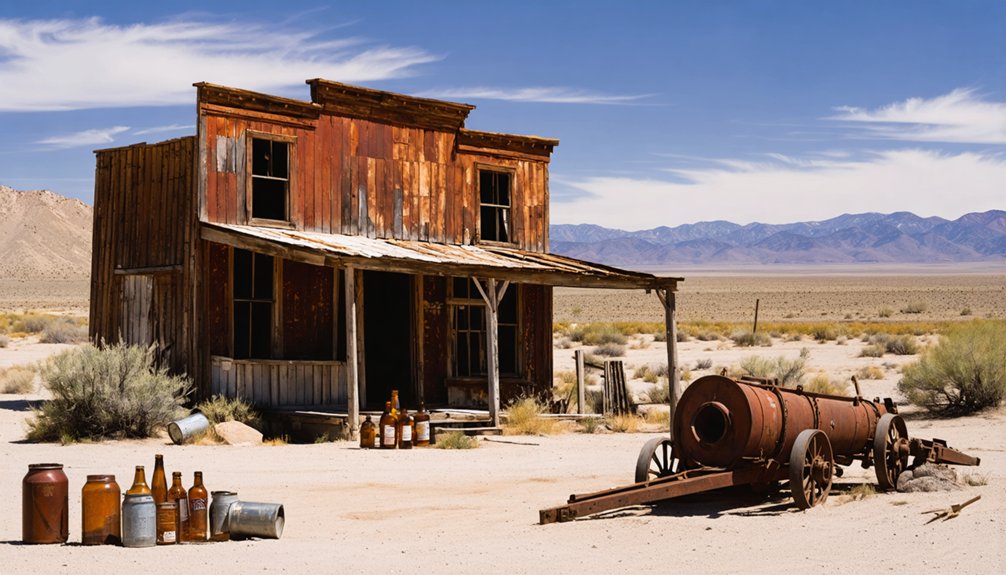
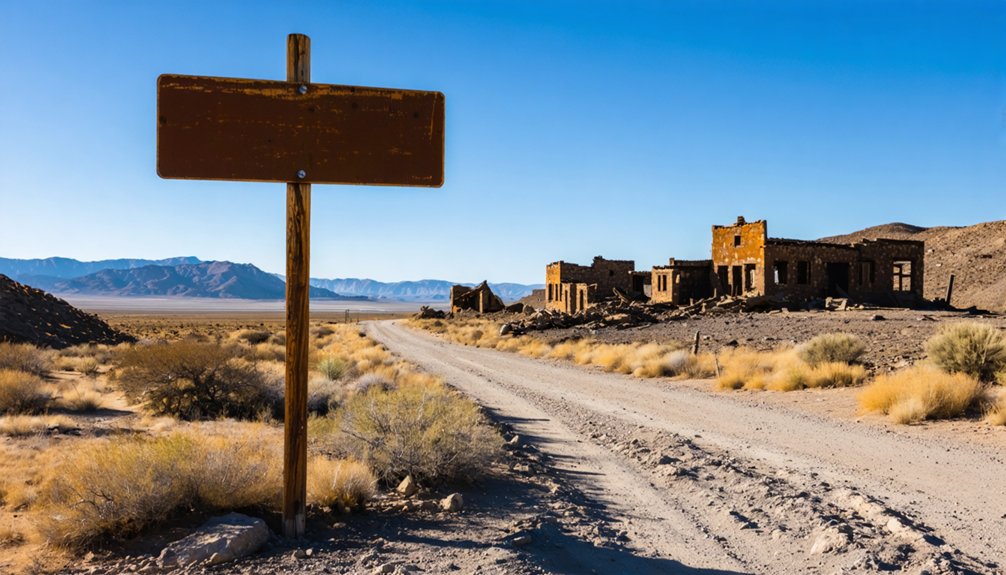
What those boom-and-bust cycles left behind is more than just memory — it’s stone, scattered metal, and crumbling walls you can actually walk among. You’ll find stone foundations marking where hotels, stores, and homes once stood, along with mill ruins that hint at the industrial scale this remote canyon once supported.
The Dun Glen cemetery offers a quieter, more personal connection to the people who lived and died here. Don’t expect manicured trails or interpretive signs — this site rewards self-guided exploration.
While formal preservation efforts remain limited, the surviving historic architecture speaks clearly enough on its own. Bring water, wear sturdy shoes, and give yourself time to move slowly through the ruins. What’s left is fragile, so look closely but tread carefully.
How to Get to Dun Glen, Nevada
Getting to Dun Glen takes some effort, and that’s part of the appeal. You’ll head into Pershing County, Nevada, using Mill City as your jumping-off point. From there, follow the dirt road southeast into the East Range toward the Sierra Mining District canyon where the site sits.
A high-clearance vehicle handles the terrain far better than a standard car, so plan accordingly.
Before you leave, study historical photographs of the area to help you recognize surviving landmarks once you’re on-site. The remote drive also puts you through open desert terrain where local wildlife, including pronghorn and jackrabbits, frequently crosses your path.
Carry extra water, fuel, and a paper map. Cell service disappears fast out here, and self-reliance isn’t optional — it’s the whole point.
Road Conditions, Cell Coverage, and What to Pack for Dun Glen
Knowing the route to Dun Glen is only half the battle — the road itself will test your preparation before you ever reach the ruins. Expect rough, unpaved desert terrain that demands high-clearance vehicles.
Cell coverage disappears quickly once you leave Mill City, so download offline maps before departing.
Wildlife encounters are common; watch for rattlesnakes near stone foundations and desert animals crossing the trail.
Pack extra water, food, a spare tire, and basic tools.
Bring a first-aid kit and let someone know your itinerary.
A quality camera earns its weight here — you’ll want to capture historical photos of mill ruins, crumbling walls, and the weathered Dun Glen cemetery before the Nevada sun shifts the light.
Ghost Towns and Mining Sites Near Dun Glen
Once you’ve explored Dun Glen’s ruins, the surrounding Pershing County region rewards curious road-trippers with several other ghost towns and mining sites worth adding to your itinerary. Mill City sits nearby and offers additional context for the Sierra Mining District’s industrial past.
Pershing County rewards curious road-trippers with ghost towns and mining sites that bring Nevada’s industrial past to life.
Farther out, Unionville draws visitors with its well-documented boom-and-bust story, local legends of silver fortunes, and surviving stone structures you can photograph alongside historic photographs you’ve researched beforehand.
Lovelock serves as a practical base, giving you access to regional museums where archived maps and images help connect each site’s story.
Traveling this corridor lets you trace Nevada’s mining frontier across multiple locations, building a richer, more complete picture of the region’s relentless cycles of discovery, labor, and abandonment.
Frequently Asked Questions
Is There an Entrance Fee to Visit Dun Glen?
Like a wide-open frontier, Dun Glen’s free to explore! You won’t pay an entrance fee, but don’t expect visitor amenities. Historical preservation here’s minimal, so you’re venturing into raw, remote ruins on your own terms.
Are Pets Allowed When Exploring the Dun Glen Site?
No official pet policies restrict your visit, but you’ll want to prioritize pet safety by honoring leash requirements — keeping your furry companion close as you explore remote terrain, unstable ruins, and unpredictable wildlife habitats throughout the site.
Can You Camp Overnight Near the Dun Glen Ghost Town?
Like a lone campfire flickering against Nevada’s vast desert sky, you’re free to camp near Dun Glen, but check local camping regulations first and stay alert to wildlife encounters roaming the remote terrain.
Is Dun Glen on Public Land or Private Property?
Dun Glen’s land ownership isn’t fully confirmed here, so you’ll want to verify before visiting. Its historical significance makes it likely BLM-managed public land, giving you the freedom to explore this remarkable Nevada ghost town.
What Is the Best Time of Year to Visit Dun Glen?
Spring and fall offer you the best seasonal weather for exploring Dun Glen’s remote ruins. You’ll dodge summer’s brutal heat and winter’s harsh conditions, and you won’t battle visitor crowds in this beautifully isolated Nevada canyon.
References
- https://www.nvexpeditions.com/pershing/dunglen.php
- https://nvtami.com/2022/09/26/dun-glen-the-not-so-final-final-resting-place/
- https://forgottennevada.org/sites/dunglen.html
- https://www.destination4x4.com/dun-glen-nevada-pershing-ghost-town/
- https://en.wikipedia.org/wiki/Dun_Glen
- https://www.nevadaghosttownsandmininghistory.com/portfolio-2/dun-glen
- https://en.wikipedia.org/wiki/List_of_ghost_towns_in_Nevada
- https://www.intuitive-investigations.com/single-post/2016/04/12/haunted-national-parks-the-dodge-city-of-the-east