Planning a ghost town road trip to East Fletcher, Vermont means heading into Franklin County via Route 100, roughly 15 miles from Montpelier or 30 from Burlington. You’ll wander through rolling farmland and dense woodlands, discovering moss-covered cellar holes and crumbling stone walls left behind by logging-era families. Bring sturdy boots, navigation tools, and respect for private property. East Fletcher blends documented history with whispered local legends — and there’s far more to this haunting landscape than first appears.
Key Takeaways
- East Fletcher, Vermont, is accessible via Route 100 or Interstate 91, roughly 15–30 miles from Burlington or Montpelier.
- Scattered cellar holes and moss-covered stone walls mark abandoned homesteads from Vermont’s logging-era rural exodus.
- Always verify land access beforehand, as most abandoned settlement remnants sit on private property.
- Pack waterproof boots, layered clothing, navigation tools, and emergency supplies for dense backcountry woodland terrain.
- Photograph and document historical remnants respectfully, following Leave No Trace principles without disturbing fragile structures.
Why East Fletcher Is Vermont’s Most Underrated Ghost Town Stop
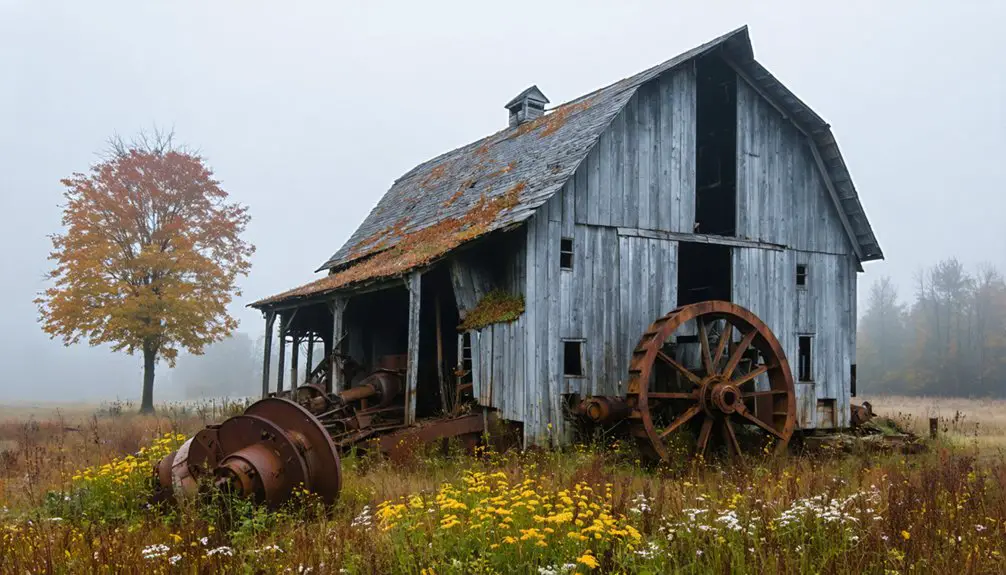
Though it lacks the dramatic branding of Vermont’s more publicized abandoned settlements, East Fletcher quietly holds its own as a ghost town destination worth your detour. Tucked within Franklin County, this rural town carries layers of local folklore tied to early logging eras, where cellar holes and stone walls still mark where lives once took root.
You won’t find polished signage or curated tours here — and that’s precisely its appeal. Historical preservation efforts remain grassroots, leaving the landscape raw and honest. The Bennington Triangle‘s shadow of strange disappearances adds an edge to the atmosphere you’ll feel on the trails.
If you crave exploration without the crowds, East Fletcher rewards the curious traveler who’s willing to look past the obvious.
How to Get to East Fletcher, Vermont
To reach East Fletcher, you’ll take Route 100 or hop on Interstate 91, both of which cut through Franklin County’s rural landscape with straightforward access.
If you’re coming from Montpelier, you’re only 15 miles out, while Burlington adds just 30 miles to your drive.
These short distances make East Fletcher an easy day trip or a natural stop on a longer Vermont ghost town itinerary.
Routes and Road Access
Whether you’re driving from Burlington or Montpelier, reaching East Fletcher is straightforward. Burlington sits 30 miles away, while Montpelier is just 15 miles out. Route 100 and Interstate 91 are your primary corridors into this region rich with local folklore and historical preservation opportunities.
Key navigation points to remember:
- Route 100 serves as your main scenic corridor into Fletcher
- Interstate 91 provides the fastest regional highway access
- Google Maps reliably navigates you to state park entry points
- Backcountry conditions exist beyond paved roads, so prepare accordingly
Once you arrive, you’ll find scattered cellar holes and stone walls hidden among the woods — silent remnants of logging-era settlements waiting to be explored on your own terms.
Nearby City Distances
Planning your drive to East Fletcher becomes much easier once you know the distances from Vermont’s key cities — Montpelier sits just 15 miles away, making it your closest urban launching point. While Burlington adds another 15 miles to the journey at 30 miles out. Both cities offer strong bases for stocking up before you venture into Fletcher’s rural landscape, where local folklore and historic preservation converge in quiet, wooded corners.
From Montpelier, you’ll travel northwest through rolling farmland and forested hills, with Route 100 guiding you efficiently.
Burlington travelers gain scenic momentum heading east, shedding urban density mile by mile. Either approach rewards you with increasingly open skies and that particular Vermont stillness that makes ghost town exploration feel genuinely untethered — exactly the freedom you’re chasing.
Cellar Holes, Stone Walls, and the Legends Behind Fletcher’s Abandoned Settlements
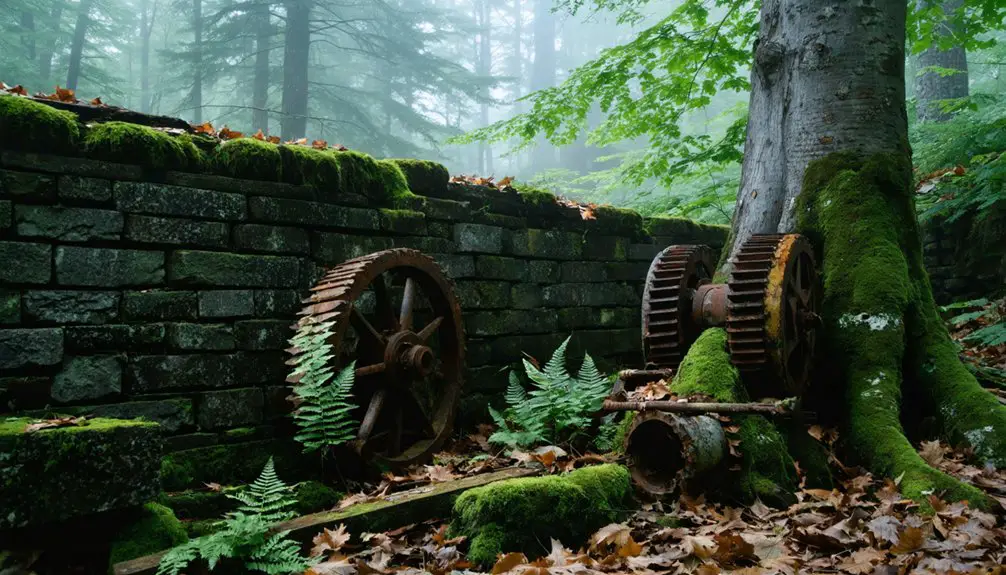
As you hike through Fletcher’s forested back roads, you’ll stumble upon cellar holes and stone walls—quiet remnants of early logging-era settlements that time has swallowed whole. These moss-covered foundations reveal stories of communities that once thrived here before abandonment claimed them.
Local legends add a darker layer, tying some of these forgotten sites to mysterious disappearances near the Bennington Triangle, making your exploration feel as eerie as it’s historically rich.
Cellar Holes Explored
Scattered across Fletcher’s wooded hillsides, cellar holes and crumbling stone walls are all that remain of the settlements that once defined this corner of Franklin County. You’ll find these quiet remnants tucked beneath decades of forest growth, waiting for curious explorers who respect historical preservation and tread carefully.
Watch for these essentials before you venture out:
- Sturdy footwear — uneven terrain surrounds every cellar hole
- Wildlife observation awareness — deer, foxes, and birds inhabit these abandoned spaces
- Property boundaries — many sites sit on private land; verify access first
- Camera gear — stone walls photograph beautifully in filtered light
Each crumbling foundation tells a story of early logging families who carved lives from this Vermont wilderness, then vanished, leaving only stone and silence behind.
Stone Walls Revealed
Beyond the cellar holes themselves, Fletcher’s stone walls tell an equally compelling story—one built by hands that cleared fields, marked boundaries, and shaped a landscape that outlasted the people who made it.
These walls snake through second-growth forest, disappearing under moss and fern, tracing property lines that no deed currently honors. You’ll notice how wildlife photography opportunities emerge naturally here—a fox pausing along a crumbling boundary, a hawk perched where a farmer once walked.
Historical preservation efforts remind you to look without disturbing, letting these silent records remain intact for the next explorer.
Follow the walls deeper into the woods and you’re fundamentally reading a map of vanished lives—each stone placed deliberately, each gap a question only Fletcher’s forgotten residents could answer.
Settlement Legends Uncovered
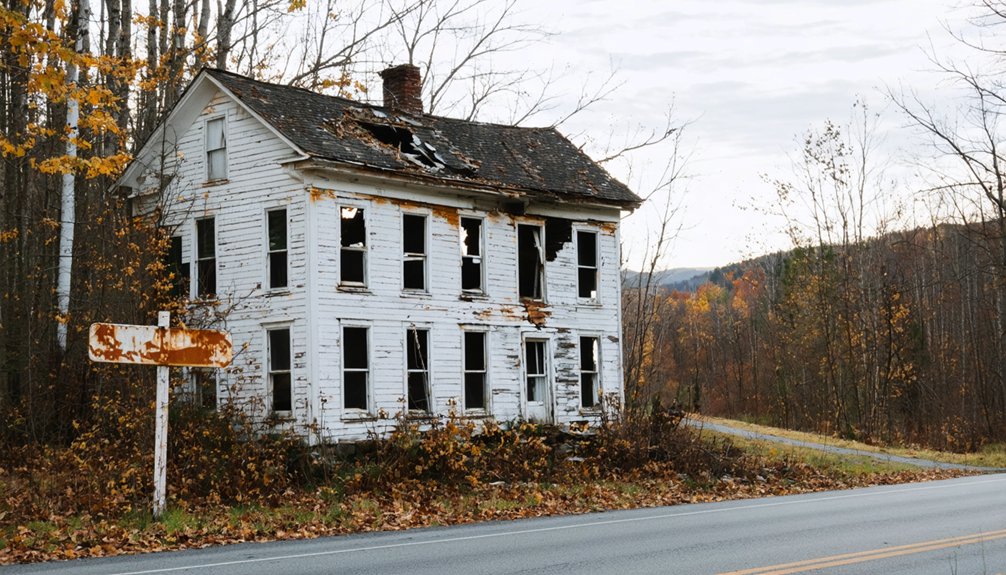
Where cellar holes end and legend begins, Fletcher’s abandoned settlements blur the line between documented history and whispered story. Early logging-era communities vanished quietly, leaving stone walls and foundation pits as their only testimony.
Local folklore fills the silence with tales of sudden departures and unexplained disappearances, binding historical preservation efforts to something far more atmospheric.
As you explore these sites, you’ll encounter:
- Cellar holes marking homesteads abandoned during Vermont’s rural exodus
- Stone walls tracing property lines nobody legally owns anymore
- Legends connecting Fletcher’s forgotten settlements to the broader Bennington Triangle mysteries
- Whispered accounts of disappearances that never made official records
You’re walking ground where documentation stops and storytelling begins — and that tension makes Fletcher’s abandoned landscape genuinely unforgettable.
What to Pack for Backcountry Ghost Town Hiking in East Fletcher
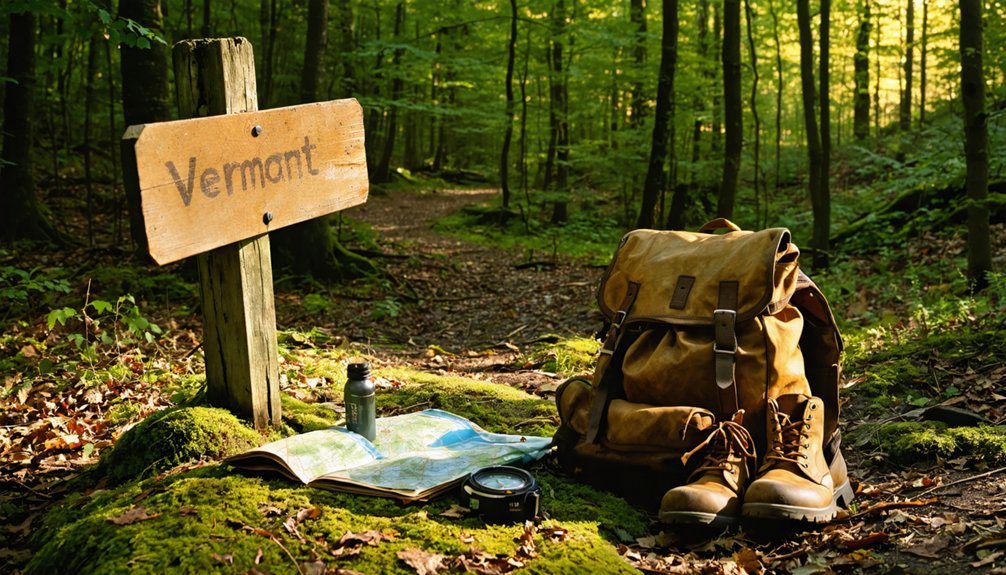
Exploring the backcountry around East Fletcher means venturing into wooded terrain where cellar holes and stone walls hide beneath dense Vermont undergrowth, so you’ll want to pack thoughtfully before hitting the trail.
Your gear essentials should include sturdy waterproof boots, layered clothing, a topographic map, and a compass since cell service gets unreliable fast.
Carry a first aid kit, emergency whistle, and enough water for your full route — these safety tips aren’t optional when you’re roaming remote terrain alone.
A headlamp, energy-dense snacks, and a fully charged backup battery round out your kit.
Respect posted boundaries and private property as you explore, because true freedom on the trail means leaving every site exactly as you found it.
What You’re Actually Allowed to Do at Fletcher’s Abandoned Sites
Knowing the rules before you step onto any abandoned site in East Fletcher keeps your adventure legal and the sites intact for future visitors. You’ve got real freedom here — if you respect the boundaries.
- Stay on public land; don’t cross onto private property without permission
- Practice Leave No Trace — pack out everything you pack in
- Wildlife observation is welcome, but keep your distance and avoid disturbing habitats
- Photography tips apply here too — shoot freely, but never remove artifacts or disturb structures
Fletcher’s abandoned cellar holes and stone walls are fragile. You can explore, document, and marvel — just don’t take anything home.
Posted signage tells you exactly where you can and can’t go. Read it, follow it, and your road trip stays memorable for the right reasons.
Building Your East Fletcher Ghost Town Weekend, Day by Day

A well-paced weekend in East Fletcher rewards you more than a rushed day trip ever could. Arrive Friday evening via Route 100, settle in, and study your maps before dark.
Saturday belongs to the cellar holes and stone walls scattered through the wooded backcountry. Move deliberately through these sites, honoring historical preservation by staying on established paths and keeping hands off structural remnants. Photograph everything; disturb nothing.
Sunday morning shifts your focus outward. These quiet rural edges offer genuine wildlife observation opportunities — deer, fox, and migratory birds move freely through abandoned clearings. Follow that with a drive toward Montpelier, just 15 miles out, where local historical societies can deepen your understanding of Fletcher’s logging-era past.
Two days here feels deliberate, unhurried, and completely yours.
Frequently Asked Questions
What Is the Population of East Fletcher, Vermont?
You’ll find East Fletcher, Vermont’s population sits at 1,346 residents, yet you’re drawn beyond the numbers into historical ghost town legends and mysterious tourist attractions in Fletcher that’ll ignite your adventurous, freedom-seeking spirit.
What County Is East Fletcher, Vermont Located In?
You’ll find East Fletcher nestled in Franklin County, Vermont — a landscape rich with historical landmarks and whispered local legends. Don’t worry about getting lost; it’s an accessible, freeing destination waiting for your exploration.
How Far Is East Fletcher From Burlington, Vermont?
You’re just 30 miles from Burlington, making East Fletcher an easy escape into Vermont’s haunted history. You’ll discover historic landmarks steeped in local ghost stories, where abandoned settlements whisper tales of forgotten souls awaiting your adventurous spirit.
What Are the GPS Coordinates for East Fletcher, Vermont?
You’ll find East Fletcher’s GPS coordinates at 44.6500° latitude and 71.1500° longitude. Navigate there to uncover haunted legends and discover mysterious abandoned buildings hiding among Vermont’s rugged, untamed wilderness awaiting your adventurous spirit.
Are There Officially Recognized Ghost Towns Within Fletcher’s Township Limits?
Like whispers in the wind, Fletcher’s past hides well — there aren’t any officially recognized ghost towns within its township limits. Yet you’ll discover abandoned structures and spine-tingling local legends waiting to fuel your adventurous spirit.
References
- https://en.wikipedia.org/wiki/List_of_ghost_towns_in_Vermont
- https://kids.kiddle.co/List_of_ghost_towns_in_Vermont
- https://en.wikipedia.org/wiki/Category:Ghost_towns_in_Vermont
- https://urbexunderground.com/ghost-towns-in-vermont/
- https://ghost-towns.close-to-me.com/states/vermont/
- https://www.tripadvisor.com/Attractions-g28966-Activities-c47-t14-Vermont.html
- https://www.youtube.com/watch?v=gxePk0rsBx4
- http://freepages.rootsweb.com/~gtusa/history/usa/vt.htm
- https://www.educationdirectory.net/articles/are-there-ghost-towns-in-vermont
- https://newenglandwithlove.com/ghost-towns-in-vermont/