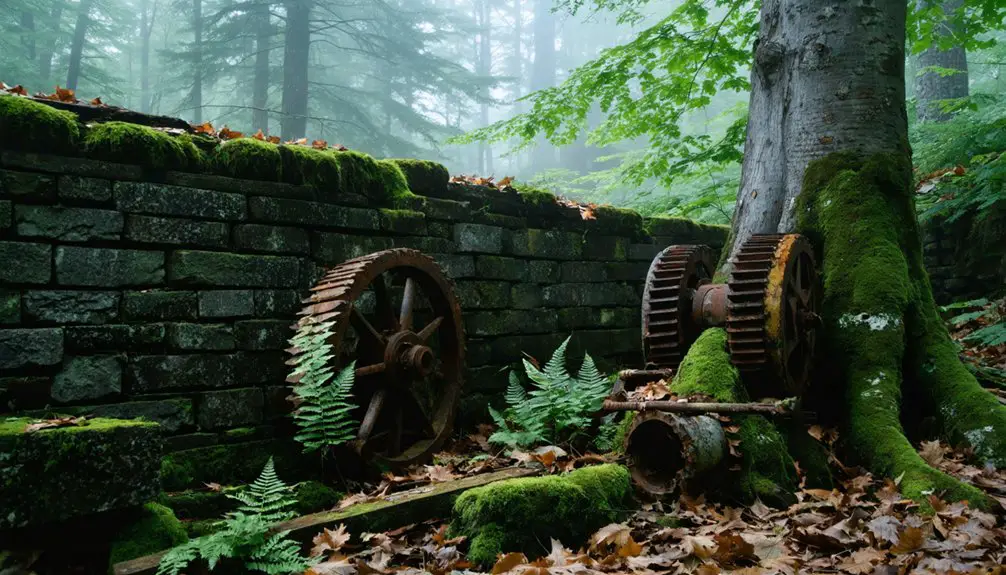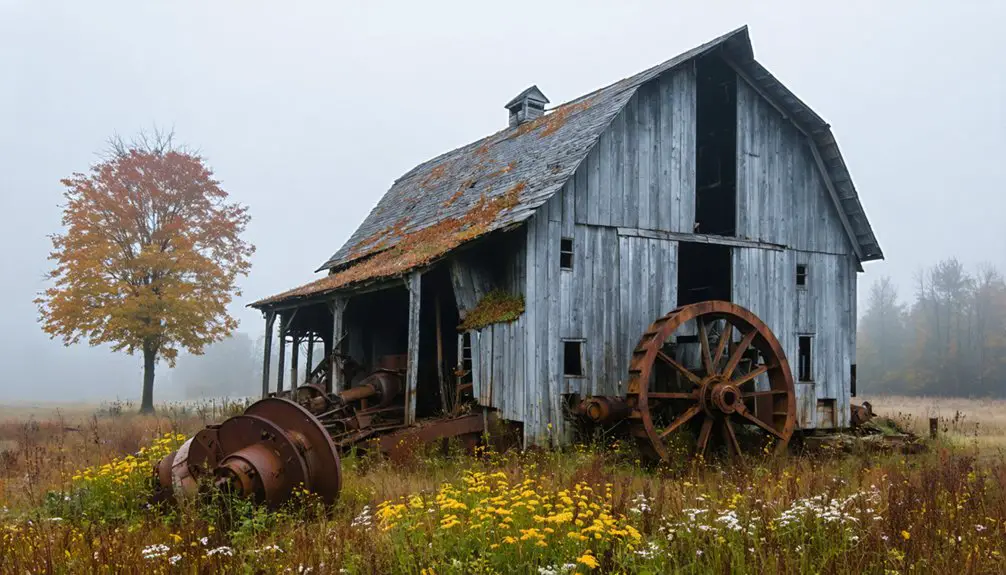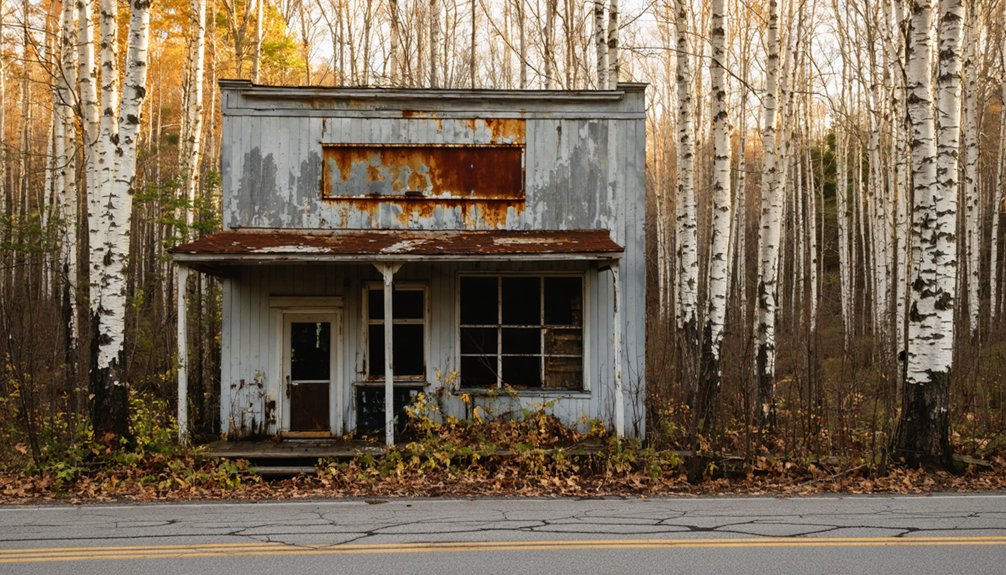
Planning a ghost town road trip to Fairmont, Vermont puts you at the center of New England’s most overlooked history. You’ll find collapsed cellar holes, crumbling stone walls, and overgrown carriage roads stretching toward vanished communities like Glastenbury, Ricker Basin, and Greenbank’s Hollow. Many sites sit at the end of remote logging roads with no cell service, so preparation matters. Whether you’re hiking or driving, Vermont’s forgotten settlements reward the curious traveler — and there’s plenty more to uncover ahead.
Key Takeaways
- Fairmont, Vermont serves as an ideal base for exploring nearby ghost towns, including Glastenbury, Ricker Basin, Somerset, and Greenbank’s Hollow.
- Many sites require hiking logging roads or dirt tracks, so bring offline maps, a compass, and sturdy boots.
- Fall (September to mid-October) offers the best conditions, with vibrant foliage, crisp air, and accessible roads.
- Pack essentials including water, snacks, bear spray, a first aid kit, and a camera for remote exploration.
- Cell service is often unavailable at these sites, so download offline maps and carry charged backup batteries beforehand.
Why Fairmont Fits Vermont’s Ghost Town Trail
Why does Fairmont feel like the perfect anchor for a Vermont ghost-town road trip? It sits within a region shaped by depopulation, industrial decline, and forgotten mill culture — the same forces that hollowed out dozens of Vermont settlements over two centuries.
When you center your route here, you’re stepping into a landscape where historical preservation efforts reveal cellar holes, crumbling stone walls, and overgrown carriage roads that once connected thriving communities. Local legends cling to these hills, passed down through generations who watched farms and villages quietly disappear.
Fairmont lets you move freely between documented ghost villages like Glastenbury, Ricker Basin, and Greenbank’s Hollow, threading each stop into a single, purposeful journey. You’re not just sightseeing — you’re uncovering Vermont’s layered, often overlooked past on your own terms.
The Best Vermont Ghost Towns to Add to Your Route
Once you’ve made Fairmont your base, the surrounding region opens into a surprisingly rich network of ghost towns and ruined settlements worth threading into your route. Vermont’s hidden history runs deep, and its abandoned architecture tells stories no museum can replicate.
Fairmont opens a door — beyond it, ghost towns and broken histories wait along Vermont’s forgotten roads.
Add these stops to your road trip:
- Glastenbury – a logging ghost town near Bennington demanding a rewarding day hike
- Somerset – a vanished trading settlement tucked along Green Mountain logging roads
- Greenbank’s Hollow – an 1800s mill village in Danville, accessible via dirt road
- Ricker Basin – a haunting hill farming community reached by a 3-mile moderate trail
- Norcross-West Marble Quarry – a free, short-walk site dating back to 1785
Each destination rewards the curious and the restless equally.
How to Actually Reach These Remote Sites?
Getting to Vermont’s ghost towns takes more planning than punching an address into your phone—many of these sites sit at the end of logging roads, dirt tracks, or unmarked trails with no cell service to bail you out. Download offline maps before you leave, and confirm access points using recent trail reports or local forestry websites.
Trail conditions shift fast in Vermont—spring mud can swallow a two-wheel-drive vehicle whole, and fall foliage crowds narrow dirt roads. Check seasonal closures ahead of time.
For hike-in destinations like Glastenbury or Ricker Basin, wear sturdy boots and carry water since you’re walking old carriage roads that haven’t seen maintenance in decades.
A printed map, a charged backup battery, and flexibility in your schedule will keep the adventure from turning into a rescue call.
What to Pack for a Vermont Ghost Town Road Trip?
Packing smart separates a memorable Vermont ghost-town trip from a miserable one. These remote sites demand preparation, not improvisation.
Carry these essentials before you hit those rugged logging roads:
- Sturdy hiking boots — cellar holes and uneven ruins punish unprepared feet fast
- Offline maps and a compass — cell service disappears deep in Vermont’s mountains
- Bear spray and wildlife awareness gear — wildlife safety isn’t optional in these isolated corridors
- Water, snacks, and a first aid kit — no stores exist near abandoned settlements
- A camera, never a souvenir bag — historical preservation means leaving every artifact, bottle, and stone exactly where you find it
You’re chasing freedom out there, but freedom favors the prepared. Pack intentionally, respect the ruins, and you’ll leave with stories instead of regrets.
When Is the Best Time to Visit Vermont Ghost Towns?
Timing your Vermont ghost-town trip well makes the difference between a rewarding exploration and a frustrating slog through mud, bugs, or early darkness. Spring and fall are your strongest choices.
Timing your Vermont ghost-town visit right separates a memorable adventure from a muddy, bug-ridden disappointment.
Late May brings fresh foliage and manageable temperatures, though muddy dirt roads can still catch you off guard. Fall, particularly September through mid-October, offers crisp air, stunning color, and golden light that rewards photography tips like shooting ruins against vibrant hillsides.
Summer works, but expect thick vegetation hiding cellar holes and aggressive insects.
Winter closes many logging roads entirely.
Seasonal wildlife is most active during spring and fall shifts, so watch for deer and turkeys along trail approaches.
Always check sunset times before heading out, since remote sites offer zero artificial lighting once darkness falls.
Frequently Asked Questions
Are Vermont Ghost Town Sites Suitable for Young Children or Families?
Like explorers charting new worlds, you’ll find Vermont’s ghost town sites offer family friendly activities for curious young adventurers. Choose accessible spots, prioritize historical preservation, and you’ll craft unforgettable memories together while roaming Vermont’s hauntingly beautiful abandoned landscapes.
Can I Bring My Dog to Vermont Ghost Town Locations?
You can bring your dog to many Vermont ghost town locations, but always check pet policies first. Prioritize dog safety by keeping your pup leashed near unstable ruins, mine shafts, and wildlife-heavy trails.
Is Photography Permitted at All Vermont Ghost Town Sites?
Over 80% of Vermont’s ghost town sites welcome photography! You can capture history freely, but historical preservation laws enforce photography restrictions at some protected ruins—always check local guidelines before you shoot to stay compliant.
Do Any Vermont Ghost Towns Offer Guided Tours or Ranger Programs?
You won’t find formal guided tour options or ranger programs availability at most Vermont ghost towns, but some state forests occasionally offer seasonal interpretive walks — so check with local historical societies before you head out exploring!
Are There Nearby Campgrounds for Overnight Stays Near These Sites?
You’ll find campground options and overnight accommodations near Vermont’s ghost-town sites, letting you explore freely after dark. Green Mountain National Forest campgrounds put you close to Glastenbury, Somerset, and other haunting, history-rich destinations.
References
- https://obscurevermont.com/tag/ghost-town/
- https://www.onlyinyourstate.com/trip-ideas/vermont/abandoned-places-road-trip-vt
- https://www.instagram.com/reel/DBqvoTHO7Ck/
- https://ghost-towns.close-to-me.com/states/vermont/
- https://www.reddit.com/r/vermont/comments/1hnt1tz/weird_town_that_i_visited_cant_find_it_on_google/
- https://www.instagram.com/reel/C6vs-KhuBKB/
- https://urbexunderground.com/ghost-towns-in-vermont/
- https://urbex-maps.com/en/blog/abandoned-places-vermont-6-iconic-urbex-spots