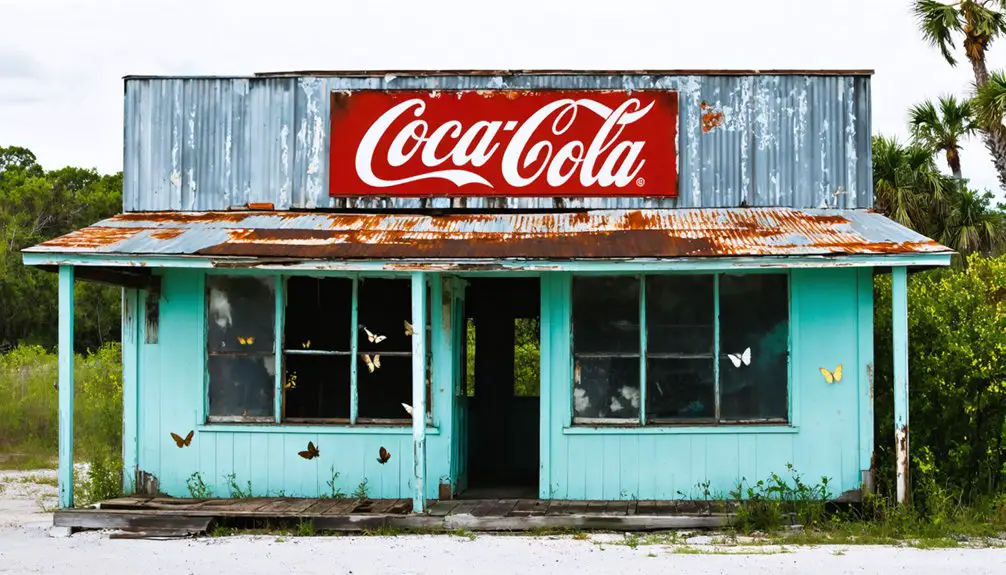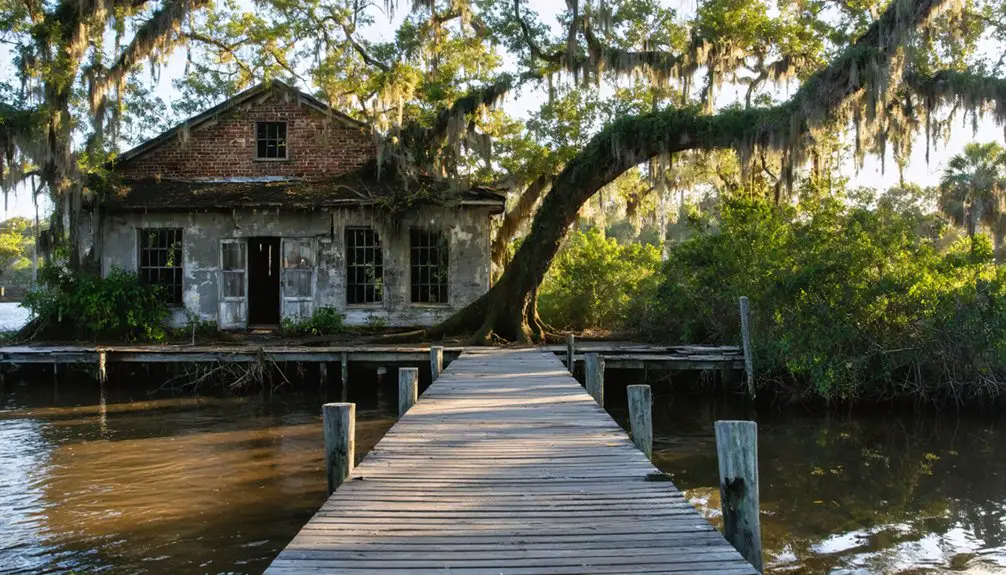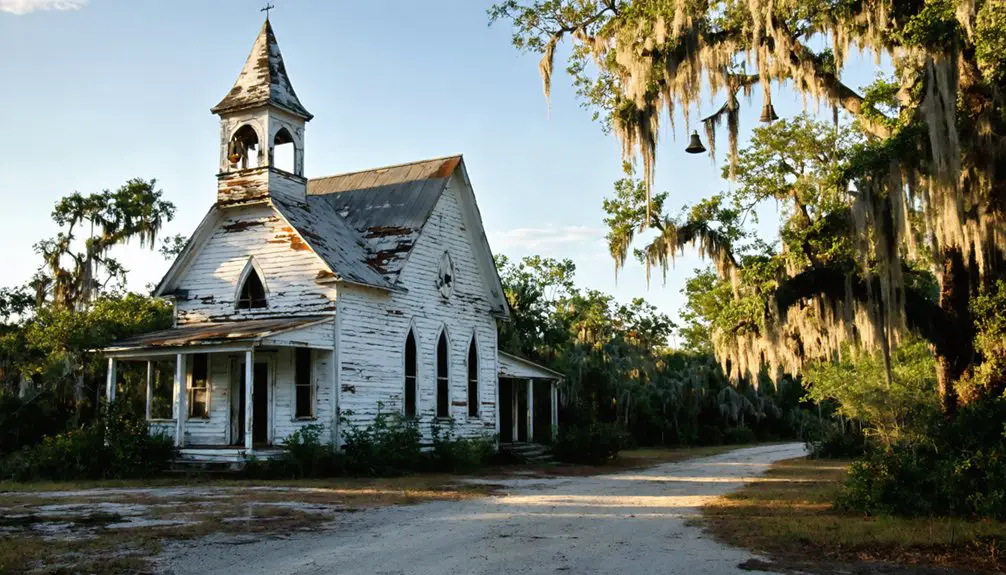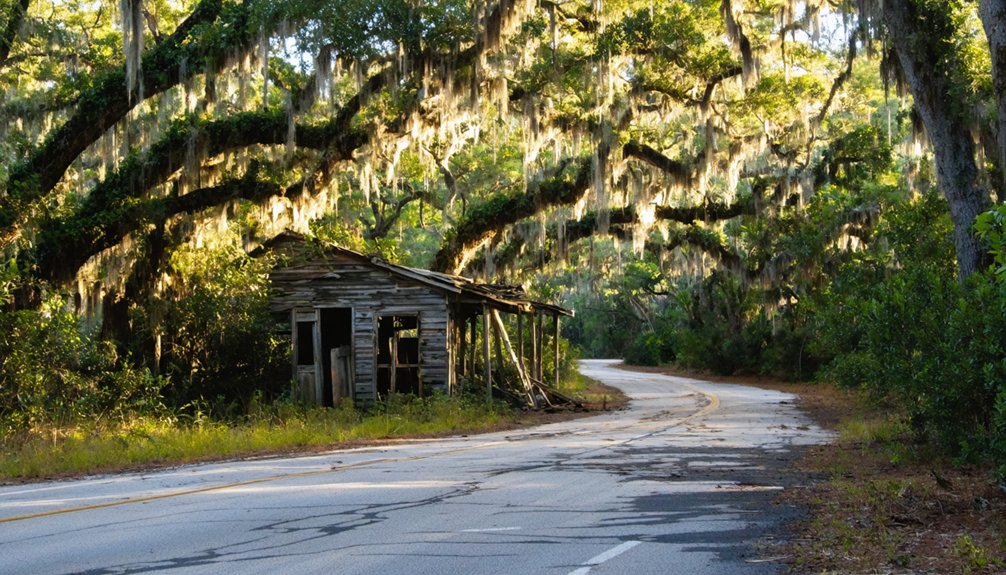
To plan your ghost town road trip to Verna, Florida, base yourself in Bradenton or Sarasota and head to the intersection of State Road 70, Verna Bethany Road, and Verna Road. Visit between October and April for the best conditions. Pack water, sturdy shoes, offline maps, and a camera — cell service gets spotty out there. There’s more to this forgotten railroad town’s story than a simple crossroads suggests, and it’s worth uncovering every layer.
Key Takeaways
- Verna, Florida, a railroad town incorporated in 1925, was abolished by 1929 and today only its rural crossroads intersection remains.
- Visit between October and April to avoid summer humidity, muddy roads, and limited visibility during the rainy season.
- Base yourself in Bradenton or Sarasota, building your itinerary around Verna’s intersection and the local Posey family legend.
- Pack offline maps, paper backups, a camera, notebook, water, and sturdy shoes, as cell service is limited in the area.
- Extend your trip by visiting nearby ghost towns to better understand Florida’s broader railroad boom-and-bust historical patterns.
What Was Verna, Florida: and Why Ghost Town Hunters Care?
Once a buzzing little railroad stop in the heart of Florida, Verna was a real town with a post office, hotel, restaurant, train depot, and grocery store — all anchored by the East and West Coast Railroad line running between Bradenton and Arcadia.
By 1925, it had incorporated as an official town. Two years later, the Florida State Legislature ordered it abolished, and by 1930, it was gone.
That’s exactly why ghost town hunters care. Verna represents local history that nearly vanished without a trace. There are no major preservation efforts protecting the site, no museums, no markers — just an intersection where three roads meet and a story worth chasing.
If you love exploring Florida’s forgotten places on your own terms, Verna belongs on your map.
How Did a Railroad Stop Become a Lost Florida Town?
Before Verna had a name, it had a train. The East and West Coast Railroad connected Bradenton to Arcadia, and this stop became the seed of a real community. Railroad influence shaped everything about early Verna’s local history.
Within a decade, travelers and settlers built something real here:
- A post office opened in 1916, giving the town an official identity
- By 1925, a hotel, garage, restaurant, and depot lined the stop
Families planted roots, children attended school, and neighbors knew each other.
Then the boom collapsed, and the Legislature abolished the town by 1929.
That’s the painful truth about railroad towns — they live and die by the line. When the rails lost relevance, Verna quietly disappeared from Florida’s map.
What’s Left to See at the Verna Town Site?
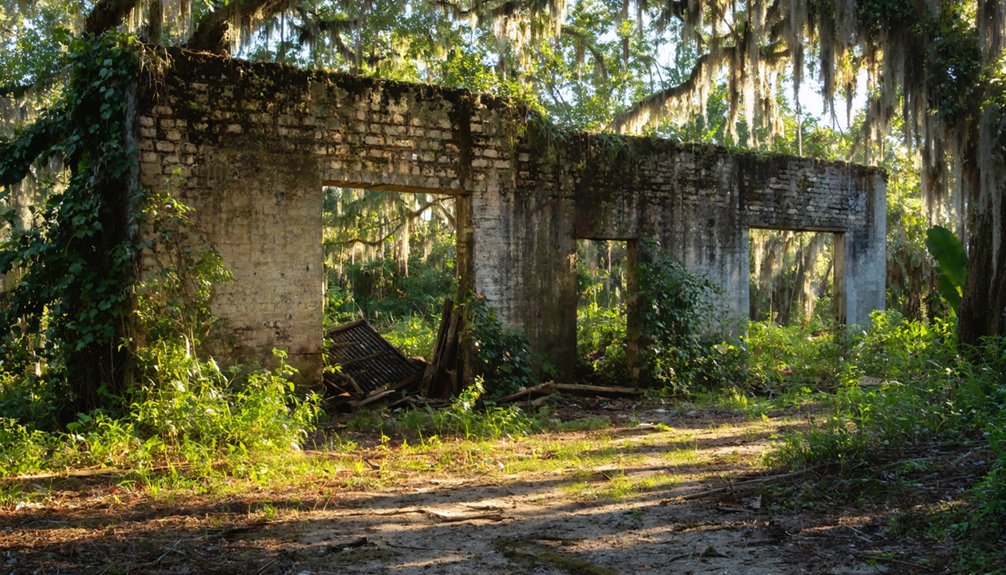
Though Verna’s buildings are long gone, you can still stand at the intersection of State Road 70, Verna Bethany Road, and Verna Road — the exact crossroads where a depot, hotel, and garage once served a living town. It’s one of Florida’s quiet historical landmarks, easy to miss if you don’t know what you’re looking for.
Today, agricultural fields and small neighborhoods have replaced the rail-era bustle. Local legends tie the town’s name to John Posey’s daughter, Verna, giving the spot a personal story beneath the silence. You won’t find markers or museums here, just open land and a road sign.
But that raw, undeveloped stillness is exactly what draws ghost-town explorers — you’re standing where a real community rose, thrived, and disappeared within fifteen years.
Where Exactly Is Verna, Florida Located Today?
Verna sits within both Manatee County and Sarasota County, Florida — a split that already hints at how easily this place slips through the cracks of official record-keeping. Today, you’ll find the former town site at the intersection of State Road 70, Verna Bethany Road, and Verna Road.
That crossroads is your anchor for historical preservation and chasing local legends. Stand there and consider what once surrounded you:
- A hotel where travelers rested after long rail journeys
- A train depot humming with connection and possibility
- A post office holding letters from families building new lives
- A school where children learned, then lost their community entirely
Now it’s agricultural land and quiet neighborhoods — freedom’s landscape, stripped of its original story.
When Is the Best Time to Road Trip Through Verna?
If you’re planning a road trip to Verna, you’ll want to aim for the cooler, drier months between October and April. During this time, Florida’s relentless summer heat and humidity ease up considerably.
The rainy season, which runs roughly from June through September, can turn rural roads into soggy challenges. This is especially true around the agricultural backroads near the old town site.
Spring and fall offer that sweet spot where the weather’s mild, the skies are clear, and the drive through Manatee and Sarasota counties feels almost like stepping back into a quieter Florida.
Best Seasonal Visit Times
Florida’s ghost towns don’t disappear on a schedule, but your road trip through Verna definitely should. Timing your visit makes a real difference when you’re chasing historical preservation and local legends across Florida’s backroads.
The best windows to explore Verna are:
- November through February – cooler temperatures make walking the old intersection comfortable and unhurried
- Early mornings – quiet light hits the rural landscape exactly how you’d imagine it looked a century ago
- Weekdays – fewer cars mean you can stop freely without feeling rushed
- Spring before April – wildflowers frame the agricultural land, adding unexpected beauty to forgotten ground
Avoid Florida’s brutal summer humidity if you can. You’ll want clear skies and open roads, not sweat-soaked windows blocking your view of what once was.
Weather And Road Conditions
Knowing when to show up matters just as much as knowing where to go, and Verna rewards visitors who pay attention to both. Florida’s wet season runs June through September, turning rural roads into muddy obstacles that’ll slow your exploration of the area’s remaining historical architecture and old intersection landmarks.
You’ll get the best road conditions between November and April, when dry weather keeps the back roads manageable. Morning fog occasionally rolls through during winter months, giving the landscape an eerie atmosphere that feels perfect for chasing local legends tied to Verna’s railroad past.
Avoid holiday weekends if you want the quiet, unhurried experience this kind of ghost-town road trip deserves. Pack water, check your tires, and keep a paper map handy since cell service gets spotty out here.
What Should You Bring When Visiting Verna and Similar Lost Towns?
When you’re heading out to trace the ghostly footprint of a place like Verna, you’ll want to pack smart and pack light. Bring a reliable GPS alongside a printed map, since rural Florida roads can get spotty on cell service.
Layer your clothing for shifting temperatures and unexpected afternoon rains. Don’t forget your camera, a notebook, and maybe a voice recorder, because documenting these forgotten places is half the point of the trip.
Tracking down a ghost town like Verna means you’re chasing a place that most modern maps don’t fully recognize, so it’s worth packing both digital and paper tools before you head out.
Historical landmarks and local legends don’t always show up on GPS, and that’s exactly where prepared travelers find what others miss.
Bring these essentials:
- A downloaded offline map — cell service disappears fast in rural Manatee and Sarasota counties
- A Florida road atlas — old highway names still matter out here
- A notepad — jot coordinates, impressions, and unexpected discoveries
- Screenshots of historical maps — they reveal where Verna’s depot and hotel once stood
The intersection of State Road 70, Verna Road, and Verna Bethany Road is your anchor point.
Start there.
Weather-Ready Clothing Essentials
Florida’s rural interior doesn’t forgive the unprepared, and Verna’s open agricultural landscape means you’re fully exposed to whatever the sky decides to throw at you. Summer afternoons bring sudden downpours, so pack a light rain jacket you can stuff into a daypack.
Breathable, moisture-wicking layers handle the humidity without weighing you down.
Wear sturdy closed-toe shoes because you’ll be walking uneven ground near historical landmarks where the old intersection once anchored an entire community.
A wide-brim hat and sunscreen are non-negotiable.
Local legends suggest Verna’s ghost-town energy is best felt at dusk, so bring a light layer for the cooler evening air.
Freedom means exploring on your terms, and smart packing keeps you moving without interruption.
Camera And Documentation Gear
Once you’ve got your clothing sorted, the next thing worth thinking about is how you’ll actually capture what you find. Verna’s story deserves documentation — it’s historical preservation in action, one photo at a time.
Pack smart so you don’t miss anything:
- A camera or charged phone to photograph the landmark intersection where the town once stood
- A notebook to jot down local legends you’ll hear from longtime residents
- A portable battery pack because you’re off the beaten path
- A voice recorder to capture your own observations while driving
You’re not just sightseeing — you’re piecing together a vanished world. Every image and note you take honors what Verna was before the legislature erased it from the map in 1929.
Which Other Florida Ghost Towns Are Worth Adding to Your Route?
Verna doesn’t have to be your only stop — Florida’s interior is dotted with ghost towns that tell similar stories of railroad dreams and boom-and-bust ambitions. Centralia is one worth researching for its historical significance and the urban legends that have quietly built up around it over the decades.
You’ll find that many of these lost places share Verna’s pattern: a railroad arrives, a town forms, the railroad fades, and the community dissolves. Pairing Verna with other vanished Florida settlements turns a single-day drive into a fuller picture of the state’s forgotten past.
You’re fundamentally tracing the same economic forces across different landscapes, connecting dots that most travelers never bother to find. That kind of freedom makes the road trip genuinely rewarding.
How Do You Turn Verna Into a Full Weekend Road Trip?
Stretching your ghost-town research into a full weekend gives you room to breathe and actually absorb what you’re seeing. Base yourself in Bradenton or Sarasota, then work your way toward Verna at your own pace.
Build your itinerary around these emotional anchors:
- Stand at Verna’s intersection and picture a bustling 1925 railroad town that’s now just farmland
- Chase local legends about the Posey family and the daughter who gave the town her name
- Support historical preservation by visiting nearby museums that document Florida’s boom-and-bust era
- End each evening with a rural Florida sunset that reminds you why open land still matters
You’re not rushing through history here. You’re letting it settle into you, mile by quiet mile.
Frequently Asked Questions
Was Verna Ever Featured in Any Florida Historical Preservation Efforts?
There’s no record of formal historical preservation or community efforts spotlighting Verna. You won’t find it on official registers, but its ghost-town legacy keeps its memory alive for freedom-seeking explorers like you.
Did John Posey’s Family Remain in the Verna Area After Dissolution?
The records don’t confirm if John Posey’s family stayed, but his family legacy shaped community changes forever. You’d feel that nostalgic connection standing at Verna’s intersection, knowing his daughter’s name still echoes through history.
Are There Any Surviving Photographs of Verna During Its Boom Years?
No confirmed surviving photographs are documented here, but you’ll want to explore historic photo collections and vintage postcard archives at Manatee County libraries — they’re your best shot at glimpsing Verna’s bustling 1920s boom years firsthand.
Is the Original Posey Farm Land Still Identifiable on Current Maps?
Virtually every inch of the original Posey farmstead remnants has been swallowed by time! You’ll spot land use changes on current maps, but pinpointing the exact boundaries today requires cross-referencing old county records with modern agricultural parcel data.
Did the East and West Coast Railroad Serve Other Ghost Towns Nearby?
Yes, the East and West Coast Railroad’s railroad expansion likely touched nearby settlements along its Bradenton-to-Arcadia route. You’d find other forgotten stops where communities once thrived, then faded — perfect waypoints for your freewheeling ghost-town adventure.
References
- https://www.youtube.com/watch?v=Lv9sIPn3NgU
- https://floridatrailblazer.com/tag/ghost-towns/
- https://en.wikipedia.org/wiki/Verna
- https://en.wikipedia.org/wiki/List_of_ghost_towns_in_Florida
- https://no.abcdef.wiki/wiki/Verna
- https://pl.abcdef.wiki/wiki/Verna
- https://pt.abcdef.wiki/wiki/Verna