Planning a ghost town road trip to Ferguson, Nevada means heading roughly 30 miles southwest of Caliente into Lincoln County’s desert backcountry. Stock up on fuel and supplies in Caliente before hitting unpaved roads that demand a high-clearance vehicle. You’ll find stone ruins, mill foundations, and cemeteries scattered across an open, unfenced site. This boomtown’s gold rush rise and its grim nickname, the Widowmaker, tell a story that gets more haunting the deeper you explore.
Key Takeaways
- Ferguson (later Delamar) sits 30 miles southwest of Caliente, Lincoln County; stock up on fuel and supplies in Caliente before departing.
- High-clearance vehicles are required; check road conditions beforehand, as desert tracks become impassable quickly after weather changes.
- Explore stone ruins, mill foundations, tailings piles, and cemeteries at your own pace—no guided tours, fences, or entry rules exist.
- Combine Ferguson with nearby ghost towns Pioche, Bullionville, and Pahranagat Valley settlements for a layered Nevada mining history road trip.
- Known as “The Widowmaker,” Ferguson’s deadly silica dust killed hundreds of miners, making its cemeteries a sobering historical highlight.
Delamar, Nevada: The Ghost Town They Called the Widowmaker
Tucked into the remote Delamar Valley of Lincoln County, Nevada, Delamar is one of the state’s most haunting ghost towns — and it earned that reputation the hard way. Born from Wild West mining legends, the camp started as Ferguson after John Ferguson and Joseph Sharp discovered gold in Monkeywrench Wash in 1889.
Captain Joseph Rafael De Lamar bought the mines in 1894, renamed the town, and built it into Nevada’s leading gold producer. But the prosperity came at a brutal cost. Dry milling kicked up a fine silica dust that destroyed miners’ lungs, earning Delamar the grim nickname “The Widowmaker.” More than 400 widows reportedly lived here at once.
When you walk these ruins today, you’re stepping through one of Nevada’s most tragic chapters.
How a Gold Strike in 1889 Built a Boomtown From Nothing
When you trace Delamar’s origins, you land on an 1889 gold strike in Monkeywrench Wash, where prospectors John Ferguson and Joseph Sharp first pulled wealth from an isolated, treeless stretch of Lincoln County. The early camp that sprang up around the Monkeywrench Mine took Ferguson’s name before Captain Joseph Rafael De Lamar bought the most valuable claims in April 1894 and rebranded everything under his own.
From that point, growth hit fast — a mill, a newspaper, a post office, and eventually 3,000 residents transformed what had been empty desert into one of Nevada’s most productive boomtowns within just a few years.
Gold Discovery Origins
Before Ferguson became a boomtown, it was nothing but a stretch of isolated, treeless desert in Nevada’s Delamar Valley. Then in 1889, two prospectors changed everything. Here’s what sparked it all:
- John Ferguson and Joseph Sharp discovered gold in Monkeywrench Wash, triggering an immediate rush to the region.
- Early mining technology was crude but effective enough to confirm rich ore values ranging from $75 to $1,000 per ton.
- A mining camp formed west of the Monkeywrench Mine, initially carrying Ferguson’s name.
- Town architecture emerged fast, as miners and merchants built the foundation of what would become a thriving settlement.
You’re looking at a place that went from absolute wilderness to a recognized mining district practically overnight.
Boomtown Rapid Growth
Once Ferguson’s gold potential was confirmed, growth hit fast and hard.
Captain Joseph Rafael De Lamar bought the most valuable mines in April 1894, renamed the camp Delamar, and immediately modernized operations.
His investment in mining technology transformed the settlement’s output, with a 50-ton mill firing up by May 1895 and eventually processing 260 tons of ore daily by 1896.
Town architecture followed the money.
You’d have walked past a hospital, opera house, churches, a school, and no shortage of saloons.
A newspaper launched, a post office opened, and by 1897, over 3,000 people called Delamar home.
From nothing but desert and a promising ore strike, a fully functioning town emerged in just a few years — raw, fast-built, and thriving.
Why Did So Many Miners Die at Delamar?
When you walk through Delamar’s ruins, you’re standing in a place once called “The Widowmaker” for a grim reason: dry milling ground ore into an ultra-fine silica dust that miners inhaled with every breath.
That dust caused silicosis, a brutal lung disease that scarred and hardened lung tissue until breathing became impossible.
Exposure was so severe that miners reportedly survived only short periods after working the mills, leaving behind more than 400 widows at the town’s peak.
Deadly Silica Dust
Although Delamar’s gold rush brought prosperity, it carried a brutal hidden cost — the town’s dry milling process ground ore into an ultra-fine silica dust that miners couldn’t avoid breathing. With zero mining safety standards and no dust prevention measures in place, workers inhaled “Delamar Dust” daily, developing silicosis that slowly hardened their lungs.
The consequences were devastating:
- 400+ widows reportedly lived in Delamar simultaneously
- Silicosis scarred miners’ lungs beyond recovery
- No protective equipment existed to filter the lethal particles
- Entire families lost breadwinners prematurely, reshaping the community
The town earned its grim nickname, “The Widowmaker,” honestly. When you walk these ruins today, you’re standing where freedom came at an unimaginably high price.
The Widowmaker Nickname
How does a boomtown earning millions in gold become forever remembered as “The Widowmaker”? The answer lies in the deadly cost of Delamar’s dry milling process, which ground ore into fine silica dust that workers breathed daily.
Without modern mining safety standards, men had no protection against the particles destroying their lungs. Silicosis killed fast and without mercy.
Over 400 widows reportedly lived in Delamar simultaneously — a staggering figure for any community. The nickname wasn’t dramatic exaggeration; it was earned death by death.
When you visit today, ghost town preservation efforts keep this painful legacy visible through the cemeteries still standing on site. Walking among those graves, you’ll understand that Delamar’s gold came with a human price no paycheck could justify.
Miners’ Short Life Expectancy
Delamar’s miners didn’t just face dangerous work — they faced a death sentence measured in years, not decades. The health hazards here weren’t hypothetical — they were guaranteed. Dry milling released fine silica dust that destroyed lungs silently and swiftly. Mining hazards at Delamar weren’t just cave-ins or explosions; the air itself was lethal.
Here’s what made survival so unlikely:
- Silica dust accumulated deep in lung tissue with every breath
- Silicosis hardened and scarred lungs beyond recovery
- No protective equipment existed to filter the toxic air
- Exposure began immediately upon arrival — there was no safe period
You’re walking ground where men traded their freedom, health, and futures for wages. That grim reality still echoes through Delamar’s ruins today.
What’s Still Standing at the Delamar Ghost Town Site?
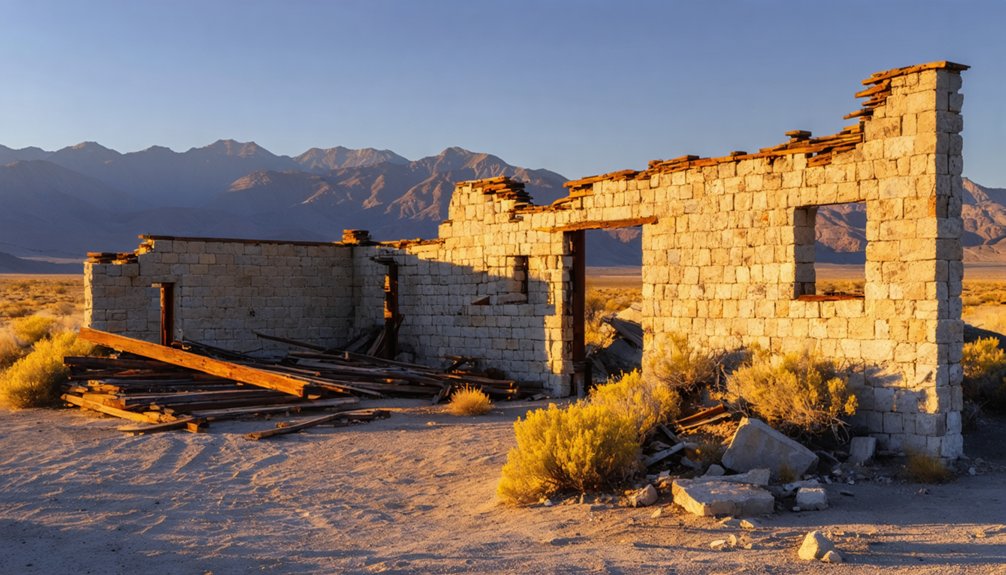
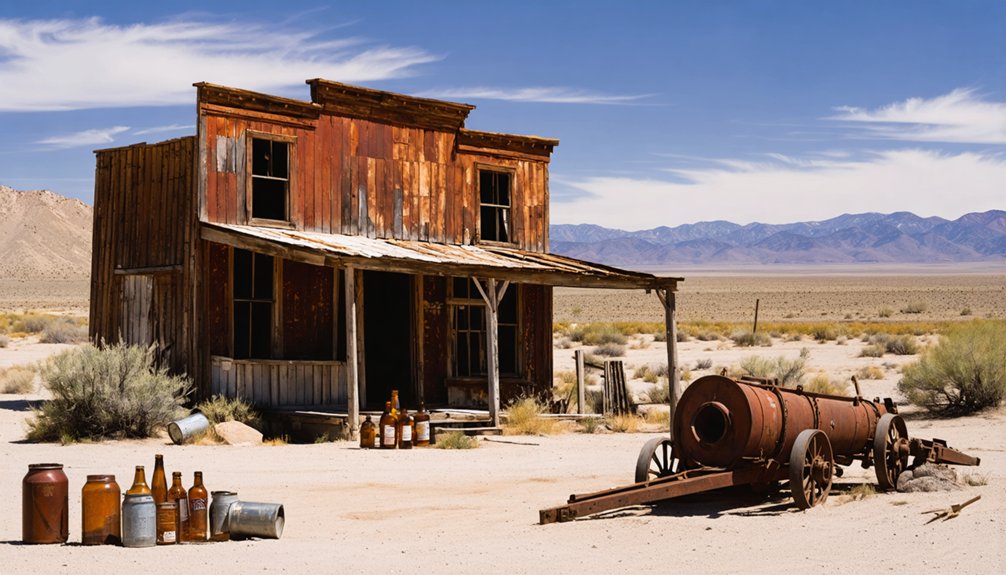
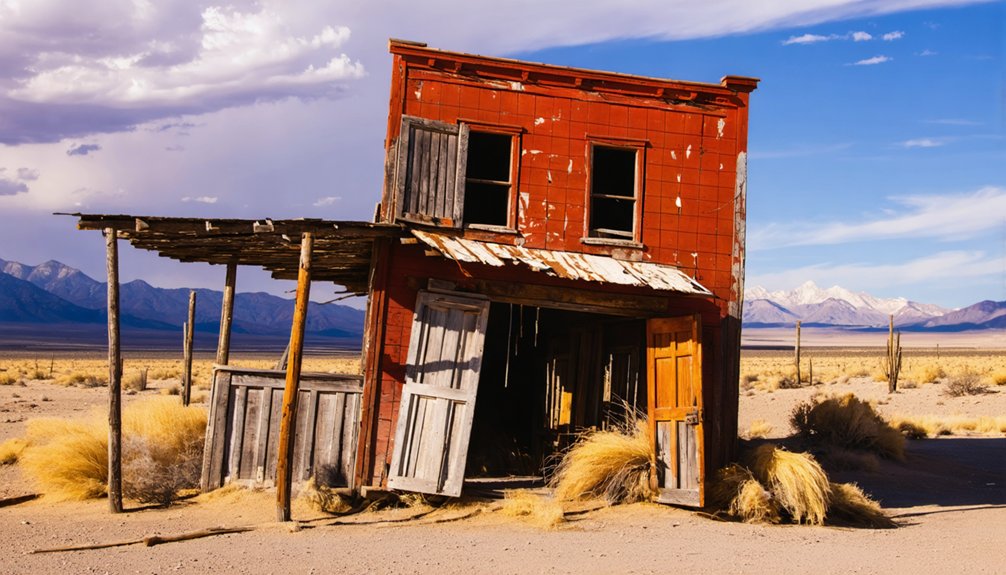
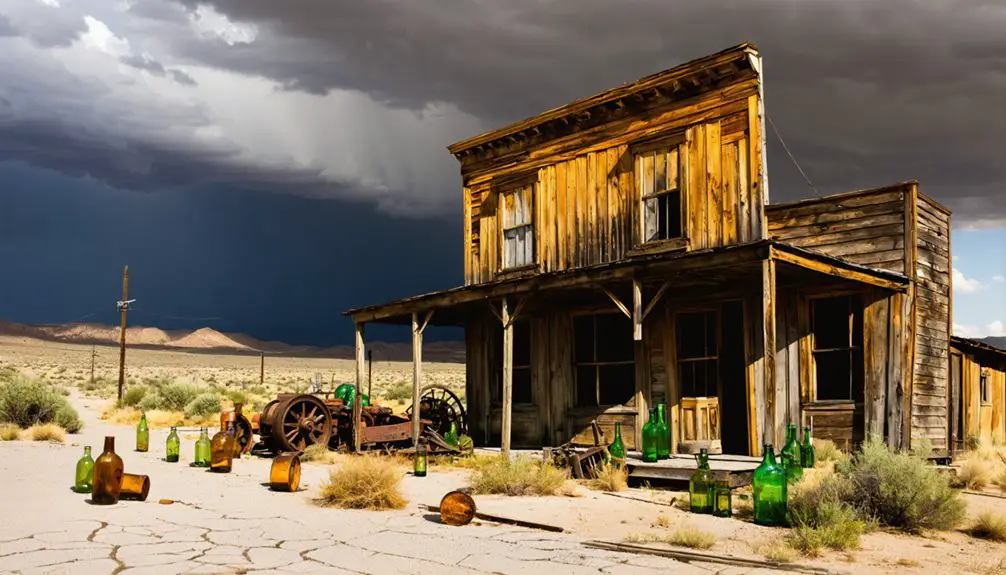
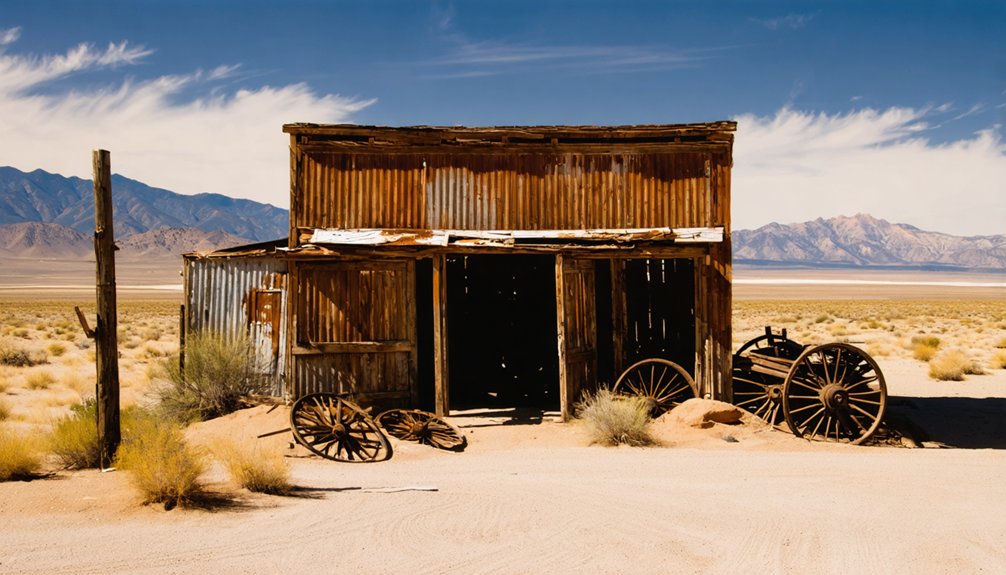
When you arrive at the Delamar ghost town site, you’ll find a surprisingly intact collection of stone buildings, mill foundations, tailings piles, and two historic cemeteries.
Historical preservation here isn’t formal or fenced off — it’s raw and open, letting you explore freely on your own terms.
No ropes, no rangers, no rules — just open ruins waiting for you to make sense of them yourself.
You can walk directly among the ruins, studying mining equipment artifacts and structural remnants that tell the story of a town that once produced half of Nevada’s mineral output.
The mill foundations reveal the scale of the operation, while the tailings piles still carry traces of the deadly silica dust that earned Delamar its grim nickname.
The cemeteries ground everything emotionally, reminding you that real people lived, worked, and died here chasing gold in this remote Nevada valley.
How To Get to Delamar, Nevada
Reaching Delamar takes some effort, but that’s part of the appeal. You’re not just driving to ruins — you’re tracing local legends and cultural traditions tied to one of Nevada’s most haunting mining stories. Plan your route through Lincoln County, roughly 30 miles southwest of Caliente.
- Start in Caliente, your nearest reliable fuel and supply stop before heading into open desert.
- Take the unpaved road southwest toward Delamar Valley — a high-clearance vehicle handles it best.
- Check road conditions beforehand, since weather can make desert tracks impassable fast.
- Arrive with time to explore both cemeteries, mill foundations, and stone ruins before daylight fades.
No guided tours exist here. You move at your own pace, on your own terms — exactly how it should be.
Other Lincoln County Ghost Towns Worth Adding to Your Route
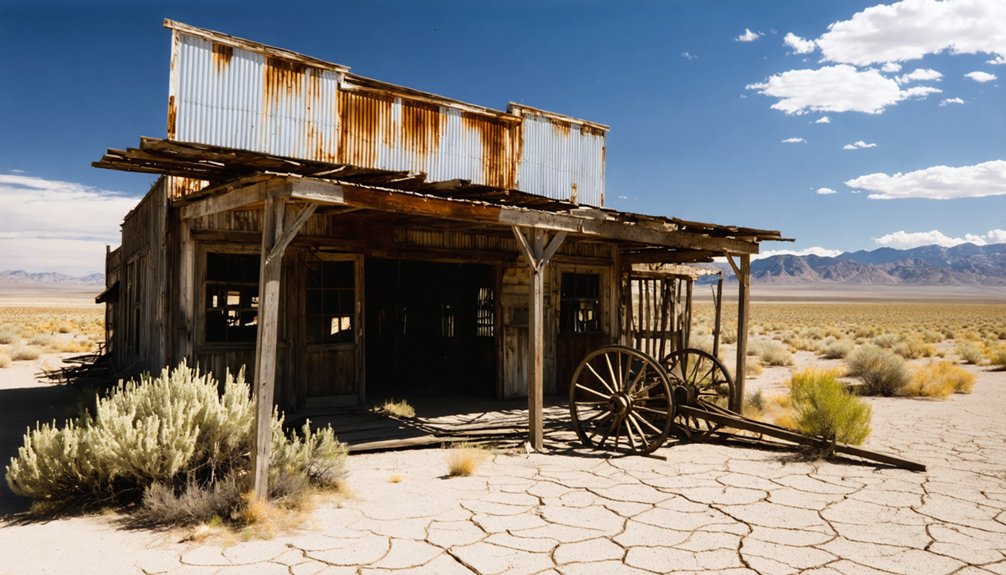
Lincoln County rewards the curious traveler with more than just Delamar — scatter your route across the region and you’ll find a string of ghost towns that each carry their own collapsed dreams and dusty footnotes.
Pioche, once a violent silver camp, still stands with remarkable ghost town preservation, including a functioning courthouse and crumbling Victorian storefronts.
Pahranagat Valley settlements tell quieter stories of ranching and failed ambition.
Bullionville, which once supported Pioche‘s ore processing, offers visible remnants of early mining technology that helped shape Nevada’s silver economy.
Each stop deepens your understanding of how boom-and-bust cycles shaped the landscape.
Connecting these sites into one deliberate loop turns a simple drive into a richly layered journey through Lincoln County‘s restless, unfinished past.
Frequently Asked Questions
Was the Town Ever Called Ferguson Before It Became Delamar?
Yes, before it became Delamar, you’d have stumbled upon “Ferguson” — a gloriously nameless ghost town history waiting to happen. These Nevada settlements loved a good rename, especially once Captain De Lamar’s gold money talked in 1894.
Who Originally Discovered Gold at the Site Before Captain De Lamar Arrived?
You’ll find that John Ferguson and Joseph Sharp, the early explorers behind the gold prospecting efforts, originally discovered gold at the site in 1889, long before Captain De Lamar ever arrived to claim it.
Did Delamar Ever Attempt a Full Mining Revival After Its Initial Decline?
After a 29-year pause, Delamar did attempt a revival in 1929! You’ll find ghost town architecture and mining equipment preservation echoing that brief comeback, but by 1934, the silence returned permanently, reclaiming everything.
How Much Total Gold Was Extracted From Delamar During Its Operating Years?
You’ll find that Delamar produced over $15 million in gold from 1892 to 1909. Mining technology advancements drove that impressive output, and today’s ghost town architecture silently honors the workers who extracted that remarkable wealth.
What Newspaper Served the Delamar Community During Its Boomtown Peak Years?
The Delamar Lode served the community starting in 1894. Imagine reading its headlines amid ghost town architecture of historical significance — you’d feel the boomtown’s pulse, connecting you to Nevada’s boldest, freest mining era firsthand.
References
- https://www.legendsofamerica.com/nv-delamar/
- https://nvtami.com/2024/01/17/lincoln-county-ghost-towns/
- https://www.ghosttowns.com/states/nv/ferguson.htm
- https://www.youtube.com/watch?v=hcQ0XJiCiEI
- https://www.youtube.com/watch?v=eS-ViGu3qII
- https://westernmininghistory.com/towns/nevada/delamar/
- https://en.wikipedia.org/wiki/List_of_ghost_towns_in_Nevada
- https://www.destination4x4.com/delamar-nevada-ghost-town/