To plan your ghost town road trip to Johnson, Utah, head east from Kanab on Highway 89 for 11 miles, then take Johnson Canyon Road. You’ll explore genuine pioneer history, a weathered graveyard, and Hollywood film-set ruins from over 50 productions, including *Gunsmoke*. Visit in spring or fall for the best conditions, and check road access before you go. There’s far more to this canyon than meets the eye.
Key Takeaways
- Johnson, Utah, sits 11 miles east of Kanab on Highway 89, then 18 miles along Johnson Canyon Road, transitioning from pavement to dirt.
- Visit in spring (April–May) or fall (September–October) for mild weather, clear skies, and ideal photography conditions along the canyon.
- Check road and weather conditions beforehand, as wet dirt roads become impassable and private land boundaries may restrict access unexpectedly.
- The site features a pioneer graveyard, weathered film-set structures, and remnants from over 50 Hollywood productions, including *Gunsmoke*.
- Nearby ghost towns like Grafton, Paria, and Hebron can be combined into a comprehensive southern Utah historical road trip.
What Is Johnson, Utah and Why Does It Draw Ghost Town Visitors?
Although it looks like a forgotten corner of Kane County, Johnson, Utah pulls in ghost town enthusiasts for reasons that go well beyond crumbling walls and dusty roads. You’re stepping into a place where real pioneer history and Hollywood’s Wild West collide.
Founded by Joel Hills Johnson, the site carries genuine roots, and you can still find a graveyard holding roughly 20 to 25 headstones among its historical artifacts.
What really sets Johnson apart is its movie history. Gunsmoke filmed here, along with more than 50 other productions, earning nearby Kanab the nickname “Little Hollywood.”
The weathered film-set structures still standing give you a vivid sense of that era. It’s a raw, atmospheric stop that rewards curious travelers who crave something wilder than a standard roadside attraction.
How to Get to Johnson Canyon From Kanab
Getting to Johnson Canyon is straightforward once you’re behind the wheel in Kanab. Head east on U.S. Highway 89 for about 11 miles, then turn onto Johnson Canyon Road. You’ll enjoy 18 miles of pavement before the surface shifts to dirt, so plan accordingly.
From Kanab, head east on Highway 89 for 11 miles, turn onto Johnson Canyon Road, and enjoy 18 paved miles ahead.
Keep these essentials in mind:
- Stick to dry conditions — unpaved sections become treacherous when wet
- Drive 2WD-friendly — the paved stretch handles standard vehicles comfortably
- Go prepared — cell service is limited once you’re deep into canyon country
The road rewards you with red and vermilion cliffs framing historical architecture tied to local legends and western film culture.
It’s less a quick detour and more a full sensory experience — canyon walls, open sky, and real frontier atmosphere surrounding you.
How Gunsmoke and 50 Films Turned Johnson Into a Wild West Icon
When you pull into Johnson Canyon, you’re stepping onto ground that’s hosted more than 50 films and served as a longtime backdrop for *Gunsmoke*, one of television’s most iconic westerns.
Southern Utah’s dramatic red cliffs and wide-open terrain made Johnson Canyon a natural stand-in for the rugged frontier, drawing Hollywood productions to the region for decades.
That film legacy earned nearby Kanab the nickname “Little Hollywood,” and Johnson Canyon remains the canyon at the heart of it all.
Gunsmoke’s Southern Utah Home
Few ghost towns can claim a Hollywood résumé, but Johnson, Utah pulls it off effortlessly. Kanab earned the nickname “Little Hollywood,” and Johnson Canyon became its backlot. Gunsmoke filmed here for years, and over 50 productions followed, leaving behind weathered film-set structures packed with historical artifacts and local legends.
Here’s why Johnson’s cinematic past still resonates:
- Authentic atmosphere – The canyon’s red cliffs provided a natural, untouched western backdrop no studio could replicate.
- Layered history – Film-set ruins sit alongside original settlement remnants, blending real pioneer history with Hollywood myth.
- Cultural significance – Johnson helped define America’s visual image of the Wild West for generations of viewers.
You’re not just visiting a ghost town — you’re walking through a living film set.
50 Films, One Canyon
Johnson Canyon didn’t stumble into Hollywood history — it earned it. More than 50 films used this canyon as a backdrop, drawn by its raw vermilion cliffs and wide-open desert light. Gunsmoke may be the most famous production tied to these filming locations, but it’s far from the only one. Directors kept returning because the landscape delivered an authentic Wild West atmosphere that studio sets simply couldn’t replicate.
What you’re seeing today sits at the crossroads of historical preservation and pop culture legacy. The weathered structures aren’t just ruins — they’re remnants of a working creative industry that put southern Utah on the map.
When you drive through Johnson Canyon, you’re rolling through a genuine outdoor stage that shaped how generations imagined the American frontier.
Little Hollywood’s Wild Legacy
How does a remote Utah canyon become synonymous with the American West? Simple — Hollywood picks it. Kanab earned the nickname “Little Hollywood” because filmmakers kept returning to its dramatic red cliffs and open skies.
Johnson specifically drew productions including:
- Gunsmoke — the iconic television series filmed multiple episodes here
- 50+ feature films — westerns that defined America’s frontier imagination
- Enduring set structures — weathered remnants that blur historical preservation with cinematic myth
You’re not visiting a carefully maintained museum. Visitor facilities are minimal, access can be restricted, and the private land adds an edge of uncertainty.
That rawness is actually the point. Johnson doesn’t sanitize its wild legacy — it wears it openly, letting the canyon itself serve as the final, unkillable backdrop.
Road and Season Conditions: When to Go and What to Expect
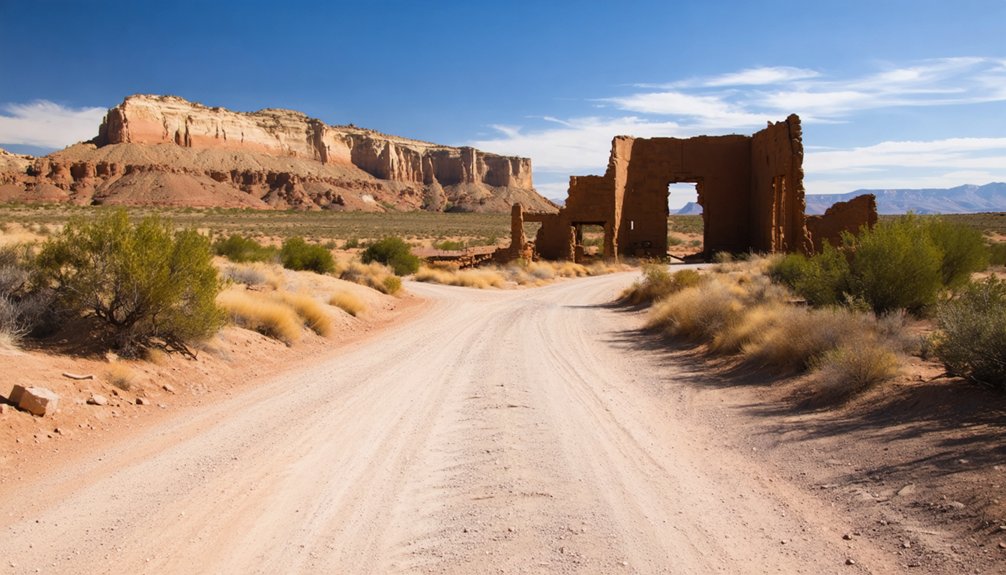
You’ll get the most out of Johnson Canyon Road when you visit in spring or fall, since summer heat can be punishing and winter snow can close off the unpaved sections entirely.
The main corridor offers 18 miles of paved road, but once the surface turns to dirt, wet conditions make the route genuinely risky — so check forecasts before you head out.
A dry-weather window isn’t just a suggestion here; it’s what stands between a scenic canyon drive and a muddy dead end.
Best Seasons To Visit
Timing your visit to Johnson, Utah can make the difference between a smooth canyon drive and a muddy, axle-deep headache. The unpaved sections turn treacherous when wet, cutting off tourist access entirely. Choose your window wisely:
- Spring (April–May): Mild temperatures and clear skies make canyon scenery pop, though late rain can soften dirt roads quickly.
- Fall (September–October): Ideal conditions for historical preservation photography — dry roads, cooler air, and golden light across the vermilion cliffs.
- Summer (June–August): Passable but brutal heat; start early and carry extra water.
Winter brings snow that renders backroads impassable.
Whatever season you choose, check local conditions before heading out — access on private land shifts, and nobody wants a wasted drive.
Road Surface Conditions
Knowing when to go only gets you halfway there — understanding what the road itself demands gets you the rest of the way.
Johnson Canyon Road offers about 18 miles of pavement before the surface shifts to dirt. When dry, that unpaved stretch is manageable for 2WD vehicles, giving you real freedom to explore canyon scenery, red cliffs, and sites tied to local folklore surrounding the area’s Wild West film legacy.
But wet conditions change everything — avoid the dirt sections after rain or snow, or you’ll trade adventure for a stuck vehicle.
Preservation efforts in the area depend partly on respectful, low-impact visits, so arriving prepared matters. Check road conditions locally before you leave, because access on private property can shift without notice.
Film-Set Ruins, a Graveyard, and What’s Actually Accessible on Site
What you’ll actually find at Johnson, Utah depends heavily on who owns the land when you visit. The site is privately held and sometimes fenced, so public access can shift without notice. That said, the area’s appeal centers on three distinct draws:
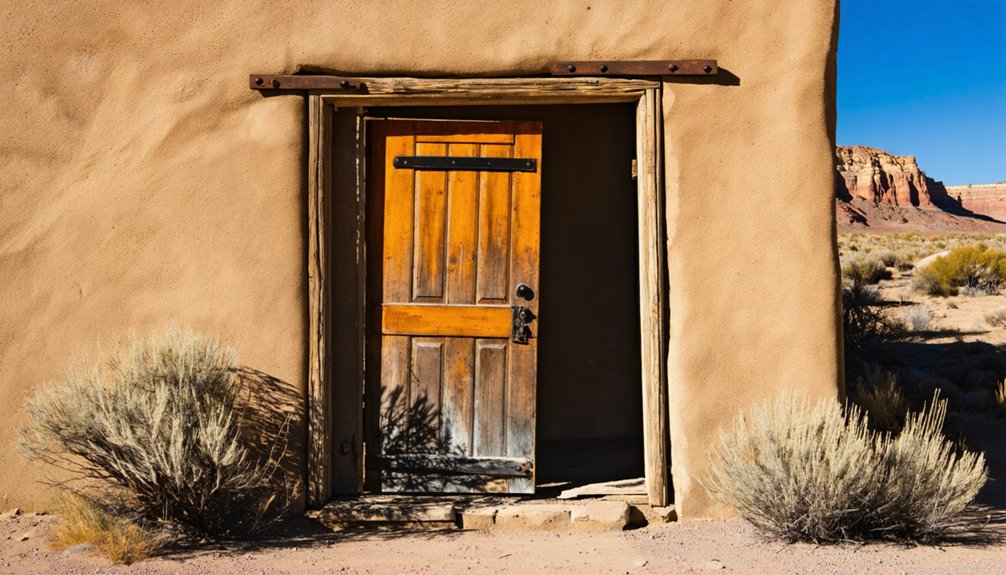
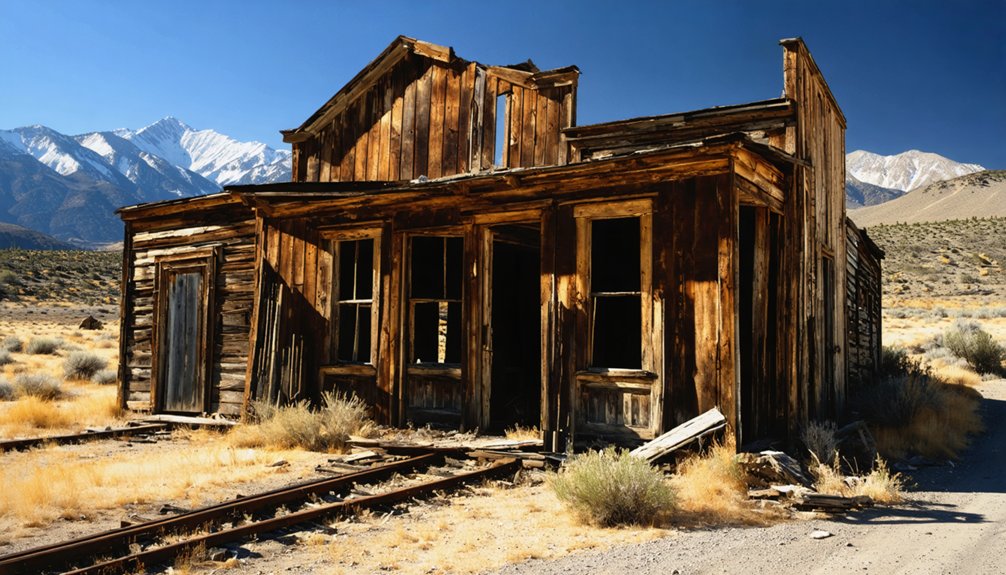
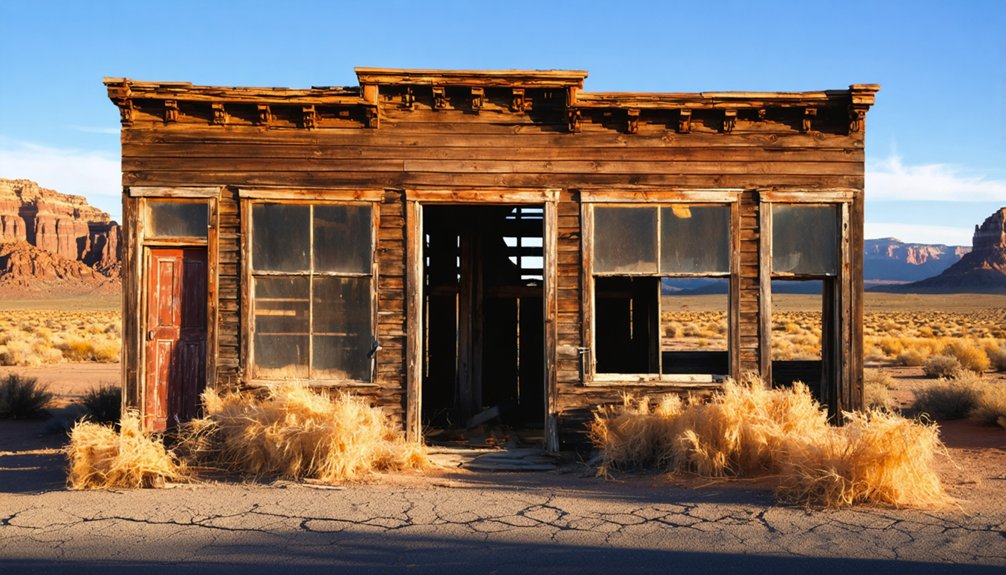
- Weathered film-set structures — remnants from *Gunsmoke* and 50+ productions that defined southern Utah’s filming locations
- A pioneer graveyard — roughly 20–25 headstones representing historical artifacts from the town’s earliest settlers
- Canyon atmosphere — the raw, cinematic landscape that made Johnson irresistible to Hollywood directors
Before you arrive, contact local sources in Kanab to confirm current access. The last thing you want is to drive out only to find a locked gate blocking your exploration.
What Else to See Along Johnson Canyon Road?
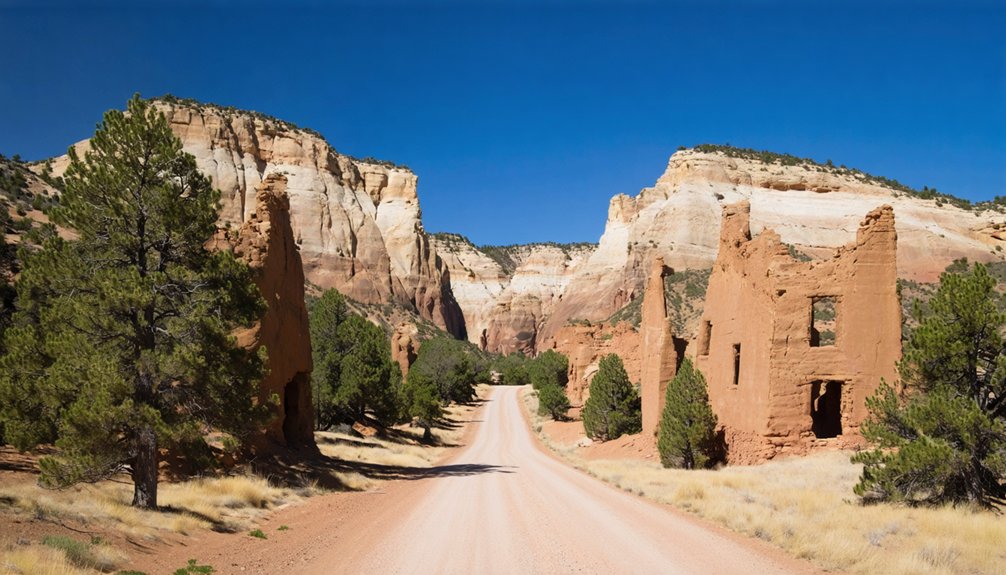
Even if Johnson’s ghost town turns out to be partially fenced off, Johnson Canyon Road more than justifies the drive. You’ll pass beneath striking red and vermilion cliffs that shift color as the light changes throughout the day, making golden hour your best window for photography tips worth following: shoot early, shoot late, and always pull over safely before raising your camera.
The road eventually opens toward Grand Staircase-Escalante National Monument, where the landscape grows wilder and more dramatic. Keep your eyes open for local wildlife, including mule deer and raptors that frequent the canyon corridor.
If conditions are dry, extending your route onto Glendale Bench Road rewards you with sweeping overlooks and the kind of unfiltered solitude that makes southern Utah road trips genuinely unforgettable.
Other Ghost Towns Worth Adding Near Johnson Canyon
Southern Utah rewards ghost town hunters who look beyond any single stop, and Johnson Canyon sits within striking distance of several other abandoned settlements worth folding into your itinerary. Each site carries its own historical landmarks and cultural significance, deepening your understanding of pioneer and mining life across the region.
Consider adding these stops:
- Grafton, Utah – A well-preserved ghost town near Zion National Park with standing adobe structures and a pioneer cemetery.
- Paria, Utah – A remote settlement with scattered ruins and striking canyon scenery along the Paria River corridor.
- Hebron, Utah – A quiet, lesser-known pioneer townsite in Washington County that rewards curious explorers willing to venture off familiar routes.
Combining these stops transforms a single visit into a full regional road trip.
Frequently Asked Questions
Is There an Entry Fee or Guided Tour Required to Visit Johnson?
With 50+ films shot here, you’ll find access is limited — it’s privately owned, so tours may be required. For historical preservation and photography tips, check local permissions before you visit to capture its Wild West charm freely.
Are Pets Allowed When Visiting the Johnson Ghost Town Site?
No clear pet policies exist for Johnson’s private site, so you’ll want to call ahead. Prioritize pet safety by following leash requirements, keeping your furry companion close while exploring the rugged, untamed Wild West terrain.
Can You Camp Overnight Near Johnson Canyon Road Legally?
You’ll find legal camping options near Johnson Canyon Road on Grand Staircase-Escalante’s public lands, where camping regulations permit dispersed stays. You’re likely to enjoy wildlife encounters, but always verify current rules before setting up camp.
Who Currently Owns the Johnson Ghost Town Private Property?
The current owner of Johnson’s private property isn’t publicly confirmed, but you’ll find the site’s historical significance shapes ongoing preservation efforts. Contact local Kanab authorities before visiting, as access rules can change unexpectedly.
Is Cell Phone Service Available Along Johnson Canyon Road?
Like a fading radio station, cell coverage drops fast on Johnson Canyon Road. You’ll likely lose signal strength once you head deep into the canyon, so download your maps offline before you leave Kanab.
References
- https://www.youtube.com/watch?v=hvwZEnASXhA
- https://roadslesstraveled.us/johnson-canyon-movie-set-ghost-town-happy-halloween/
- https://www.visitutah.com/things-to-do/history-culture/ghost-towns
- https://www.onlyinyourstate.com/trip-ideas/utah/road-trip-ut-ghost-towns
- https://www.ghosttowns.com/states/ut/johnson.html
- https://www.youtube.com/watch?v=RCtOn9GIIxE
- https://www.youtube.com/watch?v=fuMDtg5mVmc
- https://en.wikipedia.org/wiki/Johnson
- https://www.utah24.com/scenic-byways/johnson-canyon-road/