Planning a ghost town road trip to Freeman Township, Maine starts with downloading offline maps—there are no roadside signs and cell service is unreliable. Tucked between Kingfield and Strong in Franklin County, this forgotten settlement hides crumbling foundations, weathered gravestones, and the decaying Freeman Trading Post along quiet country roads. Visit late spring through early fall for the best road conditions. Everything you need to make the most of your trip is just ahead.
Key Takeaways
- Freeman Township sits between Kingfield and Strong in Franklin County, Maine, with no roadside signs marking its presence.
- Visit late spring through early fall for optimal road conditions, with summer offering long daylight and fall providing scenic foliage.
- Pack navigation tools, camera, water, and snacks, as no stores or restaurants exist nearby and cell service is unreliable.
- Explore foundations, a weathered cemetery, and the partially standing Freeman Trading Post while leaving all artifacts undisturbed.
- Combine the trip with nearby Flagstaff ghost town for a richer understanding of the region’s lost communities.
What Is Freeman Township, Maine’s Most Overlooked Ghost Town?
Freeman Township, tucked between Kingfield and Strong in Franklin County, Maine, is one of the state’s most quietly forgotten ghost towns — a place that once housed nearly 1,000 residents, bustling sheep farms, train stations, and churches. Yet today leaves little more than foundations and a creepy-feeling cemetery to mark its existence.
Once nearly 1,000 strong, Freeman Township now offers only crumbling foundations and an eerie cemetery as proof it ever existed.
You won’t find polished visitor centers or guided tours here. What you’ll find instead is raw, unfiltered history on your own terms.
Historical myths surround Freeman’s exact incorporation and disincorporation dates, with sources disagreeing by years on both ends.
Preservation challenges remain real — the site offers no formal protections, meaning artifacts disappear and remnants erode quietly.
If you value authentic exploration over curated experiences, Freeman rewards the curious traveler willing to seek it out.
The Rise and Fall of Freeman Township
What built Freeman Township into a thriving rural community fundamentally makes its eventual collapse all the more striking. By the 1840s, Freeman had nearly 1,000 residents farming thousands of acres, raising sheep, logging timber, and supporting schools, churches, hotels, and stores.
Its historical significance stretched back to 1797, when Massachusetts issued the land as relief for survivors of the 1775 burning of Falmouth.
Then the Civil War, the Industrial Age, and rural depopulation slowly drained the township. By 1900, only 397 residents remained. By 1930, that number had dropped to 219.
Freeman eventually lost its municipal status entirely, leaving behind foundations, a cemetery, and scattered ruins. Preservation challenges mean little else survived. You’re fundamentally walking through memory when you visit.
What’s Left to See at Freeman Township Today?
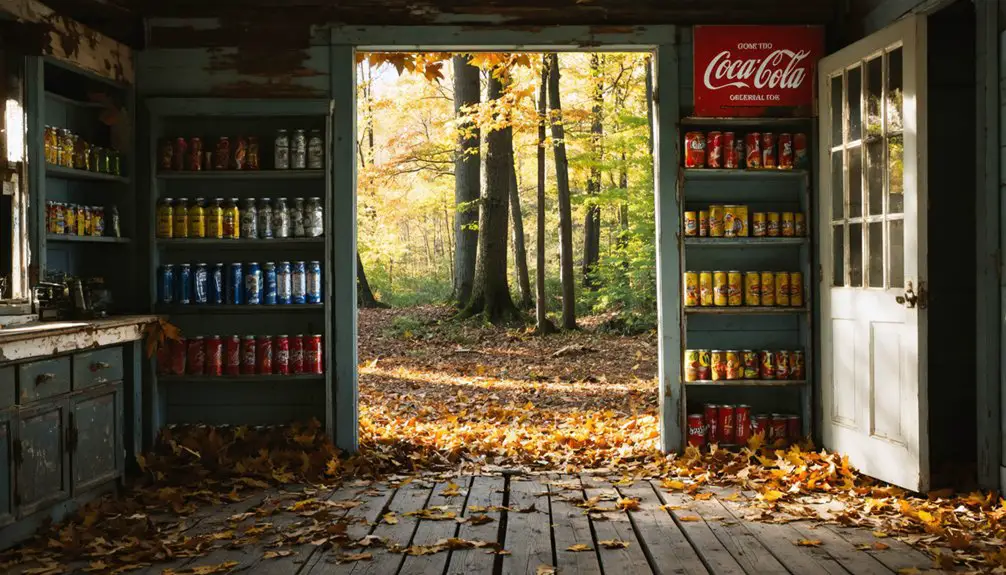
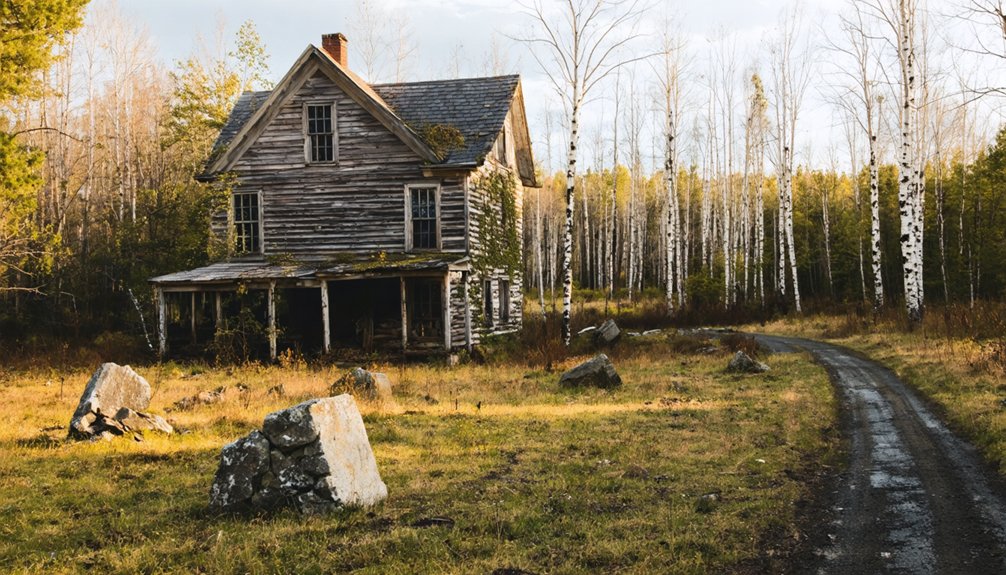
When you arrive at Freeman Township today, you’ll find a creepy-feeling cemetery, scattered foundations, and structural remnants as the town’s most visible reminders. A few abandoned buildings and the historic Freeman Trading Post still exist in the area, giving you tangible connections to the township’s past.
Since there’s no formal visitor infrastructure, you’ll explore entirely on your own terms, so bring a camera and treat the landscape as the historic site it is.
Cemetery And Foundations
Little survives of Freeman Township’s once-bustling community, but what remains still tells a haunting story. When you visit, you’ll find a cemetery that carries a distinctly eerie atmosphere, its weathered stones marking lives once rooted in this now-silent landscape.
Scattered foundations and structural remnants hint at the historic architecture that once defined a thriving rural town complete with schools, churches, and general stores.
Preservation challenges are real here — decades of neglect, harsh Maine winters, and natural reclamation have claimed most standing structures. What you’re walking through isn’t a curated museum; it’s raw, unfiltered history.
Treat the site with respect, leave everything as you find it, and bring a camera. These quiet ruins reward those willing to look closely and imagine what once stood here.
Abandoned Buildings Remaining
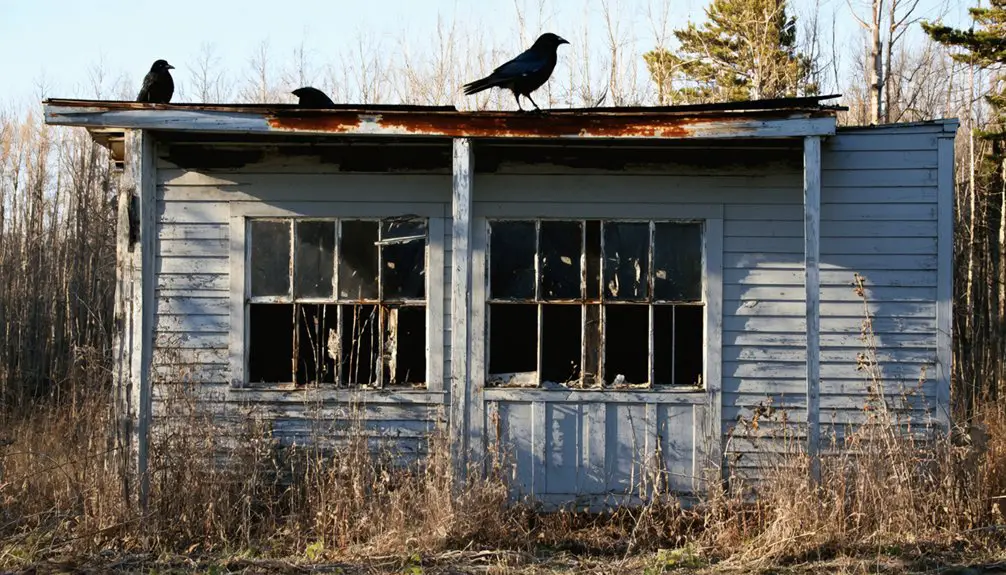
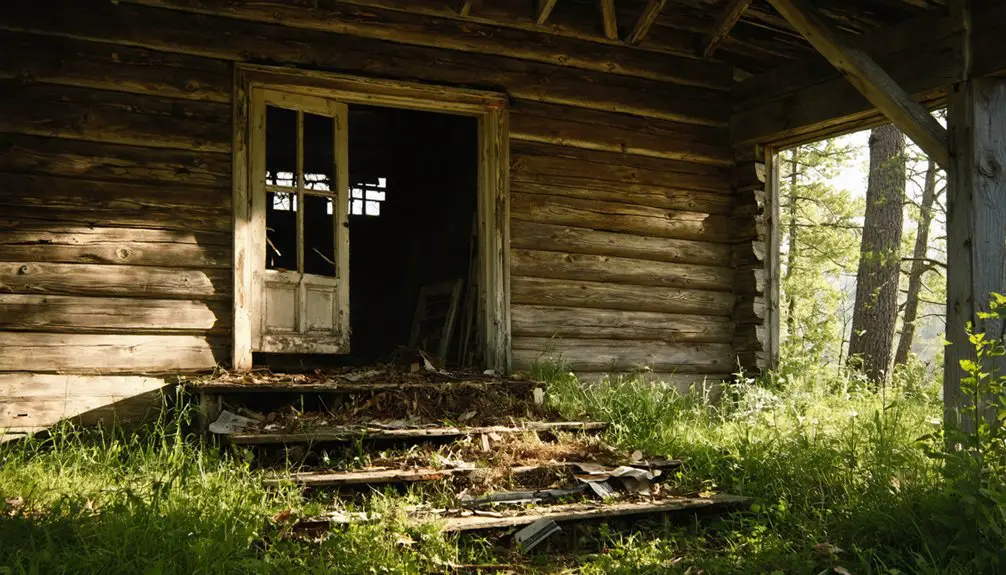
Beyond the cemetery and foundations, a handful of other remnants still stand — or partially stand — at Freeman Township. You’ll encounter scattered abandoned buildings that quietly reflect the township’s former life, their weathered frames caught somewhere between standing and collapse.
Urban decay has done its work here — wood rots, rooflines sag, and nature steadily reclaims what residents left behind. The historic Freeman Trading Post remains one of the more recognizable surviving landmarks, giving you a tangible anchor to the town’s past.
Preservation challenges are real here, as no formal restoration effort protects these structures. That means what you see today may not exist on your next visit.
Explore respectfully, leave everything as you find it, and let the silence of these ruins speak for itself.
Self-Guided Exploration Tips
Since Freeman Township offers no visitor center, no marked trails, and no interpretive signage, you’ll need to arrive with a clear sense of what you’re looking for. Research the township’s layout beforehand so you can navigate country roads confidently and locate the cemetery, foundations, and structural remnants without wasting time.
When you encounter historical artifacts, leave them exactly where they are. Removing anything disrupts the historic landscape for every explorer who follows you. Instead, photograph what you find and let the urban decay speak for itself — crumbling foundations and weathered remnants tell Freeman’s story more powerfully when left undisturbed.
Go at your own pace, stay aware of private property boundaries, and treat the entire area as an open-air museum. Your respect keeps this forgotten township accessible for future visitors.
How to Find Freeman Township in Franklin County?
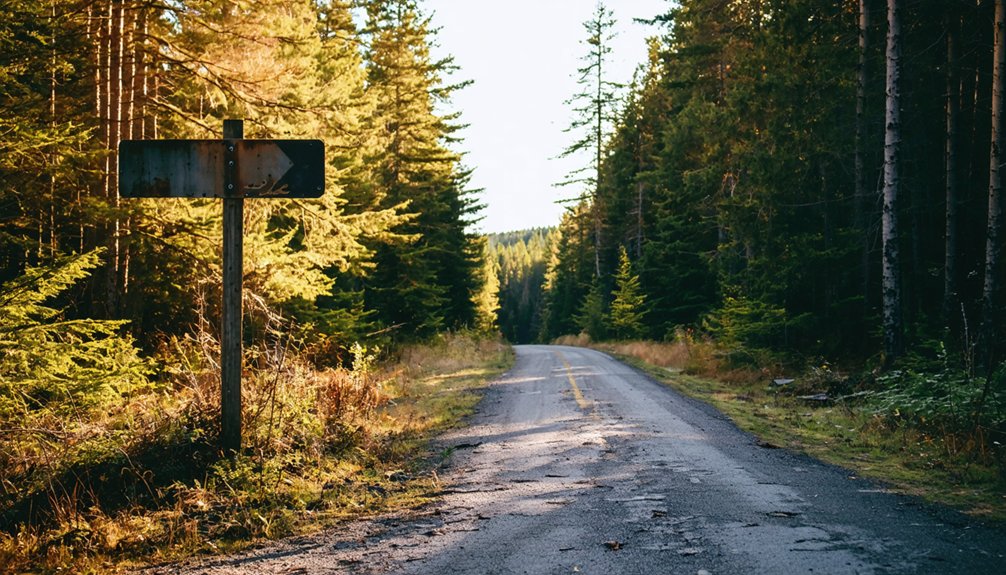
You’ll find Freeman Township tucked in Franklin County between the small towns of Kingfield and Strong, putting it well within reach if you’re already exploring western Maine’s rural interior. The surrounding landscape is quiet and largely undeveloped, so you won’t spot any roadside signs announcing a ghost town ahead.
Plan for country roads and limited amenities, and bring a map or downloaded directions since cell service in the area can be unreliable.
Freeman Township’s General Location
Tucked between the small towns of Kingfield and Strong in Franklin County, Freeman Township sits in the rural inland heart of western Maine. You won’t find urban development here — just quiet country roads cutting through farmland and forest.
That absence of modern sprawl is exactly what makes Freeman worth seeking out. The township escaped the pressures that transformed other communities, leaving behind a landscape shaped almost entirely by history rather than progress.
Historical preservation isn’t a formal mission here; it’s simply what happens when a place gets left behind. If you’re planning a ghost-town road trip, Freeman fits naturally into a western Maine route.
Keep your map handy, expect limited signage, and embrace the self-guided freedom that defines exploring places like this.
Nearby Towns And Landmarks
Knowing where Freeman Township sits relative to its neighbors makes finding it much easier. Freeman rests between Kingfield and Strong in Franklin County, two small towns that serve as natural waypoints when you’re guiding yourself through rural western Maine.
Kingfield, known for its ties to the Stanley Steamer inventors, anchors the area with a bit of character and supplies. Strong sits to the south and keeps things grounded with its quiet, working-town feel.
Both communities carry their own local legends and whispers of mining history from Maine’s frontier era, adding texture to your drive.
Together, they frame Freeman Township like bookends. Flagstaff, another famous Maine ghost town, lies further north, making it a natural addition if you’re building a full ghost-town circuit through the region.
Road And Travel Conditions
Finding Freeman Township means committing to country roads that don’t reward distracted driving. Franklin County’s rural interior demands attention, preparation, and respect for the landscape you’re entering.
Before you go, lock in these four essentials:
- Download offline maps — cell service thins out fast between Kingfield and Strong.
- Check seasonal road conditions — unpaved stretches turn rough after heavy rain or snowmelt.
- Fill your tank beforehand — amenities near Freeman are nearly nonexistent.
- Pack out everything you bring in — preservation efforts depend on visitors treating historical artifacts with care, not as souvenirs.
You’re not pulling into a parking lot with a visitor center. You’re orienteering a quiet, fading landscape where the freedom to explore comes with personal responsibility attached.
When Is the Best Time to Visit Freeman Township?
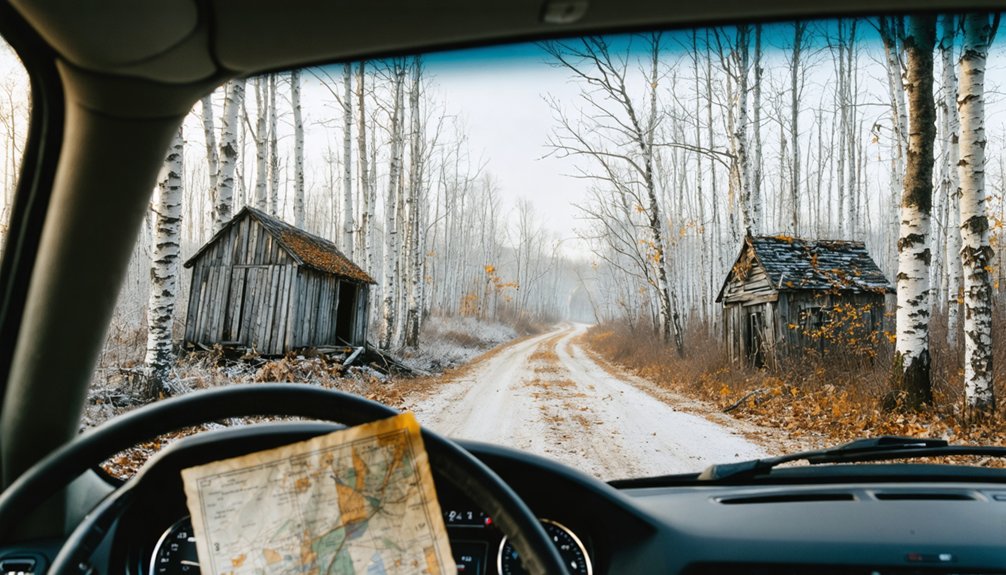
Since Freeman Township offers little in the way of formal visitor infrastructure, timing your trip around good weather makes a real difference. Late spring through early fall gives you the best access to country roads, foundations, and the cemetery without battling mud season or early snow.
Summer offers long daylight hours ideal for photography and quiet exploration. Fall brings striking foliage that frames the ruins beautifully, rewarding anyone interested in historic preservation.
Avoid late autumn and winter, when unpaved roads become unreliable and hazards multiply.
Whenever you visit, follow basic visitor guidelines: stay on accessible paths, leave artifacts untouched, and treat the landscape with respect. Freeman’s appeal lives in its history, not its physical remains, so protect what little survives for the next explorer.
What to Bring on a Freeman Township Ghost Town Trip?
Because Freeman Township offers no visitor services, what you pack determines how comfortable and productive your trip will be. You’re heading into rural Franklin County with minimal infrastructure, so preparation is everything.
Bring these four essentials:
- Navigation tools — Download offline maps since cell service along country roads near Kingfield and Strong is unreliable.
- Camera and extra batteries — Freeman rewards patient photographers willing to document foundations, cemetery stones, and scattered remnants.
- Water and snacks — No stores or restaurants operate nearby, so pack enough for your full exploration.
- Preservation guidelines awareness — Respect historical artifacts by leaving everything untouched; Freeman is a historic landscape, not a collection site.
You’ll leave with photographs and stories rather than souvenirs, which is exactly the point.
Which Maine Ghost Towns Pair Well With Freeman Township?
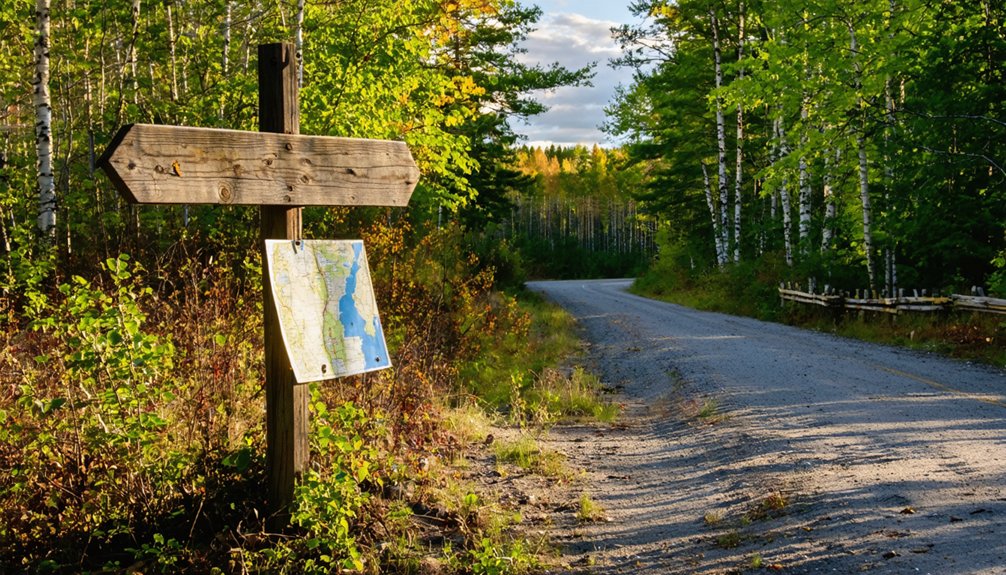
Once your pack’s ready and Freeman Township is locked into your itinerary, it makes sense to build a fuller day around it. Franklin County sits near several compelling ghost-town stops, so you’ve got real options.
Once Freeman Township is locked in, build a fuller day around it — Franklin County offers several compelling ghost-town stops.
Flagstaff is your strongest pairing. Deliberately flooded in 1950 to create Flagstaff Lake, it carries deep historical significance — entire communities disappeared beneath the water. During dry seasons, foundations and cellar holes resurface, rewarding explorers who time their visits right.
Both sites share preservation challenges, since minimal infrastructure means artifacts erode without protection and visitor access stays informal.
Traveling between Freeman, Flagstaff, and the surrounding western Maine interior keeps you on rural roads through genuine backcountry. You’re piecing together a region’s lost history one quiet stop at a time.
How Do You Explore Freeman Township Without Disturbing the Site?
Exploring Freeman Township responsibly starts before you even arrive. Research the area, respect its history, and leave the urban legends where they belong—in stories, not souvenirs.
Follow these four principles on-site:
- Stay on visible paths to avoid disturbing foundations hidden beneath overgrowth.
- Leave everything untouched — artifacts, stones, and structural remnants belong to the landscape.
- Maximize your photographic opportunities by shooting the cemetery, ruins, and tree lines without repositioning objects for composition.
- Keep noise minimal out of respect for a place where hundreds once lived.
You’ve got the freedom to explore, but Freeman’s value lies in what remains intact. Treat it like a living museum, and it’ll reward you with atmosphere no reconstruction ever could.
Frequently Asked Questions
Was Freeman Township Ever Considered for Historical Preservation or Landmark Status?
The knowledge doesn’t confirm Freeman Township’s historical preservation or landmark status efforts, but you’ll find its cemetery, foundations, and ruins treated as a historic landscape worth exploring respectfully—it’s yours to discover authentically.
Are There Any Guided Tours Available Specifically for Freeman Township Visitors?
Like a lone wolf roaming untamed land, you’ll find no guided tours here. Freeman Township’s historical architecture and wildlife observation are yours to explore freely on your own self-guided journey through its quiet, forgotten remnants.
Did Freeman Township Have a Post Office During Its Incorporated Years?
The records don’t confirm a post office, but Freeman’s incorporated years likely supported one among its abandoned structures. You’ll find local legends hinting at a thriving community that once connected residents through bustling civic life.
Are Metal Detectors or Artifact Collection Tools Permitted at Freeman Township?
You shouldn’t bring metal detecting equipment or collection tools to Freeman Township. Ghost-town preservation guidelines enforce strict artifact collection rules and metal detecting regulations—you’re encouraged to leave everything in place and respect the historic landscape.
Has Freeman Township Appeared in Any Documentaries or Published Ghost Town Books?
The knowledge doesn’t confirm Freeman Township’s appearance in documentaries or ghost town books, but you’ll find its urban decay and ghostly legends woven into Maine ghost town travel guides celebrating freedom-seekers exploring forgotten, abandoned landscapes.
References
- https://en.wikipedia.org/wiki/List_of_ghost_towns_in_Maine
- http://strangemaine.blogspot.com/2012/02/ghost-towns-of-maine.html
- https://ca.hotels.com/go/usa/ghost-towns-maine
- https://www.facebook.com/groups/2107225159500244/posts/3028909567331794/
- https://urbexunderground.com/ghost-towns-in-maine/
- https://peakng.com/ghost-towns-in-maine/
- https://www.youtube.com/watch?v=3mjsI8AIHQA
- https://newenglandwithlove.com/ghost-towns-in-maine/