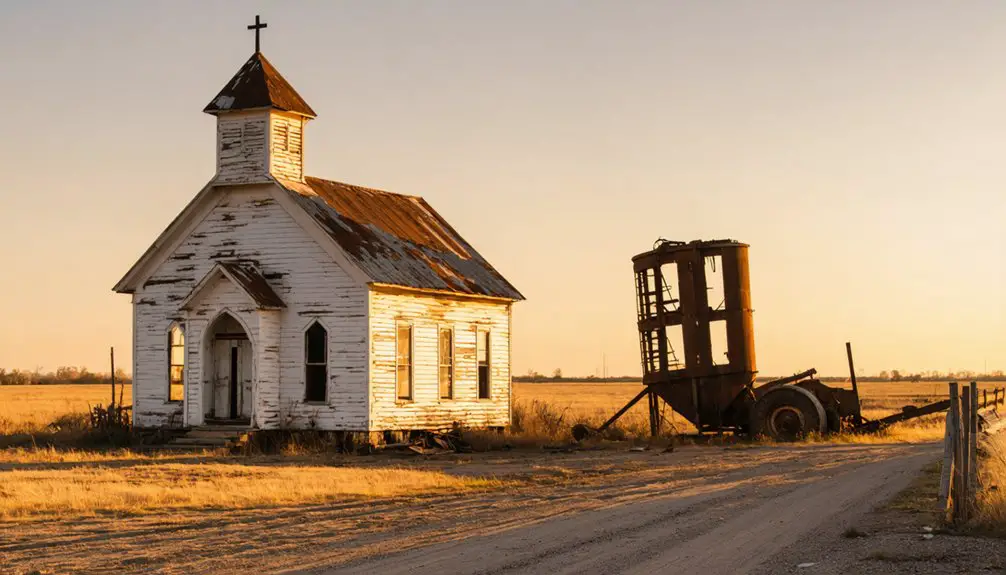
Planning a road trip to Ioland, Oklahoma means stepping into one of the state’s most historically compelling ghost towns. Once Ellis County’s seat of government in the early 1890s, Ioland vanished from relevance by November 1893. Today, you’ll find a weathered cemetery and rare school remains standing quietly in Oklahoma’s wide, flat terrain. It’s remote, minimally marked, and entirely authentic. Stick around to uncover everything you need to know before you go.
Key Takeaways
- Ioland is located in southeastern Ellis County, Oklahoma, approximately 16 miles east of Grand and half a mile north of the Canadian River.
- The former 1890s county seat features two key landmarks: the Ioland Cemetery with weathered headstones and surviving Ioland School remains.
- Cell service is unreliable, so carry a paper map, sufficient water, and confirm road conditions before visiting this remote site.
- No guided tours or interpretive signs exist on-site, so research Ellis County ghost-town maps and gather local stories beforehand.
- Respect all boundaries, avoid disturbing headstones or artifacts, stay on public land, and leave the site exactly as found.
What Was Ioland, Oklahoma?
Once a functioning county seat, Ioland was a small settlement in what’s now Ellis County, Oklahoma. It was positioned roughly half a mile north of the Canadian River in the county’s southeastern corner.
It sat approximately 16 miles east of Grand and briefly held local government authority before county functions shifted to Grand on November 13, 1893.
Ioland’s Brief Role as Ellis County Seat
Ioland’s identity as a county seat is what sets it apart from other ghost towns that simply faded into Oklahoma’s landscape. In the early 1890s, Ioland held real administrative power as Ellis County’s governmental hub. That historical significance places it in a category beyond ordinary abandoned settlements.
Ioland wasn’t just another ghost town — it was Ellis County’s seat of power, and that changes everything.
County government operated from this small town until November 13, 1893, when officials transferred functions to Grand. That transfer effectively began Ioland’s decline.
You’re not just visiting a forgotten field when you stop here — you’re standing where local governance once shaped people’s lives and freedoms. Cultural preservation efforts recognize this layered past, which is why the cemetery and school remnants still carry weight.
Ioland represents a moment when this stretch of Oklahoma was actively being built.
What’s Left at the Ioland Ghost Town Site Today
When you arrive at the Ioland site today, you’ll find very little standing where the town once bustled as Ellis County’s seat of government. The Ioland Cemetery survives as the most visible landmark, offering a quiet but tangible connection to the community that once thrived here.
You can also spot remnants of the Ioland School, making these two sites your primary anchors for exploring what little the ghost town has left behind.
Ioland Cemetery Survives
What survives at the Ioland ghost town site today is largely a matter of what the land chose to keep. The historical architecture that once defined this brief county seat has vanished, leaving the Ioland Cemetery as the most enduring landmark you’ll find on the ground.
Headstones mark lives tied to a community that rose and fell within a single generation. Local legends surrounding ghost towns like Ioland remind you that absence tells its own story.
Walk the cemetery rows and you’re reading history directly from stone. The school is also noted as surviving in some form, offering a second anchor point for your visit.
Beyond those two remnants, the site returns nothing but open land and quiet.
School Remnants Remain
Beyond the cemetery rows, a second landmark breaks the silence at the Ioland site: the school. It stands as one of the few surviving examples of historical architecture from this vanished late-19th-century settlement, giving you a rare, tangible connection to the community that once operated here.
When you visit, you’re walking ground where local legends and county-seat ambitions collided, then quietly collapsed. The school reminds you that real families built something here — children learned, neighbors gathered, and life moved forward before the town faded after 1900.
You won’t find guided tours or interpretive signs. What you’ll find is open land, honest ruins, and the freedom to piece together the story yourself. Bring curiosity, respect the site, and let the school speak on its own terms.
How To Find Ioland in Ellis County
You’ll find Ioland in the southeastern corner of Ellis County, Oklahoma. It is roughly 16 miles east of Grand.
The Canadian River runs close by, sitting about half a mile south of the old townsite. You can use that natural landmark to orient yourself as you navigate the rural terrain.
Ellis County ghost-town listings and historical maps are your best tools for pinpointing the exact location before you head out.
Ellis County General Location
Tucked into the southeastern corner of Ellis County, Oklahoma, Ioland sits roughly half a mile north of the Canadian River and about 16 miles east of the town of Grand. This rural positioning made it both accessible and isolated during its peak years, when its historical population supported a functioning county seat.
Today, that same remoteness gives the site an untamed, open-road quality that independent travelers appreciate. You’re not steering through tourist infrastructure here — you’re tracing the outline of a town that history nearly erased.
Local legends surrounding Ioland’s rapid rise and fall add texture to what might otherwise seem like empty land. Ellis County’s wide, flat terrain keeps the horizon wide and the distractions few, letting you focus entirely on the story beneath your feet.
Canadian River Landmark Reference
When you’re steering toward Ioland, the Canadian River becomes your most reliable anchor point. Position yourself roughly half a mile north of its banks in southeastern Ellis County, and you’re standing where a real community once took root. That proximity to the river wasn’t accidental — early settlers understood the historical significance of water access for survival and commerce.
The Canadian River still flows freely today, indifferent to the community decline that quietly erased Ioland from the map. Use it as your compass. From Grand, drive approximately 16 miles east, keep the river’s general course in mind, and watch for the land flattening into open rural terrain.
The river connects you to the landscape these settlers once depended on, making your arrival feel grounded in something larger than a forgotten address.
Distance From Grand
Grand serves as your practical launch point — from there, Ioland sits approximately 16 miles to the east, deep in the rural stretches of Ellis County. That distance feels intentional, like the land itself is protecting what’s left of this forgotten settlement.
Before you head out, keep these navigation tips in mind:
- Use Grand as your confirmed reference point before venturing east
- Expect minimal signage near abandoned structures or the former townsite
- Local legends suggest the area rewards patient, curious explorers
- Confirm road conditions ahead — rural Ellis County terrain can surprise you
The drive east from Grand isn’t just mileage — it’s a passage into open, untamed Oklahoma landscape. You’re retracing a route that once connected a county seat to the wider world.
What the Ioland Cemetery and School Actually Look Like
Although little remains of Ioland itself, the cemetery and school ruins give you a genuine sense of what this short-lived Ellis County settlement once was.
The Ioland Cemetery holds weathered headstones that reflect the community’s 1890s roots, offering a quiet example of cemetery preservation on the Oklahoma plains. You’ll notice modest markers typical of frontier burial grounds, worn by decades of wind and sun.
The school structure, what survives of it, hints at historical architecture common to rural late-19th-century Oklahoma settlements.
Neither site is manicured or commercialized, which makes them feel genuinely raw and honest. If you respect what’s standing and tread carefully, you’ll walk away with a real connection to a place history nearly erased completely.
Other Ghost Towns Near Ioland in Western Oklahoma
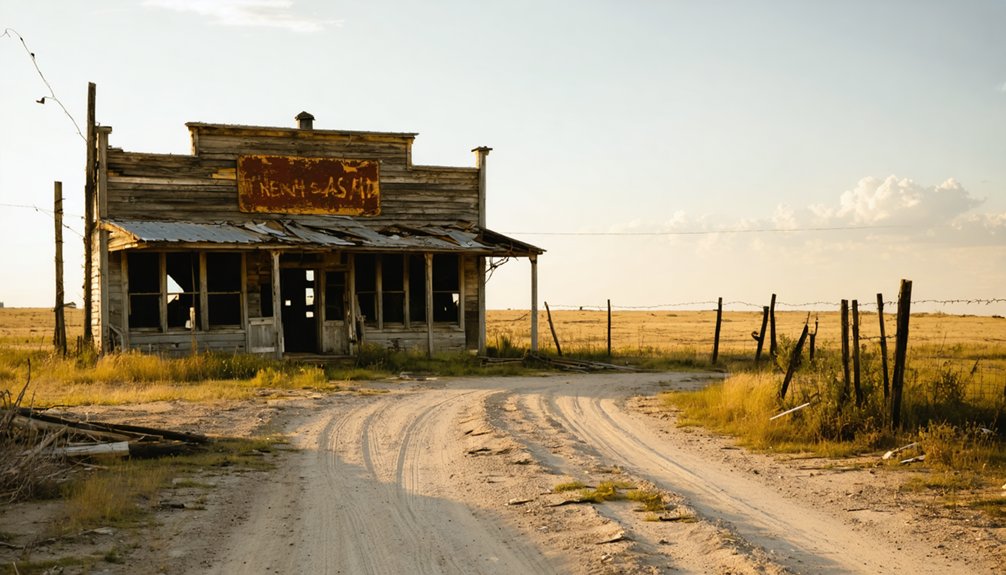
Ellis County and the surrounding western Oklahoma region hold more ghost towns than most travelers realize, so if Ioland sparks your curiosity, you’ve got a natural starting point for a longer route.
Western Oklahoma’s forgotten settlements carry deep cultural significance, and exploring several in one trip rewards you with a richer picture of frontier history.
Consider adding these stops to your itinerary:
- Grand, Oklahoma – the town that replaced Ioland as county seat
- Higgins area settlements – small communities with scattered preservation efforts underway
- Canadian River corridor towns – rural sites shaped by the river’s geography
- Ellis County cemetery clusters – unmarked histories worth documenting
Mapping these locations before you leave gives you flexibility while keeping your route purposeful and rewarding.
How To Visit Remote Oklahoma Ghost Towns Safely and Respectfully
Visiting remote ghost towns like Ioland means stepping into landscapes that haven’t seen steady foot traffic in over a century, so you’ll want to prepare carefully before you head out. Bring water, a paper map, and a charged phone since cell service gets spotty near the Canadian River bottomlands.
Stay on public land, respect fencing, and never remove artifacts — preservation efforts depend on visitors like you leaving sites exactly as found. Tread lightly around the Ioland Cemetery, keeping headstones undisturbed and grounds clean.
Talk to locals before arriving; they often carry local legends that no written record captures, giving your visit genuine depth.
Ghost town exploration rewards the prepared and the respectful, so treat every remnant as the irreplaceable piece of Oklahoma history it truly is.
Frequently Asked Questions
Is There an Admission Fee to Visit the Ioland Ghost Town Site?
You’ll find no admission fee at Ioland’s ghost town site—it’s freely accessible, embracing true historical preservation without restrictions. Visitor amenities are minimal, so pack your own supplies and enjoy this open, untamed Oklahoma heritage destination independently.
What Is the Best Time of Year to Visit Ioland?
Spring and fall offer you the best seasonal weather for exploring Ioland’s sparse remains. With Ellis County averaging under 300 visitors annually, you’ll dodge visitor crowds and freely roam the quiet cemetery grounds undisturbed.
Are Pets Allowed at the Ioland Cemetery During Visits?
No official pet regulations exist for Ioland Cemetery, so you’ll likely enjoy open cemetery accessibility with your furry companion. Keep your pet leashed, clean up after them, and respect this historic, hallowed ground during your visit.
Can You Camp Overnight Near the Ioland Ghost Town Location?
Like a frontier spirit calling you back in time, you’ll need to research local camping regulations before staying overnight near Ioland. Always prioritize overnight safety by contacting Ellis County authorities for permitted camping areas nearby.
Is the Ioland Site on Public or Private Land?
The knowledge doesn’t confirm whether Ioland’s site is public or private land, so you’ll want to research visitor access policies before heading out. Respecting historical preservation means always securing permission before exploring unmarked rural properties.
References
- https://en.wikipedia.org/wiki/List_of_ghost_towns_in_Oklahoma
- https://en.wikipedia.org/wiki/Ioland
- https://sites.rootsweb.com/~okghstwn/ellis/ellis.htm
- https://www.okhistory.org/publications/enc/entry?entry=GH002
- https://www.travelok.com/articles/oklahomaghosttowns
- https://www.youtube.com/watch?v=WJF6vDJUuBI
- http://sites.rootsweb.com/~oktttp/ghost_towns/ghost_towns.htm
- https://oklahoma.hometownlocator.com/features/historical