Planning a ghost town road trip to Frisco, Utah is easier than you’d think. Head about 15 miles west of Milford on Highway 21, and you’ll find one of Utah’s most fascinating abandoned mining towns waiting in the open desert. You won’t need four-wheel drive, there’s no admission fee, and you’ll want to set aside two to three hours to explore. Pair it with nearby ghost towns for a fuller West Desert experience, and there’s far more to this story than meets the eye.
Key Takeaways
- Frisco is located about 15 miles west of Milford, Utah on Highway 21, accessible without four-wheel drive.
- Plan two to three hours exploring the charcoal kilns, cemetery, and open desert landscape.
- Stock up on fuel and supplies in Milford before heading to the remote site.
- No admission fee is required, and crowds are rarely an issue at this wide-open historical site.
- Pair Frisco with nearby ghost towns like Newhouse and Wah Wah Valley sites for a fuller road trip.
What Made Frisco, Utah a Ghost Town?
When silver brought thousands of prospectors flooding into Utah’s West Desert in the 1870s, Frisco was born almost overnight. The Horn Silver Mine, discovered in 1875, fueled the boom, turning a harsh desert landscape into a settlement of nearly 6,000 people. Mining legends grew fast here — 23 saloons, gambling halls, brothels, and a reputation as one of the wildest towns in the West.
Then, on February 13, 1885, the Horn Silver Mine collapsed completely. That single event gutted Frisco’s economy and sent residents scattering. Production limped along, but the town never recovered its former scale.
The Horn Silver Mine: Why It Made and Broke Frisco
Few mines in the American West carried as much weight as the Horn Silver Mine did for Frisco. Discovered in 1875, it triggered a silver rush that transformed a desert outpost into a booming settlement of 6,000 people.
The Horn Silver Mine didn’t just shape Frisco — it built it from nothing.
Advancing mining technology allowed workers to extract silver, lead, and zinc at impressive rates, while railroad expansion connected Frisco to broader markets, making ore shipments faster and far more profitable.
Then came February 13, 1885. The Horn Silver Mine caved in completely, and Frisco never recovered. Production limped along afterward, but the glory days were gone.
You can trace the town’s entire arc through this single mine — the discovery built everything, and the collapse unraveled it just as fast. That’s the boom-and-bust reality you’ll feel the moment you arrive.
What Frisco Looked Like at Its Wildest Peak
At its peak in the mid-1880s, Frisco packed around 6,000 people into a raw desert settlement where water had to be freighted in.
But whiskey was never hard to find. You could walk past 23 or more saloons on a single stretch, with gambling halls and brothels filling the gaps between.
The town earned a reputation as one of the wildest in the West, where violence wasn’t an exception — it was part of daily life.
Population And Daily Life
By the mid-1880s, Frisco had exploded into a roaring settlement of around 6,000 people, and it didn’t take long for the chaos to follow. Mining legends grew fast here, built on silver, lead, and copper ripped straight from the earth. You’d have found 23 or more saloons lining the streets, alongside brothels and gambling halls running day and night.
Desert survival wasn’t glamorous either. Drinking water had to be freighted in, meaning every sip cost someone something. Life moved hard and fast in Frisco, driven by opportunity, risk, and raw frontier energy.
Violence and disorder weren’t exceptions — they were practically part of the town’s daily rhythm. If you crave stories of unfiltered freedom, Frisco’s peak years deliver exactly that.
Saloons And Frontier Lawlessness
Frisco didn’t just have a wild reputation — it earned it daily. At its peak, the town packed 23 or more saloons into a desert settlement of roughly 6,000 people. Brothels and gambling halls filled the gaps between. Mining legends grew fast here, born from silver strikes, big payouts, and bigger losses at the card table.
You can almost feel the lawlessness when you stand at the townsite today. Outlaw tales from Frisco rivaled anything coming out of Tombstone or Deadwood. Violence wasn’t the exception — it was routine.
Drinking water had to be freighted in, yet whiskey flowed freely. This was frontier life stripped raw, and Frisco wore that identity without apology. That energy is exactly what draws road trippers here still.
The 1885 Mine Collapse That Ended It All
On February 13, 1885, the Horn Silver Mine caved in completely, and Frisco’s wild, prosperous run came to a sudden halt. One catastrophic collapse reshaped everything — the population that once hit 6,000 began bleeding out almost immediately.
Mining legends were made here, but the desert landscapes don’t forgive mistakes or misfortune.
Production continued after the collapse, but it never matched earlier output. By around 1900, only roughly 500 residents remained.
By the 1920s, Frisco had surrendered entirely to the silence of the West Desert.
When you visit today, that abrupt ending is part of what makes the site so compelling. You’re standing where boom turned to bust almost overnight — and the emptiness around you tells that story better than any museum ever could.
How to Get to the Frisco Ghost Town Site
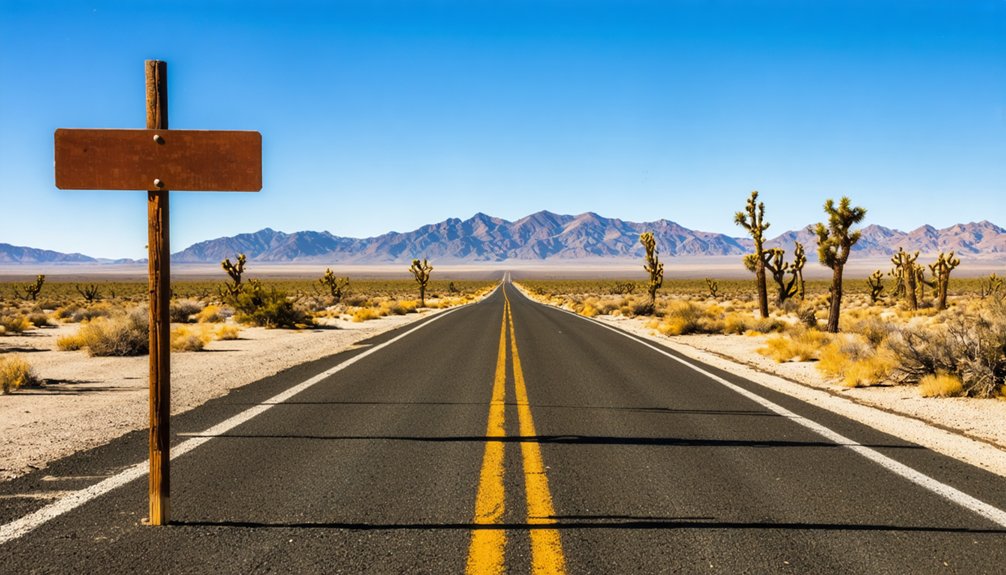
Getting to Frisco is straightforward once you’re near Milford, Utah — the town sits about 15 miles to the west. Head west on Highway 21, and you’ll drive straight through an open desert landscape that sets the mood long before you arrive.
Frisco sits 15 miles west of Milford — just follow Highway 21 straight into the open desert.
The flat, arid terrain gives you a clear sense of how isolated this boomtown once was.
You won’t need a four-wheel drive for the main site, making it accessible for most road trippers. Once you arrive, you’ll spot remnants of mining equipment and the iconic charcoal kilns rising against the skyline.
There’s no admission fee and no crowds — just wide-open land and layered history. Pair the stop with Milford for fuel and supplies before heading out into the West Desert.
What You Can Still See at the Frisco Ghost Town Today
Although Frisco’s boomtown days are long gone, you’ll still find enough on-site to make the stop worthwhile. The charcoal kilns are the crown jewel of the site — five beehive-shaped stone structures once used in the smelting process, now listed on the National Register of Historic Places. They’re remarkably intact and visually striking against the open desert backdrop.
Beyond the kilns, you’ll encounter scattered mining equipment, remnants of abandoned structures, and a cemetery that quietly tells the town’s human story.
Historic signage helps you piece together what once stood where, adding context to what’s otherwise a rugged landscape. Frisco doesn’t overwhelm you with preserved buildings, but that raw, open quality is exactly what makes it feel like genuine frontier history rather than a curated museum experience.
How Long Should You Spend at Frisco?
Frisco works best as a half-day stop rather than a full-day destination. You’ll want roughly two to three hours to explore the charcoal kilns, wander the cemetery, and soak in the desert mysteries surrounding the abandoned townsite.
Frisco rewards a half-day visit — two to three hours to explore kilns, wander the cemetery, and breathe in the desert silence.
The remains are sparse, so you won’t need an entire day to absorb what’s here.
That said, don’t rush through it. The mining legends tied to the Horn Silver Mine and Frisco’s wild boomtown past give the landscape a haunting depth that rewards slow, deliberate exploration. Walk the grounds, read the history, and let the silence do its work.
Pair Frisco with nearby Milford for a meal or fuel stop, and you’ve got a lean, rewarding road trip segment that fits naturally into a broader West Desert adventure.
Other West Desert Ghost Towns to Pair With Frisco
Utah’s West Desert hides more than one ghost town worth chasing, and pairing Frisco with nearby abandoned sites turns a half-day stop into a fuller road trip narrative. The region’s desert landscapes reward curious travelers willing to explore beyond the obvious.
Consider adding these stops:
- Newhouse – A copper-era ghost town with standing ruins about an hour from Frisco, rich with mining legends tied to early 1900s boom cycles.
- Wah Wah Valley sites – Scattered remnants of short-lived prospecting camps sitting inside raw, open desert landscapes rarely seen by casual visitors.
- Stateline – A small, forgotten settlement straddling historical travel and trade routes worth a brief detour.
Together, these stops build a connected story of boom, bust, and desert survival across Utah’s forgotten frontier.
Frequently Asked Questions
Is There an Entrance Fee to Visit the Frisco Ghost Town Site?
You’ll access Frisco’s ghost town site for free! Roam freely among historical artifacts and soak in the wild history. For photography tips, you’ll want to capture the iconic charcoal kilns during golden hour for stunning desert shots.
Are Pets Allowed When Visiting the Frisco Ghost Town Area?
The knowledge base doesn’t confirm specific pet policies for Frisco, so check before you go. You’ll want to prioritize pet safety since it’s an open, rugged desert site with scattered debris and extreme conditions.
Is the Frisco Site Accessible to Visitors With Mobility Limitations?
The Frisco site doesn’t offer formal accessible pathways or mobility assistance, so you’ll navigate uneven desert terrain. If you’ve got limited mobility, plan carefully, but you’ll still experience this hauntingly beautiful ghost town’s sweeping historic landscape.
What Is the Best Time of Year to Visit Frisco?
Spring and fall are your sweet spots—like Goldilocks finding the perfect chair. You’ll enjoy mild temperatures ideal for historical preservation exploration and stunning photography opportunities, avoiding summer’s brutal desert heat and winter’s icy, unpredictable conditions.
Are Overnight Camping Stays Permitted at or Near the Frisco Site?
Camping regulations for Frisco itself aren’t clearly defined, so you’ll want to check with local authorities before pitching a tent. Nearby accommodations in Milford offer your best bet for a comfortable overnight stay.
References
- https://en.wikipedia.org/wiki/Frisco
- https://www.visitutah.com/articles/frisco-west-desert-ghost-town
- https://www.atlasobscura.com/places/frisco-ghost-town
- https://www.familysearch.org/patron/v2/TH-904-49878-533-21/dist.pdf?ctx=ArtCtxPublic/1000
- https://www.intermountainhistories.org/items/show/744
- https://www.islands.com/1830959/utah-once-booming-mining-town-frisco-famous-abandoned-desert-wonder-near-zion-national-park/
- https://www.onlyinyourstate.com/trip-ideas/utah/frisco-ut-ghost-town
- http://www.youtube.com/watch?v=CP2nr-HxpGU
- http://desertsurvivor.blogspot.com/2019/06/ghost-town-visit-frisco-utah.html
- https://www.frrandp.com/2021/03/frisco-ut.html