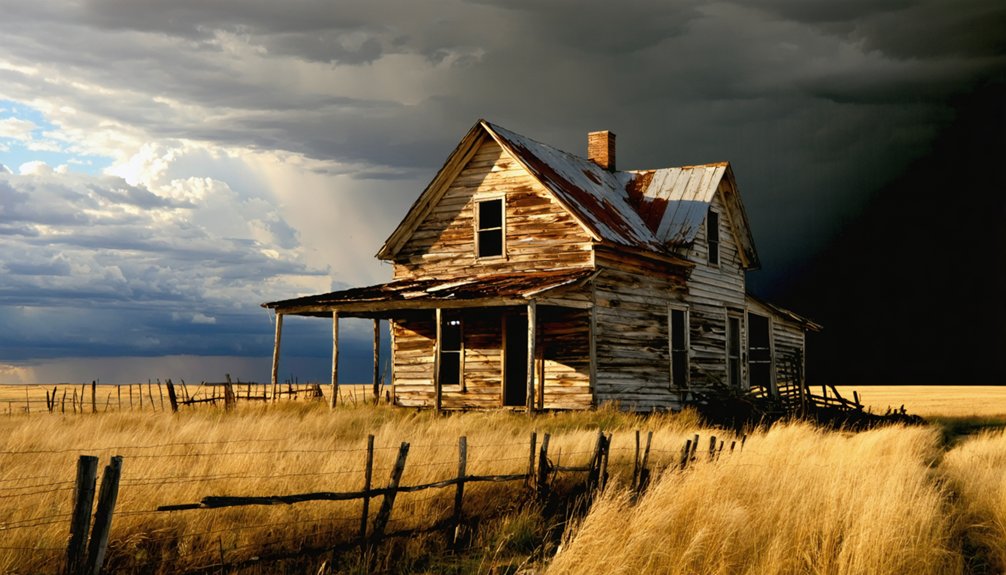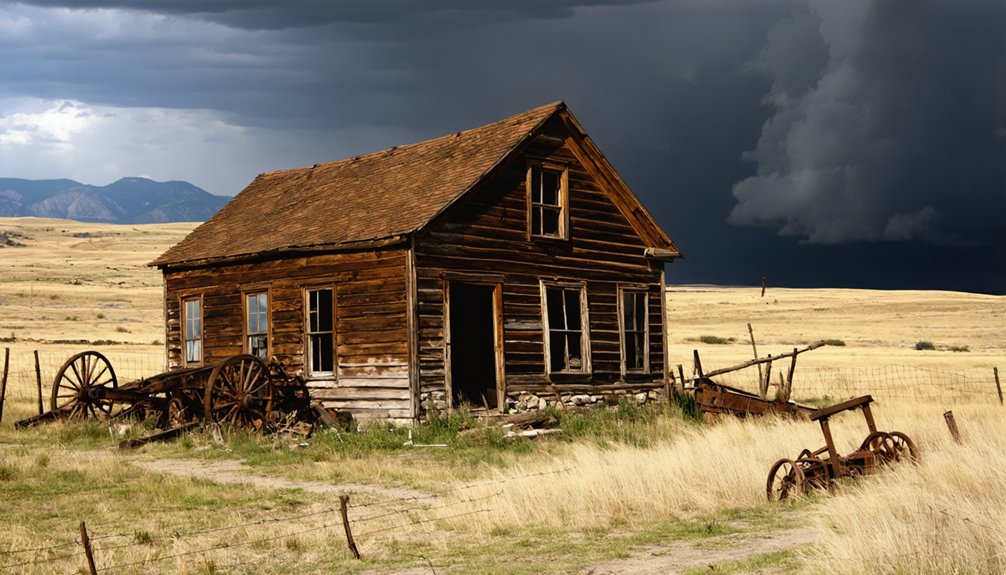
Planning a ghost town road trip to Greenwood, South Dakota means heading into Lawrence County’s Black Hills, where pine-studded terrain hides scattered foundations and a silent mine site from the 1880s gold rush. You’ll want sturdy boots, offline maps, and plenty of water since cell service is limited. Late spring through early fall offers the best road conditions. Stick around, and you’ll uncover everything from Greenwood’s fiery collapse to the nearby ghost towns worth adding to your route.
Key Takeaways
- Greenwood is located in the Black Hills of Lawrence County, South Dakota, accessible via gravel and standard 2WD grid roads.
- Visit between June and September for dry roads, open skies, and the most manageable travel conditions.
- Pack sturdy boots, ample water, a camera, and offline maps, as cell service is extremely limited on-site.
- The site features scattered foundations, mine traces, and earth depressions marking collapsed shafts, with no standing buildings remaining.
- Pair Greenwood with nearby ghost towns like Galena, Carbonate, and Roubaix for a complete Black Hills mining heritage road trip.
What Was Greenwood, South Dakota?
Tucked into the Black Hills of Lawrence County, South Dakota, Greenwood was a gold rush boomtown that lived fast and died hard. Founded around 1885, the town sprang up alongside a promising gold mine, drawing settlers who built a self-sufficient community complete with a store, school, post office, smithy, livery stable, and boarding house. That historical architecture tells you everything about how seriously people invested in this place.
Local legends still circle around Robert Flormann, the man who promoted the mine, built his fortune on it, and ultimately died in 1912 trying to rescue someone during the mine fire that ended Greenwood for good.
The town also carried a Dakota name, *čha-phežŋ*, meaning “wood of grass.” By 1971, the last standing house was gone.
How Greenwood’s Gold Mine Put It on the Map
When you dig into Greenwood’s history, the gold mine stands out as the force that built the town from the ground up during the Black Hills mining boom.
You’ll find the story bittersweet, though — the mine kept itself running but never turned a real profit, despite promoter Robert Flormann’s efforts to sell its potential.
Flormann’s story ends tragically in 1912, when he died trying to rescue someone during the mine fire that ultimately wiped Greenwood off the map.
Gold Rush Boom Days
Like many Black Hills settlements, Greenwood owed its existence entirely to gold. When miners flooded the region after 1874, towns like Greenwood rose fast. Early mining technology drove daily life, and the town’s architecture reflected genuine frontier ambition.
Picture yourself walking through Greenwood at its peak:
- Timber-framed buildings lining a dirt main street
- A smithy hammering iron tools for underground shafts
- A boarding house packed with dusty, hopeful miners
- A post office connecting isolated prospectors to the outside world
- A stage barn where horses rested before the next run
You’d have felt the energy of a community betting everything on what lay underground. Greenwood wasn’t just surviving — it was thriving, fueled by gold fever and the raw optimism that defined the Black Hills boom era.
Mine Profits And Losses
Greenwood’s gold mine put the town on the map, but the story behind it’s more complicated than a simple strike-it-rich tale. The mine produced real gold, yet mining profits never materialized in any meaningful way. Operations only managed to cover their own costs, leaving investors with little to show for their trouble.
Robert Flormann still found a way to profit personally, promoting the venture skillfully enough to build his own wealth even as the broader economic decline crept in.
For the town itself, the mine was both its reason for existing and its greatest vulnerability. When the mine caught fire in 1912, Greenwood lost everything.
You’re visiting a place that gold built but couldn’t sustain — and that tension is exactly what makes it worth the detour.
Flormann’s Fatal Legacy
Robert Flormann’s name is inseparable from Greenwood’s rise and fall. He promoted the gold mine, built his reputation, and became one of the town’s mining legends.
Then in 1912, fire consumed the mine, and Flormann died trying to save someone trapped inside. That single act ended both a life and a town.
Picture what ghost town preservation can’t fully restore:
- Smoke rising from a mine shaft in 1912
- Flormann running toward flames, not away
- A boarding house emptying after the news spread
- Foundations slowly reclaiming their place in the earth
- Silence replacing the clang of smithy hammers
When you visit Greenwood, you’re standing where that story ended. No marker fully captures it, but the ground remembers.
The 1912 Fire That Ended a Boomtown
After nearly three decades as a scrappy Black Hills mining settlement, Greenwood met its end in 1912 when fire tore through the mine.
The blaze triggered a swift mining collapse, erasing what little economic foundation the town had left.
Worse, Robert Flormann — the man who’d promoted the mine and built his fortune around it — died attempting to rescue someone trapped inside.
The fire aftermath left nothing worth rebuilding.
With the mine gone and Flormann dead, residents had no reason to stay.
The store, school, smithy, boarding house, and post office all fell quiet.
People scattered, and Greenwood faded fast.
What’s Left to See at Greenwood Today?
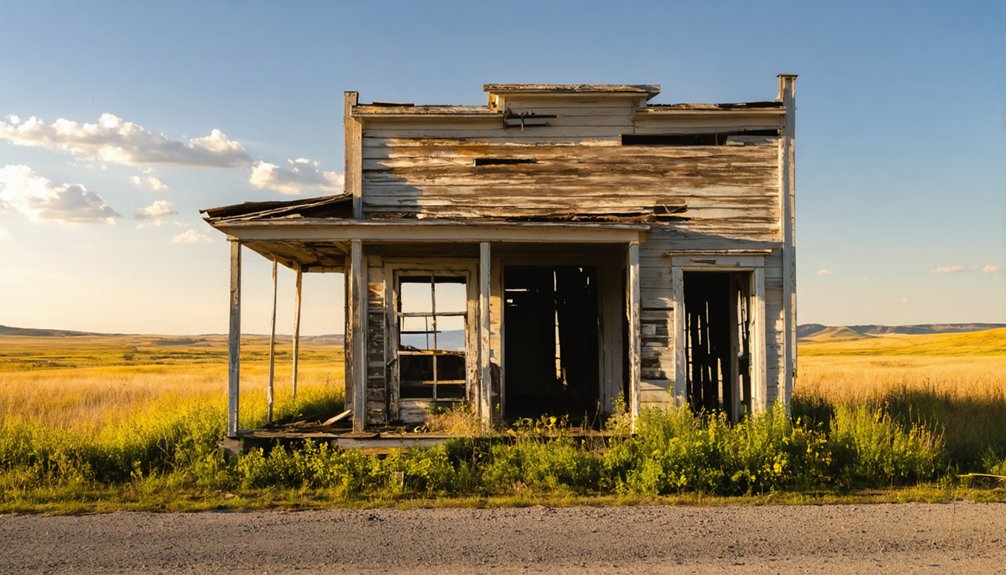
When you arrive at Greenwood today, you won’t find standing buildings — just scattered foundations that outline where the store, school, and boarding house once stood.
You can still pick out the mine site on the ground, a quiet reminder of the gold operation that drove the town’s brief, restless life.
It’s a sparse stop, but if you’re tracing Black Hills mining history, these remnants tell the story clearly enough.
Visible Foundations And Ruins
Though little remains of Greenwood today, what you’ll find still tells a story. Don’t expect restoration projects or polished tourist attractions — this is raw history sitting quietly in the South Dakota landscape.
Walk the site and you’ll encounter:
- Crumbling stone foundations outlining where the store, school, and boarding house once stood
- Sunken earth depressions marking collapsed underground mine shafts
- Scattered debris from the catastrophic 1912 fire that ended the town
- Overgrown lots where the livery stable and smithy operated during the gold rush years
- Open terrain views revealing how isolated this mining community truly was
You’re fundamentally reading the town’s bones. Every foundation edge and mine remnant connects you directly to the miners, merchants, and dreamers who built Greenwood from nothing.
Remaining Mine Site
Beyond the foundations, the mine site itself stands as Greenwood’s most compelling remnant. You’ll find scattered traces where miners once pulled gold from the earth, chasing a strike that never quite paid off.
The remaining mine site gives you a raw, unfiltered look at what drove men to build an entire town architecture of stores, stables, and boarding houses around a single shaft.
Walking the area, you can piece together how mining equipment and infrastructure shaped Greenwood’s short-lived identity.
The 1912 fire that killed Robert Flormann effectively ended operations, and nature has slowly reclaimed what was left behind.
There’s no guided tour or polished exhibit here — just open land, honest ruins, and the freedom to explore a place history nearly swallowed whole.
How to Reach Greenwood in Lawrence County
Tucked into the Black Hills of Lawrence County, South Dakota, Greenwood sits southwest of Boxelder Creek at coordinates 44°13′13″N, 103°33′42″W — a precise target for any ghost town hunter. You don’t need special equipment to get here; standard 2WD grid roads carry you straight to where gold rush mining techniques and town infrastructure once defined daily life.
Picture your approach:
Picture your approach: gravel roads, open sky, pine-studded hills, and silence where history waits.
- Gravel roads cutting through pine-studded Black Hills terrain
- Open sky stretching above rolling South Dakota landscape
- The former Black Hills & Fort Pierre Railroad corridor running nearby
- Quiet grid roads replacing once-busy wagon routes
- A remote clearing where foundations emerge from the earth
Keep your coordinates loaded, your tank full, and your expectations set for raw, unfiltered history waiting at road’s end.
When Is the Best Time to Visit Greenwood and the Black Hills?
You’ll find the Black Hills most welcoming in late spring through early fall, when dry roads make reaching Greenwood’s remote foundations far easier.
Summer brings heat, so pack water and plan your visit for the cooler morning hours.
If you’re building a ghost town itinerary, aim for June or September to avoid both winter snowfall and the peak-season crowds that flock to the broader Black Hills region.
Summer Versus Winter Visits
Timing your visit to Greenwood and the Black Hills makes a real difference in what you experience on the road. Summer brings seasonal beauty with long days and open skies, while winter wraps the ruins in snow-covered silence.
- Summer heat bakes the foundation stones under a wide Dakota sun
- Wildflowers push through cracked earth near the old mine site
- Wildlife encounters happen often — deer and hawks patrol the open terrain
- Winter snow softens the ruins into quiet, almost haunting shapes
- Spring thaw turns grid roads muddy, adding real challenge to the drive
You’ll want to weigh comfort against atmosphere. Summer keeps roads dry and 2WD-friendly. Winter rewards the bold traveler with solitude and a raw, unfiltered look at abandonment.
Ideal Road Trip Timing
Knowing when summer dries out the grid roads and winter locks them under snow helps you plan smart, but the broader question of ideal road trip timing goes beyond just weather.
Late spring and early fall hit that sweet spot — roads are passable, crowds are thin, and the Black Hills wear softer light that makes ruins feel alive. You’ll move through Greenwood’s foundations with space to think, connecting with local legends that weathered communities like this one carried forward.
Historical preservation efforts are also more visible when seasonal tourism ebbs, giving you a clearer sense of what’s documented versus what’s quietly disappearing.
Plan your visit for May or September, and you’ll experience Greenwood on your own terms, unhurried and fully present.
While Greenwood wasn’t the only Black Hills town that rose and fell with the gold rush, it’s one of the most accessible examples of a pattern that played out across Lawrence County and beyond. The same mining techniques and town infrastructure that defined Greenwood shaped dozens of nearby settlements.
Explore these ghost towns that share Greenwood’s story:
- Carbonate – crumbling foundations surrounded by pine-covered hills
- Galena – weathered structures hinting at a once-thriving silver and gold economy
- Roubaix – quiet trails cutting through a former mining community
- Rockerville – one of the Black Hills’ earliest gold camps, now mostly shadows
- Nahant – scattered remnants sitting deep in Lawrence County’s rugged terrain
Each stop adds another layer to your road trip.
How Do You Build a Black Hills Ghost Town Road Trip Around Greenwood?
Building a Black Hills ghost town road trip around Greenwood works best when you treat it as a half-day loop rather than a standalone destination. Start early, drive the 2WD grid roads into Lawrence County, and spend time reading the foundations and mine remains for their cultural significance before moving on.
Pair Greenwood with nearby mining-era towns that share its boom-and-bust story, letting each stop build context for the last. You’re not visiting preserved museums here — you’re moving through raw historical preservation, where the land itself holds the record.
Keep your itinerary loose. Summer heat moves fast, and so should you. Pack water, bring a map, and plan each stop as a chapter in a longer story the Black Hills never finished telling.
What to Pack Before You Visit a Black Hills Ghost Town
Once your itinerary’s mapped and your stops are set, what you throw in the car makes or breaks the day. Greenwood’s foundations and mine remains won’t have shade, water, or rangers explaining local legends, so you’re on your own out there.
- Sturdy boots for uneven ground around collapsed foundations
- Printed maps or downloaded offline GPS, since cell service drops in the Hills
- A camera for documenting historical artifacts like stonework and mine remnants
- Plenty of water, especially during summer heat
- A small notebook for jotting details, dates, or local legends you piece together on-site
Pack light but pack smart. The Black Hills reward prepared travelers and punish the careless ones. Keep it simple, stay aware, and let the ruins do the talking.
Why Greenwood Belongs on Any South Dakota Mining History Road Trip
Greenwood doesn’t just check a box on a South Dakota ghost town list — it tells a complete story. From its 1885 founding during the post-1874 gold rush to its fiery end in 1912, every detail connects.
You’re walking through the full arc of Black Hills mining history — boom, effort, loss, and silence. The mine itself represents the era’s mining technology: ambitious, costly, and ultimately unprofitable despite producing real gold.
Local legends surrounding Robert Flormann’s fatal rescue attempt during the 1912 fire give Greenwood a human weight that most ruins lack. The foundations you’ll see aren’t just crumbling concrete — they’re proof that a full community once stood here.
If South Dakota mining history matters to you, Greenwood earns its place on your route.
Frequently Asked Questions
Is Greenwood, South Dakota Listed on Any Official Historic Registers?
The knowledge doesn’t confirm Greenwood’s official historic register status, but its rich mining history and ghost town preservation make it a fascinating stop you’ll want to explore for its raw, untamed frontier legacy.
What Was the Dakota Name for Greenwood and What Does It Mean?
You’ll find Greenwood history rooted in the Dakota name čha-phežŋ, meaning *”wood of grass.”* This Dakota name significance beautifully captures the lush, green trees that inspired the town’s modern name — a poetic nod to nature’s freedom.
Did Robert Flormann Profit From the Greenwood Mine Before His Death?
Though you’d expect mining history to reward investors, Flormann didn’t truly profit — he only covered operating costs. Yet he grew wealthy promoting the mine, making ghost town preservation of Greenwood’s story all the more fascinating for you to explore.
Was Greenwood Ever Officially Incorporated as a South Dakota Town?
No records confirm Greenwood’s official incorporation. You won’t find it on formal municipal lists, but don’t let that stop your travel planning tips research — its ghost town attractions, foundations, and mine ruins make it a compelling, freedom-worthy stop.
What Railroad Line Once Ran Near the Greenwood Ghost Town Site?
You’ll find that the Black Hills & Fort Pierre Railroad once ran near Greenwood, making it part of essential transportation routes that shaped the region’s railroad history — connecting mining boomtowns and fueling your spirit of exploration.
References
- https://en.wikipedia.org/wiki/Greenwood
- https://www.sdpb.org/rural-life-and-history/2023-08-21/some-black-hills-ghost-towns-and-their-origins
- https://www.youtube.com/watch?v=yVWWqwcGTt0
- https://www.blackhillsbadlands.com/blog/post/old-west-legends-mines-ghost-towns-route-reimagined/
- https://www.ghosttowns.com/states/sd/greenwood.html
- https://kids.kiddle.co/Greenwood
- https://de.abcdef.wiki/wiki/Greenwood
- https://en.wikipedia.org/wiki/List_of_ghost_towns_in_South_Dakota