Dresser, Indiana won’t show up on any modern map, but that’s what makes it such a compelling road trip stop. It’s a ghost town in Warren County that thrived briefly in the early 20th century before quietly vanishing within a single generation. Named after Indiana songwriter Paul Dresser, it held a post office from 1899 to 1903 before fading into open farmland. Stick around to uncover everything you’ll need to find it.
Key Takeaways
- Dresser, Indiana, is a ghost town in Warren County with no standing structures, making research through county maps and local records essential before visiting.
- The town was named after Paul Dresser, songwriter of Indiana’s state song, giving the site unexpected cultural significance despite its physical absence.
- A post office operated from 1899 to 1903, representing Dresser’s only period of official recognition before its rapid decline and disappearance.
- No roadside signage marks the site, so visitors should prepare for an exploration focused on historical research rather than visible ruins.
- Nearby ghost towns Yeddo and Marshfield offer additional stops, enriching the road trip with broader regional history and forgotten community stories.
What Is Dresser, Indiana, and Where Did It Go?
Tucked into Steuben Township in Warren County, Indiana, Dresser was a small settlement that blinked in and out of existence around the turn of the 20th century, leaving behind little more than a name and a post office that ran from 1899 to 1903.
You won’t find preservation efforts or a restored historic district waiting for you here. What you’ll find instead are historical anecdotes worth chasing — particularly the story of how first postmaster Harvey Porter Layton named the town after meeting songwriter Paul Dresser at Hotel Mudlavia.
That single connection to Indiana’s future state song composer gives Dresser its lasting identity. The town vanished quickly, but its place in county ghost-town records keeps it alive for curious travelers willing to dig into the details.
Where Dresser Sits in Warren County Today
Knowing the story behind Dresser’s name is one thing — finding the actual spot on a map is another. Dresser sat within Steuben Township, Warren County, Indiana, placing it squarely in the state’s west-central region.
Dresser once claimed its place in Steuben Township, Warren County — a quiet dot in Indiana’s west-central map.
Today, no markers or preserved district signal its former existence, so you’ll rely on county maps and local historical records to pinpoint the location.
That research process itself becomes part of the experience. Community memory keeps Dresser alive in ghost-town lists and place-name histories, even without formal historical preservation efforts on the ground.
When you roll through Warren County, you’re fundamentally reading a landscape that has quietly absorbed a settlement whole. Pack your curiosity, pull up a county plat map, and treat the search as the destination.
Why This Ghost Town Was Named After a Famous Songwriter
Most ghost towns earn their names from landowners, geography, or pure practicality — but Dresser got its identity from a brush with celebrity. First postmaster Harvey Porter Layton reportedly met songwriter Paul Dresser at Hotel Mudlavia and honored that encounter by naming the settlement after him.
Paul Dresser wasn’t just locally known. He wrote *”On the Banks of the Wabash, Far Away,”* which became Indiana’s official state song — cementing his place in cultural memory forever.
That naming decision tells you something real about how communities claimed identity:
- Naming traditions often reflected personal connections over formal processes.
- Honoring cultural figures gave small towns a sense of belonging to something larger.
- Those names outlasted the towns themselves, preserving history where structures couldn’t.
Dresser’s Ghost Town Post Office: 1899 to 1903
When a post office opened in Dresser in 1899, it gave the settlement its clearest claim to existence. Post office significance in small Indiana towns was enormous — federal recognition meant the community appeared on official records, received mail routes, and earned a place on regional maps.
For Dresser, that window lasted only four years, closing in 1903.
You’re looking at a brief but meaningful chapter in historical naming and local identity. Harvey Porter Layton served as the first postmaster, operating out of what was likely a modest structure among a handful of residences.
Once the post office closed, Dresser’s institutional backbone disappeared.
When you visit today, that four-year federal record becomes your most reliable anchor for understanding what once stood here.
How Dresser Vanished Within a Single Generation
Once the post office shuttered in 1903, Dresser lost the one institutional thread holding it to the wider world. Without mail service, residents had little reason to stay rooted. No historical architecture survived to anchor cultural memory, and the settlement quietly dissolved.
You can trace Dresser’s disappearance through three compounding losses:
- Mail service ended, severing the town’s connection to commerce and communication.
- Residents dispersed, leaving no population base to sustain growth or community identity.
- Physical structures vanished, erasing any built record that might’ve preserved cultural memory.
What remained was only a name tied to Paul Dresser and a four-year post office window. That’s actually enough to build a meaningful road trip stop around — if you know what you’re looking for.
What You’ll Actually Find at Dresser’s Ghost Town Site
Arriving at Dresser’s ghost town site, you’ll find open land rather than crumbling storefronts or weathered signage — this is a location defined by absence. The post office closed in 1903, and whatever modest structures once stood have long since disappeared. Preservation challenges proved insurmountable for a settlement this small and short-lived.
What you’re really chasing here are historical anecdotes — the story of Harvey Porter Layton naming a town after meeting Paul Dresser at Hotel Mudlavia, and a brief community that flickered out within a single generation.
Bring county maps and local history research rather than expecting interpretive markers or guided tours. Your reward isn’t a photograph of standing ruins; it’s standing in Warren County knowing exactly what once existed and why it mattered.
County Maps and Local Records That Pinpoint Dresser
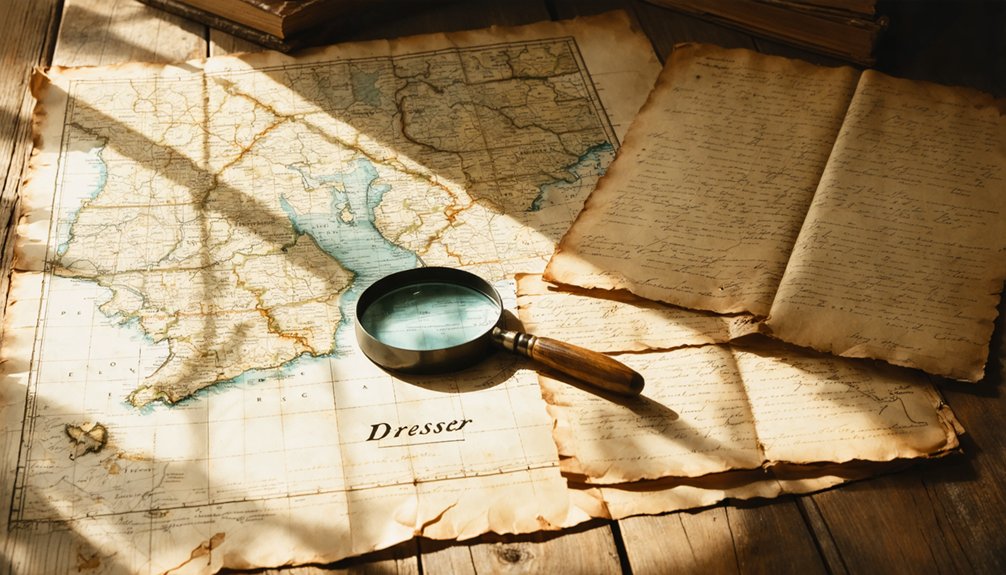
Because Dresser left behind no standing structures, county maps and local historical records become your most essential tools for pinpointing where the settlement once stood. Warren County archives hold the clearest evidence of Dresser’s historical population and geographic boundaries, letting you chart your own course through this vanished community.
Start your research with these three key sources:
- Warren County plat maps from the late 1890s, which mark Steuben Township boundaries and local landmarks near Dresser’s location.
- Post office records confirming the 1899–1903 operational window, anchoring the settlement’s timeline precisely.
- Indiana ghost-town compilations, which cross-reference county histories and naming traditions tied to Paul Dresser.
These resources transform a roadside stop into a genuinely rewarding historical investigation you control completely.
Ghost Towns Near Dresser to Build a Warren County Route
With your county maps marked and Dresser’s post office window firmly in mind, you’re ready to stretch this stop into a fuller Warren County ghost-town route. West-central Indiana holds clusters of briefly inhabited settlements, each carrying its own historical anecdotes about settlers, failed commerce, and vanished ambition.
String these locations together and you’ll trace a landscape shaped by communities that rose fast and disappeared faster. Dresser gains deeper meaning when you place it alongside similar sites, letting the cultural symbolism of Paul Dresser’s name stand out against a backdrop of equally forgotten place names.
Research county histories and plat maps to identify your next stops. Each ghost town sharpens the story of the last, turning a single roadside visit into a genuinely rewarding regional heritage route.
Other West-Central Indiana Ghost Towns Worth the Drive
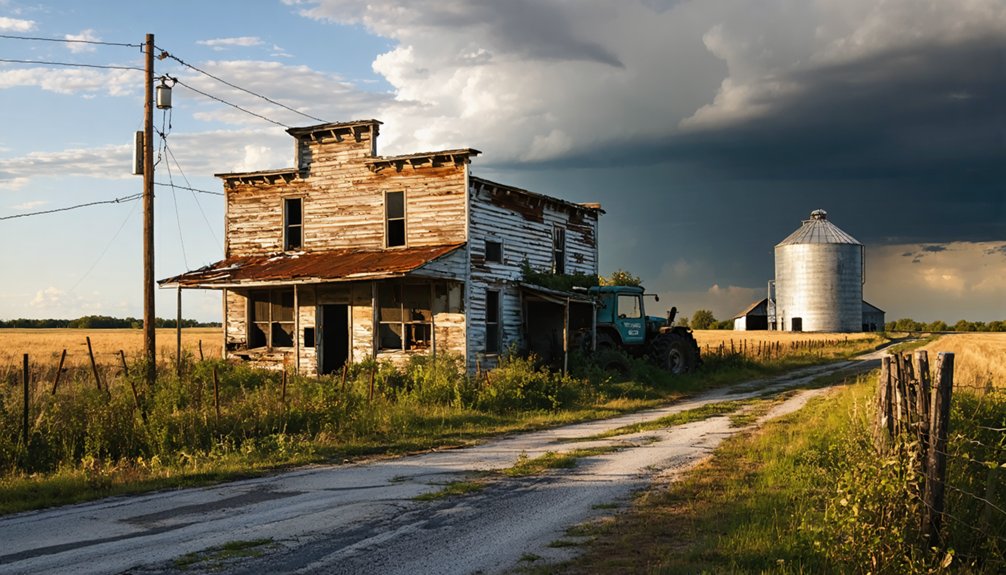
Stretching beyond Warren County opens up a broader web of west-central Indiana ghost towns that reward the historically curious traveler. Each stop adds historical anecdotes and cultural references that deepen your understanding of how quickly settlements rose and vanished across this region.
Consider adding these destinations to your route:
- Carbondale, Fountain County – A former coal-era settlement where industrial ambition outpaced long-term survival.
- Yeddo, Fountain County – A compact community that thrived briefly before railroads shifted commercial traffic elsewhere.
- Marshfield, Parke County – A river-adjacent ghost town carrying strong ties to early agricultural trade networks.
Each location rewards exploration through county maps and local histories rather than roadside signage. You’re fundamentally reading Indiana’s forgotten chapters one disappearing town at a time.
Frequently Asked Questions
Is There Parking Available Near the Dresser Ghost Town Site?
No parking facilities or formal accessibility options exist here — but freedom’s yours! You’ll likely pull over roadside, explore openly, and navigate this vanished Indiana ghost town on your own adventurous terms.
What Is the Best Time of Year to Visit Dresser?
Spring and fall offer you the best Photography opportunities at historical landmarks like Dresser. You’ll enjoy mild weather, softer light, and vivid surroundings that make roadside exploration feel invigoratingly wide-open and adventurous during these seasons.
Are There Guided Ghost Town Tours Available in Warren County?
You won’t find formal guided ghost town tours in Warren County, but you can freely explore historic landmarks and uncover local legends on your own terms, crafting a deeply personal, self-directed adventure through Indiana’s vanished past.
Can Children Enjoy a Ghost Town Road Trip Through West-Central Indiana?
Surprisingly, ghost towns aren’t just for adults! You’ll spark your kids’ curiosity with haunted legends and historic landmarks scattered across west-central Indiana, turning forgotten places like Dresser into unforgettable family adventures they’ll never stop talking about.
Are Any Lodging Options Available Near the Dresser, Indiana Area?
You’ll find lodging options in nearby Warren County towns, letting you explore historic landmarks and enjoy local dining freely. Small-town inns and regional hotels keep your ghost town adventure comfortable and authentically rooted in west-central Indiana’s charm.
References
- https://en.wikipedia.org/wiki/Dresser
- https://www.youtube.com/watch?v=45D4dbASJyE
- https://www.lowellpl.lib.in.us/lowell-history-pages/the-ghost-town-of-northwest-indiana/
- http://freepages.rootsweb.com/~gtusa/history/usa/in.htm
- https://en.wikipedia.org/wiki/List_of_ghost_towns_in_Indiana
- https://www.facebook.com/groups/143361599467728/posts/609879509482599/
- https://www.youtube.com/watch?v=GQuQJldC2fY
- https://indianacountyparks.org/our-trails/ghost-town-trail/ghost-town-trail-history/
- https://www.in.gov/history/files/84.1966.1_and_.3_Dresser.pdf