Planning a ghost town road trip to Adobes, Texas means embracing raw, unfiltered history along FM 170 in Presidio County. You’ll find crumbling adobe walls, cemetery remnants, and desert silence where a farming community once thrived in the 1870s. There are no amenities, so pack water, fuel, and sturdy boots before leaving Presidio. Visit in spring or fall for the best conditions. Everything you need to make this trip unforgettable is just ahead.
Key Takeaways
- Adobes, Texas, sits along FM 170 in Presidio County; from Presidio, head northeast and expect elevations reaching 2,671 feet.
- The ghost town offers crumbling adobe ruins, cemetery remnants, and embedded artifacts with no preserved structures or visitor amenities.
- Visit in spring or fall for mild temperatures, better light, and more comfortable exploring conditions across the open desert landscape.
- Pack water, fuel, sturdy boots, sun protection, a paper map, and a first aid kit before leaving Presidio.
- Combine Adobes with nearby Presidio County sites to make the remote journey more worthwhile and efficient.
How Adobes, Texas Went From Farming Town to Ghost Town
Tucked along the Rio Grande in Presidio County, Adobes, Texas started as a modest farming community in the 1870s, built on the promise of fertile river-bottom land. Cotton cultivation took hold by 1914, and by 1930, farmers were working 750 irrigated acres along this remote stretch of West Texas borderland.
That agricultural ambition, however, couldn’t hold the town together forever.
Even the most determined ambitions eventually surrender to the weight of time and circumstance.
Agricultural decline slowly stripped Adobes of its population, leaving behind scattered ruins and a cemetery as the only witnesses to what once existed. Today, historical preservation efforts haven’t reached this neglected site the way they’ve other ghost towns.
What you’ll find instead is raw, unfiltered abandonment — exactly the kind of freedom-seeking explorer’s destination that rewards curiosity over comfort. Adobes doesn’t ask you to admire it. It simply endures.
What’s Left to See at Adobes Today?
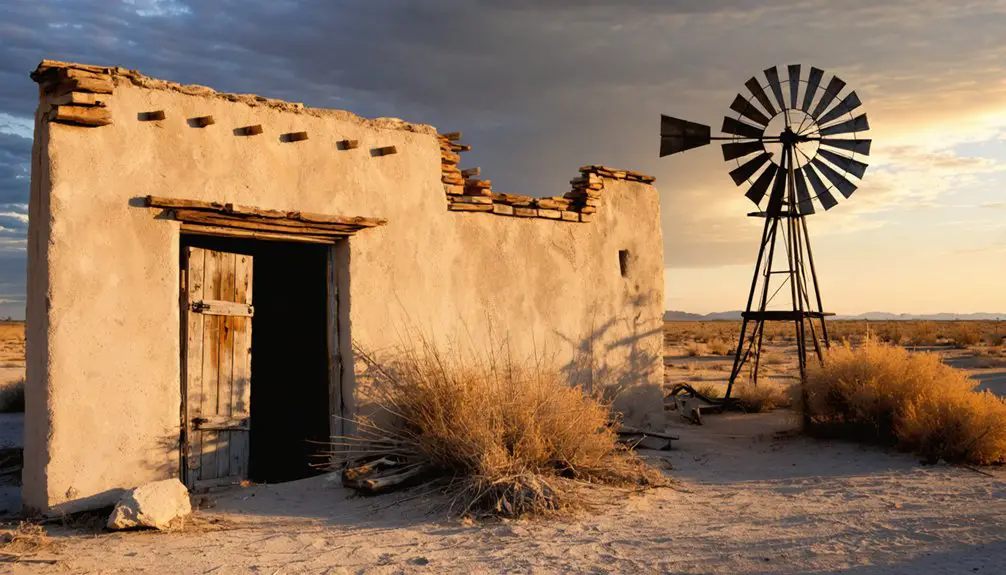
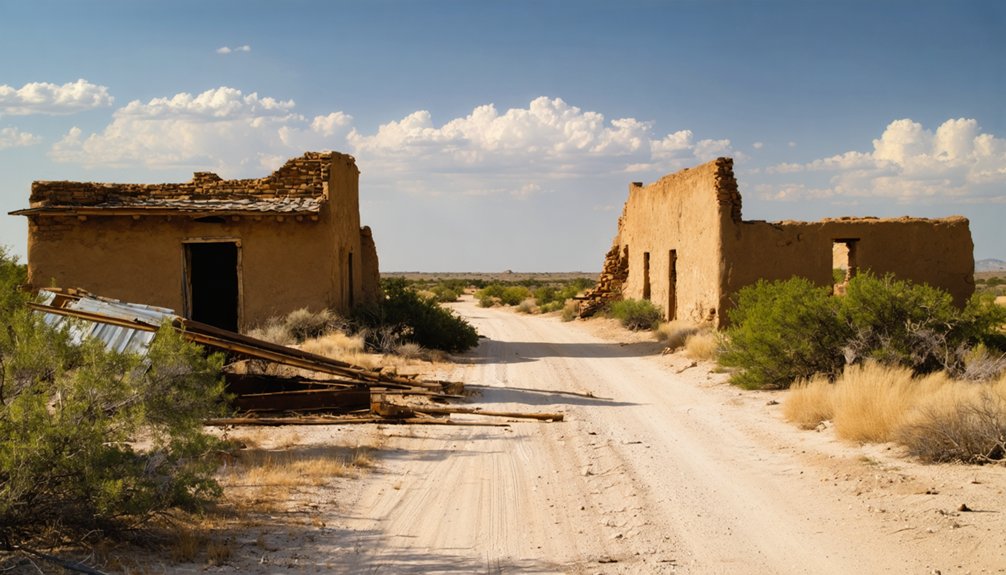
What remains at Adobes won’t impress anyone expecting a preserved historic site — and that’s precisely the point. You’re not visiting a museum — you’re walking through forgotten time. Scattered ruins and cemetery remnants sit quietly against the West Texas landscape, asking nothing of you except attention.
Here’s what you’ll encounter:
- Crumbling adobe walls slowly returning to earth
- Cemetery remnants marking lives the history books never recorded
- Historical artifacts embedded in silence and dust
- Open borderland sky stretching endlessly over broken foundations
- The raw, unfiltered feeling of standing somewhere the world left behind
No crowds. No gift shop. No guided tour. Just you, the Rio Grande nearby, and the honest wreckage of a community that once cultivated 750 acres of irrigated farmland before disappearing entirely.
How to Get to Adobes, Texas
Once you’ve stood in the quiet wreckage of Adobes long enough, the next question answers itself — how do you actually get there? Adobes sits in Presidio County along Farm to Market Road 170, tracing the Rio Grande through far West Texas.
From Presidio, head northeast on FM 170 and watch the elevation climb toward 2,671 feet as the borderland terrain opens wide around you. Check local road conditions before leaving — this stretch can shift after rain, and the area offers no visitor amenities whatsoever. No restrooms, no water, no signage welcoming you in.
You’re responsible for your own fuel, supplies, and navigation. Pair the stop with other Presidio County sites to make the drive worthwhile. The freedom out here is real, but so is the remoteness.
The Best Time of Year to Visit Adobes
Far West Texas doesn’t forgive poor timing, and Adobes is no exception. Seasonal weather defines your entire experience along FM 170, so plan smart.
Spring and fall offer the most rewarding visits:
- March through May brings mild temperatures, wildflowers, and active local wildlife along the Rio Grande corridor.
- October and November deliver cooler air, golden desert light, and quieter roads perfect for exploring ruins.
- Summer heat routinely exceeds 100°F, turning the river bottom into a punishing, shadeless gauntlet.
- Winter mornings can surprise you with freezing temperatures and unpredictable wind along the borderland elevation.
- Early mornings year-round reward patient visitors with dramatic desert silence and wildlife movement near the ruins.
Choose spring or fall, arrive early, and let the landscape meet you on its best terms.
Don’t Confuse Adobes With Adobe Walls, Texas
Both ghost towns share a name rooted in adobe brick, but they tell completely different stories and sit hundreds of miles apart. Adobes is a quiet agricultural ruin in Presidio County along FM 170, shaped by farming and borderland life rather than historical myths or dramatic conflict.
Adobe Walls, by contrast, sits in Hutchinson County near the Texas Panhandle and carries the weight of frontier battles, local legends, and a place on the National Register of Historic Places.
If you’re planning a West Texas road trip through the Rio Grande corridor, you’re heading to Adobes.
Adobe Walls requires a completely separate Panhandle journey near Stinnett and Borger.
Don’t let the similar names redirect your route or blur the distinct histories these two places carry.
Presidio County Ghost Towns Worth Pairing With Adobes
Presidio County holds more ghost towns than most travelers realize, and pairing a few of them with an Adobes stop makes the drive far more rewarding. This region’s borderland settlements carry deep histories of historical agriculture, frontier survival, and quiet abandonment. FM 170 connects several forgotten places worth your time.
- Candelaria — a near-empty village clinging to the Rio Grande’s edge
- Ruidosa — crumbling walls where farming families once built full lives
- Presidio — a border town layered with centuries of cultural crossroads
- Shafter — a silver-mining ghost town with haunting stone ruins still standing
- Polvo — a faded settlement where irrigated fields once fed entire communities
You don’t need a packed itinerary. You just need an open road and a full tank.
What to Bring for an Adobes Road Trip

Heading out to Adobes means driving deep into Far West Texas, where services thin out fast and the landscape doesn’t forgive poor preparation. Pack water — more than you think you’ll need. FM 170 runs scenic but remote, so bring fuel before leaving Presidio. Wear sturdy boots for walking uneven ruins, and carry sun protection because the high desert offers little shade.
Bring your photography gear to capture the scattered adobe remains and cemetery, where light and shadow create striking compositions. Don’t disturb historical artifacts if you spot them — document with your camera, not your hands, and leave the site as you found it.
A paper map, first aid kit, and charged phone round out your essentials. Respect the land, and it’ll reward you.
Frequently Asked Questions
Is There an Entrance Fee to Visit the Adobes Ghost Town Site?
There’s no documented entrance fee for visiting Adobes — you’re free to explore this neglected historical preservation site. Visitor amenities are minimal, so pack your own supplies and embrace the raw, untamed spirit of West Texas borderland adventure.
Are Overnight Camping Stays Permitted Near the Adobes Ruins Area?
Concrete details on camping regulations aren’t confirmed, but you’ll want to check local Presidio County rules before sleeping under the stars near those ancient whispers of adobe. Stay alert — wildlife encounters in this rugged borderland are nature’s uninvited guests.
Is the Adobes Cemetery Open to Genealogical Research or Family Visits?
You’ll find the Adobes cemetery welcoming for genealogical research and family visits, where historical preservation meets local legends. Explore scattered remnants, trace ancestral roots, and connect with the borderland’s quietly haunting, freedom-evoking past on your own terms.
Does Cell Service Exist Along FM 170 Near the Adobes Site?
Cell coverage along FM 170 is practically nonexistent — you’re truly off the grid! Signal strength drops dramatically near Adobes, so download your maps beforehand, carry a paper backup, and embrace the raw, untamed freedom of West Texas borderlands.
Are Guided Ghost Town Tours Available for Visiting Adobes, Texas?
You won’t find formal guided ghost town tours at Adobes, but that’s part of its raw appeal. You’ll explore independently, discovering scattered ruins and historical preservation remnants that aren’t curated tourist attractions—just authentic, unfiltered freedom.
References
- https://en.wikipedia.org/wiki/Adobe_Walls
- https://en.wikipedia.org/wiki/Adobes
- https://www.texasescapes.com/TexasGhostTowns/Adobes-Texas.htm
- https://en.wikipedia.org/wiki/List_of_ghost_towns_in_Texas
- https://www.facebook.com/thcfriends/posts/adobe-wallsa-ghost-town-in-the-texas-panhandle-where-the-past-still-whispers-onc/1218338796993757/
- https://texoso66.com/2021/07/29/adobe-walls/
- https://www.instagram.com/p/DNitOBkMIRe/
- https://theclio.com/entry/15297
- https://www.ghosttowns.com/states/tx/tx_ghst_twns_sect1345.doc
- https://www.texasescapes.com/TexasPanhandleTowns/Adobe-Walls-Texas.htm