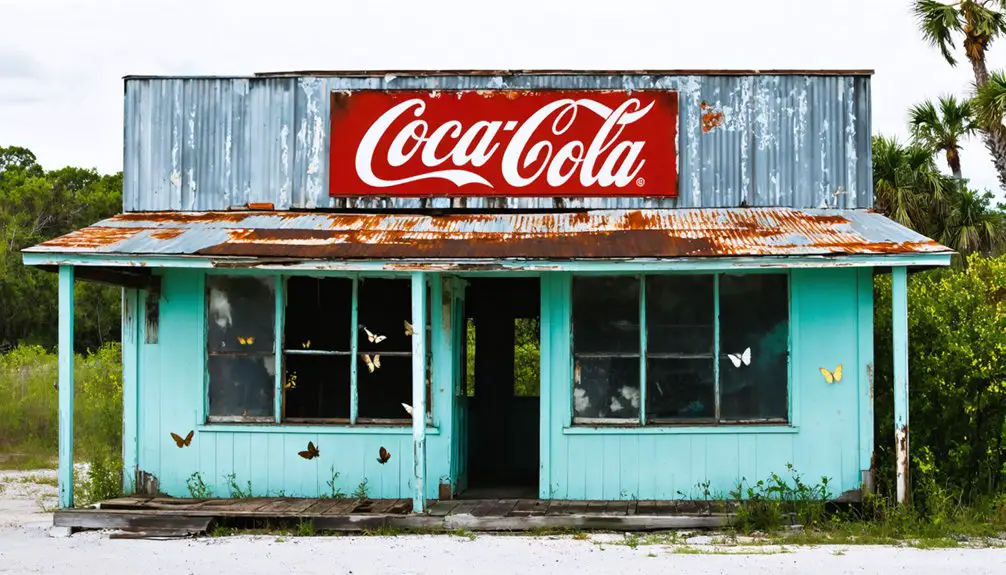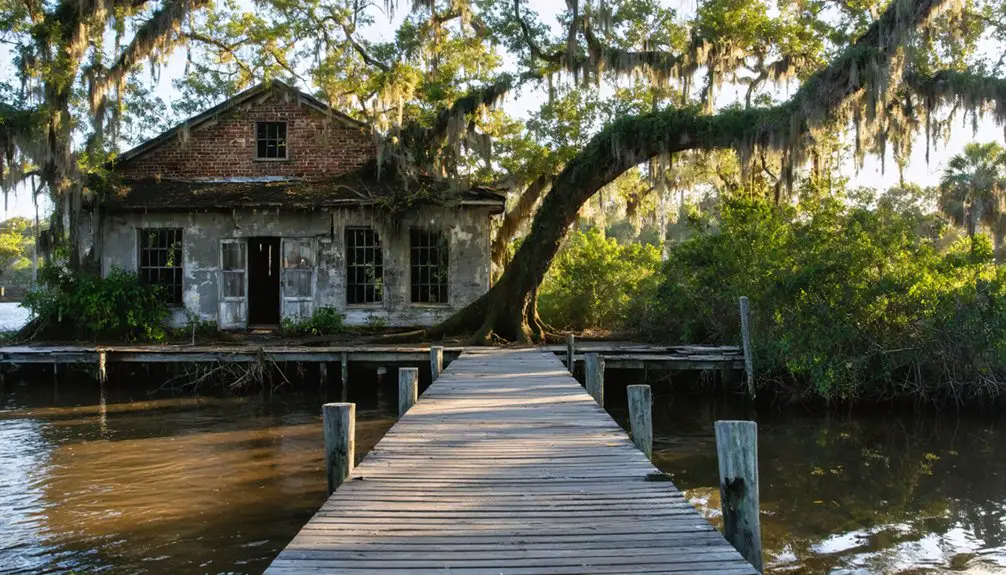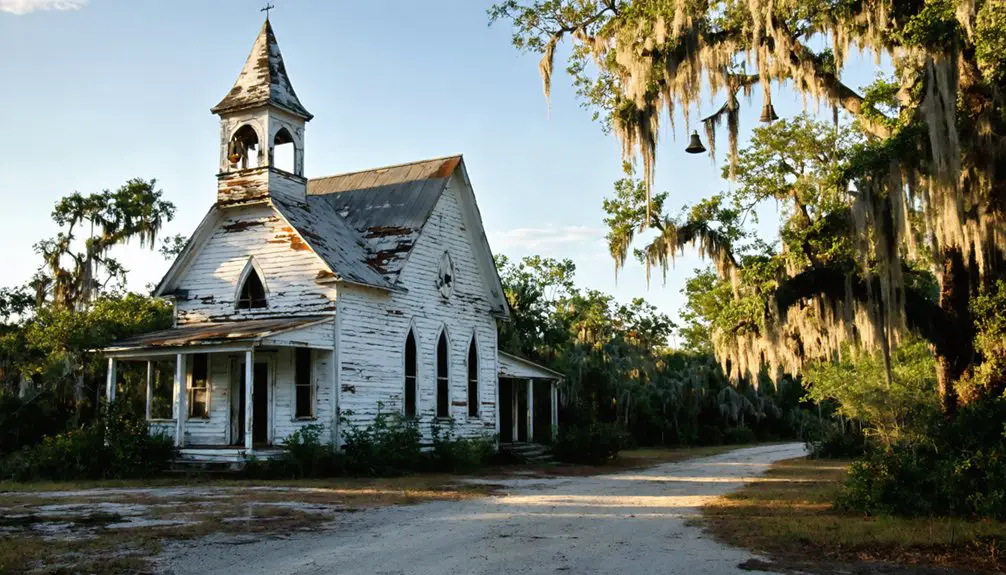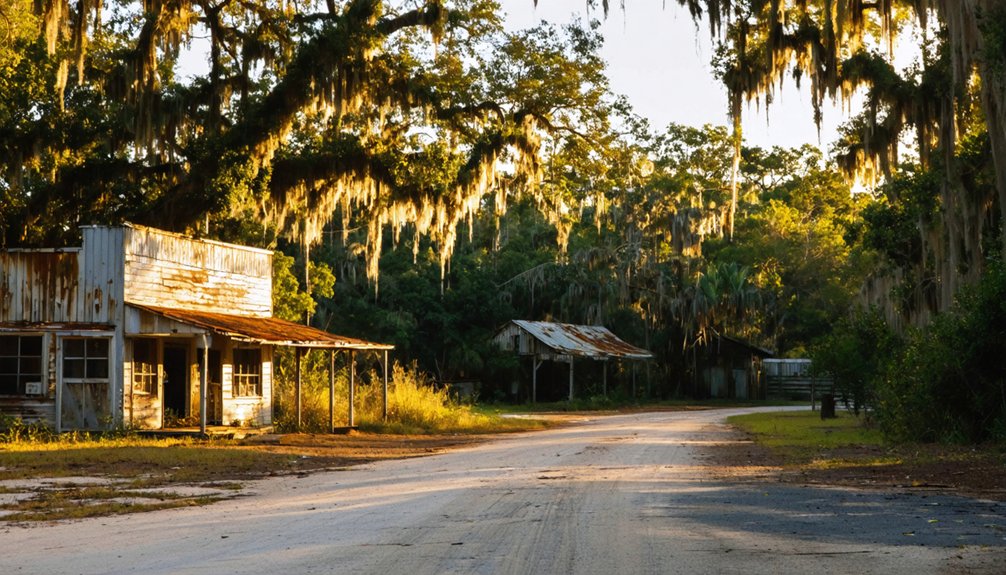
Planning a ghost town road trip to Hopkins, Florida starts in Melbourne, where you’ll follow University Blvd along the ghost of the old Union Cypress Railroad. This once-thriving cypress mill town rose around 1900 and collapsed by 1925, leaving almost nothing behind. Streets like Fell Rd and Milwaukee Ave trace former timber corridors, but you’ll need sharp eyes to spot the subtle clues still hidden in the modern landscape.
Key Takeaways
- Melbourne serves as the ideal base for exploring Hopkins, with University Blvd tracing the old Union Cypress Railroad route through the ghost town.
- No standing structures remain; look for subtle clues like railroad grade remnants, earthworks, and street alignments along Fell Rd and Milwaukee Ave.
- The site is accessible year-round via standard 2WD vehicles, with free street parking and no permits required.
- Cooler months offer the most comfortable walking conditions for interpreting the landscape and exploring Crane Creek’s south side.
- Extend your road trip westward to comparable ghost towns like Orleans, Sumica, and Deer Park for broader context on Florida’s timber history.
What Was Hopkins, Florida?
Once a thriving mill town nestled on the south side of Crane Creek, Hopkins, Florida built its entire identity around lumber. George W. Hopkins founded the community around 1900 after establishing the Union Cypress Company, and the town literally bore his name.
George W. Hopkins founded this lumber town around 1900, and it literally bore his name.
Workers lived and labored there, harvesting cypress trees and depending entirely on the Union Cypress Railroad to keep operations moving.
You’re looking at a place with real historical significance — a self-contained company town that functioned for roughly 25 years before the railroad closed in 1925 and took the community down with it.
Today, cultural preservation efforts keep its story alive, even though modern Melbourne has absorbed nearly every physical trace. What remains is largely invisible, making the history worth seeking out.
How Hopkins Went From Mill Town to Ghost Town
When the Union Cypress Railroad shut down in 1925, it didn’t just end a transportation route — it pulled the life support from an entire community. Hopkins had survived 25 years on timber, but once the cypress ran out, everything collapsed fast.
Here’s how the decline unfolded:
- The railroad closed, severing Hopkins’ only economic connection to the outside world.
- Workers scattered, leaving homes and businesses abandoned along Crane Creek’s south side.
- Nature reclaimed the land, burying most structures beneath what’s now Melbourne’s urban landscape.
Today, the historical significance of Hopkins lives in scattered railroad grades and cultural preservation efforts that keep its story alive. You won’t find standing buildings, but you’ll find a town that once breathed — and the freedom to explore what remains.
What Physical Evidence of Hopkins Still Exists
When you visit the site today, you’ll find only faint traces of Hopkins scattered across the modern Melbourne landscape. You can spot some remnants of the old railroad grade near the former mill site, but don’t expect standing structures.
The residential and business buildings are long gone, destroyed or buried beneath urban development. In essence, the city has swallowed Hopkins whole, leaving you to piece together its history more through imagination than physical evidence.
Visible Railroad Grade Remains
What’s left of Hopkins today isn’t much, but it’s enough to spark your imagination. The most tangible evidence you’ll find centers on the old Union Cypress Railroad grade, which traces through modern Melbourne’s streets.
Historical artifacts here are subtle, but they’re real.
Look for these visible remnants:
- Railroad grade traces running near the former mill site along present-day University Blvd
- Route alignments following Fell Rd and Milwaukee Ave, echoing the original timber railroad path
- Terrain contours near Crane Creek’s south side where the mill once operated
Preservation efforts haven’t produced a formal historic site, so you’ll need a sharp eye.
The urban landscape has absorbed most evidence, but walking these streets connects you directly to Hopkins’ 25-year timber legacy.
Structures No Longer Standing
Though Hopkins once housed an entire company workforce, you won’t find a single standing structure from its timber-town era. The abandoned structures that once sheltered mill workers and supported daily operations have completely vanished, swallowed by time and urban expansion.
Melbourne’s modern development has erased nearly every physical trace of this former company town.
Don’t expect historical markers pointing you toward former homes or business sites either. The landscape offers no commemorative signage honoring Hopkins’ 25-year run as a thriving timber community.
What you’re visiting is fundamentally an invisible town, its footprint buried beneath present-day streets and neighborhoods. The railroad grade remains your most tangible connection to what existed here, making that subtle earthwork far more significant than it might initially appear.
Urban Landscape Integration
Hopkins hasn’t disappeared entirely — it’s just hiding in plain sight beneath Melbourne’s modern street grid. If you know where to look, you’ll find real traces woven into everyday roads and landscapes. Forget historical architecture — Hopkins left a different kind of imprint.
Here’s what you can still find:
- Railroad Grade Remnants — Sections of the old Union Cypress Railroad grade survive near the former mill site, giving you a tangible connection to the town’s industrial past.
- Street Alignments — University Blvd, Fell Rd, and Milwaukee Ave trace the exact path locomotives once traveled.
- Local Legends — Longtime Melbourne residents carry oral histories about the cypress operation that official signage won’t tell you.
Walk these streets knowing you’re literally following Hopkins’ ghost.
How to Get to Hopkins in Melbourne, Florida
To find Hopkins, you’ll head to the south side of Crane Creek within modern Melbourne’s city limits.
University Blvd serves as your best navigational anchor, since it follows the same path as the old Union Cypress Railroad that once connected the mill town to Deer Park.
The site’s standard 2WD accessibility means you can park a regular vehicle and explore without specialized equipment.
Finding Crane Creek’s South Side
Finding what’s left of Hopkins means making your way to the south side of Crane Creek in present-day Melbourne, Florida. The ghost town blends into the modern urban landscape, but local legends suggest you’ll feel the history if you know where to look.
While historical architecture is fundamentally gone, the railroad grade near the former mill site survives as your most tangible clue.
Use these three landmarks to orient yourself:
- University Blvd – follows the original Union Cypress Railroad path directly
- Fell Rd – another street tracing the old rail route
- Milwaukee Ave – completes the former railroad alignment
You don’t need anything special to get there — standard two-wheel-drive works fine. The site sits fully within Melbourne’s city limits, making it accessible anytime.
University Blvd is your primary navigation anchor when you’re tracking down the ghost town of Hopkins in Melbourne, Florida. This modern road follows the exact path of the old Union Cypress Railroad, giving you a rare chance to drive history itself.
Head toward the south side of Crane Creek, where George W. Hopkins built his mill town around 1900.
You’re fundamentally retracing the railroad corridor that once connected the mill to Deer Park, a route carrying real cultural significance for Brevard County’s timber era. The historical preservation of this alignment — even unintentionally through urban road planning — lets you experience the ghost town’s skeleton firsthand.
Standard two-wheel-drive vehicles handle the route easily, so nothing’s stopping you from making this trip today.
Parking And Site Access
Once you’ve turned onto University Blvd and traced the old Union Cypress Railroad corridor toward Crane Creek’s south side, you’ll want to plan your parking strategy before arriving. Standard street parking works fine since the site sits within Melbourne’s urban grid.
Here’s what to keep in mind:
- Vehicle access — 2WD vehicles handle the area easily; no off-road capability required.
- Cultural preservation — Treat visible railroad grade remnants respectfully; their archaeological significance makes them irreplaceable historical markers.
- Exploration boundaries — Stay aware of private property lines since Hopkins is now absorbed into active city infrastructure.
You’re fundamentally walking through a living city layered over a vanished timber town, so stay observant. The ghost town experience here rewards curiosity rather than dramatic ruins.
When Is the Best Time to Visit Hopkins?
Since Hopkins sits within Melbourne’s city limits, you can visit anytime of year without worrying about seasonal road closures or accessibility issues. The site’s urban integration means you’re never locked out by weather or restricted permits.
Hopkins sits within Melbourne’s city limits, welcoming visitors year-round with no seasonal closures or accessibility concerns.
That said, Florida’s humid summers can make outdoor exploration uncomfortable, so cooler months between October and April deliver the most pleasant conditions for walking the old railroad grade along University Blvd. You’ll move more freely through the landscape without battling oppressive heat.
Spring and fall also give you sharper awareness of surrounding wildlife habitats still threading through Melbourne’s urban edges. These quieter seasons invite deeper reflection on local legends tied to the Union Cypress Company’s rise and collapse.
Choose your timing wisely, and Hopkins rewards your curiosity completely.
What Will You Actually Find When You Arrive?
Arriving at Hopkins, you’ll find a ghost town absorbed almost entirely into Melbourne’s modern urban fabric, with few dramatic ruins to photograph or crumbling structures to explore. The cypress harvesting operation that once defined this community left minimal traces behind. Here’s what you can actually expect to discover:
- Railroad remnants — Subtle grades near the former mill site follow present-day University Blvd, tracing the Union Cypress Railroad’s original path.
- Urban overlay — Streets like Fell Rd and Milwaukee Ave now cover what were once active timber corridors.
- Historical imagination — The south side of Crane Creek offers context for visualizing where Hopkins once operated independently.
You’re fundamentally reading a landscape, piecing together a vanished company town through modern streets and quiet geographic clues.
How Does Hopkins Compare to Other Florida Timber Towns?
Hopkins fits a familiar pattern you’ll find scattered across Florida’s ghost town landscape — a small, resource-dependent company town that thrived briefly, then collapsed the moment its economic engine shut down. Compare Hopkins to Orleans in Citrus County or Sumica further south, and you’ll notice the same trajectory: extract the resource, abandon the workers, leave the land behind.
What separates Hopkins slightly is its absorption into modern Melbourne, where urban growth swallowed most physical traces. Sumica, by contrast, saw its land shift toward ecological significance through property acquisition efforts tied to cultural preservation goals.
Both outcomes reflect how Florida handles its forgotten timber towns — either nature reclaims them quietly, or cities pave over them entirely. Hopkins got the pavement.
Either way, the freedom those communities once represented disappears fast.
Which Nearby Ghost Towns Are Worth Adding to Your Route?
Once you’ve mapped out Hopkins on your itinerary, it makes sense to string together a few more stops across central Florida’s ghost town circuit. Each site adds context to how resource extraction shaped and erased entire communities.
- Orleans, Citrus County – A small late-19th-century settlement mirroring Hopkins’ timeline. Ghost town preservation efforts highlight Florida’s timber-era footprint.
- Sumica – A resource-dependent town that vanished once materials ran dry. Now tied to property acquisition focused on historic resource management and ecological protection.
- Deer Park – Directly connected to Hopkins via the Union Cypress Railroad route, making it a natural companion stop along University Blvd.
Linking these sites turns a single detour into a fuller picture of Florida’s vanished company towns.
How to Plan a Central Florida Ghost Town Road Trip From Melbourne
Melbourne makes a practical base for tackling central Florida’s ghost town circuit, since you’re already positioned near Hopkins on the south side of Crane Creek. Start your route by walking University Blvd, where the old Union Cypress Railroad grade still traces the landscape — one of the few surviving historical artifacts from a town that vanished in 1925.
From Melbourne, push west toward Citrus County to reach Orleans, another community shaped by the same pattern of economic decline that erased Hopkins when its timber ran dry. Keep your itinerary flexible, since most sites blend into modern development or wilderness.
A 2WD vehicle handles every stop comfortably. Plan two days minimum to move between sites thoughtfully, absorb the history, and appreciate what resource exhaustion actually leaves behind.
Frequently Asked Questions
Was Hopkins, Florida Ever Officially Incorporated as a Municipality?
Hopkins wasn’t officially incorporated as a municipality—it functioned purely as a company town. You’ll find its abandoned infrastructure fascinating for ghost town tourism, as it existed solely to support Union Cypress Company’s lumber operations before folding in 1925.
How Many Workers and Residents Lived in Hopkins at Its Peak?
Like abandoned mining camps swallowed by time, Hopkins’ ghost town history holds no record of its peak population. You won’t find exact resident or worker counts — that data simply doesn’t survive in available historical records.
Did George W. Hopkins Establish Any Other Company Towns in Florida?
The available records don’t confirm whether George W. Hopkins established other company towns throughout Florida history. You’ll find his legacy tied specifically to Hopkins, making it a unique chapter in Florida’s company towns narrative worth exploring!
Are There Any Historical Photographs or Maps of Hopkins Still Available?
Specific records aren’t confirmed, but you’d want to explore Florida State Archives for ghost town photography or historical maps of Florida — imagine uncovering an 1905 survey map revealing Hopkins’ cypress mill and Union Cypress Railroad route firsthand!
Has Hopkins, Florida Ever Been Considered for Any Historical Designation?
There’s no record of Hopkins receiving historical designation, but you’ll find its ghost town legends enthralling. Abandoned structures are largely gone, absorbed into Melbourne’s urban sprawl, yet its timber-town history deserves your exploration and recognition.
References
- https://ufndnp.domains.uflib.ufl.edu/ghost-towns-of-florida-ufndnp/
- https://floridatrailblazer.com/tag/ghost-towns/
- https://www.youtube.com/watch?v=DKesRivP9VU
- https://en.wikipedia.org/wiki/Hopkins
- https://www.ghosttowns.com/states/fl/hopkins.html