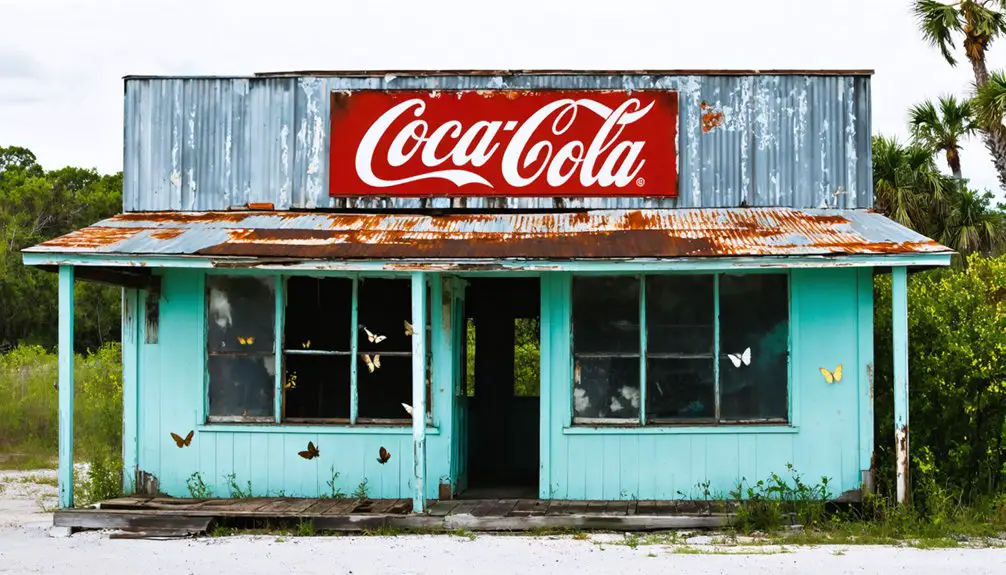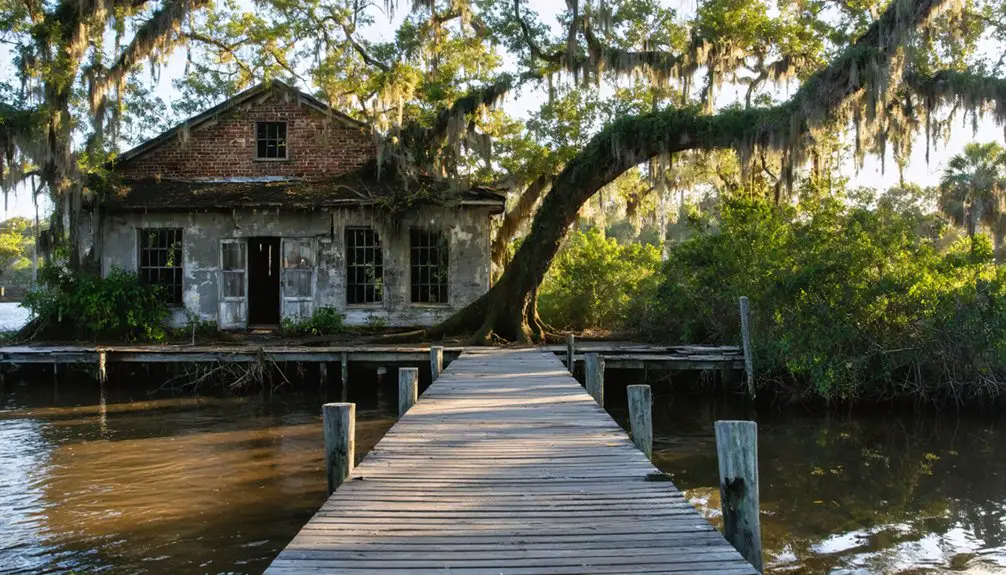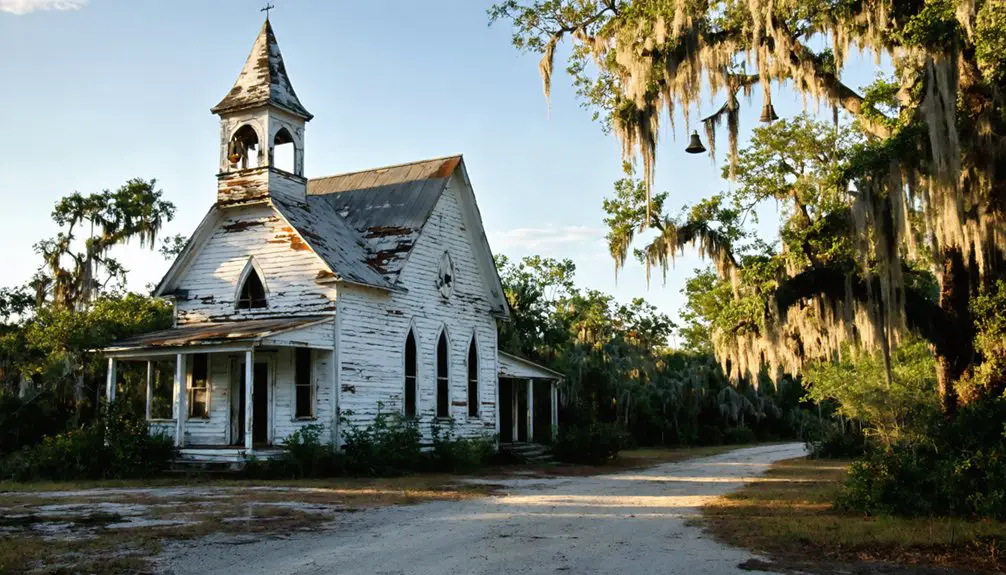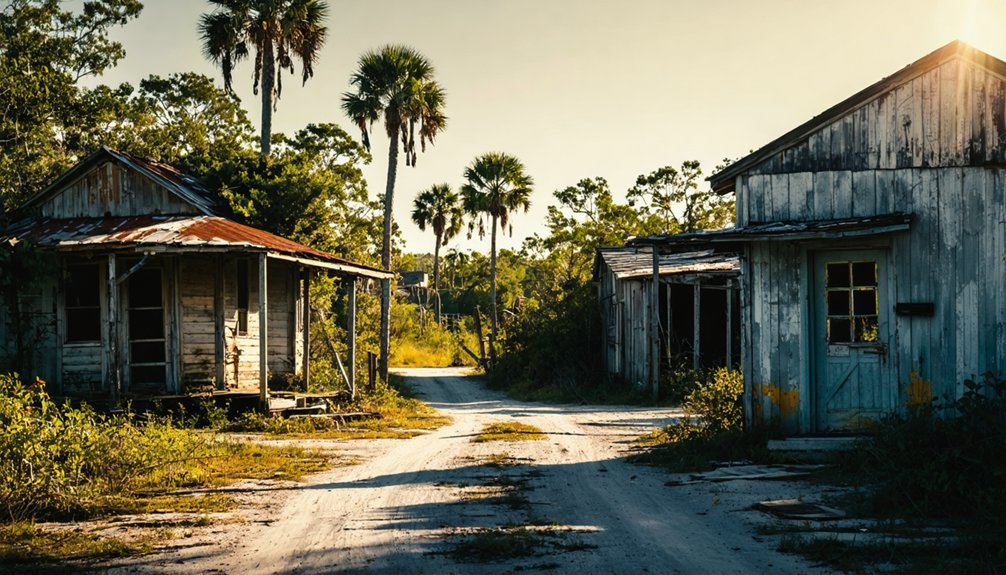
Planning a ghost town road trip to Hopewell, Florida means heading east from Tampa on SR 60, then turning south on CR 39 toward Lithia Pinecrest. You’ll discover weathered cracker-style homesteads, an old Baptist church, and a cemetery with roughly 100 graves marking post-Civil War settlers. Visit between fall and spring to beat the heat. Bring water, wear closed-toe shoes, and respect private property boundaries. There’s far more to this forgotten community’s story than first meets the eye.
Key Takeaways
- From Tampa, take SR 60 east, then turn south on CR 60 toward Lithia Pinecrest; the route is fully accessible by 2WD vehicles.
- Visit during fall, winter, or spring to avoid heat and storms; January through March offers ideal photography lighting.
- Key landmarks include the McDonald House, Hull House, Hopewell Baptist Church, and a cemetery with approximately 100 graves.
- Bring water, wear closed-toe shoes, respect private property boundaries, and maintain caution around wildlife and unstable structures.
- Hopewell transitioned from a plantation community to a phosphate mining area, making it a significant window into Florida’s history.
Why Hopewell Went From Thriving Settlement To Ghost Town
By the early twentieth century, Hopewell had quietly built itself into a self-sufficient rural community, complete with a sawmill, general store, pharmacy, school, and post office. Farmers shipped fruit and vegetables by 1914, and citrus packing plants followed by 1927. For a time, the town thrived on its own terms.
Then things shifted. Phosphate mining moved in during the mid-1920s, reshaping the land and drawing workers away from traditional farming. Agricultural decline followed as citrus operations consolidated and smaller homesteads couldn’t compete.
Population shifts pulled residents toward larger towns offering steadier work and modern conveniences. One by one, the businesses closed and the community hollowed out. What you’ll find today is a quiet rural landscape — overgrown, mostly forgotten, but still carrying the bones of everything Hopewell once was.
Hopewell’s History From Plantation To Ghost Town
Before Hopewell had a name, it had a plantation. The Turner Plantation anchored this stretch of east Hillsborough County long before emancipation reshaped the land into smaller homesteads.
Before Hopewell had a name, it had a plantation — and that plantation shaped everything that followed.
By 1870, settlers called the community Callsville, until J.R. McDonald arrived and renamed it Hopewell. That name carried real optimism — a post office, sawmill, general store, and school followed.
By 1914, farmers were shipping fruit and vegetables, and citrus packing plants were humming by 1927. Then phosphate mining moved in during the mid-1920s, quietly reshaping both the economy and the local flora beneath your feet.
Community legends still tie the McDonald and Hull families to the land. Today, overgrown homesteads and a standing Baptist church remind you that Hopewell lived fully before it faded.
What’s Left To See In Hopewell Today?
When you arrive in Hopewell today, you’ll find a quiet rural landscape where history still peeks through the overgrowth — the McDonald House, Hull House, and Hopewell Baptist Church all remain standing as tangible links to the community’s past.
The cemetery serves as the most prominent landmark, sitting near the center of the historic district and offering a sobering reminder of the families who once built their lives here.
You’ll also encounter abandoned homes and phosphate mine remnants scattered across the area, many swallowed by vines and vegetation, so tread carefully and respect the private property boundaries.
Historic Structures Still Standing
Though much of Hopewell has been reclaimed by vines and overgrowth, a handful of historic structures still stand as quiet reminders of the community that once thrived here. The McDonald House and Hull House represent the area’s surviving historic architecture, offering a tangible connection to the families who shaped this settlement.
Hopewell Baptist Church still stands as well, anchoring community memories that stretch back generations. Its associated cemetery remains one of the most visited and preserved landmarks on-site.
You’ll also spot scattered cracker-style homesteads throughout the landscape, though some sit in rough condition. Approach carefully, as certain structures are too deteriorated to safely explore.
Much of the surrounding land is private property, so always respect boundaries as you take in what remains.
The Cemetery Landmark
Of all the landmarks still holding their ground in Hopewell, the cemetery sits at the heart of what remains. You’ll find it near the center of the historic district, quietly anchoring the community’s layered past to the present landscape.
Cemetery history here runs deep, stretching back to the post-emancipation homesteaders who built their lives on divided plantation land. As you walk the grounds, grave preservation becomes personal — these markers represent the roughly 100 people who shaped Hopewell from Callsville into a functioning rural community.
Some stones show their age, weathered by Florida’s humidity and overgrowth, but the site remains intact. It’s a place where freedom, faith, and resilience are literally written in stone, making it one of the most meaningful stops on your visit.
Overgrown And Abandoned Sites
Beyond the cemetery, Hopewell’s remaining landscape tells its story through silence and slow decay. You’ll find cracker-style homesteads half-swallowed by vines, their wood frames leaning under decades of Florida heat and humidity. Nature reclaiming what humans left behind is everywhere here — oak roots cracking foundations, palmettos crowding doorways, and tree canopies swallowing rooflines.
The McDonald House and Hull House still stand, offering rare glimpses into the community’s domestic past. Hopewell Baptist Church remains intact, but surrounding structures reflect urban decay at its most honest. Some abandoned homes are too structurally compromised to safely enter, so keep your distance and observe from the road.
Much of this land is private property, so respect boundaries while you soak in the layered, overgrown history surrounding you.
How To Get To Hopewell From Tampa
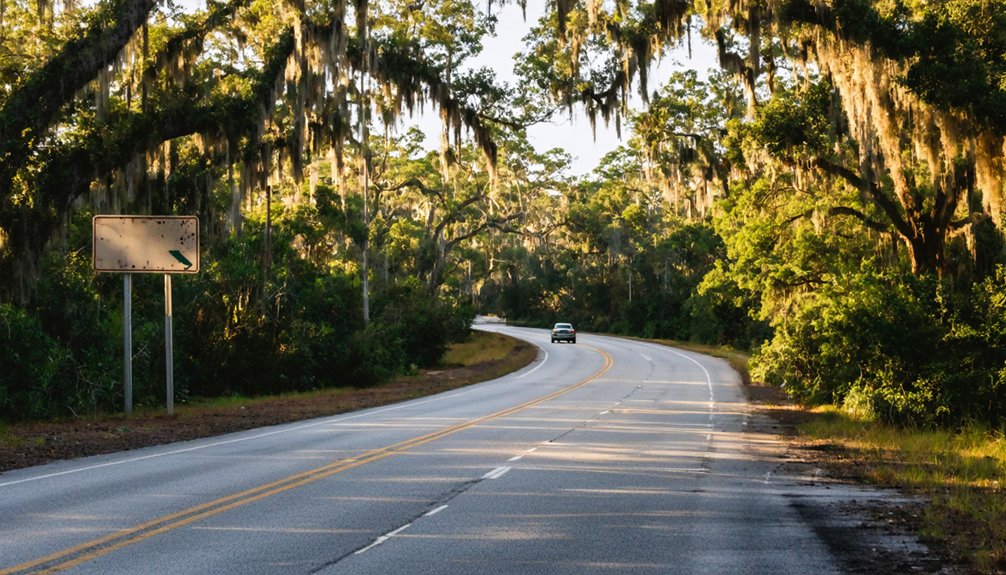
Getting to Hopewell from Tampa is straightforward, and the drive itself gives you a taste of old Florida before you even arrive. Head east on SR 60, watching for wildlife encounters along the roadside as the suburban sprawl fades into open ranchland.
The drive to Hopewell is half the experience — old Florida unfolding eastward along SR 60.
Turn south on CR 39 toward Lithia Pinecrest, and you’ll feel the shift immediately — the canopy closes in, the pace drops, and the landscape turns rural and raw.
The route is entirely 2WD-accessible, so no special vehicle is required.
Fall, winter, and spring offer the most comfortable conditions for exploring. Softer seasonal light also makes those months ideal for photography tips worth noting: golden hour along CR 39 rewards anyone with a camera ready.
Best Time To Visit Hopewell, Florida
Timing your visit matters as much as the route you take. Fall, winter, and spring offer the most comfortable conditions for exploring Hopewell’s overgrown streets and historic landmarks. You’ll avoid the brutal summer heat and afternoon thunderstorms that make outdoor exploration miserable.
Cooler months also improve your chances of wildlife sightings, since deer, birds, and native Florida species move more actively through the citrus groves and abandoned phosphate mine areas. Early morning arrivals reward patient visitors with golden light filtering through the trees, which makes for stunning photography tips — bring a wide-angle lens to capture the weathered McDonald House and the cemetery’s quiet atmosphere.
January through March hits the sweet spot. The skies stay clear, the crowds stay thin, and the history feels closer than ever.
Private Property, Road Conditions, And What To Know Before You Go
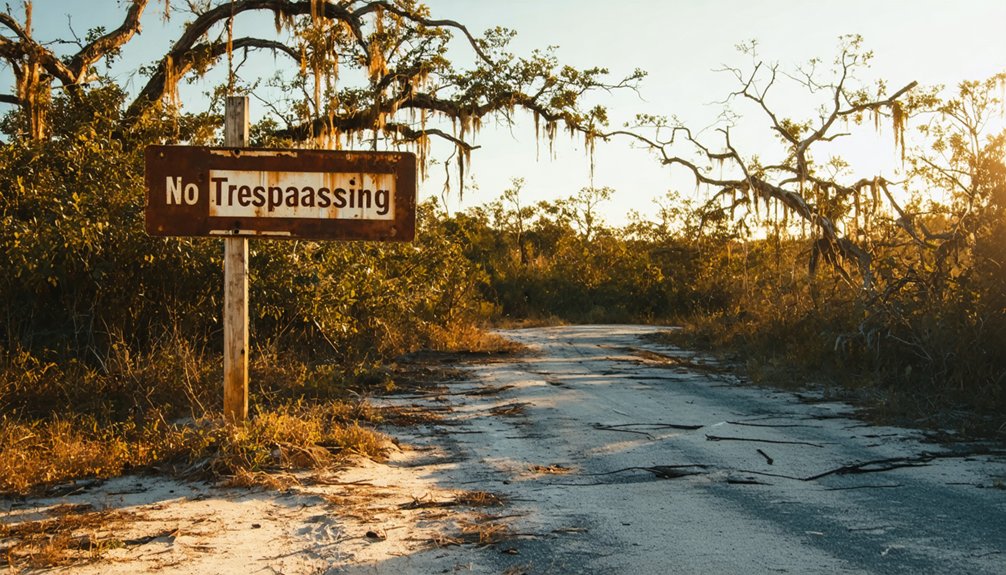
Before you load up the car and head down SR 60, there are a few practical realities about Hopewell that’ll shape your visit. Much of the land surrounding the historic structures is private property, so stick to public roads and the cemetery area unless you’ve confirmed access. Trespassing risks aren’t just legal — local wildlife, including snakes and wild hogs, roam the overgrown lots freely.
Road conditions are straightforward; SR 39 is paved and 2WD-accessible, so no off-road vehicle is necessary. However, preservation challenges mean some structures are structurally unstable and unsafe to enter. Photograph from a distance when in doubt.
Bring water, wear closed-toe shoes, and respect the landscape. Hopewell rewards curious, respectful visitors who treat the site as living history rather than an abandoned playground.
Frequently Asked Questions
What Was Hopewell’s Original Population at Its Peak?
Like a small campfire that never grew into a bonfire, Hopewell’s ghost town history peaked at just 100 people. You’ll find that population decline transformed this once-lively community into the quiet, overgrown landscape you can explore today.
Who Is Credited With Renaming Callsville to Hopewell?
You’ll find that J.R. McDonald’s credited with renaming Callsville to Hopewell, a pivotal moment in ghost town history. His legacy lives on through local legends, shaping the free-spirited, independent community you’re about to explore.
Is Hopewell Baptist Church Still an Active Congregation Today?
The knowledge doesn’t confirm it’s active, but you’ll find Hopewell Baptist Church standing strong, rich in historic architecture and local legends. It’s a must-see landmark that connects you to the community’s deeply rooted, freedom-shaped past.
Are the Abandoned Phosphate Mines Visible From the Main Road?
By the 1940s, phosphate mining had reshaped this entire region. You’ll spot remnants of abandoned mine exploration just off SR 39, offering raw phosphate history insights that’ll fuel your adventurous spirit as you cruise through Hopewell’s untamed, open landscape.
Was Hopewell Established Before or After the Civil War?
Hopewell’s roots stretch before the Civil War — you’ll find its origins tied to the Turner Plantation. After emancipation, it transformed, with historical architecture and local legends shaping a free community that still echoes independence today.
References
- https://www.ghosttowns.com/states/fl/hopewell.html
- https://floridatrailblazer.com/tag/ghost-towns/
- https://www.timeout.com/florida/florida-ghost-towns
- https://www.reddit.com/r/florida/comments/gfwzvw/hopewell_fl/
- https://urbexunderground.com/ghost-towns-in-florida/
- https://en.wikipedia.org/wiki/List_of_ghost_towns_in_Florida
- https://timelessdishes.org/10-florida-ghost-towns-that-reveal-the-states-forgotten-side/
- http://hillsborough.wateratlas.usf.edu/upload/documents/HILLSBOROUGH_COUNTY_Historic_Resources_Excerpts_Hopewell.pdf
- https://secretmiami.com/spooky-ghost-towns-florida/