Planning a ghost town road trip to Willoughby, Vermont means heading deep into the Northeast Kingdom, where Westmore’s twice-abandoned history lingers in foundation lines, overgrown lots, and forgotten mill sites along Lake Willoughby’s shores. You’ll drive Route 5A past dramatic cliffs, a glacially carved lake exceeding 300 feet deep, and landscapes shaped by collapse and resettlement. It’s hauntingly beautiful, historically rich, and barely touched by modern development. Keep going, and the full story gets even more intriguing.
Key Takeaways
- Lake Willoughby, carved by glaciers 10,000 years ago, sits between Mt. Hor and Mt. Pisgah in Vermont’s remote Northeast Kingdom.
- Reach the area by flying into Burlington International Airport, then driving two hours northeast along Route 5A.
- Abandoned foundation lines, overgrown lots, and earthwork traces mark former hotels, mills, and factories from Westmore’s collapsed settlements.
- Visit between late June and mid-October for open roads, peak foliage, fishing, boating, hiking, and swimming.
- Local folklore includes legends of a drowned man named Willoughby and an 1868 reported “great water snake” sighting.
Why Westmore, Vermont Feels Like a Ghost Town
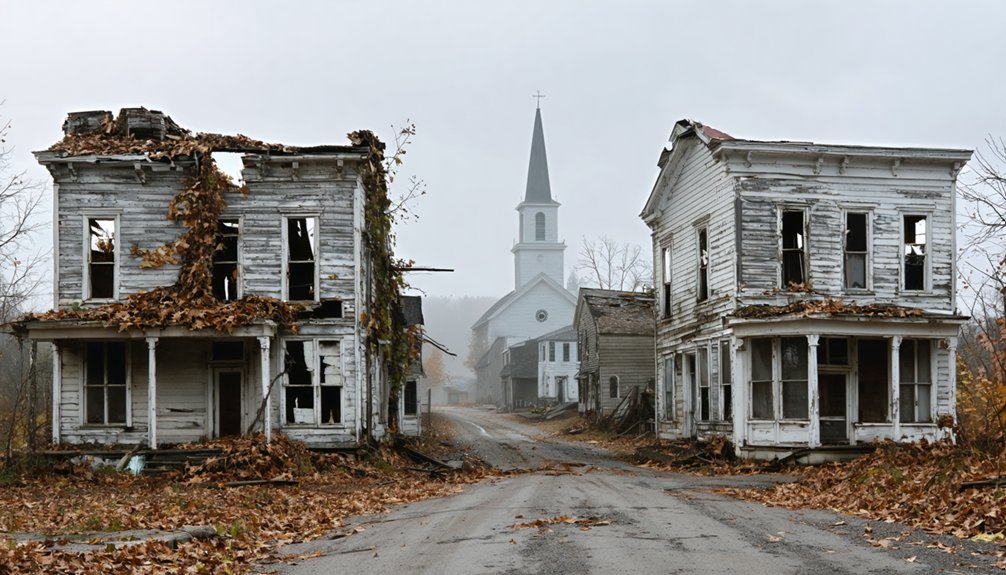
When you arrive in Westmore, Vermont, you’ll notice something immediately — the quiet isn’t peaceful, it’s historic. This town was granted in 1780, abandoned around 1812, and barely resettled by 1830.
Westmore’s quiet isn’t peaceful — it’s the silence of a town that was granted, abandoned, and barely remembered.
By 1820, only 18 people called it home. The numbers tell the story before the landscape does.
You’ll find no dense town center here, just traces of mills, old hotel corridors near Lake Willoughby, and scenic viewpoints framed by Mt. Hor and Mt. Pisgah.
The first public road wasn’t built until 1852 — decades after people tried and failed to root here.
Local legends about a lake monster and a drowned horseman add another layer to the isolation. Westmore doesn’t perform its ghost-town status. It simply lives it.
The History Behind Westmore’s Abandonment
Westmore’s quiet didn’t happen by accident — it was earned through decades of failed attempts to make this corner of Vermont work. Before you explore its abandoned structures, know what shaped this ghost town:
- 1780–1781 — Westmore was granted and chartered, drawing hopeful settlers from Connecticut.
- 1797 — First settlers arrived, only to face brutal mountainous terrain that limited growth.
- 1812 — The settlement collapsed entirely, leaving the land empty for nearly two decades.
- 1830–1833 — Resettlement began, and the town was reorganized, though population stayed painfully sparse.
You’re not visiting a town that gradually faded — you’re walking into a place that was surrendered twice.
That surrender is exactly what makes Westmore worth the drive.
The Mills and Factories Westmore Left Behind
As you explore the area around Westmore’s mill brook, you’ll find traces of a surprisingly active industrial past. A sawmill, bobbin factory, scythe stone factory, and clapboard and shingle machine once drew power from the brook’s current.
Making this small corridor more productive than its sparse population suggests. These forgotten factory remnants sit quietly along a route that rewards visitors who look past the scenery to read the landscape’s history.
Mills Along The Brook
Before the resort crowd ever discovered Lake Willoughby, Westmore’s earliest settlers were already putting the land to work. A mill brook running through town powered a small industrial corridor that left behind ancient artifacts and local legends worth chasing on your road trip.
The brook once supported four distinct operations:
- A sawmill cutting timber from the surrounding forests
- A bobbin factory producing spools for textile mills
- A scythe stone factory shaping tools for regional farms
- A clapboard and shingle machine supplying building materials
You won’t find these structures standing today, but you’ll feel their absence walking the brook’s edge. That quiet stretch of water once drove a self-sufficient community before harsh conditions pushed settlers out entirely around 1812.
Forgotten Factory Remnants
What the brook took with it when it quieted down is harder to see than the water itself — but the evidence of Westmore’s industrial past is still worth hunting for. The mill brook once powered a bobbin factory, a scythe stone factory, and a clapboard and shingle machine, all operating within a small stretch of what’s now quiet woodland.
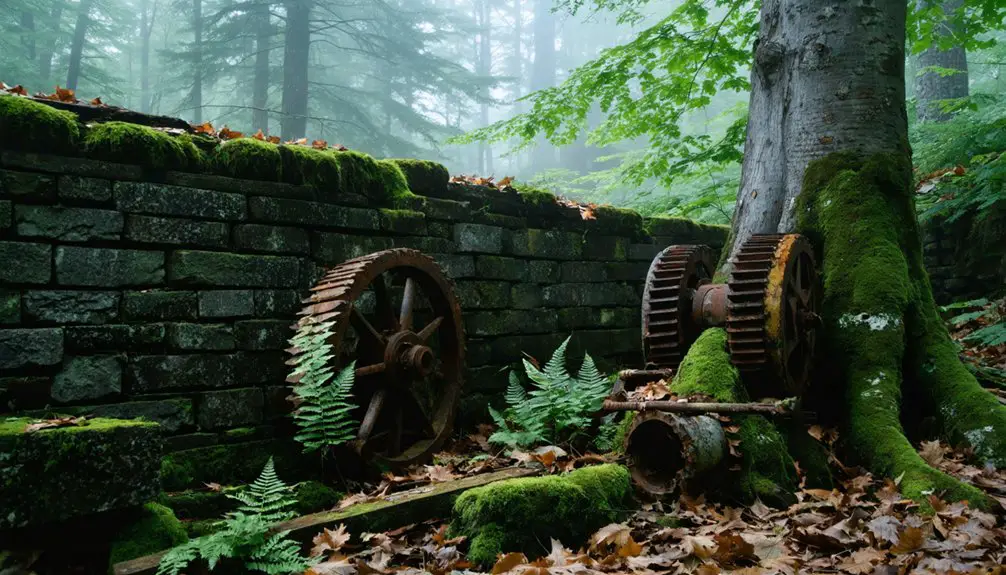
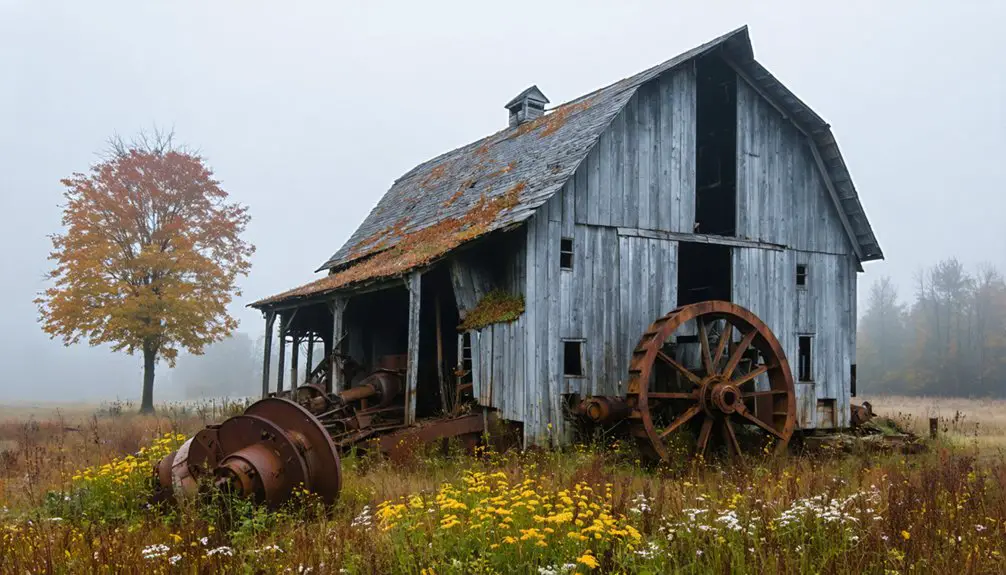
You won’t find dramatic industrial relics standing upright here, but you’ll find traces if you look closely — foundation lines, flattened clearings, and soil that doesn’t quite match the surrounding forest floor. Abandoned machinery rarely survives Vermont winters for long, but the layout of the land still tells the story.
Walk slowly, and you’ll read it.
The Hotels That Disappeared From Willoughby’s Shore
When you stand at Lake Willoughby’s southern shore today, you’re looking at the same spot where Alonzo Bemis and his associates built the Lake House hotel in 1852.
The mills that lined the nearby brook didn’t just process lumber and bobbins — they powered the small economy that made lakefront hospitality possible in the first place.
Now those hotels are gone, leaving only the water, the mountains, and the quiet outline of a resort corridor that never quite took hold.
Early Lakefront Hotel Builders
As the lake’s reputation for dramatic scenery spread, entrepreneurs moved quickly to capitalize on it. Two early builders shaped Willoughby’s historical architecture and left traces that local folklore still references today.
Here’s what you should know about the pioneers:
- 1852 — Alonzo Bemis and associates constructed the Lake House hotel at the lake’s southern end.
- Eastern shore — Peter Gilman built a competing hotel shortly after Bemis established his operation.
- Mill brook village — A small settlement grew nearby, supporting mills and manufacturing alongside hospitality.
- Industrial mix — The brook powered a sawmill, bobbin factory, scythe stone factory, and clapboard and shingle machine.
These weren’t casual ventures. These builders gambled on Willoughby’s wild beauty, and for a time, they won.
Mills Supporting Hotel Growth
Behind every hotel that once lined Willoughby’s shore, a working mill kept the operation alive. Near the mouth of the mill brook, you’ll find the industrial ruins of a sawmill, bobbin factory, scythe stone factory, and clapboard and shingle machine — all powered by moving water.
These operations supplied the raw materials that built and sustained the lakefront hotels through the mid-1800s.
When you walk this corridor today, the silence hits differently knowing what once ran here. The machinery is gone, but the geography tells the story.
Layer in the folklore legends surrounding the lake — a monster lurking below, a drowned man giving the lake its name — and the whole stretch carries an eerie weight.
This wasn’t just a resort. It was a working, breathing community that quietly disappeared.
Hotels Left Behind
By 1852, the southern end of Lake Willoughby had its first real hotel — the Lake House, built by Alonzo Bemis and his associates. Peter Gilman soon added another on the eastern shore. Today, both are gone, leaving you to read the landscape instead of a brochure.
As you explore, watch for these historic landmarks and remnants:
- Foundation outlines where the Lake House once stood
- Overgrown lots that once served lakefront guests
- Abandoned cabins scattered along the shoreline corridor
- Stone and earthwork traces near former access points
The hotels didn’t survive, but the setting that drew visitors remains unchanged. You’re standing where Vermont’s early tourism quietly rose and fell, framed by Mt. Hor and Mt. Pisgah on either side.
Legends and Haunted Lore Around Lake Willoughby
Lake Willoughby doesn’t just haunt you with its dramatic cliffs and glacial depths — it comes with its own cast of legends to match. Folklore traditions here run deep, and haunted sightings have shaped how locals talk about this remote stretch of water for generations.
Lake Willoughby doesn’t just haunt you — it comes with its own cast of legends to match.
An 1868 newspaper account reported a “great water snake” killed by a boy named Stephen Edmonds — one of the lake’s most specific and unsettling stories.
Another tale claims the lake was named for a man named Willoughby who drowned when ice gave way beneath a horse-drawn sled. No clear record confirms the origin of the name, which only adds to the mystery.
When you stand between Mt. Hor and Mt. Pisgah, those stories feel entirely possible.
Lake Willoughby’s Glacial Depths and Mountain Setting
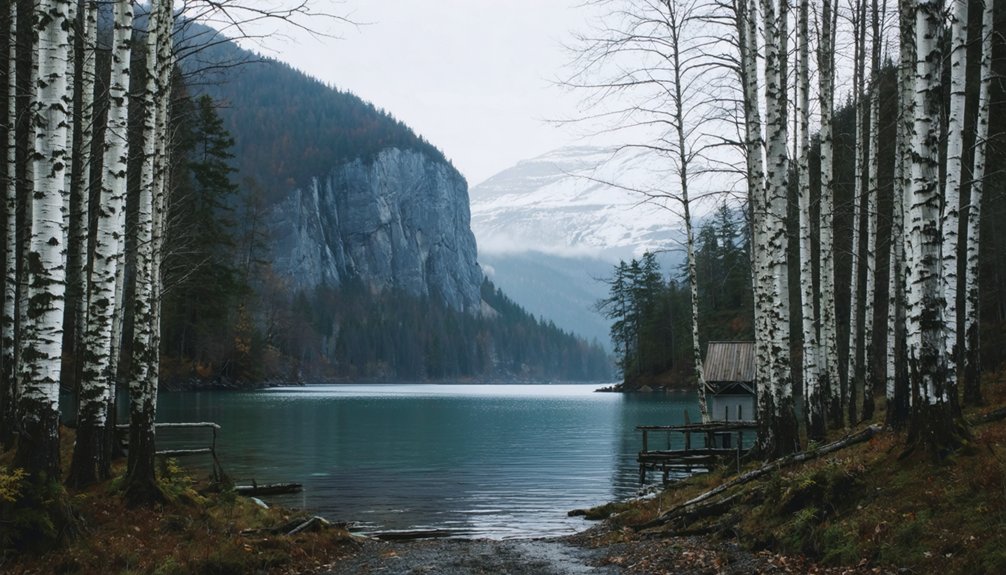
Carved by glacial action roughly 10,000 years ago, Willoughby stretches more than five miles between Mt. Hor and Mt. Pisgah. It drops over 300 feet at its deepest point. This lake formation makes it Vermont’s deepest lake, a dramatic result of glacial history reshaping the Northeast Kingdom’s rugged terrain.
When you stand at the shoreline, the mountain walls rising on both sides create an almost surreal sense of isolation.
Before you visit, keep these facts in mind:
- The lake covers roughly 2 square miles of surface area
- Glacial carving created its extraordinary depth
- Mt. Hor and Mt. Pisgah frame both sides
- Fishing, swimming, and boating remain accessible today
You’re not just seeing a lake — you’re witnessing ancient geological force.
Fishing, Swimming, and Hiking the Cliffs Above Lake Willoughby
Whether you’re drawn to the water or the heights above it, Lake Willoughby delivers on both fronts. You can cast a line into depths exceeding 300 feet, where cold-water species thrive year-round. The swimming areas along the shoreline offer clear, invigorating water framed by dramatic cliffs.
If you prefer elevation, hike the trails up Mt. Pisgah or Mt. Hor for scenic vistas that stretch across the Northeast Kingdom. Standing above the lake, you’ll understand why local folklore made this place feel mythic and untamed. The cliffs drop sharply toward the water below, creating a view that’s genuinely hard to forget.
This isn’t a manicured resort stop. It’s raw Vermont landscape that rewards the curious traveler willing to move beyond the pavement.
Getting to Lake Willoughby in Vermont’s Northeast Kingdom
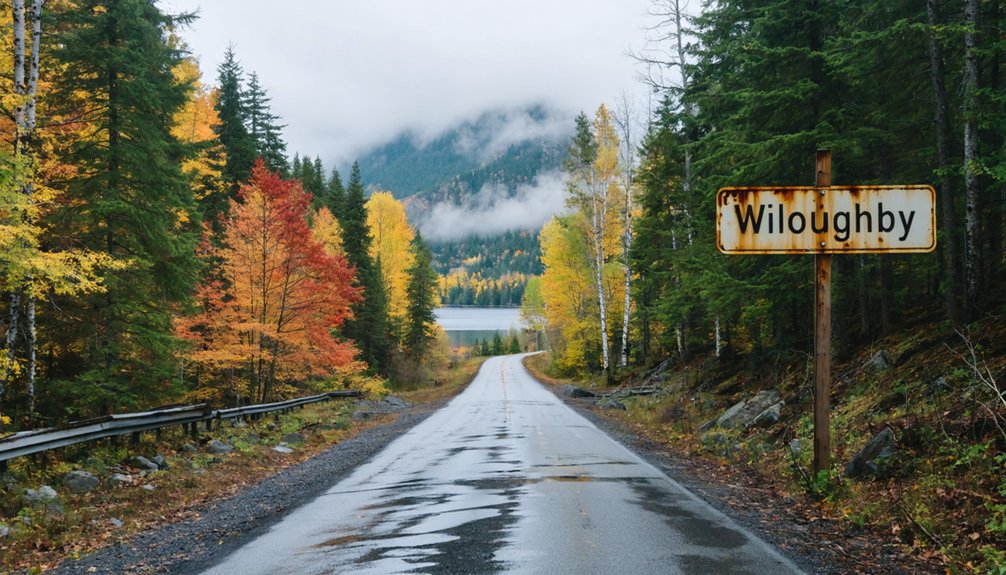
Reaching Lake Willoughby takes you deep into Vermont’s Northeast Kingdom, a region that still feels genuinely remote. You’ll drive through dense forest corridors supporting active wildlife conservation efforts, passing landscapes that rarely see heavy tourist traffic.
Plan your route using these key tips:
- Fly into Burlington International Airport, then drive roughly two hours northeast toward Westmore.
- Take Route 5A along the lake’s eastern shore for the most dramatic approach between Mt. Hor and Mt. Pisgah.
- Visit during summer cultural festivals in nearby Orleans County to combine history with local celebration.
- Pack supplies before arriving since services near the lake remain sparse by design.
The isolation isn’t a drawback — it’s exactly what makes this ghost-town road trip worth taking.
The Best Season to Road Trip to Lake Willoughby
Each season brings something different to Lake Willoughby, but summer gives you the fullest experience — warm enough for swimming and boating, with long daylight hours to explore the shoreline between Mt. Hor and Mt. Pisgah.
Fall earns a close second, when seasonal foliage transforms the mountain slopes into vivid color, making the drive through Vermont’s Northeast Kingdom genuinely spectacular. Wildlife sightings also peak during autumn, so keep your eyes on the tree lines and lake edges.
Winter closes off much of the area and limits access, while spring can leave roads muddy and unpredictable.
If you want open roads, striking scenery, and the freedom to move at your own pace, plan your trip between late June and mid-October.
Frequently Asked Questions
Are There Any Campgrounds or RV Hookups Near Lake Willoughby?
You’ll find thousands of camping options near this hauntingly beautiful lake! Historical ghost towns and abandoned mining sites await as you set up camp at nearby campgrounds offering RV hookups, perfect for your wild, free-spirited adventure.
Is Lake Willoughby Suitable for Kayaking or Canoeing Trips?
You’ll love paddling Lake Willoughby’s crystal waters while soaking in scenic mountain views of Mt. Hor and Mt. Pisgah. It’s a perfect way to explore this hauntingly beautiful region steeped in historic ghost towns and glacial legends.
Are Pets Allowed on the Beaches and Trails at Lake Willoughby?
Your adventure’s leash has limits here — pet friendly beaches aren’t guaranteed at Lake Willoughby. You’ll want to check trail access restrictions before arriving, as rules shift seasonally and vary by location.
What Nearby Towns Offer Lodging Options Close to Westmore?
You’ll find lodging in nearby Barton, Newport, and Lyndonville, all offering cozy stays close to Westmore’s historic ghost towns and breathtaking scenic mountain views, giving you the freedom to explore Lake Willoughby at your own pace.
Is There Cell Phone Service or Wi-Fi Available Near Lake Willoughby?
Cell service coverage can be spotty near Lake Willoughby’s remote Northeast Kingdom location, so don’t rely on it. Wi-Fi availability improves if you’re staying at nearby lodging in surrounding towns like Barton or Lyndonville.
References
- https://oldstonehousemuseum.org/westmore/
- https://happyvermont.com/2014/10/23/glastenbury-ghost-town/
- https://www.vermonter.com/vermont-ghost-stories/
- http://freepages.rootsweb.com/~gtusa/history/usa/vt.htm
- https://www.youtube.com/watch?v=ScW-H7A8yL8
- https://brynnswim.com/lake-willoughby-legend-of-the-lake-monster/
- https://www.willoughvale.com/history-of-the-willoughvale-inn-on-lake-willoughby-vt
- https://www.vermonter.com/lake-willoughby-westmore-vermont/
- https://newenglandwithlove.com/ghost-towns-in-vermont/
- https://en.wikipedia.org/wiki/Lake_Willoughby