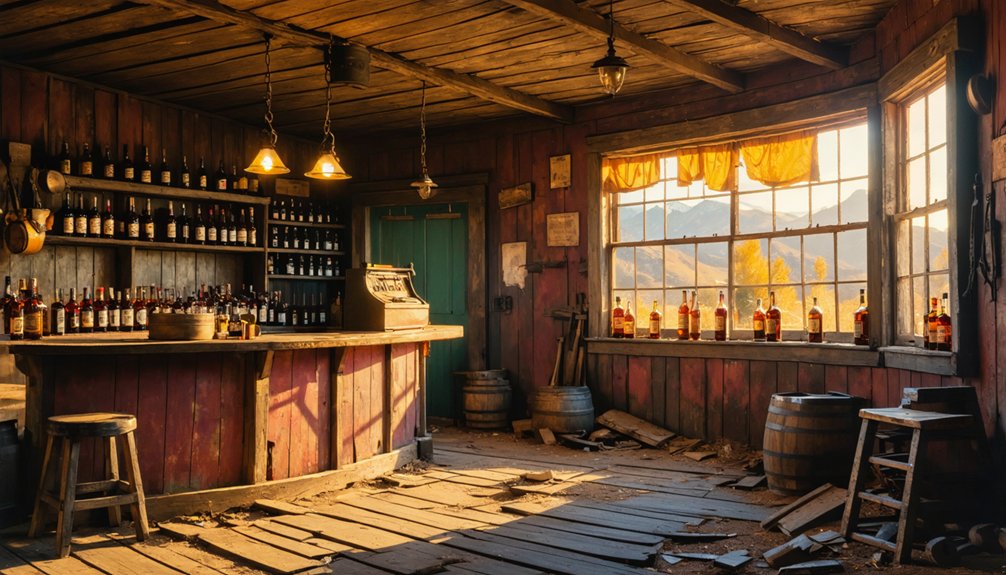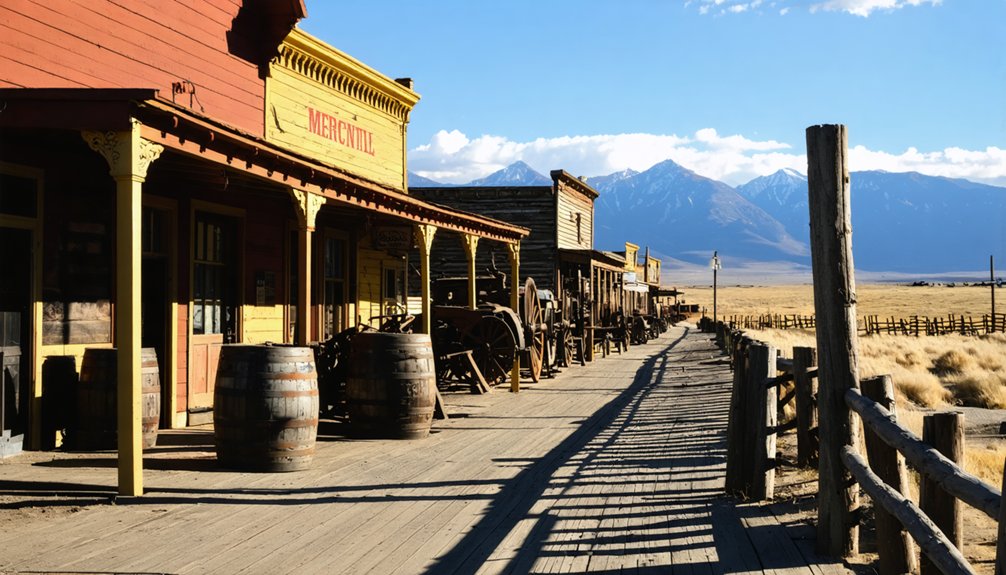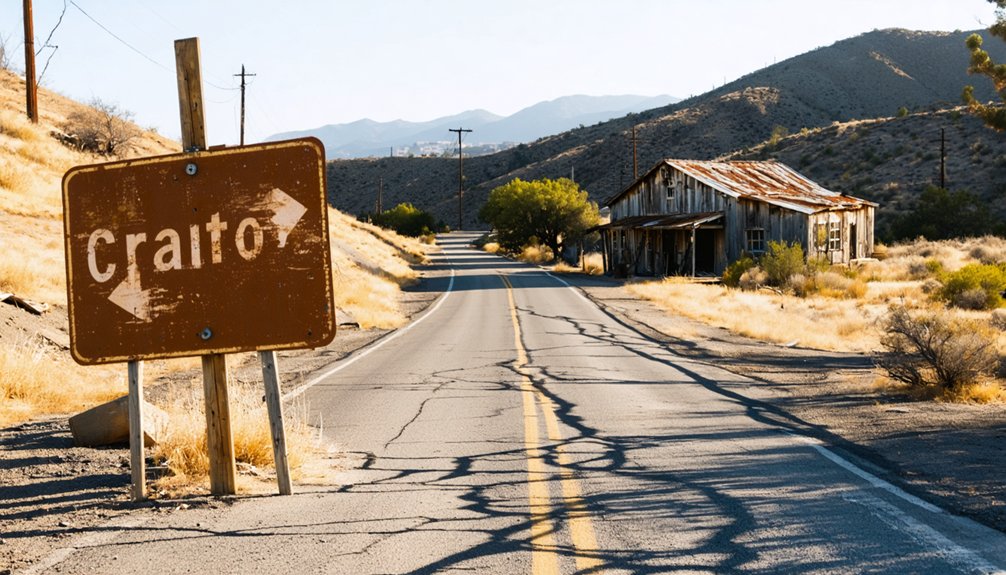
Planning a ghost town road trip to Inskip, California means heading into Butte County’s northern Sierra Nevada, where a forgotten boomtown sits frozen in time at nearly 4,800 feet elevation. You’ll follow SR 70 and SR 191 through rugged mountain terrain to reach this gold rush-era relic, where the haunted Inskip Hotel still stands after more than 165 years. There’s more to this eerie destination than meets the eye—and it’s all worth exploring.
Key Takeaways
- Inskip sits at nearly 4,800 feet in Butte County; access via SR 70 and SR 191 through scenic northern Sierra Nevada mountain terrain.
- The 1857 Inskip Hotel, listed on the National Register of Historic Places, is the last surviving significant structure from the town’s gold rush era.
- Visit the nearby Inskip Pioneer Cemetery, about a mile south, for additional historical storytelling and cultural preservation opportunities.
- The hotel is rumored to be haunted by a ghost named Charley, with visitors reporting unexplained sounds and an eerie presence.
- Visit between May and October for the best road conditions; avoid winter travel due to hazardous mountain roads on SR 191.
What Is Inskip, California: and Why Do Ghost Town Hunters Keep Coming Back?
Tucked into a ravine off SR 191 in Butte County, Inskip sits at nearly 4,800 feet in the northern Sierra Nevada, quietly holding onto what’s left of a mining boomtown that once drew over 1,000 residents during California’s gold rush era.
Nestled in a Butte County ravine at 4,800 feet, Inskip once bustled with over 1,000 gold rush settlers.
What started as a stage stop in the 1850s grew fast, then faded just as quickly when the gold dried up.
Today, the surviving Inskip Hotel anchors the site as one of northern California’s most authentic historical artifacts, listed on the National Register of Historic Places.
Ghost town hunters keep coming back because this place delivers more than typical tourist attractions.
You’ll find real ruins, a haunted hotel with a ghost named Charley, and a pioneer cemetery just a mile south, all waiting on your terms.
How to Get to Inskip, California
You’ll reach Inskip by heading north from Sacramento and picking up the SR 70/SR 191 corridor through the northern Sierra Nevada foothills.
The route cuts through mountain terrain near Lassen National Forest, so expect forested, winding roads as you get closer to the ravine where the town sits at nearly 4,800 feet.
Along the way, you’ll pass through classic Gold Rush country, making it easy to string together nearby mining-history stops before you arrive.
Route Overview And Access
Getting to Inskip means heading into the forested hills of northern Butte County, where SR 70 and SR 191 serve as your main corridors north of Sacramento. These mountain roads wind through terrain shaped by mining history, delivering you to a ravine-bottom ghost town sitting at nearly 4,800 feet elevation near Lassen National Forest.
You’ll follow the same route that once carried stage coaches, prospectors, and supply wagons along the old Oroville-Susanville-Honey Lake Road. When you arrive, the surviving historical architecture of the Inskip Hotel anchors the site visually and historically.
Local legends about arson and a ghost named Charley add an atmospheric layer to the drive. Plan your approach from the SR 70 corridor for the most straightforward access through the northern Sierra foothills.
Key Highways To Take
Reaching Inskip starts on SR 70, the primary artery that cuts northeast through the northern Sierra foothills from Oroville. Follow it until you connect with SR 191, which drops you into the ravine where Inskip sits at roughly 4,777 feet elevation.
These roads once carried miners, freight wagons, and stagecoaches along the Oroville-Susanville-Honey Lake Road, so every mile carries genuine cultural significance. You’re not just driving pavement — you’re tracing a corridor that shaped California’s gold rush economy.
The mountain terrain stays forested and dramatic, keeping the drive engaging. Once you arrive, the Inskip Hotel and scattered ruins hold historical artifacts that anchor the town’s story.
Coming from Sacramento, head north and pick up SR 70 near Marysville for the most direct approach.
Nearby Landmarks En Route
The SR 70 and SR 191 corridor doesn’t just deliver you to Inskip — it strings together several landmarks worth slowing down for along the way. You’ll pass through mountain terrain edging Lassen National Forest, where forested switchbacks reward anyone who takes their time. Watch for pull-offs that frame the West Branch of the Feather River below — it’s the same waterway that drew gold seekers here in the 1850s.
Historic architecture surfaces at unexpected turns, echoing the mining-era boomtown energy that once packed these hills. Before rolling into Inskip itself, budget a stop at the Inskip Pioneer Cemetery, about a mile south of town. Local legends tied to these grounds deepen the story you’re already piecing together — and set the mood perfectly before reaching the hotel.
The Inskip Hotel: The Last Building Left Standing
When you arrive at Inskip, the hotel is impossible to miss — it’s the last significant structure still standing in what was once a thriving mining town. Built in 1857, the Inskip Hotel survived a destructive fire in 1868, only to be rebuilt that same year, a resilience that mirrors the grit of the gold rush era itself.
That storied history earned it a spot on the National Register of Historic Places in 1975, when it was recognized as the only hotel in Butte County in continuous operation for over 125 years.
Hotel’s Fiery Past
Standing as the last structure left from Inskip’s boomtown days, the Inskip Hotel has a past shaped by fire, resilience, and more than a little mystery. First built in 1857, it sold to John Stokes in 1866, then burned to the ground in 1868. Stokes rebuilt it that same year, preserving its historical architecture through sheer determination.
Here’s what makes this survivor worth your stop:
- Rebuilt within months after a suspicious 1868 fire possibly linked to arson
- Operated continuously as a stage stop for over 125 years
- Listed on the National Register of Historic Places in 1975
- Rumored to contain mining artifacts and host a ghost named Charley
That kind of history doesn’t just sit quietly — it pulls you in.
National Register Listing
Surviving fire and decades of hard use, the Inskip Hotel earned its place on the National Register of Historic Places in 1975 — recognized not just as a curiosity, but as the only hotel in Butte County documented in continuous operation for over 125 years.
That designation means you’re not just visiting a crumbling shell — you’re walking through a protected landmark still anchored in its original footprint. Historical artifacts tied to the mining era surround the site, giving you tangible connections to Inskip’s boomtown past.
Local legends, including the story of a ghost named Charley said to haunt the hotel, add an unexpected layer to your visit. The listing confirms what the building itself already tells you — some places refuse to disappear quietly.
What’s Still Standing at the Inskip Townsite Today?
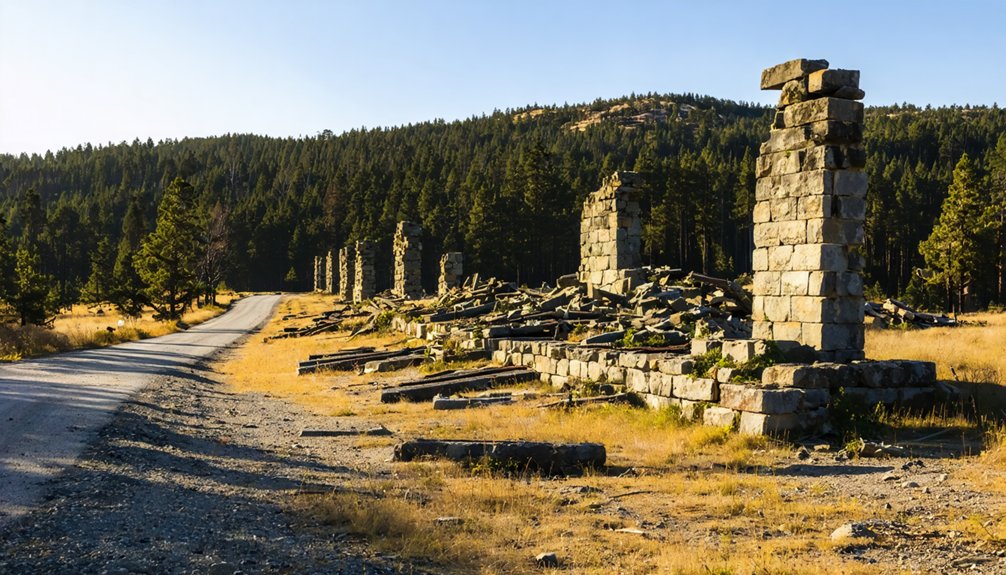
After the gold rush boom faded and the miners moved on, Inskip was left with little more than echoes — but one remarkable structure still anchors the townsite today. The Inskip Hotel, listed on the National Register of Historic Places, stands as your clearest connection to the town’s storied past.
Beyond the hotel, a few smaller buildings scatter the site, hinting at the bustling community that once thrived here.
Scattered remnants of smaller buildings still dot the site, quiet witnesses to a community that once buzzed with life.
Here’s what you’ll find worth exploring:
- The historic Inskip Hotel, survivor of the 1868 fire
- Smaller outlying structures tied to local legends, including the ghost named Charley
- Scattered historical artifacts throughout the surrounding area
- The Inskip Pioneer Cemetery, roughly one mile south
It’s a compact but genuinely haunting stop on any northern California ghost-town road trip.
Is the Inskip Pioneer Cemetery Worth a Stop?
This stop matters for cultural preservation — these markers document lives that formal history often overlooks.
You’ll also find threads of local legends woven into the stories surrounding certain graves, adding mystery to your visit.
If you’re serious about understanding Inskip beyond its surviving structures, the cemetery delivers that depth.
It’s a quiet, worthwhile detour that rounds out your road trip with genuine historical weight rather than spectacle.
The Dark History Behind Inskip’s 1868 Fire
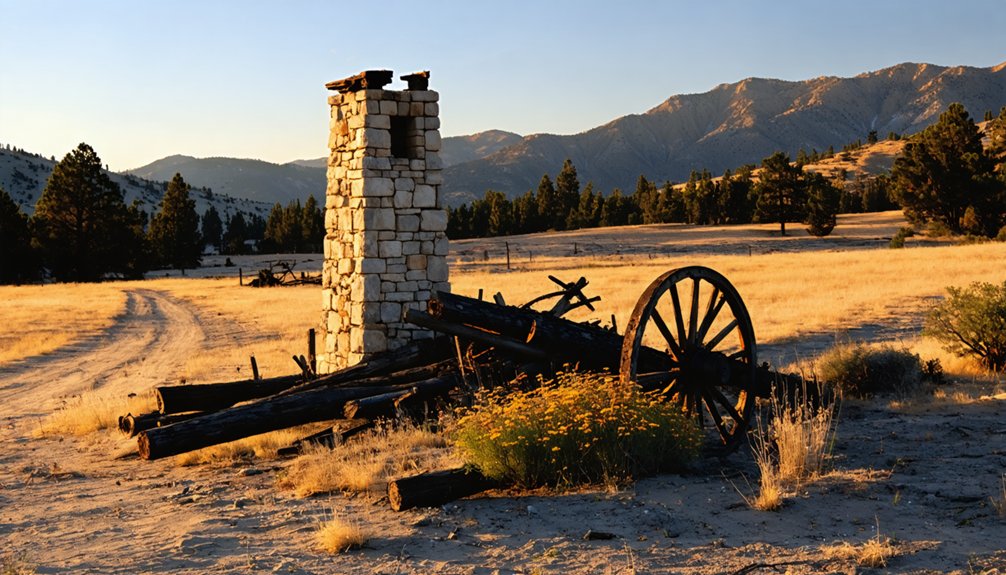
When you look at the charred chapter of Inskip’s past, the 1868 fire stands out as one of its most unsettling events. Locals didn’t accept the blaze as an accident, and arson rumors quickly spread, pointing fingers at unnamed suspects with possible grudges or motives tied to the town’s competitive business scene.
Yet the community pushed back hard, rebuilding the hotel that same year and refusing to let the destruction write the final word on Inskip’s story.
The Suspicious 1868 Blaze
Just eleven years after its founding, the Inskip Hotel burned to the ground in 1868 — and not everyone believed it was an accident. Local legend points to arson, adding a darker chapter to this already rugged mining town’s story. When you walk the site today, that history feels embedded in the surviving historical architecture and scattered mining relics.
Here’s what makes the 1868 fire compelling:
- Suspicious timing fueled arson rumors that never fully disappeared
- The hotel was rebuilt that same year, suggesting serious financial interest in the site
- A ghost named Charley is said to haunt the rebuilt structure
- The fire marked a turning point in Inskip’s slow decline
You’re not just visiting ruins — you’re standing inside a genuine mystery.
Arson Rumors And Suspects
Although no official investigation ever named a culprit, the arson rumors surrounding the 1868 Inskip Hotel fire never fully faded — and it’s easy to understand why. Boomtown rivalries ran fierce, and Inskip’s success made it a target for jealousy and greed.
Competing merchants, displaced miners, and shadowy business dealings all fed the speculation.
When you walk the site today, you’ll notice how the surviving historical architecture tells only part of the story. The gaps — the missing structures, the lost mining relics, the scorched past buried beneath overgrowth — hint at what the fire erased.
Locals whispered names, but nobody ever proved anything. That ambiguity is exactly what makes Inskip compelling. You’re not just visiting ruins; you’re stepping into an unsolved chapter of California’s gold rush era.
Rebuilding After The Fire
Whatever started the fire, the aftermath told its own story. The community didn’t walk away — they rebuilt the Inskip Hotel that same year, 1868, proving how much the structure meant to everyone passing through.
That rapid recovery speaks directly to its cultural significance along the Oroville-Susanville-Honey Lake Road. Consider what came out of that rebuilding effort:
- A stronger, more permanent structure replaced the original
- Stage travelers regained a reliable midway stop
- The hotel continued operating for over 125 years after reconstruction
- Preservation efforts eventually earned it a spot on the National Register of Historic Places in 1975
You’re not just visiting ruins here. You’re standing near a building that refused to disappear, surviving fire, economic decline, and time itself.
Is Charley the Ghost Still Haunting the Inskip Hotel?
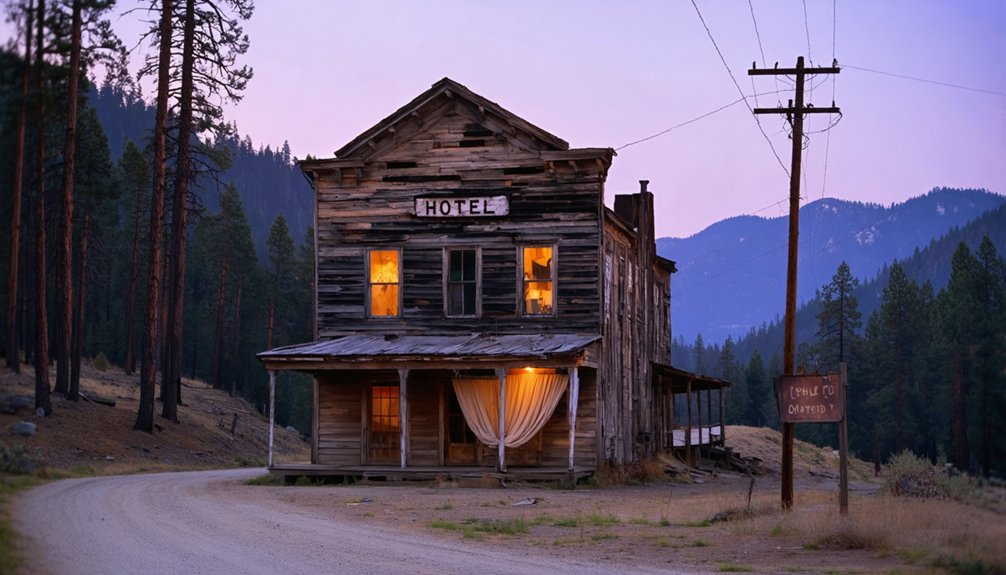
Could a ghost named Charley still be wandering the creaky halls of the Inskip Hotel? Local haunted legends say yes. Charley allegedly never checked out after the 1868 fire, and visitors today still report unexplained sounds and an eerie presence inside the old walls.
Whether you believe it or not, the story adds a compelling layer to your visit. Preservation efforts have kept enough of the hotel intact that you can actually stand where Charley supposedly roams. You’re not just reading history — you’re standing inside it.
If you’re the type who chases authentic, off-the-beaten-path experiences, Inskip delivers something most ghost towns can’t: a haunted hotel with a name, a story, and walls still standing to tell it.
When to Visit Inskip for the Best Road Trip Conditions
Charley may keep year-round hours, but your road trip to Inskip shouldn’t. Timing your visit matters for both road access and historical preservation of this fragile site.
Best times to visit:
- Late spring (May–June): Snow clears from mountain roads, giving you clean access near Lassen National Forest.
- Summer (July–August): Long daylight hours let you explore the hotel ruins, cemetery, and local legends thoroughly.
- Early fall (September–October): Cooler temperatures, fewer crowds, and stunning Sierra foliage frame the ghost town beautifully.
- Avoid winter: SR 191 and SR 70 can become hazardous, cutting off access entirely.
You’ve got freedom to roam here, but nature sets the schedule. Plan around the seasons, and Inskip rewards you with history, atmosphere, and maybe even a Charley sighting.
Which Ghost Towns Pair Best With an Inskip Road Trip?
Since Inskip sits along the SR 191 and SR 70 corridor in northern California’s mining country, it drops naturally into a larger ghost-town circuit worth building your trip around.
Pair it with Johnsville to the southeast, where historical preservation efforts have kept a gold-rush mining district remarkably intact.
La Porte offers another strong stop, carrying its own ghost legend and deep placer-mining roots.
Head toward Quincy for context on how regional commerce shaped these scattered settlements.
Each town adds a distinct layer to the broader story of California’s boom-and-bust mining era.
You’re not just collecting stops on a map — you’re tracing an economic collapse that rewrote entire communities.
String these destinations together and your road trip becomes a genuinely immersive history lesson through the northern Sierra.
What to Pack for a Northern Sierra Ghost Town Trip
Before you load up the car, understand that the northern Sierra’s elevation and remote terrain demand more preparation than a typical day trip. At nearly 4,800 feet, Inskip’s weather shifts fast, and local dining options are scarce, so self-sufficiency matters.
Pack smart with these essentials:
- Layered clothing for temperature swings between morning cold and afternoon heat
- Trail-ready footwear to handle uneven terrain during outdoor activities around the ruins and cemetery
- Enough food and water to cover the full day since services along SR 70 are limited
- Navigation tools including offline maps, since cell coverage gets unreliable fast
Toss in a first-aid kit, a flashlight, and a camera.
The freedom to explore a place like Inskip depends entirely on how well you’ve prepared.
Frequently Asked Questions
Is There an Admission Fee to Visit the Inskip Townsite?
The knowledge doesn’t mention an admission fee, so you’re likely free to explore this open historical landmark. Pack your curiosity, respect the visitor amenities available, and roam Inskip’s fascinating remnants of California’s gold rush era independently.
Are Pets Allowed When Exploring the Inskip Ghost Town Area?
The knowledge base doesn’t confirm pet policies, so you’ll want to verify before heading out. Prioritize pet safety by researching leash policies ahead of time, ensuring your adventurous companion explores Inskip’s rugged, historic terrain safely alongside you.
Can Visitors Stay Overnight at the Inskip Hotel Today?
The knowledge doesn’t confirm if you can book hotel accommodations today, but you’ll find overnight camping near Lassen National Forest satisfying your freedom-loving spirit while you explore Inskip’s hauntingly beautiful, history-rich surroundings.
Is the Inskip Site on Public or Private Property?
The Inskip site falls under private ownership, so you’ll want to respect land access boundaries before exploring. Check local regulations, get permission when needed, and you’ll still uncover this hauntingly beautiful slice of California’s gold rush history.
Are Guided Tours Available at the Inskip Historic Site?
Forget waiting for someone to hold your hand through historic landmarks — you’re free to blaze your own trail! No formal guided exploration exists at Inskip, so you’ll independently uncover its haunted, gold-rush secrets yourself.
References
- https://www.ghosttowns.com/states/ca/inskip.html
- https://en.wikipedia.org/wiki/Inskip
- https://kids.kiddle.co/Inskip
- https://en.wikipedia.org/wiki/List_of_ghost_towns_in_California
- https://www.wikiwand.com/en/map/Inskip
- https://en.wikipedia.org/wiki/Inskip_Hotel
- https://mapcarta.com/23064758
- https://www.visitcalifornia.com/road-trips/ghost-towns/
- https://noehill.com/butte/nat1975000425.asp
- https://parks.sbcounty.gov/park/calico-ghost-town-regional-park/