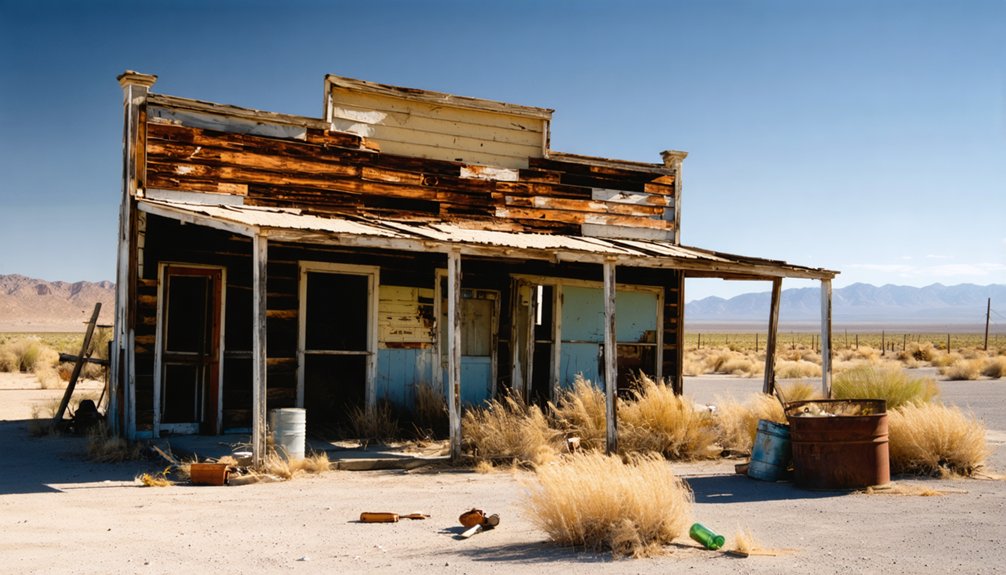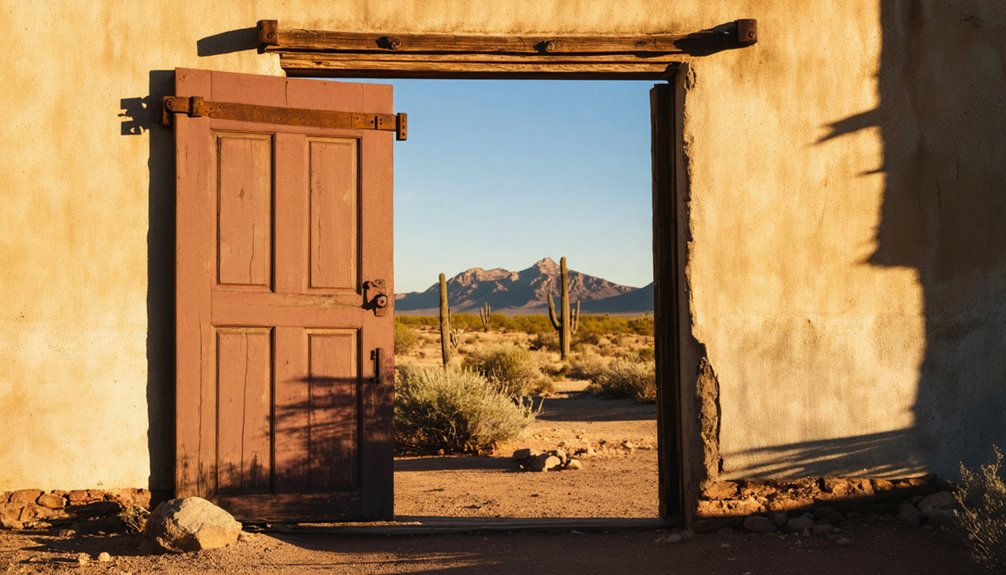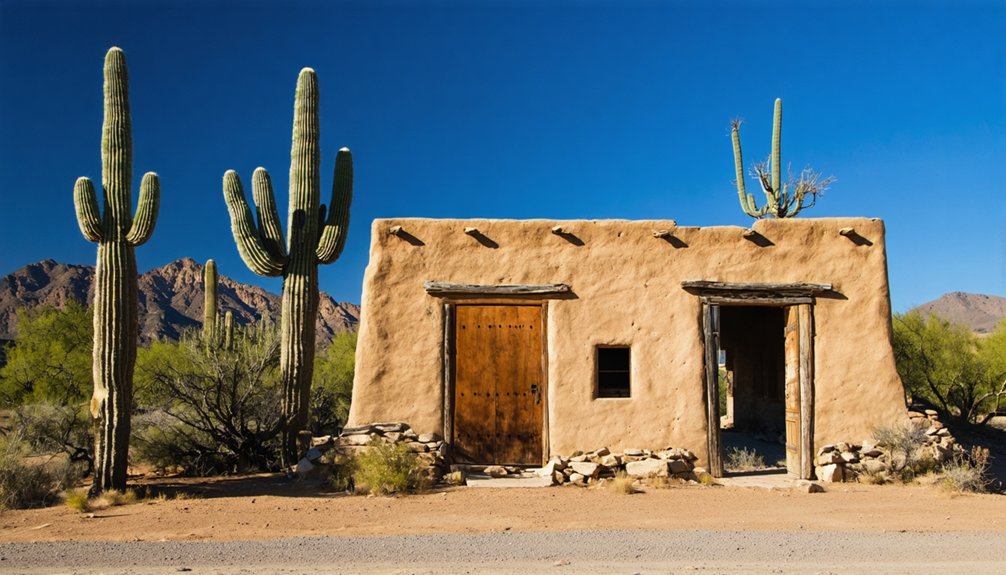
Planning a ghost town road trip to Kentucky Camp starts with a 45-mile drive southeast of Tucson into the Santa Rita Mountains, where five remarkably preserved adobe structures from 1904 await within Coronado National Forest. You’ll explore authentic mining-era artifacts, walk the historic Arizona Trail, and even spend the night in a restored frontier cabin. Spring and fall offer the best road conditions and scenery. There’s far more to discover about this fascinating slice of Arizona’s frontier history.
Key Takeaways
- Kentucky Camp is a preserved ghost town in the Santa Rita Mountains, about 45 miles southeast of Tucson within Coronado National Forest.
- Drive via Interstate 10, State Route 83, and Gardner Canyon Road, with the final 0.9 miles requiring a high-clearance or four-wheel-drive vehicle.
- Spring and early fall offer the best road conditions, mild weather, and optimal lighting for exploring and photographing the historic adobe structures.
- Five intact adobe buildings with original tools, furnishings, and equipment provide an immersive glimpse into early 1900s frontier hydraulic mining life.
- Extend your trip by booking the restored overnight cabin or combining the visit with wineries and dining in nearby Sonoita, 20 miles away.
What Is Kentucky Camp and Why Visit?
Tucked into a remote valley of the Santa Rita Mountains, Kentucky Camp is a remarkably preserved ghost town and former mining camp in Pima County, Arizona, about 45 miles southeast of Tucson. Sitting inside Coronado National Forest along the Arizona Trail, it offers you a rare chance to explore authentic historical architecture from 1904 without crowds or barriers.
You’ll find five surviving adobe structures, including an office, cabins, and an assay building, all telling the story of ambitious hydraulic mining technology that ultimately failed due to insufficient water.
Whether you’re chasing ghost towns, hiking remote trails, or digging into Arizona’s mining past, Kentucky Camp delivers an honest, unfiltered look at frontier ambition. It’s the kind of place that rewards the curious and the adventurous.
What Brought Gold Miners to the Santa Rita Mountains?
Gold first drew prospectors to the Santa Rita Mountains in 1874, when early discoveries hinted at the region’s placer gold potential. Local legends of rich gulches spread quickly, pulling ambitious miners into this rugged stretch of southern Arizona.
By the early 1900s, the Santa Rita Water & Mining Company had arrived with serious ambitions and modern mining techniques, specifically hydraulic mining, which used pressurized water to strip gold from hillside deposits.
To make that work, crews constructed a pipeline stretching roughly seven miles to deliver water into the canyon. It was an audacious engineering effort for the era.
You can still sense that determination when you walk the site today — the remnants of a bold venture that bet everything on water, geography, and the promise buried beneath the mountain soil.
Why the Kentucky Camp Mining Dream Collapsed
Despite the ambition behind Kentucky Camp’s seven-mile pipeline and hydraulic mining operation, the venture collapsed under a cruelly simple problem: there wasn’t enough water. The arid Santa Rita Mountains couldn’t sustain the volume hydraulic mining demanded, and the operation began unraveling almost immediately.
Then came a decisive blow. Chief engineer James B. Stetson died in 1905, stripping the project of its driving force. By 1912, the mining dream was effectively over.
What you’ll find today reflects careful preservation techniques applied to the historical artifacts left behind — adobe buildings, equipment, and furnishings frozen in time.
Volunteers with Friends of Kentucky Camp have worked steadily to stabilize these structures, ensuring you can walk through the site and read its failure as clearly as any written record.
What Survived at Kentucky Camp After a Century of Abandonment
When you walk into Kentucky Camp, you’ll find roughly five adobe buildings still standing from the 1904 era, including an office, cabins, an assay building, and a headquarters structure.
You can also see preserved tools and furnishings inside, giving you a rare, tangible sense of daily life during the camp’s short-lived mining heyday.
Volunteers with Friends of Kentucky Camp have worked alongside the U.S. Forest Service to stabilize the buildings and protect what’s left, so what you see today reflects decades of dedicated restoration effort.
Adobe Buildings Still Standing
What you’ll find at Kentucky Camp isn’t rubble and rust—it’s a rare collection of about five adobe buildings that have held their shape for well over a century. The historical architecture includes an office, cabins, an assay building, and a headquarters structure, all dating to around 1904.
Adobe construction naturally resists decay in arid climates, but these buildings didn’t survive on material alone. Volunteers with Friends of Kentucky Camp have applied careful preservation techniques to stabilize walls, protect furnishings, and maintain original equipment.
Walking through the site, you’re not piecing together a history from fragments—you’re standing inside it. Few ghost towns give you this kind of direct, tangible connection to the past, and Kentucky Camp delivers it without barriers or crowds.
Preserved Tools And Furnishings
Beyond the adobe walls, the interior spaces at Kentucky Camp hold something even more unexpected: tools, furnishings, and equipment that volunteers have preserved and kept in place. You’ll find artifacts that paint a vivid picture of daily life during the camp’s most active years between 1904 and 1906.
Friends of Kentucky Camp have worked carefully to stabilize what survived decades of abandonment, keeping original pieces where miners and engineers once used them.
As you explore, watch for wildlife encounters — deer and birds move freely through this remote Santa Rita Mountain valley.
If you’re building a full southern Arizona itinerary, pair your visit with a stop near Sonoita or Patagonia for local cuisine.
Kentucky Camp rewards curious travelers who want history they can actually walk through.
Volunteer Restoration Efforts
Though a century of abandonment took its toll, volunteers with Friends of Kentucky Camp have done remarkable work bringing the site back from the edge of ruin. This dedicated volunteer program has stabilized the adobe buildings, preserving them against further weathering and collapse. Without their efforts, the surviving structures would likely have crumbled entirely by now.
Beyond the buildings themselves, volunteers have safeguarded historical artifacts including original furnishings and equipment that give the site its authentic character. When you walk through Kentucky Camp today, you’re experiencing a preserved slice of 1904 Arizona that exists specifically because passionate people chose to protect it.
The U.S. Forest Service, which acquired the property in 1989, continues partnering with these volunteers to maintain what remains a rare, accessible piece of southwestern mining history.
How to Get to Kentucky Camp From Tucson
Getting to Kentucky Camp from Tucson is a straightforward drive of about 45 miles southeast through some of southern Arizona’s most scenic terrain.
Take Interstate 10 to Exit 281, then head south on State Route 83 for roughly 20 miles.
Turn west onto Gardner Canyon Road, continue about 0.9 mile, then follow Forest Road 163 and watch for signs pointing toward the camp.
A sedan can handle the route, though you’ll want a high-clearance vehicle for added comfort on rougher stretches.
Once you’ve parked, a short walk downhill brings you into the heart of a site steeped in cultural heritage and local legends.
The surrounding Santa Rita Mountains frame the journey beautifully, making the drive itself feel like part of the ghost-town experience.
What Roads and Vehicle Types Work Best for Kentucky Camp
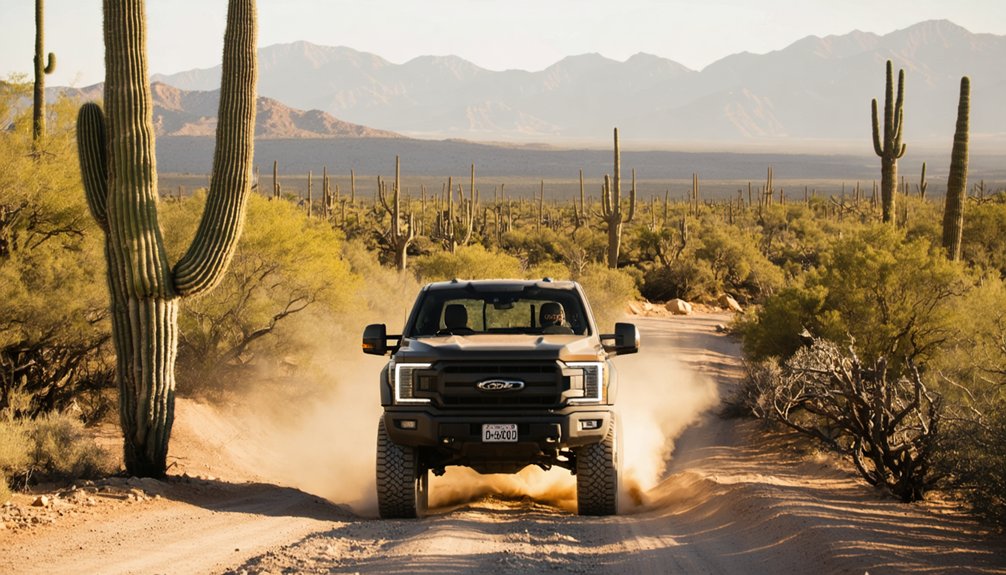
Once you turn onto Gardner Canyon Road off State Route 83, you’ll follow a dirt road west for about 0.9 mile before connecting to Forest Road 163.
This road winds through the remote Santa Rita Mountains to the camp. You can make the drive in a standard sedan, but a high-clearance vehicle gives you a more comfortable and confident ride on the uneven terrain.
After parking, you’ll take a short walk downhill to reach the preserved structures of the ghost town itself.
Road Types To Expect
Reaching Kentucky Camp means traversing a mix of paved and unpaved roads, so knowing what to expect helps you plan accordingly. You’ll start on Interstate 10, then cruise south on State Route 83, a smooth paved stretch where wildflower blooms paint the roadsides in spring and wildlife sightings of deer or javelinas aren’t uncommon.
Once you turn onto Gardner Canyon Road, the pavement ends. From there, you’ll navigate roughly 0.9 miles of dirt road before connecting with Forest Road 163, which leads you to the parking area.
The unpaved sections can get rough, especially after rain. You’ll finish with a short downhill walk into camp. The route rewards your effort with striking mountain scenery and a genuine sense of discovery around every bend.
Best Vehicle Recommendations
Although a standard sedan can technically make the drive, you’ll have a much easier time in a high-clearance vehicle. Rough patches along Gardner Canyon Road and Forest Road 163 reward drivers who come prepared.
Consider these three vehicle priorities:
- High clearance — clears rocks and ruts without scraping your undercarriage
- Four-wheel drive — gives you confidence on loose gravel, especially after rain
- Cargo space — hauls camera gear for photography tips in the field and supplies for unexpected wildlife encounters
An SUV or light truck hits the sweet spot here. You’ll park above the camp, then walk down the hill to explore on foot. That short hike actually opens up better photography tips angles than driving ever would.
Can You Spend the Night at Kentucky Camp?
Kentucky Camp offers more than just a day visit — you can actually spend the night inside a restored three-room cabin managed by the U.S. Forest Service. Book it through their reservation system, and you’ll wake up surrounded by historical artifacts and 1904-era adobe walls that preservation techniques have helped keep standing.
The cabin is available year-round, giving you full flexibility to plan around your schedule. Staying overnight lets you experience the site after day-trippers leave, when the quiet mountain valley feels entirely yours.
You’ll have time to explore the office, assay building, and headquarters at your own pace. It’s a rare chance to sleep inside living history rather than simply pass through it.
When Is the Best Time of Year to Visit Kentucky Camp?
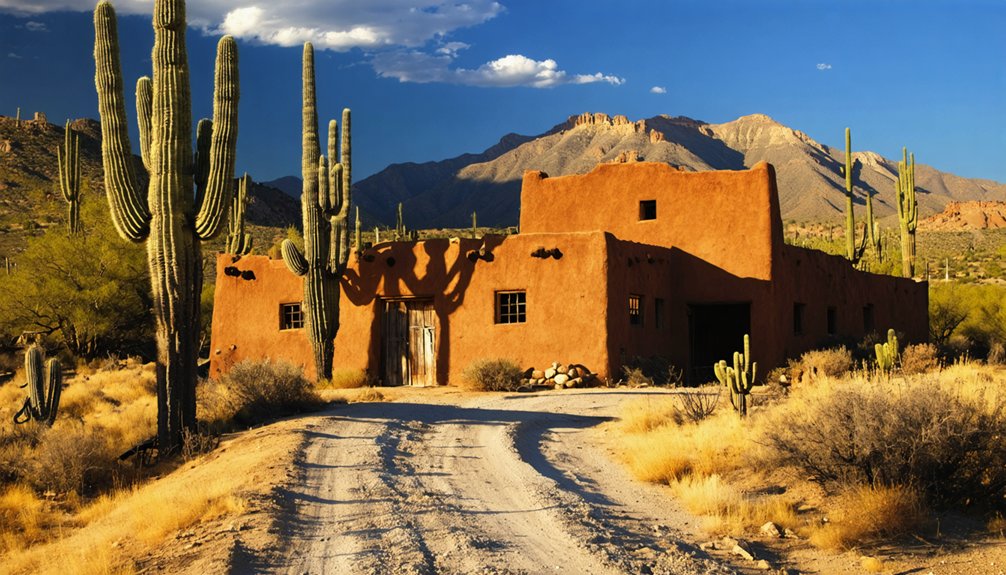
Since Kentucky Camp sits at elevation in the Santa Rita Mountains, the weather plays a big role in when you’ll get the most out of your visit. Spring and fall offer the most comfortable conditions for exploring historical artifacts and understanding the preservation challenges volunteers face year-round.
At elevation in the Santa Rita Mountains, Kentucky Camp rewards spring and fall visitors with ideal conditions for exploration.
The three best windows to visit are:
- March through May – mild temperatures, wildflowers, and clear trails
- September through November – cooler air after monsoon season, excellent light for photography
- December through February – quiet and uncrowded, though roads can get muddy
Summer monsoons make dirt roads unpredictable and can limit access entirely. If you want to move freely through the site and take your time, aim for spring or early fall.
Nearby Hikes, Trails, and Towns Worth Combining
If you’re already heading to Kentucky Camp, you’ll want to know that the Arizona Trail runs directly through the site, giving hikers easy access to miles of backcountry terrain through the Santa Rita Mountains.
You can extend your trip by heading east to Sonoita, a small ranching town about 20 miles away that offers local wineries, restaurants, and a genuine taste of southern Arizona ranch culture.
Combining the ghost town with a Sonoita stop makes for a well-rounded day that mixes history, hiking, and regional flavor without much extra driving.
Arizona Trail Access
Tucked inside Coronado National Forest, Kentucky Camp sits directly along the Arizona Trail, giving you immediate access to one of the longest and most scenic long-distance routes in the Southwest. Whether you’re hiking a short stretch or planning a multi-day push, the trail delivers through rich wildlife habitat and terrain loaded with cultural significance rooted in Apache, Spanish, and American mining history.
Three reasons to hit the Arizona Trail here:
- The Santa Rita Mountains offer dramatic elevation changes and sweeping desert views.
- You’ll pass through corridors teeming with mule deer, javelinas, and native bird species.
- The trail connects directly to other southern Arizona landmarks, expanding your itinerary effortlessly.
You don’t need a thru-hiking ambition to enjoy it — even a few miles rewards you with genuine solitude and wild country.
Sonoita Day Trip
Kentucky Camp pairs naturally with the small ranching town of Sonoita, just a short drive north on State Route 83, making it easy to build a fuller day around your ghost town visit.
Sonoita sits in open grassland country where wildlife encounters are common — watch for pronghorn moving through the valley or hawks circling overhead.
The sweeping ranch landscape also delivers strong photography opportunities, especially during morning light when shadows stretch long across the hills.
After exploring Kentucky Camp‘s adobe ruins, you can stop in Sonoita for a meal at one of its local spots before heading home.
The combination gives you history, open sky, and genuine high desert terrain without requiring an overnight stay or complicated logistics.
How to Build a Road Trip Around Kentucky Camp
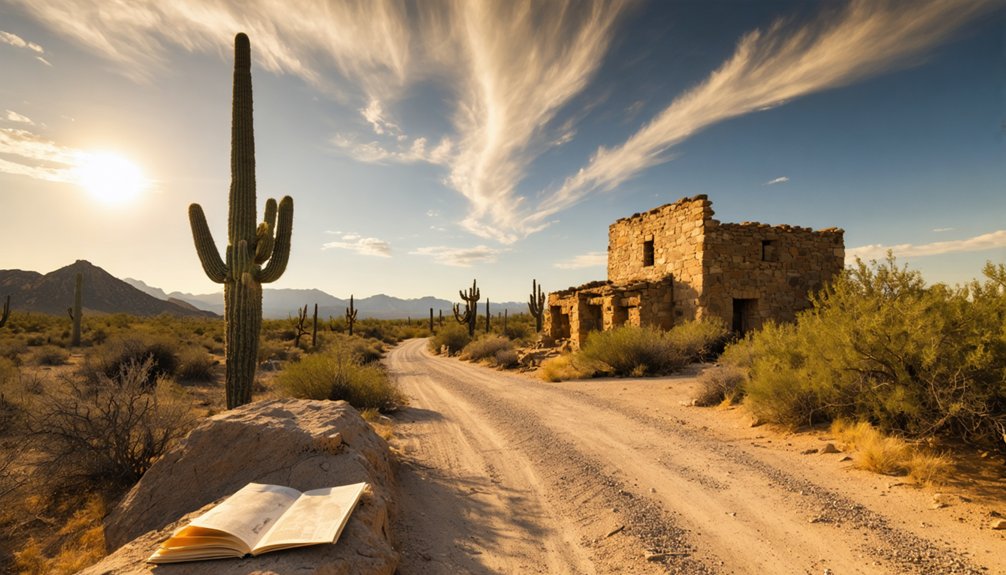
Because Kentucky Camp sits about 45 miles southeast of Tucson, it fits naturally as a centerpiece stop on a southern Arizona ghost-town road trip. Pair it with nearby attractions to build a full itinerary around local legends and historic architecture.
Structure your trip around these three logical stops:
- Tucson – Start here, heading southeast on I-10 to State Route 83.
- Kentucky Camp – Explore the 1904-era adobe buildings, hike the Arizona Trail, and stay overnight in the restored cabin.
- Sonoita – Wind down with local food and wine before heading home.
This loop keeps driving distances manageable while giving you genuine history, open landscapes, and the freedom to move at your own pace through southeastern Arizona’s quieter corners.
Before You Go: Safety at Abandoned Sites
Ghost town structures have stood without maintenance for decades. Floors, stairs and roof timbers fail without warning, and a building that looks solid from outside may not hold your weight. Stay out of standing structures unless the site is actively maintained and open to visitors.
Mine workings are the more serious hazard. Vertical shafts can be hundreds of feet deep, are often unfenced, and may be hidden by brush or capped with rotted boards. Never enter an adit, tunnel or shaft: abandoned workings can hold oxygen-poor or toxic air that gives no warning before you lose consciousness.
Enclosed spaces with rodent droppings carry a risk of hantavirus, which is contracted by breathing contaminated dust. Do not sweep or stir up dust inside old cabins and outbuildings.
Cell coverage at these sites is usually poor or absent. Tell someone your route and expected return time, and carry more water than you think you need.
Frequently Asked Questions
Is There Cell Phone Service or Wi-Fi Available at Kentucky Camp?
Don’t expect cell service or wifi availability at Kentucky Camp — you’re deep in a remote Santa Rita mountain valley. Embrace the disconnect, and you’ll find the freedom of true off-grid adventure awaiting you!
Are Pets Allowed When Visiting or Staying Overnight at Kentucky Camp?
The knowledge doesn’t confirm pet policies, so you’ll want to check directly with the Forest Service before bringing pets to Kentucky Camp’s overnight accommodations. Pet safety in this remote mountain setting makes that call absolutely essential!
Is There an Entrance Fee to Visit Kentucky Camp?
With five 1904-era adobe buildings preserved, you’ll enter Kentucky Camp for free! Historical preservation efforts keep this treasure accessible, so you can tackle trail difficulty levels without worrying about entrance fees slowing your adventure.
Are Campfires Permitted at Kentucky Camp or the Surrounding Area?
The knowledge base doesn’t specify campfire rules, so you’ll want to check current fire regulations directly with Coronado National Forest before your visit—campfire safety conditions change seasonally, and they’ll give you the most accurate, up-to-date guidance.
Is Kentucky Camp Accessible for Visitors With Mobility Limitations or Disabilities?
Like a wagon wheel rolling into the frontier, mobility accessibility at Kentucky Camp is limited — you’ll navigate uneven terrain and a downhill walk, so disability accommodations aren’t guaranteed. Check with the Forest Service before you ride out!
References
- https://en.wikipedia.org/wiki/Kentucky_Camp
- https://southernarizonaguide.com/kentucky-camp-az-a-ghost-town-with-accommodations/
- https://tucson.com/news/local/mine-tales-the-ghost-towns-of-greaterville-and-kentucky-camp/article_5027b9be-71dc-5951-b11d-665737ef5309.html
- https://azoffroad.net/kentucky-camp
- https://www.youtube.com/watch?v=QEamRAEyEWY
- https://tucson.com/news/local/article_908e5433-0782-517b-9ec6-45c655a4e680.html
- https://keystoaz.com/kentuckycamp/
- https://pcttrailsidereader.com/post/728367010726215680/the-ghosts-of-kentucky-camp
- https://www.youtube.com/watch?v=ZrpN1qcm61o
- https://www.explore.com/1477475/ghost-town-campground-stay-night-kentucky-camp-arizona-creepy-destination/