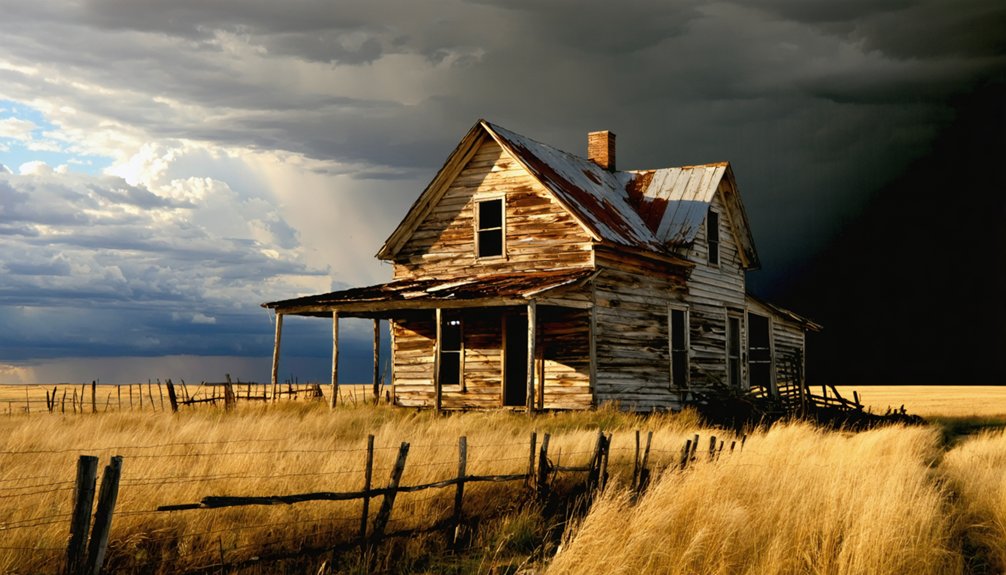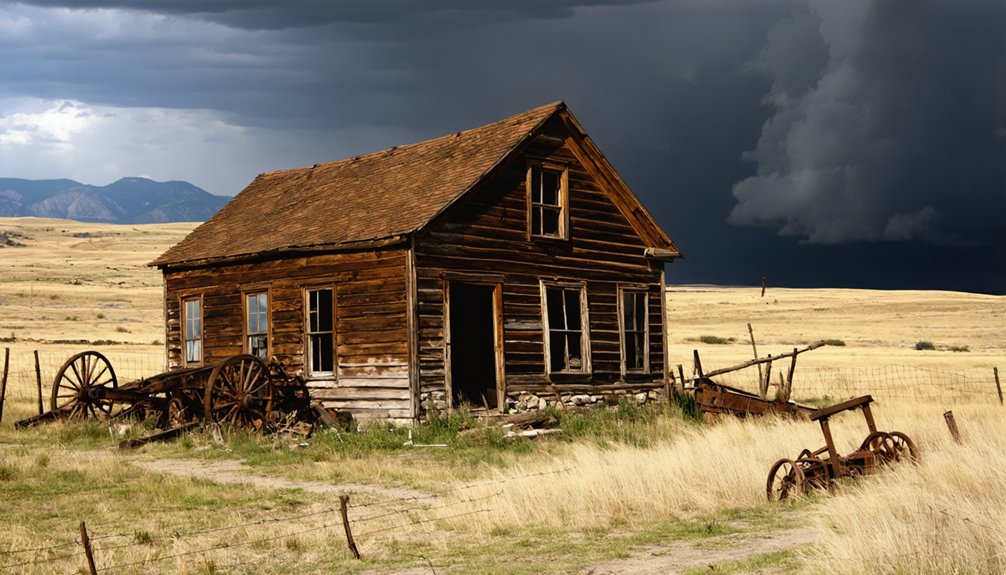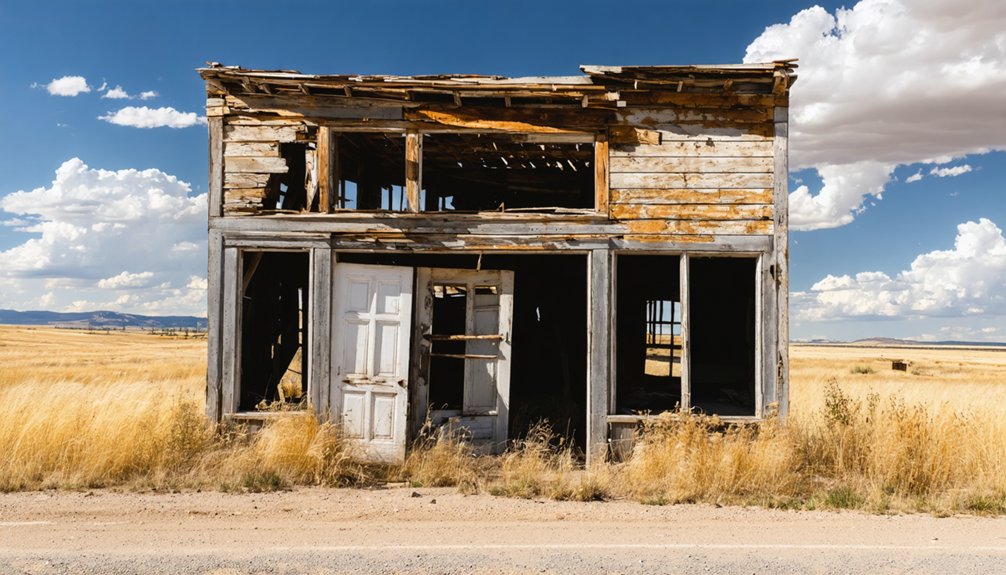
Planning a ghost town road trip to Forest City, South Dakota, means visiting a town that’s literally underwater. Founded in the 1880s, Forest City thrived briefly before railroads bypassed it and Gettysburg claimed the county seat. Then the U.S. Army Corps of Engineers dammed the Missouri River, and Lake Oahe swallowed the entire site. You can still visit the shoreline and glimpse remnants during low water levels. There’s far more to this haunting story than you’d expect.
Key Takeaways
- Forest City, South Dakota, now lies submerged beneath Lake Oahe, created when the U.S. Army Corps of Engineers dammed the Missouri River in the 1960s.
- Visits involve shoreline exploration along Lake Oahe, where remnants occasionally surface during drought conditions when water levels drop.
- Use a vehicle with decent ground clearance, as roads can become impassable during spring thaw or heavy rain.
- Pack essential supplies including water, sunscreen, a paper map, and a charged phone, since cell coverage may be limited.
- Researching Forest City’s history beforehand, including its 1880s origins and decline, enriches the overall ghost town experience.
What Was Forest City, South Dakota?
Once a hopeful settlement in Potter County, Forest City, South Dakota, was an unincorporated community that grew during the Dakota Territory era, fueled by early optimism and a nearby tract of forest that gave the town its name. Its historical significance stretches back to September 1883, when the Forest City Press began publication, signaling real ambition for growth.
A post office operated from 1884 to 1943, anchoring daily life for residents who believed railroads would soon arrive. They never did. When Gettysburg claimed the county seat and rail lines bypassed the town, Forest City’s fate was sealed.
Today, its community legacy lives beneath Lake Oahe, submerged and silent. If you’re drawn to forgotten places, Forest City tells a powerful story about settlement, failure, and the forces that shaped the American frontier.
Why Railroads and Rival Towns Killed Forest City
When you look at what killed Forest City, two forces stand out: railroads that never came and a rival town that grabbed the county seat.
Settlers had poured in expecting rail lines to follow, but the tracks bypassed the area entirely, strangling the town’s economic potential.
Gettysburg claimed the Potter County seat, and Forest City lost the regional significance it needed to survive.
Railroad Routes Bypassed Forest City
Though early settlers poured into Forest City with high hopes, the railroads never followed. Study the historical maps of Potter County, and you’ll notice Forest City sits in an uncomfortable silence — no rail lines passing through. That absence sealed its fate.
Railroad history across the Great Plains tells the same story repeatedly: towns without tracks withered while connected rivals thrived.
Here’s what the bypass meant for Forest City:
- No reliable freight movement — goods couldn’t reach outside markets efficiently.
- Population stalled — settlers chased opportunity elsewhere along active rail corridors.
- Gettysburg pulled ahead — it secured the county seat, stripping Forest City of regional influence.
You can trace this pattern across South Dakota’s ghost towns, but Forest City stands as one of its starkest examples.
Gettysburg Won The County Seat
Losing the county seat to Gettysburg didn’t just bruise Forest City‘s pride — it stripped the town of its administrative identity and handed its rival a permanent structural advantage. When Gettysburg claimed that designation, government offices, legal records, and regional decision-making all migrated away from Forest City.
You can imagine how quickly that shift drained the town’s economic momentum. Settlers who’d arrived with ambitions of building something lasting suddenly had fewer reasons to stay. Businesses followed the foot traffic, and foot traffic followed the power.
Today, Gettysburg stands as a functioning community with historical preservation efforts that reflect its enduring role. Forest City, by contrast, offers no tourist attractions in any traditional sense — just a submerged memory beneath Lake Oahe, waiting for curious travelers to seek it out.
Decline Sealed The Town’s Fate
Railroads didn’t just build towns in the Dakota Territory — they decided which ones survived. Forest City lost that gamble. When the rails bypassed the town, its historical significance faded fast, and rivals like Gettysburg absorbed the region’s growth.
The cultural impact hits harder when you consider what Forest City once represented — real optimism, real settlers, real futures. Three forces sealed its fate:
- No railroad connection strangled commerce and population growth
- Gettysburg claimed the county seat, pulling political and economic power away
- Lake Oahe’s waters eventually swallowed the site, erasing what little remained
You won’t find a main street to walk here. What you’ll find is a powerful reminder that settlement-era survival was never guaranteed — the land, and history, proved that.
How Lake Oahe Swallowed the Original Town Site
When the U.S. Army Corps of Engineers dammed the Missouri River, rising waters buried Forest City beneath what’s now Lake Oahe. The reservoir, completed in the 1960s, permanently submerged the original town site, leaving no walkable streets or standing structures for you to explore. You won’t find a dusty main street here — just open water stretching across what was once a living community.
For adventurous travelers drawn to flooded ruins, underwater exploration of submerged ghost towns like Forest City carries a haunting appeal. Some divers have investigated similar Missouri River sites during drought-driven low-water periods when remnants briefly resurface.
If you’re planning a road trip, treat Forest City as a reflective shoreline stop rather than a conventional destination. The lake itself tells the story.
Can You Actually Visit the Forest City Site?
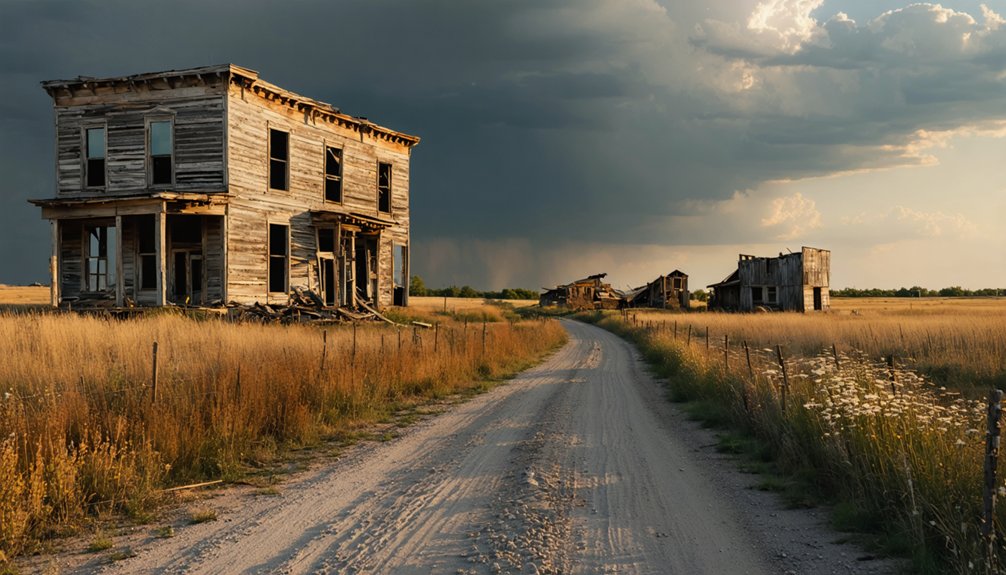
Technically, yes — you can visit the Forest City site, but don’t expect to walk through a ghost town. Lake Oahe now covers the original townsite, so your “visit” looks more like standing at a shoreline and imagining what once existed beneath the water. Still, that eerie disconnect fuels urban legends and draws curious explorers every season.
Here’s what makes the trip worthwhile:
- Shoreline access lets you scan the water and connect with the town’s buried history firsthand.
- Archaeological research has documented Forest City’s past, giving you real historical context before you arrive.
- Low crowds mean you experience the silence and isolation that define true ghost-town travel.
Come prepared with maps, historical notes, and an appetite for stories the water can’t fully erase.
Nearby Ghost Towns Worth Adding Near Potter County
South Dakota’s ghost-town landscape extends well beyond Forest City’s submerged shores, so while you’re already in Potter County, it’s worth stretching your itinerary toward nearby abandoned sites like Folsom and Gregory. These communities share Forest City’s railroad-era story — towns that thrived on optimism, then quietly collapsed when transportation routes shifted.
You’ll find abandoned structures that hint at what daily life once looked like, and scattered historical artifacts that reward curious travelers willing to explore off the beaten path.
South Dakota’s ghost-town network is dense, especially as you push toward the Black Hills region, where dozens of forgotten settlements wait. Each stop adds another layer to your understanding of how settlement patterns shaped — and ultimately erased — entire communities across the plains.
What to Expect When You Drive to the Lake Oahe Site
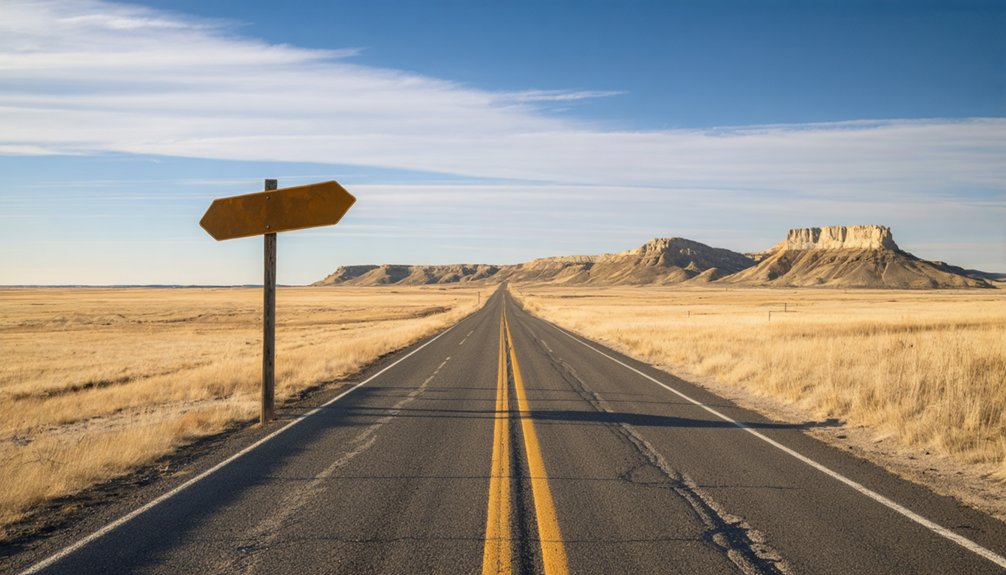
Driving out to the Lake Oahe site means accepting that Forest City won’t greet you with weathered storefronts or a crumbling main street — the original town is underwater, swallowed by the reservoir when the Oahe Dam flooded the Missouri River valley. No historical artifacts line the shore, and the submerged ruins sit beyond reach beneath the surface.
Still, the experience rewards curious travelers. Here’s what you’ll find:
- Open shoreline views where the reservoir stretches over the former townsite
- Historical context from roadside markers referencing the region’s Dakota Territory past
- Quiet, uncrowded access that suits travelers who prefer discovery over tourist infrastructure
You’re not visiting a preserved relic — you’re standing above one. That distinction makes Forest City genuinely unforgettable.
Road Conditions, Closest Access Points, and What to Bring
Because the Lake Oahe site sits in rural Potter County, you’ll encounter gravel or unpaved roads for at least part of the approach, so a vehicle with decent ground clearance handles the terrain far better than a standard sedan. Check road conditions before you leave, since spring thaw and heavy rain can make these stretches rough or temporarily impassable.
The closest access points run along Lake Oahe’s shoreline, where you might spot historical markers referencing the flooded communities beneath the water. Pack water, sunscreen, a paper map, and a charged phone, since cell coverage is unreliable.
Locals share urban legends about the submerged town, so talking to people in nearby communities can add surprising depth to your visit. Go prepared, and the freedom of exploring this lost landscape feels genuinely earned.
Frequently Asked Questions
Was Forest City Ever Considered for the Potter County Seat?
Gettysburg claimed the Potter County seat instead of Forest City, sealing its fate in ghost town history. You won’t find grand historic landmarks here—that loss accelerated decline, eventually swallowing the town beneath Lake Oahe’s waters.
How Long Did the Forest City Press Newspaper Operate?
Ironically, you’d find the *Forest City Press* championed urban decay before it was trendy! It ran from 1883 to at least 1919—roughly 36 years of historical preservation through ink, documenting a town destined to vanish beneath Lake Oahe’s waters.
Are There Any Photographs of Forest City Before It Was Submerged?
You’ll want to seek out historical photographs capturing the town before flooding submerged it forever. Check South Dakota state archives and local historical societies — they often preserve rare images documenting Forest City’s lost streets and buildings.
What Other South Dakota Towns Were Submerged by Reservoir Projects?
Several towns share Forest City’s fate. Reservoir construction along the Missouri River swallowed communities like Pollock and Gavin’s Point settlements, their town submersion erasing entire neighborhoods. You’d find echoes of lost lives beneath those cold, still waters.
Is Forest City Visible During Drought or Low Water Levels?
Drought impact and water level changes might reveal ghostly remnants of Forest City beneath Lake Oahe. You’d potentially spot foundations or debris when water recedes, offering a rare, haunting glimpse into this lost community’s submerged past.
References
- https://en.wikipedia.org/wiki/List_of_ghost_towns_in_South_Dakota
- https://en.wikipedia.org/wiki/Forest_City
- https://supercarblondie.com/night-inside-forest-city/
- https://www.loc.gov/item/sn93057084/
- https://kids.kiddle.co/List_of_ghost_towns_in_South_Dakota
- https://www.youtube.com/watch?v=POtU2hFPQsU
- https://www.sdpb.org/rural-life-and-history/2023-08-21/some-black-hills-ghost-towns-and-their-origins