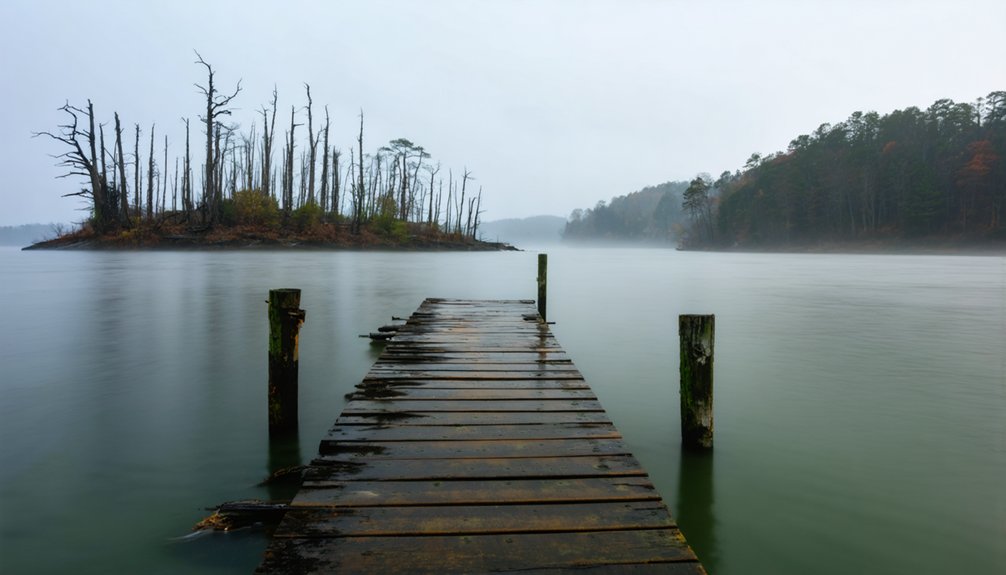
Planning a ghost town road trip to Lake Lanier means exploring more than Georgia’s most popular reservoir. Beneath its shimmering surface lie flooded cemeteries, submerged roads, and the erased remains of Oscarville, a thriving Black community violently expelled in 1912. You’ll encounter haunting legends like the Lady of the Lake near Browns Bridge and uncover a landscape deliberately buried by progress. The history here runs deeper than the water — and there’s much more to uncover.
Key Takeaways
- Lake Lanier, Georgia, submerges the former Black community of Oscarville, expelled by racial violence in 1912 and erased by floodwaters in 1950.
- Visit Oscarville historical markers to learn about the forced racial expulsion and the thriving community that once stood there.
- Browns Bridge connects to the “Lady of the Lake” legend, a ghostly figure tied to the area’s submerged and tragic history.
- The Buford Dam Overlook provides striking views of the reservoir concealing drowned roads, foundations, forests, and graves beneath 152 feet of water.
- Lake Lanier shoreline trails allow visitors to explore land bordering the submerged ghost town and its layered historical significance.
The Haunted History of Lake Lanier’s Ghost Town
Today, locals whisper about the “Lady of the Lake,” a ghostly woman in a blue gown said to haunt the water. Browns Bridge carries its own dark legends.
But underneath the folklore is something real — a story of community resilience erased by both hatred and concrete. You’re not just visiting a lake; you’re standing above a buried history.
Oscarville: The Black Community Erased Before the Lake Was Built
Before the lake swallowed it whole, Oscarville was a thriving Black community in Forsyth County, Georgia — built during Reconstruction, rooted in land, labor, and belonging. Then 1912 came. Racial violence and forced expulsion erased its people. By 1950, floodwaters erased what remained.
Oscarville was built by Black hands, erased by white rage, and buried beneath water. It still exists.
When you visit Lake Lanier, you’re standing above layers of stolen history that deserve your attention:
- Oscarville formed in the late 1800s, a testament to resilience and self-determination
- A violent 1912 campaign expelled most of Forsyth County’s Black residents
- Construction crews flooded the town’s remnants, including a cemetery, during dam construction
- Cultural memory and historical preservation efforts keep Oscarville’s story alive today
You can’t see it, but Oscarville is still there — beneath every wave.
The Lady of the Lake and the Legends That Never Drowned
Some histories sink beneath the surface, but the stories refuse to stay down. Lake Lanier‘s most persistent legend centers on the Lady of the Lake — a woman in a blue gown said to drift through the water near Browns Bridge.
Local legends place her among the drowned remnants of displaced communities, her presence tied directly to the submerged graves and erased lives beneath you.
The folklore origins aren’t random. When you flood a cemetery and erase a town, you create the conditions for hauntings.
Locals have passed these stories across generations, and visitors keep arriving expecting something unexplainable.
Whether you believe in spirits or not, the legend forces a confrontation with what actually happened here — and that discomfort is entirely real, regardless of what moves beneath the surface.
Must-See Stops on Your Lake Lanier Ghost Town Road Trip
A road trip around Lake Lanier works best when you treat it as a layered itinerary — part history lesson, part folklore tour, part quiet reckoning with a landscape that’s hiding something. Seasonal weather shapes your experience dramatically, so plan accordingly.
- Buford Dam Overlook — Watch the water and remember what’s underneath it
- Browns Bridge — A folklore hotspot tied to the Lady of the Lake legend
- Oscarville historical markers — Ground yourself in the racial expulsion history from 1912
- Lake Lanier shoreline trails — Spot local wildlife while walking land that borders a submerged ghost town
Each stop adds another layer. You’re not just sightseeing — you’re reading a landscape that Georgia spent decades trying to keep quiet.
Drownings, Debris, and What Lake Lanier Won’t Tell You Upfront
What Lake Lanier doesn’t advertise alongside its boating rentals and shoreline campgrounds is a drowning record that’s hard to ignore — more than 500 deaths since the reservoir filled, with over 200 occurring between 1994 and 2020 alone. You won’t find that statistic on the welcome signs.
Underwater forests, submerged debris, and unpredictable currents create hazards that catch even experienced swimmers off guard. The lake’s nearly 152-foot depth hides a drowned landscape — old roads, foundations, and displaced graves from communities like Oscarville.
Beneath the surface, an entire drowned world waits — forests, roads, foundations, and graves.
Those physical dangers quietly feed the area’s urban legends and give its folklore origins genuine weight. The ghost stories aren’t purely invented — they’re rooted in erasure, tragedy, and a landscape deliberately buried.
Know what you’re paddling over before you rent that kayak.
Frequently Asked Questions
What Is the Best Time of Year to Visit Lake Lanier?
You’ll find fall’s the best season to explore Lake Lanier’s historical landmarks, as seasonal weather cools beautifully, revealing haunting shorelines and ghost-town remnants while crowds thin, giving you the freedom to roam undisturbed.
Are There Guided Ghost Town Tours Available at Lake Lanier?
Like whispers beneath dark waters, historical legends breathe here. You won’t find official guided ghost town tours, but you can explore haunted locations like Browns Bridge independently, tracing Oscarville’s submerged story through self-guided adventures.
How Far Is Lake Lanier From Downtown Atlanta, Georgia?
You’re just about 45 miles northeast of downtown Atlanta, where you’ll uncover historical landmarks steeped in mystery. You’ll also enjoy thrilling boating activities across Georgia’s largest reservoir, making it an effortlessly accessible escape.
Is Swimming Allowed at Lake Lanier’s Public Access Areas?
You can swim at Lake Lanier’s public access areas, but you’ll want to follow safety guidelines carefully. With over 500 recorded deaths, respecting wildlife regulations and underwater hazards keeps your adventurous spirit thriving safely.
Are Pets Allowed at Lake Lanier’s Parks and Recreation Areas?
You can bring your pet, but pet restrictions and leash policies apply across most parks. While the lake’s legends roam free, your furry companion must stay leashed, balancing wild adventure with responsible exploration.
References
- https://en.wikipedia.org/wiki/Oscarville
- https://www.youtube.com/watch?v=ZBnUk0K03BQ
- https://www.cnn.com/2020/10/31/us/lake-lanier-urban-legends-trnd
- https://www.facebook.com/groups/836387034777097/posts/1170079261407871/
- https://oxfordamerican.org/magazine/issue-113-summer-2021/the-haunting-of-lake-lanier
- https://www.youtube.com/watch?v=ERK4KoD-Jvw
- https://www.youtube.com/watch?v=UtY-90kcQNs
- https://en.wikipedia.org/wiki/List_of_ghost_towns_in_Georgia_(U.S._state)
- https://atlantaghosts.com/terror-at-lake-lanier-and-browns-bridge/
- https://en.wikipedia.org/wiki/Lake_Lanier