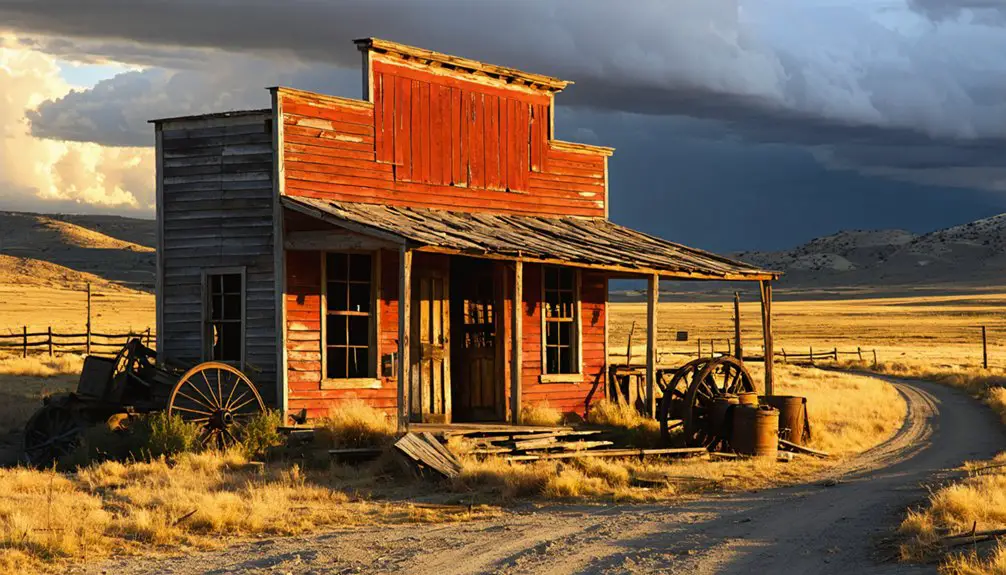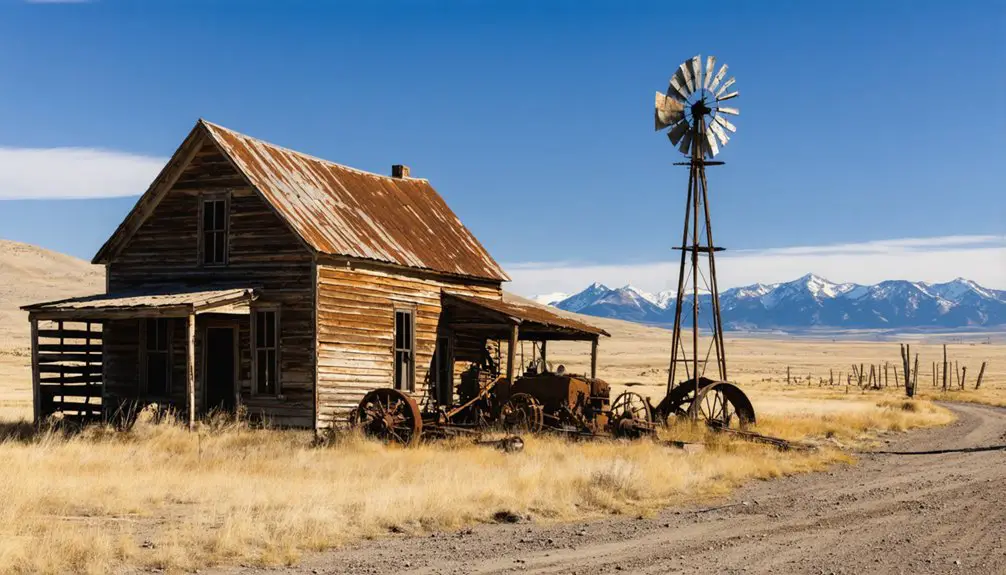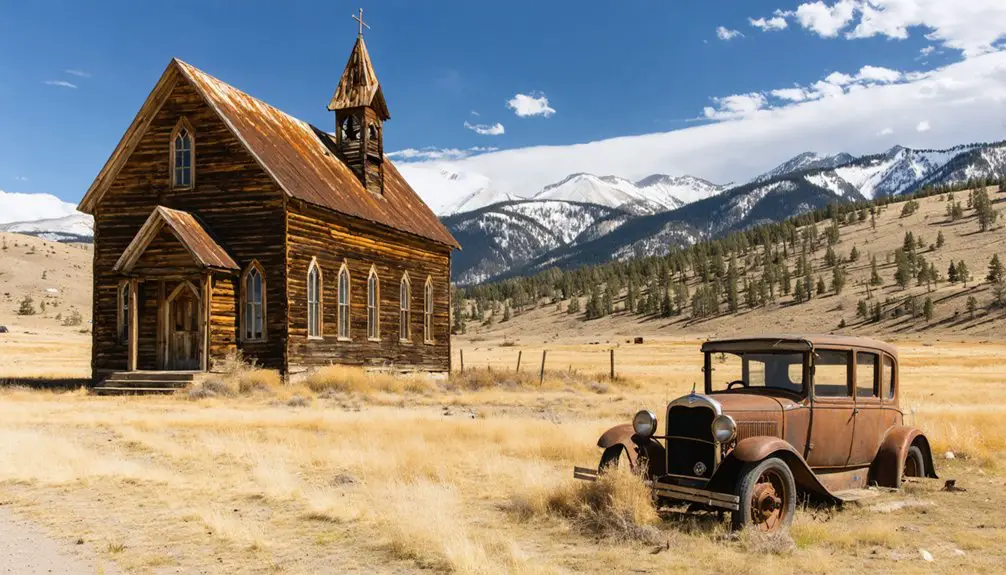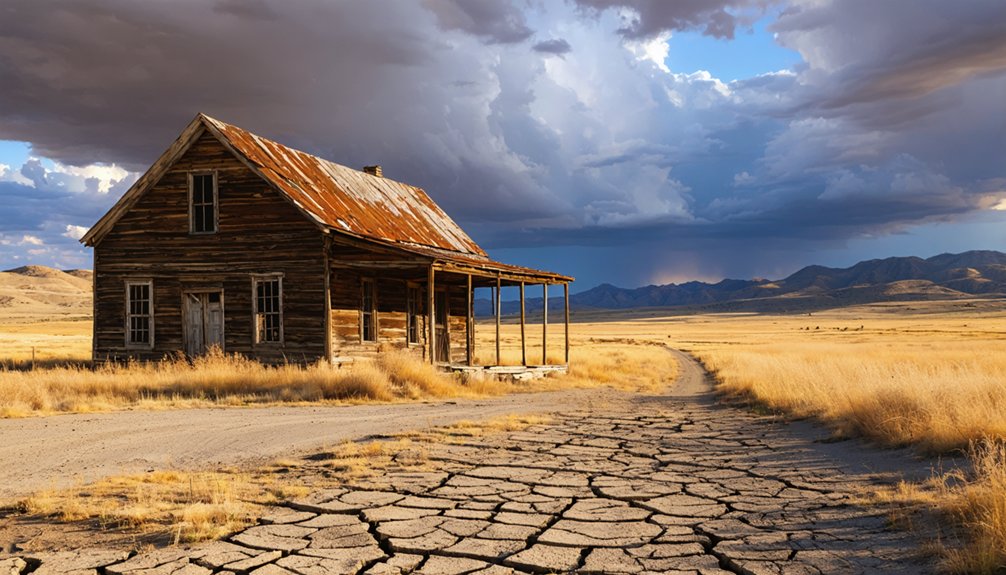
Planning a ghost town road trip to Piedmont, Wyoming means heading southeast of Evanston along an unpaved route that retraces the old Union Pacific railroad corridor. You’ll find three nearly 30-foot charcoal kilns, stone foundations, and a quiet cemetery waiting at the end of the drive. Bring water, check the weather, and pack offline maps since GPS isn’t reliable out here. There’s far more to this vanished boomtown’s story than first meets the eye.
Key Takeaways
- Piedmont is located southeast of Evanston, Wyoming, accessible via unpaved roads best navigated with offline maps due to unreliable GPS.
- High-clearance vehicles are recommended, and visiting during dry conditions prevents encountering impassable, rain-damaged roads.
- No services exist at the site, so bring sufficient water, layered clothing, and check weather forecasts before departing.
- Key attractions include three 30-foot charcoal kilns, stone foundations, an old coal dump, and a historic cemetery.
- Watch for wildlife like rattlesnakes and antelope, and explore ruins respectfully to preserve this National Register site.
How Piedmont Rose and Fell With the Union Pacific Railroad
When the Union Pacific pushed west in 1867, Piedmont didn’t exist — then, almost overnight, it did. Railroad workers needed water, wood, and fuel, and this Wyoming outpost delivered all three. Moses Byrne recognized the opportunity, built charcoal kilns, and shaped a working frontier town out of raw ambition.
Local legends say Piedmont thrived hard and fast — saloons, mercantiles, and ranches filling in around the rail line. But railroads giveth and taketh away. When Union Pacific rerouted trains through the Aspen Tunnel, bypassing Piedmont entirely, the town’s purpose evaporated.
Businesses shuttered, residents scattered, and by 1940 the last commercial doors closed for good.
Historical preservation efforts saved what remained — three standing kilns and scattered ruins that still tell Piedmont’s story better than any textbook can.
The Charcoal Kilns That Put Piedmont on the Map
Standing nearly 30 feet tall against the Wyoming sky, Moses Byrne’s charcoal kilns weren’t just industrial structures — they were the economic engine that kept Piedmont alive. Byrne built five of them, feeding wood from the Uinta Mountains into their stone chambers to produce charcoal for smelting and railroad fuel needs.
Moses Byrne didn’t just build kilns — he built the heartbeat of an entire frontier town.
By 1873, production across the region hit an estimated 100,000 bushels per month.
Today, three kilns still stand, recognized as ancient artifacts carrying deep cultural significance for Wyoming’s frontier industrial heritage. They’ve earned a spot on the National Register of Historic Places since 1971.
When you walk up to them, you’re not just seeing ruins — you’re standing inside a working chapter of American expansion. Interpretive materials on-site help you piece that story together yourself.
Ruins, Foundations, and Cemetery: What Survives at Piedmont
Beyond the kilns, Piedmont doesn’t hand you its history neatly — you’ll earn it by reading the land. Scattered foundations mark where homes and businesses once stood, their stone outlines still legible if you move slowly and look carefully. The old coal dump site adds industrial texture to the scene, grounding you in what this place actually was — a working railroad town, not a postcard.
The cemetery anchors the human story. Walk it with respect; the names and dates etched there connect you to real lives shaped by frontier hardship.
For artistic photography, the interplay of ruin and landscape rewards patience. Preservation techniques have kept what little remains accessible, so tread lightly, document freely, and let Piedmont’s fractured silhouette speak for itself.
How to Get to Piedmont, Wyoming
Reaching Piedmont means trading the interstate for emptier roads southeast of Evanston, in Uinta County — a fitting shift in pace for a town the railroad left behind.
Reaching Piedmont means leaving the interstate behind — a quieter road into a town the railroad forgot.
You’ll head out along routes that open up into sweeping mountain views, with wildflower blooms edging the roadsides during warmer months.
From Evanston, follow the old Union Pacific corridor southeast, watching for signs toward the Piedmont ghost town site.
The road is unpaved in sections, so a higher-clearance vehicle gives you more confidence on the approach.
GPS can be unreliable here, so download offline maps before you leave.
The isolation isn’t a flaw — it’s the point.
You’re retracing a path the railroad once made essential, then abandoned.
That tension makes every mile feel earned.
What to Know Before You Visit This Wyoming Ghost Town
Before you head out to Piedmont, know that this site rewards preparation more than most ghost towns. Wyoming weather shifts fast, so layer up and check forecasts before you leave — high desert conditions can surprise even experienced travelers. Bring water, since there are no services anywhere near the site.
Watch for local wildlife roaming the open terrain; rattlesnakes and antelope share this landscape freely. Stay aware and step carefully around the ruins and kilns.
The roads leading to Piedmont can become impassable after rain, so time your visit during dry conditions. No restrooms, no rangers, no crowds — just you, three standing charcoal kilns, and over a century of frontier history.
Come self-sufficient, stay curious, and you’ll leave with something worth carrying home.
Frequently Asked Questions
What Was Piedmont Originally Called Before It Became Piedmont?
You’ll discover it was originally called Byrne, Wyoming, honoring founder Moses Byrne around 1867. This ghost town preservation site carries deep historical mining impact, inviting you to explore its raw, freedom-filled frontier legacy.
Who Founded Piedmont and Established Its Earliest Settlements?
Moses Byrne founded Piedmont, shaping its earliest settler stories through historical migration west. Picture yourself following his trail — he built charcoal kilns, established roots, while Charles Guild carved out one of the territory’s first ranches nearby.
Were There Saloons and Businesses Operating in Early Piedmont?
Yes, you’d have found historic saloon scenes and early business establishments thriving in Piedmont by the late 1860s. The town’s mercantile and saloons fueled a wild, freedom-seeking railroad frontier community buzzing with restless energy.
When Was Piedmont First Established as a Settlement?
You’ll find Piedmont’s roots stretching back to 1867, when it sparked to life as Byrne, Wyoming — a rugged tent city where historical architecture rose fast and local legends were born among fearless railroad pioneers.
Is Piedmont Located Near Any Other Notable Wyoming Ghost Towns?
The knowledge doesn’t confirm nearby ghost towns, but you’re exploring Uinta County’s frontier edge, where abandoned mining towns dot the landscape. Embrace ghost town preservation as you chart your own adventurous course through Wyoming’s gloriously untamed, history-rich wilderness.
References
- https://www.youtube.com/watch?v=zPfM-niS_Ug
- https://www.facebook.com/WyomingPBS/posts/ever-heard-of-piedmont-wyoming-the-ghost-town-lasted-longer-than-most-end-of-tra/1088246379945854/
- https://www.youtube.com/watch?v=qpsKpZv6y4Q
- https://www.youtube.com/watch?v=ynvTCiTX1vI
- https://www.facebook.com/groups/704889582866623/posts/7708766362478875/
- https://en.wikipedia.org/wiki/Piedmont
- https://www.youtube.com/watch?v=U9Nxj6Um02I
- https://www.wylr.net/2009/10/16/piedmont-central-to-uinta-countyas-history/
- https://www.youtube.com/watch?v=VEw6qOLtJno
- https://expeditionutah.com/forum/index.php?threads/ghost-town-piedmont-uinta-county-wyoming.3482/