Planning a road trip to Lark, Utah means stepping into one of the West’s most haunting ghost towns—a copper mining hub that once bustled with 800 residents before industry collapsed and Kennecott erased nearly everything by 1978. You’ll find the site about 4 miles west of Herriman, but you’ll need permission from RioTinto/Kennecott before setting foot on private land. A few remarkable remnants still stand, and there’s far more to this forgotten town’s story than you’d expect.
Key Takeaways
- Lark, Utah, sits 4 miles west of Herriman on the Oquirrh Mountains’ eastern flank, accessible by standard 2WD vehicle year-round.
- The site is private RioTinto/Kennecott property; contact them directly for permission before visiting to avoid trespassing on active mining land.
- Key landmarks include the green water tower, Lark Hospital, Bingham Tunnel portal, and Mascotte Tunnel portal.
- Visit during spring or fall for mild weather; morning visits offer optimal lighting for photographing the industrial remnants.
- Pack water, food, a first aid kit, sturdy boots, and a charged phone with coordinates 40.5250°N, 112.0964°W downloaded.
What Is Lark, Utah and Why Does This Ghost Town Matter?
Tucked into the eastern flank of Utah’s Oquirrh Mountains, Lark is a true ghost town sitting 4 miles west of Herriman in southwest Salt Lake County — a place where copper mines once roared and over 800 people built their lives before Kennecott Copper Corporation bought the entire town in 1972 and erased nearly all of it by 1978.
Once home to 800 souls, Lark vanished when Kennecott Copper bought the town and erased it entirely.
Its historical significance runs deep, from its 1866 founding to harboring a young Fay Ray, future King Kong icon, between 1914 and 1919.
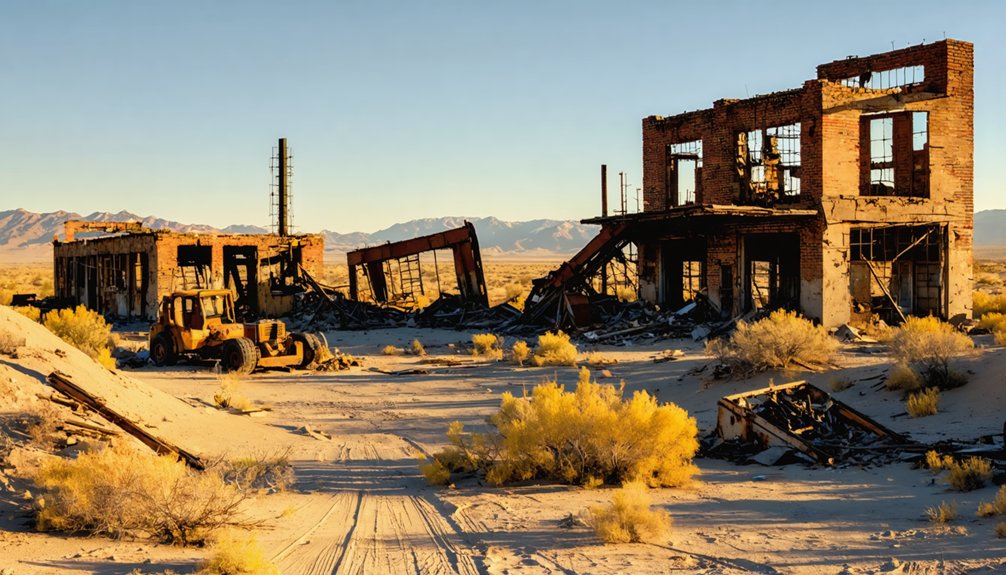
Today, you’ll find only the Lark Hospital, a green water tower, and remnants of tunnel portals standing against the reclaimed landscape.
Preservation efforts here are minimal, making your visit a raw, unfiltered encounter with industrial history before nature swallows what little remains.
How Did Lark Go From 800 Residents to a Ghost Town?
When you dig into Lark’s history, you’ll find a classic boom-and-bust story driven by mining’s inevitable decline—non-copper mines extracting silver, zinc, and lead closed systematically around 1971, sending the population into freefall from its 1950s peak of 800 residents.
In 1972, Kennecott Copper Corporation moved in, purchasing the entire town and foreclosing by 1977, when 591 residents still called it home. Kennecott then relocated those residents, demolished structures, and began dumping tailings across the townsite, erasing nearly all traces of the community that once thrived there.
Mining Industry Collapse
Once a thriving company town of over 800 residents, Lark’s decline began as the non-copper producing mines extracting silver, zinc, and lead started shutting down systematically around 1971. This mining legacy collapse reshaped the entire community’s historical significance forever.
By 1972, Kennecott Copper Corporation had purchased the town entirely, foreclosing by 1977 with 591 residents still living there.
- Non-copper mines closed systematically around 1971
- Kennecott purchased all land in 1972
- Foreclosure displaced 591 remaining residents by 1977
- Tailings dumping operations began immediately after acquisition
- The town was completely dismantled by 1978
Kennecott relocated residents and homes, erasing decades of community history. You’re now free to explore what little remains — a haunting reminder of industry’s powerful grip on human settlement.
Kennecott’s Town Acquisition
Kennecott Copper Corporation’s 1972 land purchase marked the final chapter for Lark’s tight-knit community. By 1977, Kennecott foreclosed on all remaining properties, displacing 591 residents and physically relocating homes from the townsite.
That same year, tailings dumping operations began, erasing decades of mining history beneath layers of mine waste.
Ghost town preservation efforts couldn’t compete with industrial expansion. By 1980, Lark stood completely deserted, leaving only the brick hospital, tunnel portals, and a green water tower as silent witnesses to a once-thriving town of 800 people.
Kennecott, now operating under RioTinto ownership, still holds the land today.
When you visit, you’re walking through a site where corporate ambition swallowed an entire community — a raw, unfiltered piece of Utah’s industrial past.
Did Anyone Famous Ever Live in Lark, Utah?
You might be surprised to learn that Lark once sheltered a future Hollywood icon within its modest mining community. Fay Wray, best known for her terrified screams in *King Kong*, spent her childhood in Lark from 1914 to 1919 while her parents lived in the bustling company town.
As you explore the remaining ruins today, you’re walking the same ground where one of early cinema’s most recognizable stars grew up.
Fay Wray’s Early Life
Before Fay Wray became the iconic screaming beauty clutched in King Kong’s giant fist, she was just a kid growing up in the dusty mining town of Lark, Utah. From 1914 to 1919, she called this rugged company town home, walking the same streets you’re now exploring as historical artifacts of a vanished world.
Ghost town preservation efforts keep her memory alive here. Consider these highlights of her early life:
- Born September 15, 1907, in Alberta, Canada
- Moved to Lark with her family around age seven
- Lived among mining families during Lark’s industrial boom
- Left Utah at age twelve, eventually heading to Hollywood
- Became one of cinema’s most recognizable faces by the 1930s
Lark’s Famous Resident
Walking those same dusty streets as a young Fay Wray gives you a surprising connection to Hollywood royalty—because yes, someone genuinely famous once called this forgotten Utah mining town home. The actress, legendary for her role in *King Kong*, lived in Lark from 1914 to 1919 during her childhood years. Her family settled here while the mining industry thrived around them.
As you explore the remaining historical artifacts and mining relics scattered across the site, you’re fundamentally walking through her backyard. She grew up surrounded by the same Oquirrh Mountain landscape you’re standing in today.
That contrast—a future Hollywood icon shaped by a rugged Utah mining town—makes your visit feel less like sightseeing and more like uncovering something truly extraordinary hidden in plain sight.
King Kong Star’s Childhood
Few ghost towns can claim a Hollywood connection, but Lark pulls it off effortlessly—Fay Wray, the actress immortalized by *King Kong*, spent her childhood here from 1914 to 1919. Walking these grounds, you’re treading the same earth she once explored as a young girl before Hollywood called.
- Fay Wray lived in Lark during its active mining boom years
- Her family resided here while the town thrived as a company settlement
- The surrounding Oquirrh Mountains offer stunning photography tips for dramatic landscape shots
- Wildlife encounters with desert fauna add unexpected adventure to your exploration
- The remaining hospital and water tower provide compelling foreground subjects for photographers
You’re visiting a place that shaped a future icon—that connection transforms an ordinary ghost town stop into something genuinely extraordinary.
Who Owns Lark Now and Can You Legally Explore It?
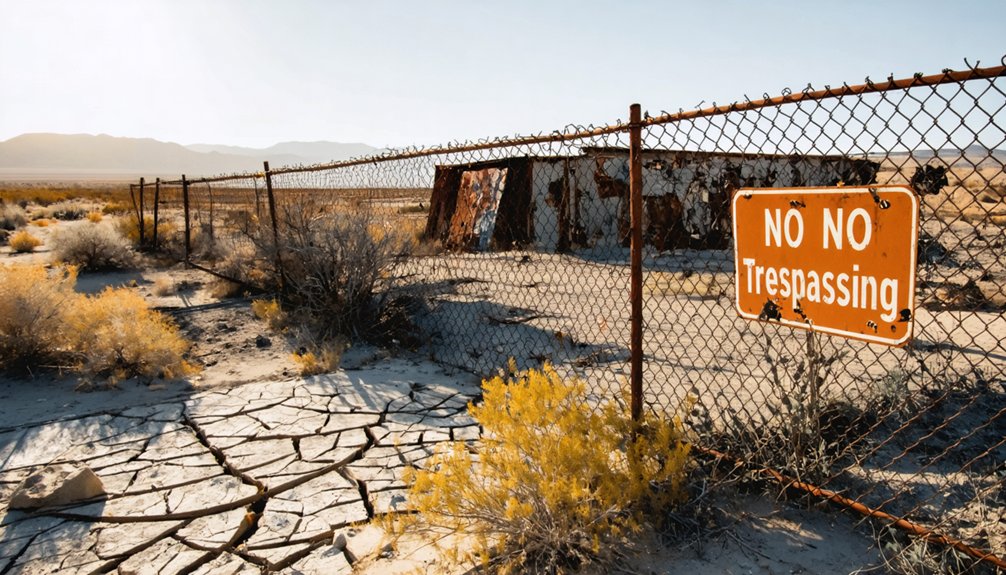
Lark’s ghost town sits firmly on private property owned by RioTinto/Kennecott, so you’ll want to plan accordingly before making the drive out. The corporation acquired the town in 1972, foreclosed by 1977, and immediately began tailings dumping operations, reshaping the landscape dramatically. Their environmental impact continues shaping what remains today.
Before you explore, contact RioTinto/Kennecott directly to request access permission. Trespassing on active mining property carries serious legal consequences you don’t want derailing your adventure.
The historical preservation of surviving structures like the Lark Hospital, tunnel portals, and water tower depends partly on respectful, authorized visits.
Getting proper permission isn’t just smart — it keeps this unique piece of Utah mining history accessible for future explorers who share your same adventurous spirit.
How Do You Find the Lark Townsite With Exact Coordinates?
Once you’ve secured permission from RioTinto/Kennecott, plug these exact coordinates into your GPS or Google Maps: 40.5250°N, 112.0964°W.
Lark sits 4 miles west of Herriman along the eastern flank of the Oquirrh Mountains, and a standard 2WD vehicle gets you there.
Use these navigation anchors to orient yourself on-site:
- Lark Hospital – the largest surviving structure housing historical artifacts from the town’s peak era
- Green water tower – your most visible landmark upon arrival
- Bingham Tunnel portal – remarkable geological features embedded in the hillside
- Mascotte Tunnel portal – another mining remnant worth documenting
- Eastern Oquirrh mountain flank – frames the entire townsite geographically
You’re roughly 3 miles south of Copperton once you’ve arrived.
Trust your coordinates, explore deliberately, and document everything.
What’s Actually Left to See at the Lark Townsite Today?
Although Kennecott dismantled nearly everything by 1978, you’ll still find four compelling remnants anchoring the townsite: the large brick Lark Hospital, a green water tower, the Bingham Tunnel portal, and the Mascotte Tunnel portal. Each structure tells a raw, unfiltered story of industrial ambition and eventual abandonment.
Four remnants endure: a brick hospital, water tower, and two tunnel portals—each a monument to industrial ambition abandoned.
The hospital’s brick walls photograph beautifully in golden-hour light, so plan your photography tips around early morning or late afternoon arrivals for dramatic shadows and texture.
The tunnel portals reward explorers who push deeper into the hillside terrain.
Wildlife encounters are common here, since nature has aggressively reclaimed the surrounding landscape. Watch for raptors circling overhead and small mammals darting through the brush. Stay alert, move freely, and treat every crumbling corner as your personal discovery.
When Is the Best Time to Visit Lark, Utah?
Visiting Lark rewards you differently depending on the season, so matching your trip to the right time sharpens the whole experience. The site’s historical artifacts and mining remnants are accessible year-round, but conditions vary dramatically.
- Spring and fall offer mild temperatures and clear skies, ideal for exploring the hospital ruins and tunnel portals.
- Summer brings warm, dry days perfect for photographing mining remnants without harsh weather interruptions.
- Winter coats the Oquirrh Mountains in snow, creating dramatic contrast against remaining brick structures.
- Avoid heavy snowfall periods if you’re traveling through with a standard 2WD vehicle.
- Morning visits maximize natural lighting on historical artifacts and the green water tower.
Pack water and supplies regardless of season since zero facilities exist on-site.
What Should You Pack When There Are Zero Facilities On-Site?

Knowing the best season to visit sets your timeline, but what you carry determines whether the trip stays comfortable or turns difficult fast. Lark has zero facilities — no water, no restrooms, no services. Pack enough water for the full trip, trail food, a first aid kit, and sun protection.
Bring a camera to document historical artifacts like the brick hospital, tunnel portals, and green water tower. You’re essentially the record-keeper here. Supporting preservation efforts means leaving everything untouched — photograph it, don’t take it.
Wear sturdy boots since the terrain is uneven and industrial debris lingers. Carry a charged phone with downloaded coordinates (40.5250°N, 112.0964°W) since cell service isn’t guaranteed. Your self-sufficiency isn’t just smart — out here, it’s non-negotiable.
Frequently Asked Questions
How Long Does a Typical Visit to the Lark Townsite Take?
You’ll typically spend 1-2 hours exploring Lark’s historical preservation highlights, like the brick hospital and water tower. Don’t expect visitor amenities—you’re on your own, so pack supplies and embrace the adventurous freedom this ghost town offers!
Are There Any Guided Tours Available for Exploring the Lark Ghost Town?
You’re on your own here — no guided exploration or historical preservation tours exist for Lark. You’ll blaze your own trail using coordinates 40.5250°N, 112.0964°W, discovering the hospital, water tower, and tunnel portals independently.
Can You Combine a Lark Visit With Nearby Bingham Canyon Mine Tours?
You can combine both visits for an epic mining history adventure! Explore Lark’s haunting ruins, then head to Bingham Canyon’s massive open-pit tour. You’ll also spot wildlife viewing opportunities roaming the Oquirrh Mountains between destinations.
Is Photography Permitted at the Lark Hospital and Water Tower Ruins?
You’d think historical preservation laws would block you, but no official photography restrictions exist! Snap the Lark Hospital’s weathered bricks and the towering water tower freely—RioTinto/Kennecott owns the site, so always respect private property boundaries.
Are Pets Allowed When Exploring the Lark Ghost Town Site?
The knowledge doesn’t specify pet policies or animal accommodations for Lark. Since Kennecott/RioTinto owns the site, you’ll want to contact them directly before bringing your adventurous companion along to explore these historic ruins.
References
- https://en.wikipedia.org/wiki/Lark
- https://www.kennecott-groundbreakers.com/stories/lark-history
- https://www.youtube.com/watch?v=CuaKGIqvoT4
- https://www.ghosttowns.com/states/ut/lark.html
- https://roamze.com/ghost-towns/lark-ghost-town-ut