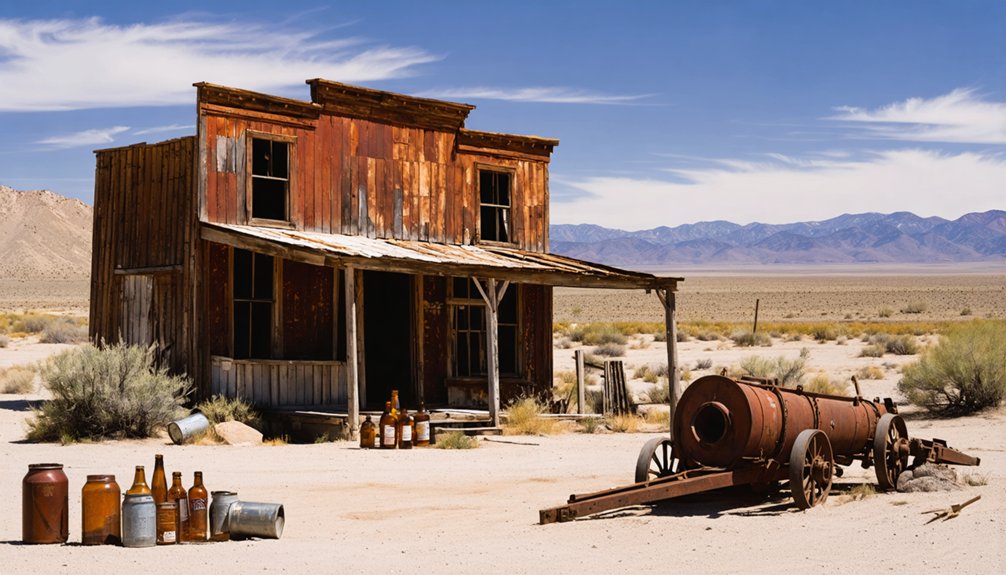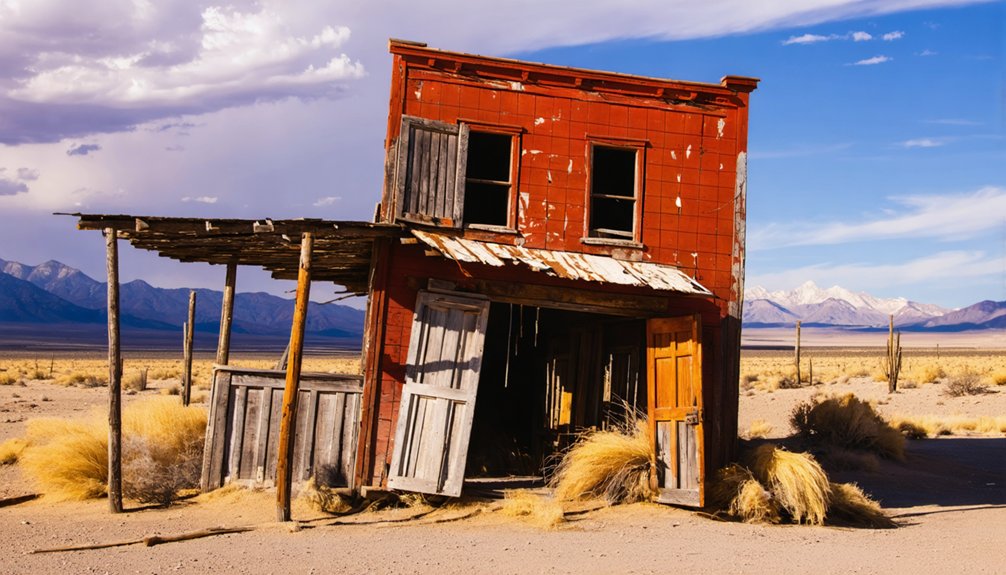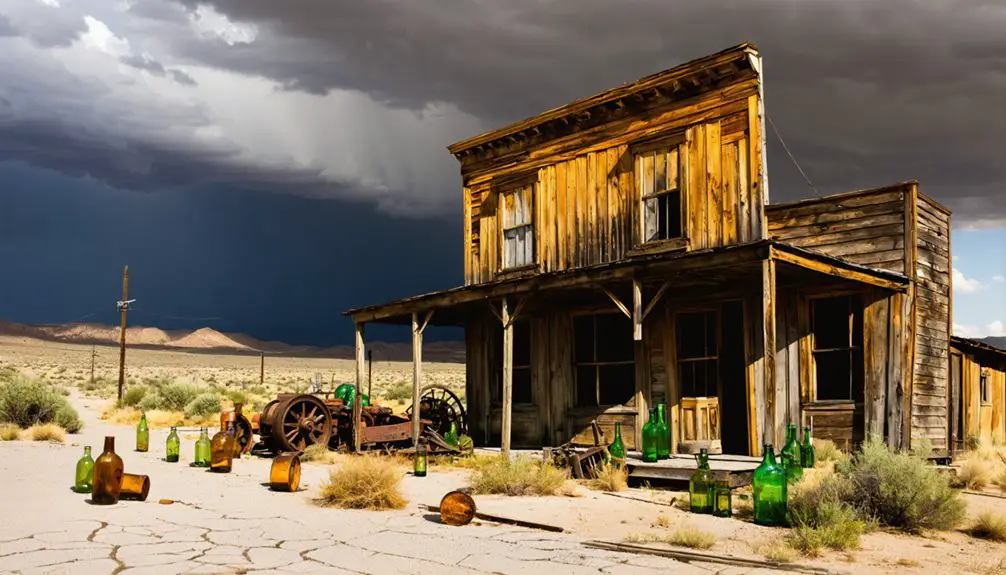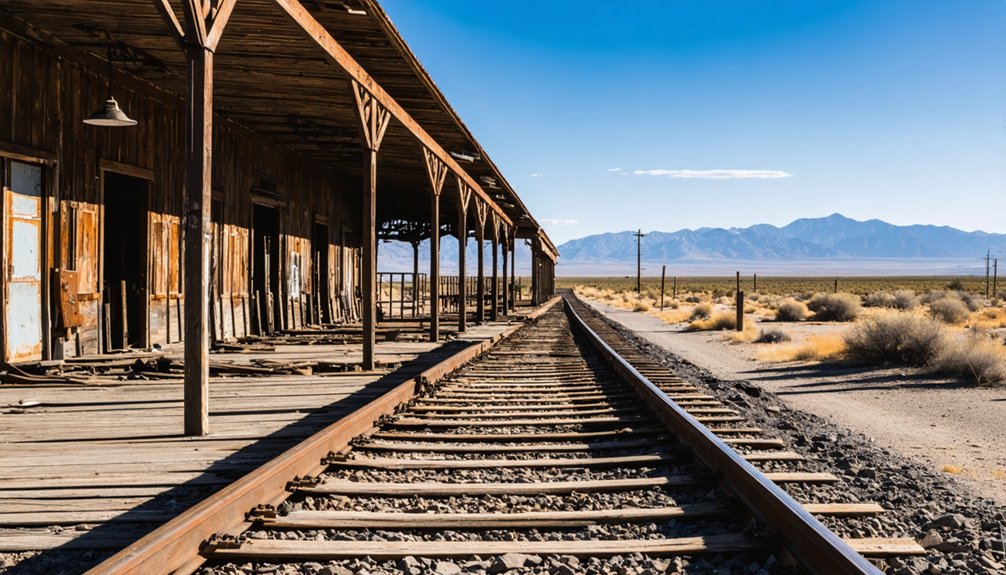
Planning a ghost town road trip to Bermond Station means driving Nevada’s legendary U.S. Route 50, roughly 30 miles east-southeast of Fallon, through one of America’s most hauntingly beautiful desert corridors. Founded in 1904 by French immigrant Aime “Frenchy” Bermond, this once-vital waypoint served miners, teamsters, and travelers before the Navy demolished it in 1987. No structures remain, but the history runs deep. Fuel up, pack your supplies, and keep exploring — there’s far more to this story than empty desert.
Key Takeaways
- Bermond Station sits on U.S. Route 50 in Churchill County, Nevada, roughly 30 miles east-southeast of Fallon between ghost towns Fairview and Wonder.
- Fuel up completely in Fallon before departing, and pack water, snacks, emergency supplies, and offline maps for this remote desert stretch.
- No structures remain at Bermond Station; the U.S. Navy demolished all buildings in 1987, leaving only open desert to explore.
- Nearby ghost towns Fairview, Wonder, Eastgate, Cold Springs, and Austin offer additional historical stops along the route.
- Dress in layers to handle temperature shifts, and watch for pronghorn antelope and hawks across the expansive alkali flats.
What Is Bermond Station?
Tucked along U.S. Route 50 in Churchill County, Nevada, Bermond Station is a ghost town with a rich past and virtually nothing left standing. Named after French immigrant Aime “Frenchy” Bermond, who arrived in Nevada in 1899, this former stagecoach stop served miners, teamsters, and travelers during the early 1900s.
Frenchy built a hotel, restaurant, and later a gas station, keeping the community alive as transportation evolved. Local legends paint him as a generous host who hauled water 12 miles from Lucky Boy Springs just to keep guests comfortable.
Unfortunately, preservation efforts never materialized — the U.S. Navy acquired the property in 1985 and demolished remaining structures by 1987. Today, you’ll find only open desert where this once-bustling station stood.
Where Is Bermond Station Located on U.S. Route 50?
Sitting about 30 miles east-southeast of Fallon along U.S. Route 50, Bermond Station rests in Churchill County, Nevada at coordinates 39°16’46″N, 118°16’09″W. This stretch of the “Loneliest Road in America” carries deep cultural significance, connecting you to Nevada’s raw frontier history and local legends of miners, teamsters, and weary travelers.
Bermond Station haunts U.S. Route 50, thirty miles east-southeast of Fallon, where Nevada’s loneliest road swallows history whole.
- U.S. Route 50 links Fallon to Austin, passing directly through Bermond’s former location.
- The site sits roughly halfway between civilization and Nevada’s open desert expanse.
- Lincoln Highway once ran this same corridor, carrying early automobile pioneers.
- Nearby ghost towns Fairview and Wonder explain why this stop existed.
- Remote Churchill County terrain means you’ll want a full tank before heading out.
The Rise and Fall of Bermond Station: A Churchill County Ghost Town
When you trace Bermond Station’s history, you’ll find it started as a humble stagecoach stop founded by French immigrant Aime “Frenchy” Bermond in 1904, serving miners, teamsters, and travelers along U.S. Route 50.
Frenchy built a thriving operation that included a hotel, restaurant, and later a gas station, hauling water from Lucky Boy Springs 12 miles away to keep everything running.
The station outlasted its founder — who died in 1926 — but couldn’t outlast the U.S. Navy, which acquired the property in 1985 due to its proximity to the Dixie Valley bombing range and demolished the remaining buildings just two years later.
Frenchy’s Humble Origins
Before Nevada’s highways made cross-country travel routine, a French immigrant named Aime “Frenchy” Bermond carved out a modest but essential outpost along what would become U.S. Route 50. Arriving in Nevada in 1899, Frenchy built something raw and necessary — a stagecoach stop serving miners, teamsters, and travelers pushing through Churchill County’s unforgiving terrain.
Here’s what defined Frenchy’s humble operation:
- Local cuisine served at his hotel and restaurant fueled exhausted travelers
- Scenic viewpoints surrounded the remote desert stop between Fallon and Austin
- Water hauled 12 miles from Lucky Boy Springs kept the station alive
- Freight relay services connected boom towns Fairview and Wonder
- A gas station was added as automobiles replaced stagecoaches
Frenchy died in 1926, but his station kept running for decades.
Growth and Community Services
As the early 1900s brought a steady stream of miners, teamsters, and travelers through Churchill County, Bermond Station grew from a simple stagecoach stop into a vital community hub.
Frenchy expanded his operation, adding a hotel and restaurant where weary travelers could rest alongside local wildlife roaming Nevada’s open desert.
Water, hauled from Lucky Boy Springs roughly 12 miles away, kept the station running and the community thriving.
When automobiles began replacing horses, Frenchy adapted, adding a gas station to serve the growing flow of road traffic.
Road safety became a practical concern along this remote stretch of U.S. Route 50, and Bermond Station provided a reliable waypoint between Fallon and Austin, giving travelers a dependable stop in an otherwise unforgiving landscape.
Navy Acquisition and Demolition
Bermond Station survived decades of shifting ownership after Frenchy’s death in 1926, but the U.S. Navy ended its story in 1985.
Proximity to the Dixie Valley bombing range made the property strategically valuable, leaving no room for local legends or ghost town myths to keep it alive.
Here’s what happened during those final years:
- The U.S. Navy acquired the property in 1985
- Demolition crews leveled remaining buildings just two years later, in 1987
- The Dixie Valley bombing range drove the acquisition decision
- Various independent owners kept the station running until the Navy stepped in
- Zero structures survived demolition, creating a true ghost town overnight
Today, you’ll find nothing but open desert where travelers once fueled up and rested.
What’s Left at Bermond Station Today
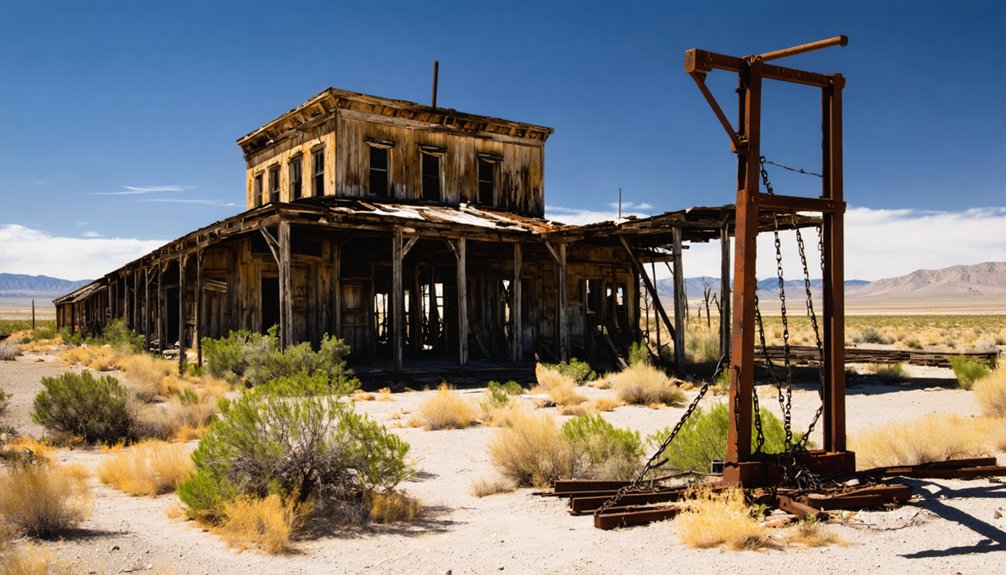
When you arrive at Bermond Station today, you won’t find a single standing structure — the U.S. Navy demolished everything in 1987. What you’ll see is fundamentally a wide spot along U.S. Route 50, a humbling reminder of how completely time and circumstance can erase a once-bustling community.
The historical significance is real, but you’ll need to bring your imagination, because the landscape itself offers no physical evidence of the hotel, restaurant, or gas station that once served miners and travelers crossing Nevada’s high desert.
Zero Structures Remaining
Unlike the bustling freight stop it once was, Bermond Station today offers nothing more than a wide spot in the road. The U.S. Navy demolished the remaining buildings in 1987, erasing nearly every trace of cultural preservation that once defined this desert landmark. You won’t find tourist attractions here — just open Nevada sky and pavement.
Here’s what greets you when you arrive:
- Flat, open desert stretching in every direction
- No signage marking the station’s historical significance
- Zero standing structures from the original settlement
- An unmarked roadside pull-off along U.S. Route 50
- Silence broken only by passing vehicles
Still, knowing what once stood here makes stopping worthwhile. You’re standing where miners, teamsters, and travelers once found relief — and that history lives in the landscape itself.
A Wide Spot
What remains of Bermond Station today fits its description perfectly — a wide spot along U.S. Route 50 where history once bustled with miners, teamsters, and travelers. The buildings are gone, demolished in 1987 after the U.S. Navy acquired the property two years earlier. You won’t find ruins, foundations, or roadside markers competing for your attention.
What you’ll find is open Nevada desert, stretching endlessly under a wide sky. For explorers drawn to abandoned sites and local legends, that emptiness speaks volumes. You’re standing where Frenchy once served meals, hauled water 12 miles from Lucky Boy Springs, and kept weary travelers moving west.
The land remembers even when nothing stands. Sometimes a wide spot in the road tells the most honest ghost town story of all.
Historical Significance Only
Though nothing physical remains at Bermond Station, the site carries a weight that empty desert rarely holds on its own. Local legends keep Frenchy’s memory alive, and quiet preservation efforts maintain this stretch of Route 50 isn’t forgotten entirely.
Stand here and you’re standing where:
- Teamsters rested horses after brutal desert crossings
- Miners fueled up before pushing toward Fairview and Wonder
- A French immigrant built something lasting from nothing
- Water hauled 12 miles transformed a barren stop into community
- The U.S. Navy erased 80 years of history in a single demolition
You won’t photograph buildings or walk through rooms. What you’ll take away is perspective — proof that significance doesn’t require walls, just the willingness to look at empty ground and understand what once stood there.
How to Drive to Bermond Station From Fallon
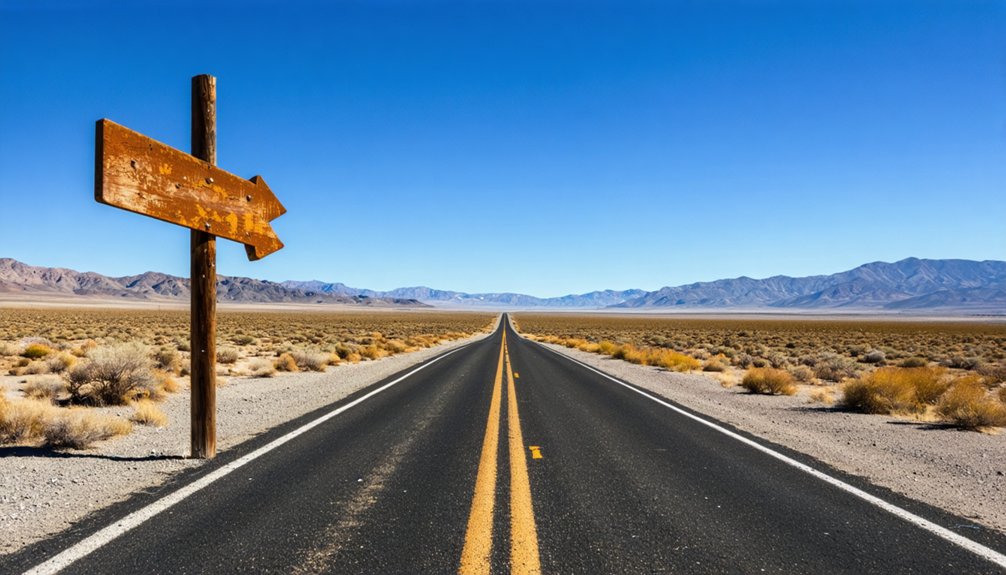
Reaching Bermond Station from Fallon is straightforward: head east on U.S. Route 50, the legendary “Loneliest Road in America,” and drive approximately 30 to 35 miles.
The open desert highway delivers you through Churchill County’s raw, expansive terrain, where scenic viewpoints reveal stark mountain ranges and vast alkali flats stretching endlessly in every direction. Keep your eyes open for local wildlife — pronghorn antelope and hawks frequently appear along this corridor.
You’ll know you’ve arrived when the road widens slightly; there’s little else marking the spot. Before departing Fallon, fuel up completely — no services exist along this stretch or at the site itself.
The drive takes under an hour, making Bermond Station an easy, rewarding detour for any freedom-seeking road tripper.
Ghost Towns Near Bermond Station on the Route 50 Corridor
Bermond Station doesn’t stand alone in its ghost town legacy — the Route 50 corridor harbors several abandoned communities worth folding into your itinerary. Local legends breathe life into these forgotten places, and scattered preservation efforts keep their stories alive.
- Fairview – A silver boomtown that Bermond Station once supplied, now reduced to scattered foundations and desert silence.
- Wonder – Another freight destination for Bermond, offering eerie remnants and sweeping basin views.
- Eastgate – A former Pony Express station site with tangible history still visible roadside.
- Cold Springs – Another Pony Express landmark carrying authentic frontier character.
- Austin – A living ghost town with Victorian architecture, active enough to fuel your next leg westward.
Each stop adds depth to your Route 50 freedom run.
What to Prepare Before Visiting This Stretch of U.S. Route 50
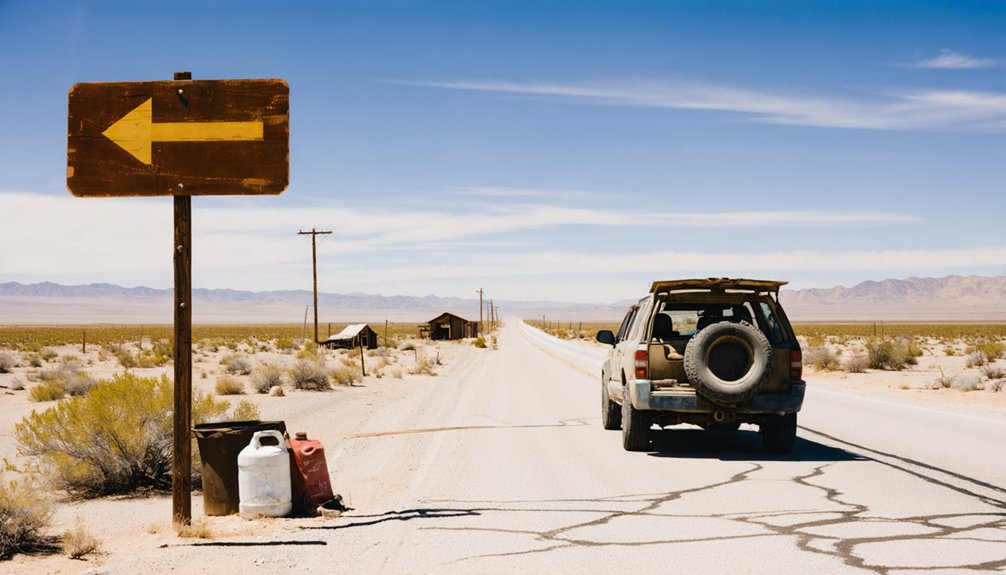
Venturing out to Bermond Station means committing to one of Nevada’s most famously desolate stretches of highway, so preparation isn’t optional — it’s survival strategy. Fill your tank completely in Fallon before heading east; there’s nothing waiting for you at the site itself. Pack water, snacks, and emergency supplies — Route 50 earns its “Loneliest Road” reputation honestly.
Before leaving Fallon, sample some local cuisine, because roadside options disappear fast once you’re heading into Churchill County’s open expanse. Keep your camera ready for wildlife observation opportunities; pronghorn antelope and desert birds frequently cross these remote corridors.
Download offline maps since cell service is unreliable. Dress in layers, as desert temperatures shift dramatically. Respect the land, travel light, and embrace the rawness of genuine Nevada freedom.
Frequently Asked Questions
When Did Bermond Station’s Post Office Officially Open and Close?
Imagine stumbling upon a forgotten postmark — Bermond’s post office opened November 24, 1920, and closed May 31, 1926. Your ghost town exploration uncovers Nevada history’s fleeting moments, where even mail couldn’t survive the desert’s abandonment.
How Far Away Was the Water Source Used by Bermond Station?
You’d have hauled your water supply location from Lucky Boy Springs, roughly 12 miles away — a fascinating piece of water source history that reveals just how fiercely self-reliant life at Bermond Station truly demanded you be!
Why Specifically Did the U.S. Navy Acquire Bermond Station’s Property?
The Navy grabbed Bermond Station’s property in 1985 because it sat dangerously close to the Dixie Valley bombing range — a critical naval training hub that shaped military history and ultimately erased this free-spirited desert community forever.
What Were All the Different Names Used for Bermond Station?
You’ll find ghost town legends tied to five names: Bermond Station, Frenchman’s Station, Bermond, Frenchie’s, and Frenchys. Historic preservation efforts remind us each name reflects the freedom-loving spirit of Nevada’s early travelers.
How Long After Acquisition Were Bermond Station’s Buildings Demolished?
You’ll find that the U.S. Navy demolished Bermond Station’s buildings just two years after acquiring the property in 1985. This abandoned building history ended in 1987, erasing all ghost town preservation possibilities forever.
References
- https://en.wikipedia.org/wiki/Frenchman
- https://forgottennevada.org/sites/frenchman.html
- https://www.nvexpeditions.com/churchill/frenchman.php
- https://en.wikipedia.org/wiki/List_of_ghost_towns_in_Nevada
- https://southwestexplorers.com/bermond-station-nevada/
- https://kids.kiddle.co/List_of_ghost_towns_in_Nevada