Planning a ghost town road trip to Marcelina, Texas starts with heading northeast of Floresville on SH 97, about 5.5 miles out. You’ll find a cemetery dating back to 1882 and a rebuilt 1935 Baptist church — the last remnants of a cotton community that once had stores, gins, and a post office. Budget around 30 minutes to explore, photograph, and reflect. There’s far more to this forgotten community’s rise and fall than first meets the eye.
Key Takeaways
- Marcelina is located approximately 5.5 miles northeast of Floresville via SH 97, following the historic Old San Antonio-Indianola Road.
- The primary visible remnants are a historic cemetery dating to 1882 and a Baptist church rebuilt in 1935.
- Plan roughly 30 minutes to walk the cemetery, view the church exterior, and photograph the ghost town surroundings.
- The cemetery is open to the public during daylight hours at no charge, requiring no reservations or guided tours.
- Combine the stop with Floresville’s courthouse square and other Wilson County heritage sites for a rewarding half-day road trip.
What Was Marcelina, Texas?
Once a quiet rural settlement tucked into Wilson County, Texas, Marcelina grew up along the Old San Antonio-Indianola Road in the early 1870s when Wiley R. Franklin purchased land and built a horse-powered cotton gin.
In the early 1870s, Wiley R. Franklin planted the seeds of Marcelina along a dusty Texas road.
Named after nearby Marcelinas Creek, the community quickly developed a Baptist congregation, a one-teacher school, two stores, two cotton gins, and a blacksmith shop by the mid-1890s.
Then the boll weevil arrived in 1901, gutting cotton production and draining economic life from the town. The post office closed in 1906, and Marcelina quietly faded.
Today, local legends surrounding its rise and fall draw curious travelers, while preservation efforts keep the 1935 Baptist church sanctuary and the original cemetery standing as tangible connections to this forgotten cotton-era community.
How Marcelina Grew From a Single Cotton Gin
When Wiley R. Franklin purchased land in late 1873 and built a small horse-powered cotton gin, he unknowingly sparked a community. By 1874, a Baptist congregation had organized, meeting in Gabriel Moffit’s home.
A one-teacher school followed in 1875, and the cemetery took root in 1882 with Martin Donaho’s burial.
You can trace Marcelina’s growth through local legends tied to its cotton-era commerce. By the mid-1890s, the town supported two stores, two cotton gins, a blacksmith shop, a gristmill, and a post office that opened in 1887.
Architectural remnants like the surviving Baptist church, rebuilt in 1935, still tell that story. Standing there, you’re looking at what a determined agricultural community built from a single machine on open Texas land.
What Killed Marcelina’s Economy?
Marcelina’s economy didn’t collapse overnight — it unraveled through a series of hard blows. The cotton industry powered this community for decades, but that dependence became its weakness. When boll weevils devastated crops in 1901, farmers had no backup plan. Fields that once funded stores, gins, and schools suddenly couldn’t sustain a livelihood.
Economic decline accelerated as transportation improved and trade shifted toward Floresville. Residents no longer needed everything Marcelina offered when better roads made larger towns accessible.
Rural mail delivery then removed another anchor — the post office closed October 1, 1906, stripping the settlement of a key community service.
You can see this pattern repeated across Texas ghost towns. One crop, one road, one decision — and a thriving community quietly disappears from the map.
What Can You Still See at Marcelina Today?
Though little remains of the community that once supported two stores, two cotton gins, and a blacksmith shop, you’ll still find a cemetery and a Baptist church standing at the Marcelina site.
Little remains of Marcelina — yet a cemetery and Baptist church still stand, quietly holding the community’s memory.
The cemetery, established in 1882 with the burial of Martin Donaho, connects you directly to the community legacy of early Wilson County settlers. Headstones mark families who built their lives around cotton fields and creek-bottom farmland.
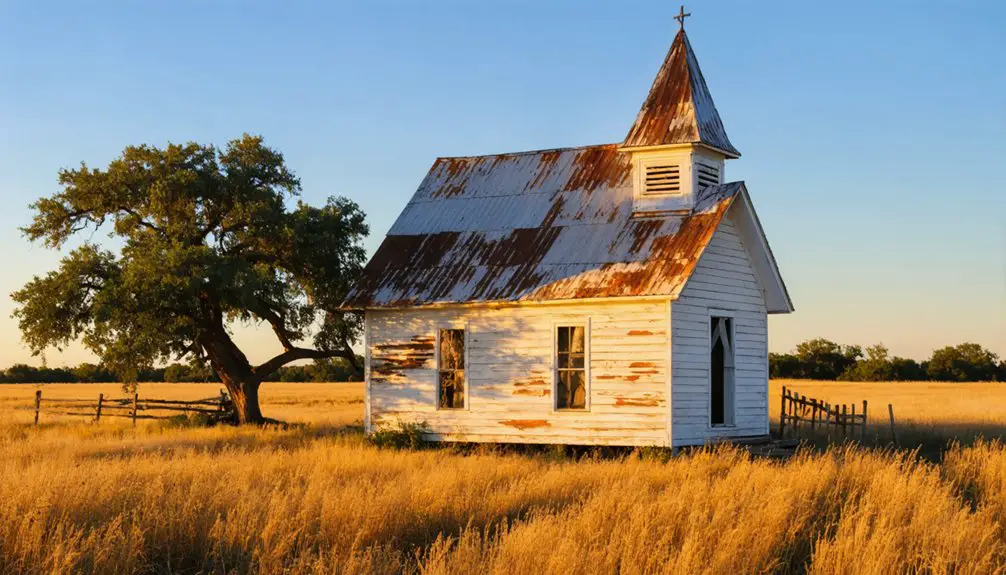
The Baptist church, first organized in 1874, still stands with its 1935 sanctuary intact. Historical preservation here isn’t museum-polished — it’s raw and honest, which makes the stop genuinely worthwhile. You can walk the grounds, read the markers, and photograph the church exterior freely.
Pair this visit with nearby Floresville for a fuller picture of the region’s heritage.
Is Marcelina Cemetery Open to the Public?
Like most rural Texas cemeteries, Marcelina Cemetery welcomes visitors during daylight hours at no charge. You can walk the grounds freely, reading headstones that trace the community’s earliest settlers back to 1882, when Martin Donaho became the first burial.
Each marker reflects the cultural influence of the farming families who built this settlement along the Old San Antonio-Indianola Road.
As you explore, notice how the surrounding Baptist church displays architectural styles shaped by modest rural craftsmanship, particularly the 1935 sanctuary still standing today.
No formal entrance fee, ranger station, or guided tour interrupts your visit. You simply arrive, walk at your own pace, and connect directly with Marcelina’s cotton-era past.
Pair this stop with nearby Floresville to build a fuller Wilson County heritage road trip.
How Do You Get to Marcelina From Floresville?
From Floresville, you’ll head northeast about 5.5 miles on SH 97 before turning south toward the cemetery.
The route follows a stretch of what was once the historic Old San Antonio-Indianola Road, giving the drive itself a layer of historical context.
Watch for the Texas historical marker, which signals you’ve reached what little remains of this once-active cotton community.
Driving Route From Floresville
Since Marcelina sits just outside Floresville, reaching it doesn’t require much of a detour. Head northeast on SH 97 for about 5.5 miles, then turn south toward the cemetery. The route is straightforward, making it an easy addition to any Wilson County heritage tourism itinerary.
You’ll pass through quiet rural landscape that still reflects the agricultural character defining this region during Marcelina’s cotton-era peak.
Once you arrive, the cemetery and Baptist church stand as the primary draws, offering genuine cultural preservation in an otherwise faded community.
Keep your visit concise — park near the cemetery, walk the grounds, and view the 1935 church sanctuary exterior.
Pair this stop with other Floresville historical sites to build a fuller picture of Wilson County’s past.
Road Access And Landmarks
Reaching Marcelina is straightforward once you head northeast out of Floresville on SH 97 for roughly 5.5 miles, then turn south toward the cemetery. You’re following the Old San Antonio-Indianola Road corridor, a route loaded with local legends from Texas’s cotton era.
Watch for these key landmarks as you arrive:
- Cemetery entrance — your clearest sign you’ve found the site
- Baptist church exterior — built in 1935, it’s still standing
- Historic marker — confirms Marcelina’s officially documented past
- Surrounding farmland — echoes the cotton fields that once defined this community
Don’t expect historical artifacts behind museum glass here. What you’ll find is raw, open Texas history you can walk through on your own terms, no admission, no crowds.
Which Nearby Sites Pair Well With a Marcelina Visit?
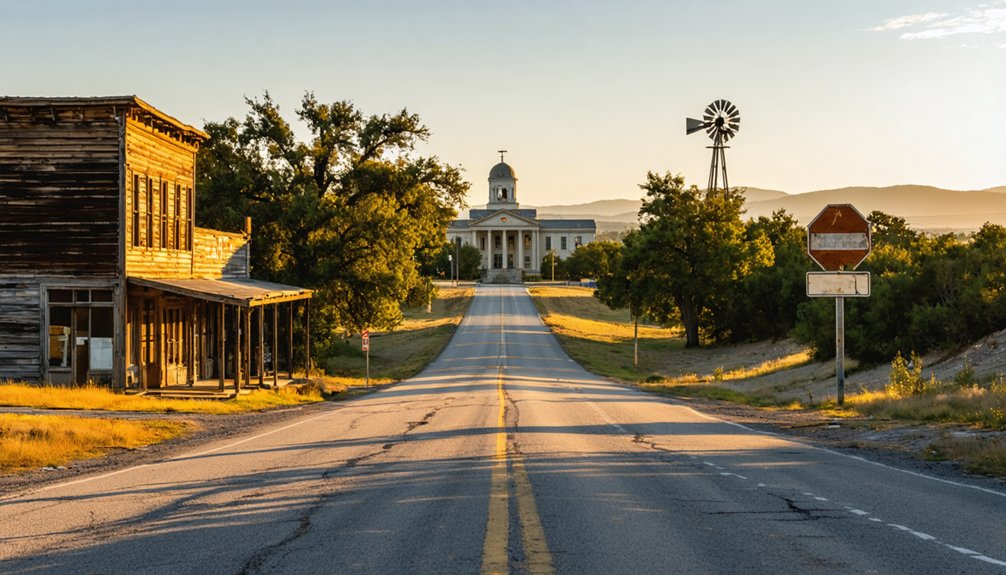
Marcelina sits close enough to Floresville that you can turn a quick cemetery stop into a half-day Wilson County heritage loop. Floresville serves as your natural base, offering local legends tied to ranching culture and historic architecture worth exploring on foot.
The Wilson County courthouse anchors downtown and rewards anyone drawn to classic Texas civic design. From there, you can push outward toward other rural communities that share Marcelina’s cotton-era story.
Each stop builds a clearer picture of how agriculture shaped and ultimately abandoned these settlements. You’re not chasing tourist traps here — you’re tracing real history across open roads on your own terms.
Pack a map, keep your tank full, and let Wilson County’s forgotten corners tell the story Marcelina started.
How Long Should You Budget for a Marcelina Stop?
You can cover Marcelina’s cemetery and church exterior comfortably in about 30 minutes, making it an easy addition rather than a standalone destination.
Pair it with Floresville for lunch, historic courthouse views, or other Wilson County stops to build a more rewarding half-day trip.
If you’re shooting the cemetery headstones or the 1935 church sanctuary, budget extra time since the light and weathered details reward a slower pace.
Quick 30-Minute Visit
How long does a ghost town stop really need to be? At Marcelina, 30 minutes is genuinely enough to absorb the history, honor preservation efforts, and move on free and unhurried. Here’s how to use that time well:
- Drive the approach from SH 97 and orient yourself to the rural landscape.
- Walk the cemetery, where local legends and pioneer names mark Wilson County’s cotton-era past.
- View the 1935 Baptist church exterior, a quiet survivor of community decline.
- Photograph the surroundings before heading back toward Floresville.
You won’t need a full afternoon. Marcelina rewards focused curiosity, not extended wandering.
Treat it as a deliberate pause — a moment where history speaks clearly if you’re willing to simply stop and listen.
Pairing With Floresville
Since Marcelina sits just a short drive from Floresville, it pairs naturally as a half-day itinerary rather than a standalone destination. Head into Floresville first to explore its courthouse square, local restaurants, and Wilson County heritage sites that highlight the region’s cultural significance.
Then drive northeast on SH 97, turn south toward the cemetery, and spend your 30 minutes absorbing what remains of this former cotton community.
Floresville gives you the full-service amenities Marcelina can’t offer — fuel, food, and lodging — while Marcelina delivers the raw, quiet history that makes the detour worthwhile.
Together, they tell a connected story about agricultural settlement and preservation efforts keeping rural Texas memory alive.
Budget roughly three to four hours total for both stops combined.
Photography Time Considerations
Most ghost town stops reward patience, and Marcelina is no exception — plan for roughly 30 to 45 minutes if you’re shooting the cemetery and church exterior without rushing. Good light transforms historical preservation sites dramatically, so timing matters.
Budget your visit around these four photography tips:
- Golden hour morning light flatters weathered headstones and the 1935 church sanctuary beautifully.
- Midday harsh shadows obscure detail on grave markers, so avoid peak afternoon sun.
- Wide establishing shots capture the rural isolation that defines Marcelina’s ghost town character.
- Close detail frames preserve historical preservation records of inscriptions and architectural elements.
You’re free to linger longer if conditions shift favorably. Stay flexible, keep your schedule loose, and let Floresville serve as your comfortable basecamp between stops.
Frequently Asked Questions
Are There Any Guided Tours Available at the Marcelina Historic Site?
You won’t find guided tours at Marcelina, but you’ll discover its historical significance independently through the cemetery and Baptist church. Ongoing preservation efforts keep these landmarks alive, letting you freely explore this enchanting ghost town at your own pace.
Is There Parking Available Near the Marcelina Cemetery and Church?
Like a wide-open Texas sky, you’ll find room to breathe here. Parking options along the rural roadside let you pull right up, and accessibility features are minimal, so you’re free to explore the cemetery and church at your own pace.
What Is the Best Time of Year to Visit Marcelina?
Spring and fall offer you the best seasonal weather for exploring Marcelina’s cemetery and church. You’ll avoid summer’s brutal Texas heat, and visitor crowds stay minimal year-round, giving you that peaceful, wide-open freedom ghost town seekers crave.
Are Pets Allowed When Visiting the Marcelina Cemetery Grounds?
Want to bring your furry companion? The pet policy isn’t officially documented, so you’ll want to call ahead before visiting. During visiting hours, keep pets leashed and respectful of this historic sacred ground.
Is the Marcelina Baptist Church Still an Active Congregation Today?
The knowledge doesn’t confirm if it’s an active congregation today, but the church’s rich church history runs deep. You’ll find the 1935 sanctuary standing, hinting at community events that once shaped this resilient, freedom-rooted Texas settlement.
References
- https://atlas.thc.texas.gov/Details/5493003203
- https://www.ghosttowns.com/states/tx/marcelina.html
- https://www.wilsoncountyhistory.org/talk-marcelina
- https://www.texasescapes.com/SouthTexasTowns/Marcelina-Texas-Wilson-County.htm
- https://www.tshaonline.org/handbook/entries/marcelina-tx
- https://www.ksat.com/holidays/2018/10/30/texas-has-more-ghost-towns-than-any-other-state/
- http://www.cemeteries-of-tx.com/Etx/Wilson/Cemetery/Marcelina.htm
- https://texashistory.unt.edu/ark:/67531/metapth39752/
- https://en.wikipedia.org/wiki/List_of_ghost_towns_in_Texas
- https://www.tshaonline.org/handbook/entries/poth-tx