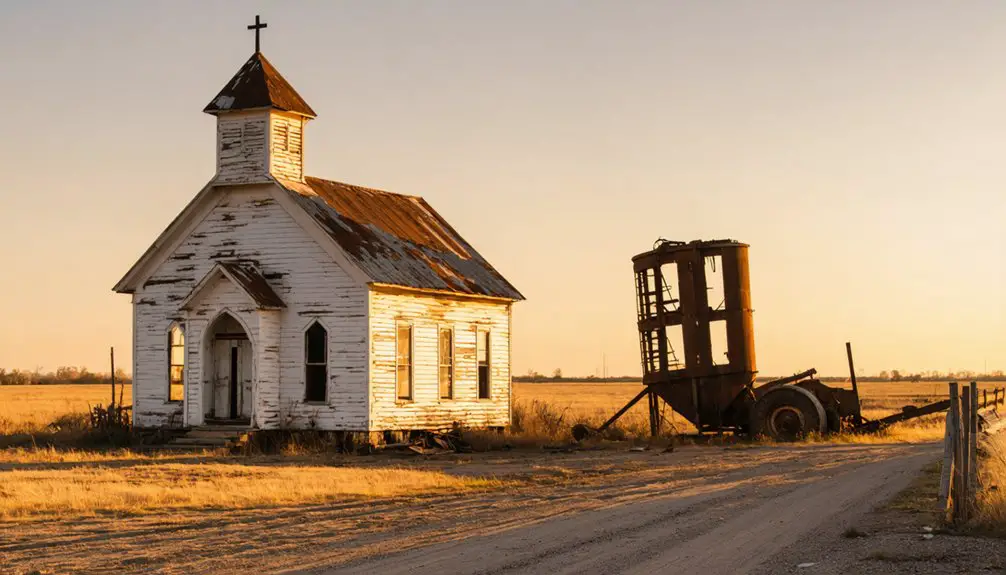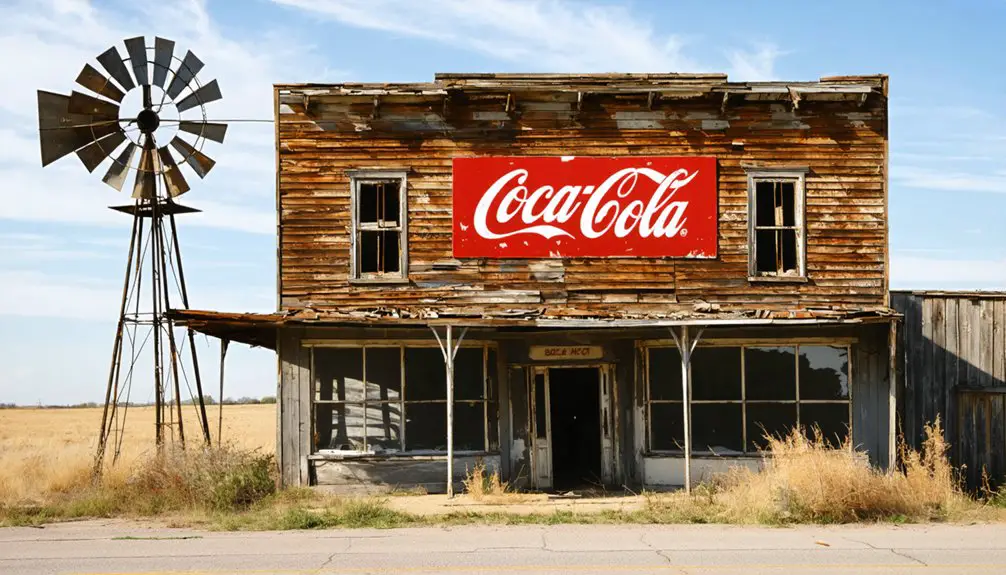
Planning a ghost town road trip to Stuart, Oklahoma starts with fueling up in McAlester, about 15 miles east, before heading west on U.S. Highway 270. You’ll find a town frozen in time, with a population of under 200 and authentic history around every corner. Don’t miss the WPA-era Malaria Ditch, one of the most intact Depression-era landmarks in the region. There’s much more to Stuart’s story that’ll surprise you.
Key Takeaways
- Stuart, Oklahoma, founded in 1903, is a near-ghost town with only 195 residents, offering authentic, unpolished history ideal for road trippers.
- Access Stuart primarily via U.S. Highway 270, located approximately 15 miles west of McAlester, your essential base for fuel and lodging.
- The WPA-era Malaria Ditch is Stuart’s key landmark, representing Depression-era engineering and historic public health efforts worth visiting.
- McAlester, known as Oklahoma’s Italian food capital, provides all necessary accommodations and dining before heading to Stuart’s minimal-service environment.
- Enhance your trip by including nearby cultural sites like the Seminole Nation Museum and Arrowhead State Park in Hughes County.
What Makes Stuart, Oklahoma a Ghost Town Worth Visiting?
Why visit a town with fewer than 200 residents and little in the way of conventional attractions? Because Stuart, Oklahoma delivers something most crowded destinations can’t — raw, unfiltered history you can actually touch.
Founded in 1903 and named after a local judge tied to the railway era, Stuart carries the quiet weight of a town that time largely passed by. You’ll find local legends woven into its streets and a WPA-era drainage project called the Malaria Ditch that stands as a surprisingly intact piece of Depression-era engineering.
The historic architecture and small-town atmosphere make it ideal for photographers and history hunters alike. If you crave open roads, freedom, and authentic American heritage without the tourist crowds, Stuart belongs on your southeastern Oklahoma itinerary.
Stuart’s History: From Railroad Stop to Near-Ghost Town
When you trace Stuart’s roots, you’ll find a town that grew up around the railroad era in 1903.
Eventually, it took its name from a local judge tied to that rail-linked history.
The railroad connection gave Stuart early purpose, drawing settlers and shaping Hughes County’s small-town landscape during Oklahoma’s formative years.
Since then, the population has stayed remarkably small, dropping to just 180 residents by 2010 before nudging up slightly to 195 in 2020, earning Stuart its place on Oklahoma’s ghost town list.
Railroad Origins And Naming
Though Stuart’s roots stretch back to 1903, it’s the town’s railroad connections that truly shaped its identity. As you explore this quiet southeastern Oklahoma stop, you’ll notice how railway heritage runs through its very name — the town was renamed to honor Judge Stuart, a figure tied directly to the rail era that once drove growth across Hughes County.
Railroads brought commerce, settlers, and ambition to towns like this one. But when agricultural decline hit and transportation patterns shifted, communities like Stuart slowly lost their momentum.
What you’re seeing today is the result of that long, gradual fade. The railroad gave Stuart its identity, and its absence helped define its current ghost-town character — making it a fascinating, honest window into Oklahoma’s rural past.
Population Decline Over Time
Stuart’s population numbers tell the story better than any historical marker could. Population trends here reflect the demographic shifts that reshaped countless Oklahoma small towns throughout the twentieth century.
You’re looking at a community that never grew large but managed to hold on:
- 1903: Stuart founded during the railroad era
- Mid-century: Regional agricultural decline pulled residents toward cities
- 2010 census: Population recorded at just 180 residents
- 2020 census: A slight rebound brought the count to 195
That modest uptick suggests resilience, not revival. Stuart remains small enough to earn its ghost town classification while still housing real people living quiet lives.
When you roll through, you’re witnessing a living snapshot of rural Oklahoma’s long, slow demographic transformation.
How to Get to Stuart on Your Oklahoma Road Trip
You’ll reach Stuart by taking U.S. Highway 270, the most direct route through southeastern Oklahoma, where State Highway 31A connects you to the town itself.
Before heading out, stock up in McAlester, just 15 miles east, since it’s your best nearby hub for fuel, food, and lodging.
Stuart’s small size makes it a natural quick stop rather than a standalone destination, so plan it as a detour within a broader regional drive.
Highway Access Routes
Getting to Stuart is straightforward, since U.S. Highway 270 runs directly through town, making it easy to slot into a southeastern Oklahoma road trip. You’re only about 15 miles west of McAlester, so you can stock up on local cuisine and fuel before heading out.
State Highway 31A connects you to other regional roads, opening up more exploration options.
Here’s what to keep in mind for routing:
- U.S. Highway 270 is your primary access route
- State Highway 31A links Stuart to surrounding southeastern roads
- McAlester sits 15 miles east as your nearest hub
- Arrowhead State Park is accessible nearby for outdoor recreation add-ons
You won’t need complicated navigation — just open roads and a curiosity for Oklahoma’s smaller, older communities.
Nearest Major Hub
McAlester works as your practical home base before heading west to Stuart. Sitting roughly 15 miles east along U.S. Highway 270, McAlester gives you reliable access to fuel, food, and lodging before you make the short drive into smaller territory.
Once you’ve stocked up, the highway pulls you directly into Hughes County’s quieter landscape. Stuart itself offers limited services, so arrive prepared.
The town rewards travelers drawn to local folklore and the kind of layered history that preservation efforts work hard to keep visible. Think of McAlester as your launch point rather than your destination — a functional anchor that lets you push west with confidence.
From there, Stuart’s ghost-town character is only a straightforward, scenic highway stretch away.
Best Travel Approach
Stuart sits right along U.S. Highway 270, making it simple to fold into any southeastern Oklahoma drive. State Highway 31A connects you to surrounding roads, so routing through here feels natural rather than forced. Whether you’re chasing local legends or hunting preservation efforts, getting here is half the adventure.
Keep these travel tips in mind:
- Fuel up in McAlester before heading west — services inside Stuart are minimal
- Use U.S. 270 as your primary approach for the smoothest drive
- State Highway 31A links Stuart to nearby county roads worth exploring
- Plan a short stop, not a full day — Stuart rewards curious, efficient travelers
You’re not fighting traffic or crowds here. You’re moving freely through open Oklahoma landscape on your own terms.
The Malaria Ditch: Stuart’s Strangest and Most Intact Historic Landmark
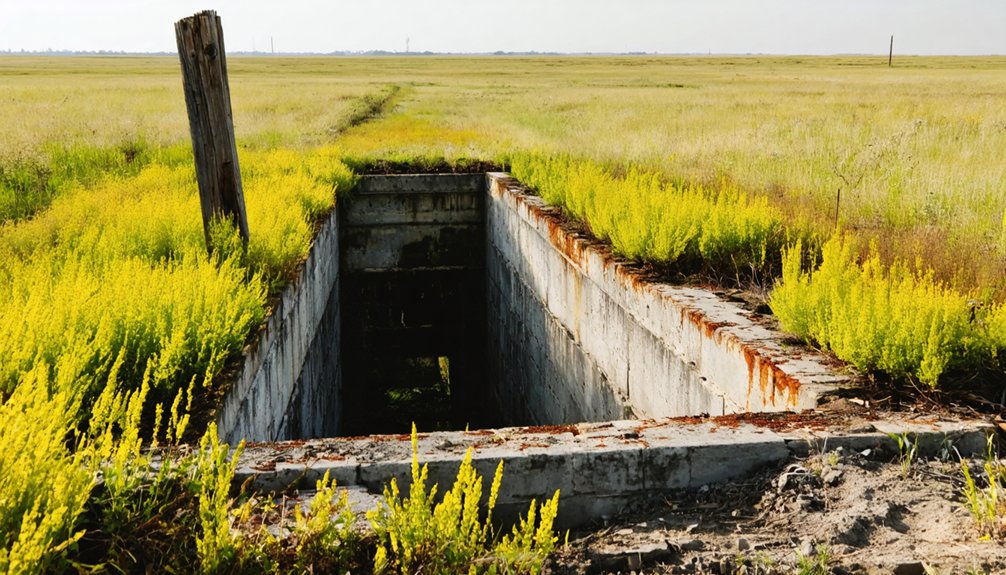
If you’re hunting for Stuart’s most unusual historic landmark, the Malaria Ditch won’t disappoint. Built during the WPA era, this drainage project was designed specifically to control malaria outbreaks that once threatened the community.
Unlike many abandoned structures from that period, the ditch remains remarkably intact, giving you a rare, tangible connection to Depression-era public health history.
Walking alongside it, you’ll sense the local legends embedded in its construction — ordinary workers solving a serious public health crisis through sheer effort and government initiative.
It’s the kind of stop that rewards curious travelers who prefer genuine historical context over polished tourist attractions.
Bring a camera, take your time, and let the ditch tell its quiet story before you continue your southeastern Oklahoma road trip.
What’s Actually Left in Stuart Today
After taking in the Malaria Ditch, you’ll naturally start wondering what else remains of this small Oklahoma settlement. Stuart’s a lean town, and that’s part of its honest charm. Local legends suggest the area once hummed with more life, shaped by rail traffic and shifting weather patterns that influenced farming and settlement.
What you’ll actually find today is simple but authentic:
- A small residential core with older homes lining quiet streets
- Highway access points that make quick exploration easy
- Roadside signage reflecting the town’s founding history
- A surrounding rural landscape that rewards photographers
You won’t find gift shops or guided tours here. Instead, you get an unfiltered slice of southeastern Oklahoma history — the kind that lets you move freely, explore at your own pace, and connect with a story that’s genuinely yours to discover.
Where to Stay and Eat Near Stuart, Oklahoma
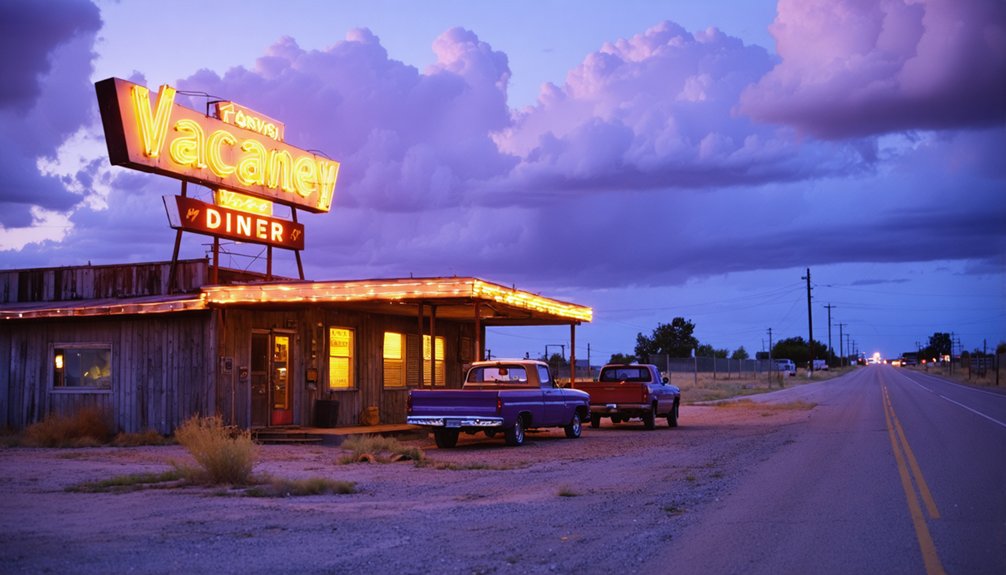
Because Stuart’s a genuine ghost town, you won’t find restaurants or hotels within its quiet residential streets — so McAlester, just 15 miles east, becomes your practical home base.
The city offers solid lodging options ranging from familiar chain hotels to locally owned accommodations, giving you flexibility depending on your budget and travel style.
When it comes to local cuisine, McAlester actually punches above its weight — it’s famously known as the Italian food capital of Oklahoma, thanks to a deep regional tradition of hearty Italian-American cooking.
You’ll find several well-regarded spots worth trying after a day of exploring backroads.
Fuel up, book a room, and treat McAlester as your launchpad for experiencing Stuart and the wider Hughes County region on your own terms.
Nearby Ghost Towns and Stops That Complement Stuart
Stuart pairs well with the broader ghost town landscape scattered across southeastern Oklahoma, and once you’ve sorted your McAlester base, it’s worth plotting a few extra stops to round out the drive.
Hughes County holds layers of local folklore and abandoned buildings waiting for curious travelers ready to explore on their own terms. Consider adding these stops:
- Seminole Nation Museum for deep regional cultural history
- Arrowhead State Park to balance history with open-air freedom
- Hughes County back roads where abandoned buildings and faded settlements tell their own quiet stories
- McAlester-area antiques and museums for a grounded finish to the route
Each stop builds on Stuart‘s ghost town character, giving your road trip real depth without locking you into a rigid itinerary.
How to Plan a Southeast Oklahoma Ghost Town Road Trip
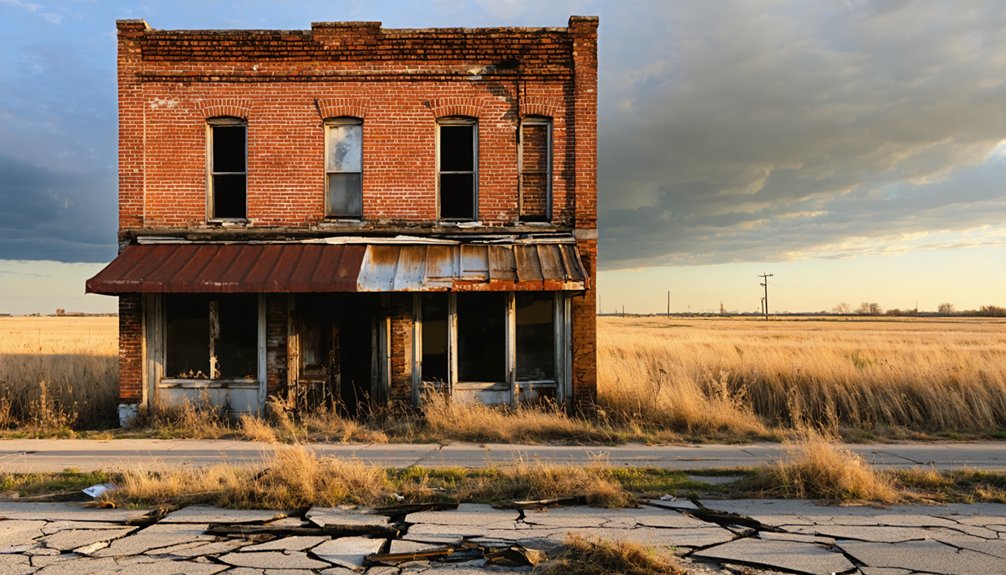
Planning a Southeast Oklahoma ghost town road trip means anchoring your route around a practical hub, and McAlester fits that role well. Stock up on fuel, food, and lodging there before heading out toward Stuart and surrounding Hughes County stops.
McAlester anchors your Southeast Oklahoma ghost town route — fuel up, rest up, and head west.
Drive U.S. Highway 270 west to reach Stuart efficiently, then layer in State Highway 31A for connecting roads.
Prioritize stops with historical depth — Stuart’s WPA-era Malaria Ditch rewards travelers who appreciate local architecture and infrastructure history. Extend your itinerary toward the Seminole Nation Museum for cultural context, or swing through Arrowhead State Park for a nature break.
If your timing allows, research regional cultural festivals that occasionally spotlight Oklahoma heritage towns. Keep each stop brief, move deliberately, and let the landscape tell the story.
Frequently Asked Questions
Is Stuart, Oklahoma Safe to Visit for Solo Travelers?
You’ll find Stuart a safe, peaceful stop as a solo traveler. It’s a tiny, quiet town, but you’ll want McAlester nearby for local dining options and overnight accommodation since Stuart’s services are very limited.
What Is the Best Time of Year to Visit Stuart?
With only 195 residents, Stuart’s charm feels deeply personal. You’ll love visiting in spring or fall when seasonal weather is mild and local attractions like the historic Malaria Ditch are most enjoyable to explore freely.
Are There Any Annual Events or Festivals Held in Stuart?
No major annual festivals are documented for Stuart, but you’ll find nearby events offering local cuisine and outdoor activities. Explore McAlester’s regional gatherings to complement your ghost town adventure with vibrant community experiences worth discovering!
Can You Access Stuart by Public Transportation?
Like tumbleweeds rolling freely on open roads, Stuart’s got no public transit ties — you’ll need your own wheels to reach it. Accessibility options are limited, so embrace the freedom of a personal vehicle for this ghost town adventure.
Is Photography of Stuart’s Historic Sites Publicly Permitted?
No specific photography permits are mentioned for Stuart’s historic landmarks. You’re free to capture the WPA-era Malaria Ditch and other sites openly, making it an ideal, unrestricted stop for history-loving photographers exploring southeastern Oklahoma’s ghost towns.
References
- https://www.okhistory.org/publications/enc/entry?entry=ST054
- https://www.stuartmagazine.com/stuart-life/arts-culture/what-to-explore-in-downtown-stuart/
- https://www.redriverhistorian.com/post/stuart-s-malaria-ditch
- https://no.tripadvisor.com/Tourism-g51674-Stuart_Oklahoma-Vacations.html
- https://nearbylens.com/cities/usa/ok/stuart/
- https://www.ghosttowns.com/states/ok/ok.html
- https://www.tripadvisor.com/Tourism-g51674-Stuart_Oklahoma-Vacations.html
- https://th.tripadvisor.com/Tourism-g51674-Stuart_Oklahoma-Vacations.html
- https://en.wikipedia.org/wiki/List_of_ghost_towns_in_Oklahoma
- https://no.tripadvisor.com/Attractions-g51674-Activities-c42-Stuart_Oklahoma.html