Planning a ghost town road trip to Melmont, Washington puts you on a path through the Carbon River Valley near Mount Rainier, where a forgotten coal town waits beneath layers of moss and forest. You’ll follow the old Northern Pacific Railroad grade to ruins that have survived over a century of wilderness reclamation. Founded in 1900 and abandoned within two decades, Melmont’s crumbling walls and foundations tell a story you’ll want to uncover fully — and there’s much more ahead.
Key Takeaways
- Melmont is located in Carbon River Valley near Mount Rainier, accessible via State Route 165 with a trailhead near Fairfax Bridge.
- The round-trip trail follows a historic railroad grade, covering approximately 2-4 miles depending on how far visitors explore.
- Key ruins include an intact explosives storage building, schoolhouse foundation, and scattered block walls from former homes and businesses.
- Pack waterproof boots, layered clothing, and trekking poles to navigate muddy, uneven terrain and steep descents safely.
- Nearby Carbonado and other ghost towns can be combined with Melmont for a comprehensive regional industrial history road trip.
What Is Melmont Ghost Town and Why Visit?
Tucked into the forested Carbon River Valley near Mount Rainier, Melmont is a ghost town in Pierce County, Washington, where the remnants of a once-thriving coal-mining community quietly decay beneath a canopy of old-growth trees.
Founded in 1900 by the Northwest Improvement Company, it fueled Northern Pacific Railway operations for roughly two decades before fire and abandonment swallowed it whole.
Born from industry in 1900, Melmont burned bright for two decades before fire and silence claimed it forever.
Its historical significance lies in what it reveals about early industrial Washington — a self-contained mining settlement complete with a schoolhouse, hotel, saloon, and depot, now reduced to crumbling foundations and moss-covered walls.
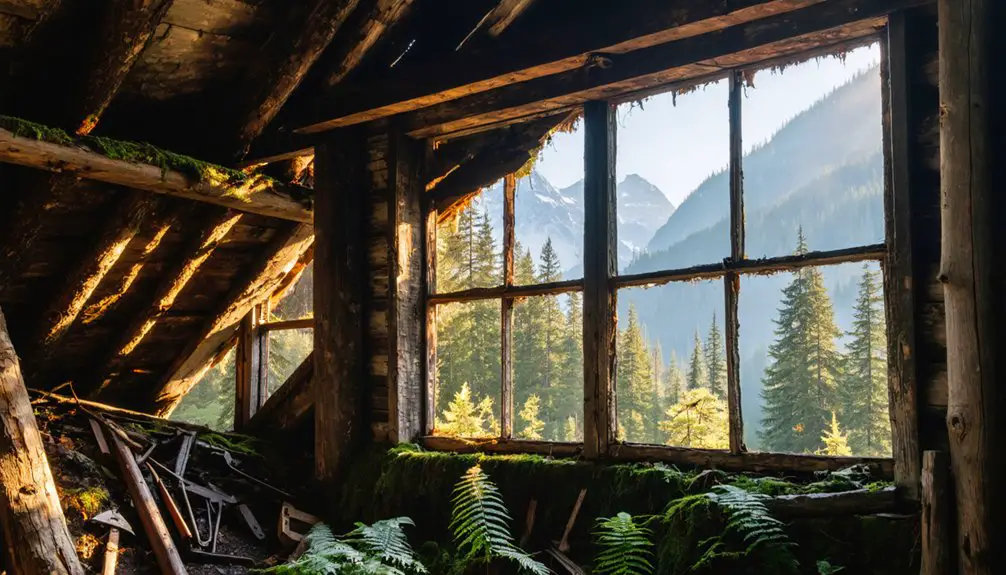
You’ll find remarkable photography opportunities around every bend, where nature reclaims old stone structures in dramatic fashion.
It’s raw, atmospheric, and completely free to explore on your own terms.
How to Get to Melmont, Washington
Getting to Melmont starts with State Route 165, which winds through the Carbon River Valley toward the small community of Fairfax. Once you reach the Fairfax Bridge, you’ll find the trailhead nearby.
From there, descend a short, steep slope to the abandoned Northern Pacific Railroad grade, which becomes your path forward.
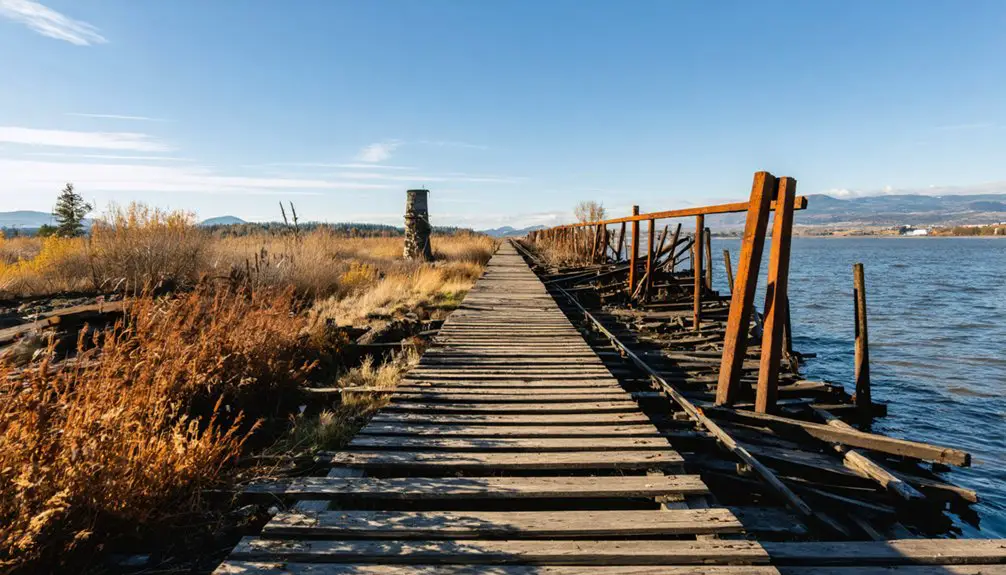
The trail follows this historic corridor roughly one to two miles into the forest, where ruins gradually emerge through the trees. You’re walking the same route that once carried coal out of these hills, so historical preservation feels tangible with every step.
Bring sturdy footwear because mud is a year-round reality here.
For photography tips, arrive during overcast mornings when soft light reduces harsh shadows on the moss-covered foundations and roofless walls, revealing their texture beautifully.
The Melmont Trail: Distance, Terrain, and Conditions
Once you leave the Fairfax Bridge behind, the Melmont Trail stretches roughly two to four miles round-trip depending on how thoroughly you explore the ruins. You’ll drop steeply to an abandoned rail grade, then follow a mostly flat corridor through dense Pacific Northwest forest. Expect mud year-round — sturdy boots aren’t optional here.
The elevation gain stays modest, around 100 to 300 feet, keeping the hike accessible for most visitors. You’ll move freely through the site, wandering past block walls, roofless foundations, and the old explosives storehouse.
The trail’s historical significance runs deep, tracing a corridor once crucial to coal transport. Preservation efforts remain minimal, so the ruins feel raw and unfiltered — exactly the kind of place that rewards curious, independent explorers willing to get their boots dirty.
Ruins Still Standing at Melmont
Once you reach the site, you’ll find that a small explosives storage building still stands as one of the most intact survivors of Melmont’s mining era.
You can also trace the outline of the former schoolhouse through its remaining foundation, giving you a concrete sense of where town life once centered.
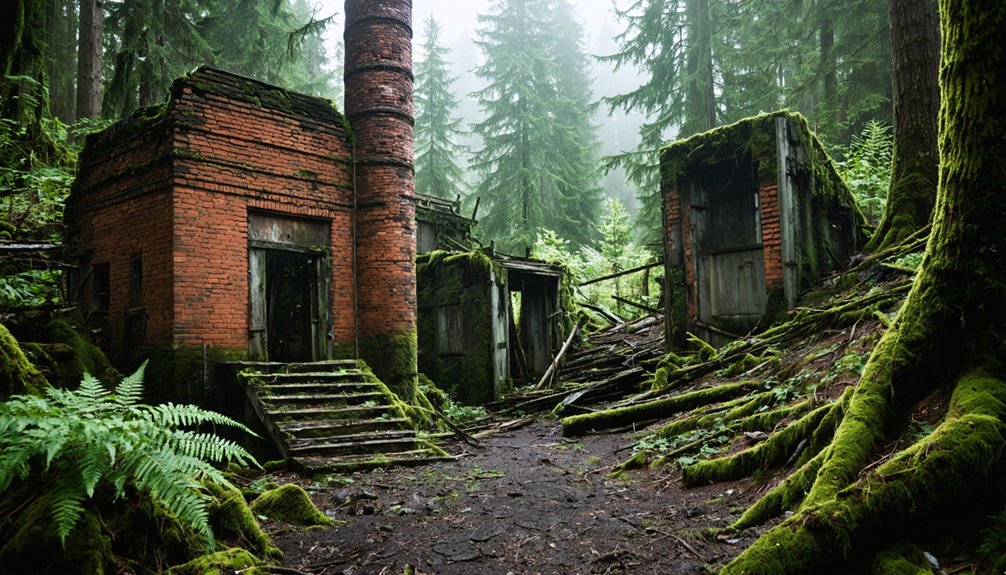
Scattered block walls and roofless ruin walls rise through the encroaching forest, quietly marking where homes and businesses once stood.
Explosives Storage Building Survives
What still stands at Melmont after a century of fire, weather, and forest regrowth? Not much — but one structure earns a second look. The explosives storage building still stands, a small, sturdy remnant that once held the blasting materials miners depended on daily.
Its survival isn’t accidental. Explosives safety standards of the era required isolated, reinforced construction, keeping the building separate from the main town. That practical engineering decision is precisely why you can still walk up to it today.
The thick walls that once protected the community from accidental detonation now serve historic preservation in an unexpected way — they’ve outlasted nearly everything else.
When you find it tucked into the trees, you’re standing beside one of Melmont’s most honest artifacts: built to endure, and quietly proving it.
Schoolhouse Foundation Remains
Step carefully around the tree roots and undergrowth, and you’ll find the schoolhouse foundation pressed into the earth like a signature Melmont refused to erase. Stone and concrete outline where children once sat learning while their fathers worked the coal seams nearby.
It’s a quiet but powerful example of historical preservation, reminding you that this wasn’t just an industrial outpost — it was a living community.
Stand inside the foundation’s perimeter and let the educational opportunities sink in. You’re reading a century of history written in stone. The forest has grown thick around it, but the structure holds its shape with surprising clarity.
Bring curious kids or history-minded friends — few classrooms teach this honestly. The foundation asks nothing from you except attention.
Block And Ruin Walls
Beyond the schoolhouse foundation, the block and ruin walls scattered across Melmont’s footprint give the ghost town its most dramatic visual presence. You’ll find sections of masonry rising from the forest floor, their roofless frames open to the sky, quietly demanding your attention.
These remnants represent one of the area’s most compelling examples of historical preservation, holding their shape despite decades of weather, fire, and encroaching vegetation.
As you move through the site, notice the architectural details still embedded in the stonework — construction choices that reveal how seriously this mining community built for permanence. The walls won’t last forever, but right now they’re standing, and walking among them connects you directly to the lives of the miners who once called Melmont home.
Gear and Footwear for the Melmont Hike
You’ll want waterproof boots on this trail, since the path stays muddy through every season and wet feet will cut your visit short fast.
Layer your clothing so you can adjust as you move through the shaded, forested rail grade, where temperatures can feel cooler than expected.
Trekking poles are worth the extra carry weight, helping you keep your footing on slippery sections and steep descents near the Fairfax Bridge trailhead.
Waterproof Boots Are Essential
Because the trail to Melmont stays muddy year-round, waterproof boots aren’t just a comfort upgrade—they’re a practical necessity. The Carbon River Valley’s wet climate means you’ll encounter soggy ground even on sunny days. Choosing the right footwear lets you move freely, explore historical preservation sites carefully, and capture better photography tips in action—steady footing keeps your shots sharper near crumbling ruins.
Here’s what your boots should offer:
- Waterproof membrane — keeps feet dry through deep puddles and saturated soil
- Ankle support — stabilizes you on uneven rail grade terrain
- Aggressive tread — grips slippery roots and muddy slopes confidently
- Durable construction — withstands repeated exposure to wet, rugged Pacific Northwest conditions
Don’t let soggy feet cut your exploration short before you’ve seen everything Melmont offers.
Dress In Layers
The Carbon River Valley’s weather shifts fast, so dressing in layers gives you control over your comfort as conditions change throughout the hike. Start with moisture-wicking base layers, add an insulating mid-layer, and top it with a waterproof shell.
Morning fog can burn off into mild afternoon sun, then temperatures drop again as the canopy thickens near the ruins.
Beyond personal comfort, layering supports visitor safety by keeping you alert and capable of exploring Melmont’s fragile remains responsibly. Cold, wet hikers rush through sites, miss details, and sometimes make careless decisions near unstable walls or foundations.
Historical preservation depends on attentive visitors who move carefully and stay aware. When you’re warm, dry, and comfortable, you naturally slow down, observe more, and treat the site with the respect it deserves.
Pack Trekking Poles
Layering keeps you warm and steady, but trekking poles keep you upright. Melmont’s trail runs along an abandoned rail grade that stays notoriously muddy year-round. Poles give you the stability to navigate safely without grabbing onto fragile ruin walls or weathered foundations — a move that protects both you and historical preservation efforts.
Here’s why you’ll want them:
- Mud control — The trail gets slippery in every season, not just winter.
- Steep descent — The initial drop from Fairfax Bridge demands solid footing.
- Visitor safety — Poles reduce fall risk near unstable block walls and roofless ruins.
- Exploration confidence — They free you to wander off the main grade without second-guessing each step.
Adjustable poles work best across the varied terrain.
Other Ghost Towns and Ruins Near Carbon River
If you’re drawn to the history of Melmont, the surrounding Carbon River corridor offers more ghost towns and ruins worth exploring. Carbonado, just a short drive away, was once a major coal-processing hub and still retains its historic character through active historical preservation efforts. You’ll find old mining-era structures and a community shaped entirely by coal.
Nearby, the Carbon River rainforest section of Mount Rainier National Park threads through landscapes where industrial history meets raw wilderness. Walking these trails, wildlife encounters with deer, black bears, or river otters aren’t uncommon.
Together, these sites form a layered portrait of a region that once fueled the Pacific Northwest’s railroads and industries, giving your road trip far more depth than a single ghost town visit ever could.
Frequently Asked Questions
Is a Parking Pass Required to Access the Melmont Trailhead?
You don’t need access permits or worry about parking regulations at the Melmont trailhead. Simply arrive, park near Fairfax Bridge, and you’re free to explore this hauntingly beautiful ghost town on your own terms.
What Days of the Week Are Best for Visiting Melmont?
Ditch the weekend crowds and log off — you’ll want to visit Melmont on weekdays for the best ghost town tours. Midweek visits mean easier parking and a more peaceful historic mining exploration experience.
How Long Does a Typical Visit to Melmont Take?
You’ll typically spend 2–3 hours exploring Melmont’s historical landmarks and soaking in the wild surroundings. As you wander freely through roofless ruins, you might spot local wildlife reclaiming this forgotten coal town’s forested, atmospheric remains.
Was Melmont Connected to Any Other Nearby Mining Towns?
Yes, you’ll find Melmont’s historical mining connections fascinating — it sent coal directly to neighboring Carbonado for processing, linking these two towns through the Northern Pacific Railroad’s network, making both neighboring ghost towns worth exploring together.
Who Originally Founded Melmont and What Company Operated the Mine?
“History repeats itself” — you’ll see it here. The Northwest Improvement Company, a Northern Pacific Railway subsidiary, founded Melmont in 1900, driving historical mining operations and shaping early settler stories that you can still explore freely today.
References
- https://en.wikipedia.org/wiki/Melmont
- https://www.wta.org/go-hiking/hikes/melmont-ghost-town-hike
- https://www.pnwanderers.com/blog/melmont-ghost-town
- https://visitrainier.com/melmont-ghost-town-2/
- https://www.facebook.com/ghosttownsofwashington/posts/melmont-is-a-ghost-town-in-pierce-county-washington-the-town-was-founded-in-1900/1024593506363730/
- https://www.youtube.com/watch?v=-HYxK40eeyc
- https://www.youtube.com/watch?v=eRkQY4HcXVM
- https://www.yelp.com/biz/melmont-ghost-town-carbonado
- https://www.youtube.com/watch?v=aMLKQsrPMcA
- https://www.youtube.com/watch?v=aANAgcgMMh4