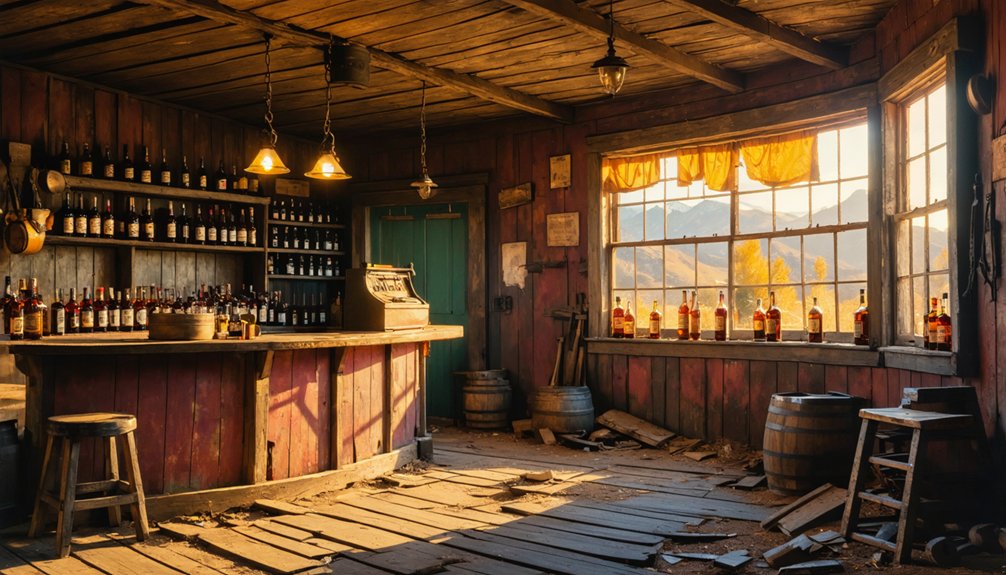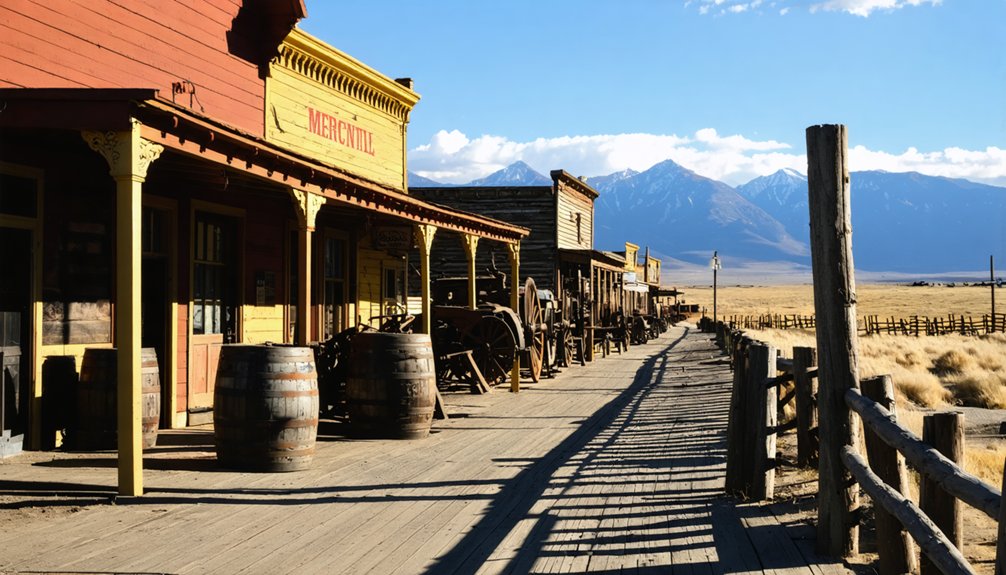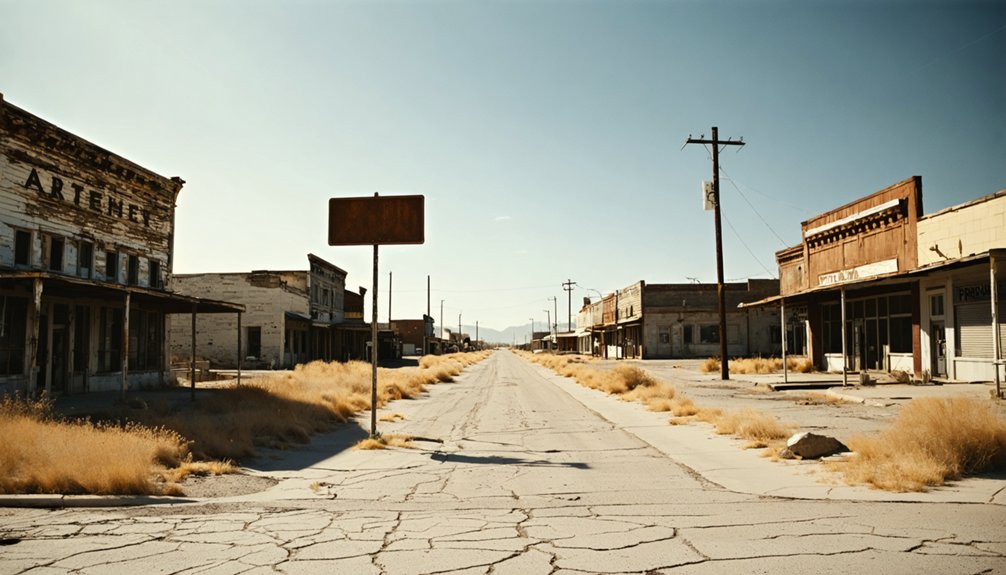
Start your ghost town road trip from Mountain House, California — a modern city carrying an old waystop’s name. From here, you’ll trace routes once walked by Gold Rush miners, stopping at Bodie’s wind-swept ruins, Calico’s silver-era streets, and Randsburg’s desert quiet. Pack layers, sturdy boots, and extra water for the journey. The history along this route runs deeper than any map shows, and there’s plenty more worth knowing before you go.
Key Takeaways
- Mountain House, California, serves as an ideal starting point for a ghost town road trip, offering modern amenities near Sierra Nevada foothills.
- Key ghost town stops include Bodie, Calico, Randsburg, and Ballarat, each offering unique historical remnants and atmospheres.
- The suggested route begins at Mountain House, passes Shasta State Historic Park, Bodie, Randsburg, and ends at Calico.
- Pack layers, sturdy boots, extra water, and a printed map, as cell service is limited along the route.
- Choose between Bodie’s authentic preservation and Calico’s curated, visitor-friendly experience based on your travel preference.
Why Mountain House Is the Perfect Launch Point for a California Ghost Town Road Trip
Though it shares its name with a dusty 19th-century waystop that once welcomed weary travelers crossing between Alameda and San Joaquin counties, today’s Mountain House is a thriving, newly incorporated city — not a crumbling relic. Its rapid urban development, growing population, and modern amenities make it an ideal base before you head into California’s forgotten corners.
You’re positioned perfectly here. To your north and east lie the Sierra Nevada foothills, riddled with abandoned mining camps. Further out stretch the Mojave’s desert ghost towns.
Mountain House sits at the crossroads of California’s past and present — a place where boom-era history echoes beneath freshly paved streets. Use that tension as your fuel, and let the open road carry you toward the stories California hasn’t quite buried yet.
The Real Ghost Towns Worth the Drive: Bodie, Calico, Randsburg, and More
Once you leave Mountain House behind — with its urban development and modern amenities — California’s real ghost towns start pulling at you — places where history didn’t just pass through but stopped, collapsed, and stayed.
These destinations earned their silence:
- Bodie – a preserved 1880s gold camp frozen at 8,379 feet in Mono County
- Calico – born as a silver mining town in 1881, now a county park with weathered bones intact
- Randsburg – a desert mining settlement still exhaling its rough past
- Ballarat – a remote Mojave stop where the quiet feels deliberate
Each site carries a different kind of weight. You’re not reading about collapse here — you’re walking through it, reading it in splintered wood, rusted iron, and empty streets that once roared.
Bodie, Calico, and the Stops That Are Actually Worth It
When you pull into Bodie, the wind does most of the talking — rattling loose window frames, pushing through gaps in walls that haven’t been patched since the 1880s. No urban development ever touched this place after the gold ran out, and that’s exactly why it hits different. You’re walking through preserved collapse, not reconstruction.
Calico trades Bodie’s rawness for accessibility — silver mining history packaged with modern amenities like food vendors and guided tours. It’s curated, but still worth your time.
Randsburg and Ballarat round out the circuit for travelers who want genuine desert solitude. These stops don’t perform history — they simply hold it.
Choose based on what you’re after: stark authenticity or approachable heritage. Both versions of California’s past are worth the drive.
The Best Ghost Town Road Trip Route From Mountain House
Starting from Mountain House, you’re already brushing up against California’s layered past — a place named after an old Alameda County waystop that once served travelers crossing the Central Valley. That local history gives your road trip an authentic anchor before you even hit the highway.
Head out across California’s open stretches toward these essential stops:
- Shasta State Historic Park – where the route begins, rich with Gold Rush memory
- Bodie – a preserved ghost town frozen at 8,379 feet
- Randsburg – a desert mining town still breathing
- Calico Ghost Town – the silver-boom finale from 1881
Mountain House’s own city development tells a boom story too — just a modern one. Use that contrast to frame everything the road reveals ahead.
What to Pack for a California Ghost Town Road Trip
Packing for a California ghost town road trip means thinking like the travelers who came before you — people who crossed the Central Valley with everything they’d need strapped to a wagon or stuffed into a saddlebag. Bring layers, because desert mornings bite cold before the sun climbs high.
Pack sturdy boots for walking crumbled boardwalks at Bodie or Calico’s rocky paths. Carry extra water beyond what you think you’ll need. Keep a printed map — cell signals vanish fast in remote canyons.
Tuck a camera bag for scenic viewpoints along Highway 395. Budget cash for local dining in small towns where card readers aren’t guaranteed.
Pack light, move free, and leave room for the unexpected finds that make these roads worth driving.
Frequently Asked Questions
Is Mountain House, California Actually Considered a Real Ghost Town?
No, you won’t find haunted legends or abandoned structures here. Mountain House is actually a thriving, newly incorporated city with booming population growth — though its historic waystop roots give it a nostalgic, ghost-town-worthy name.
When Was Mountain House Officially Incorporated as a California City?
Mountain House officially became a California city in 2024. You’re witnessing its fresh chapter in historical preservation, even as tourist attractions nearby echo a wilder, freer past worth hitting the open road to explore.
How Many People Currently Live in Mountain House, California Today?
You’d think it’s a ghost town, but Mountain House’s urban development tells a different story — 24,499 residents called it home during the 2020 census, breathing life into its historical landmarks and open, freedom-filled streets.
What Is the Historic Mountain House Waystop in Alameda County?
You’ll find the historic Mountain House waystop in Alameda County served as a beloved traveler’s rest along early California trails. It’s a treasure among historic landmarks, with preservation efforts keeping its frontier spirit and nostalgic roadside heritage alive.
How Fast Did Mountain House’s Population Grow During the 2010S?
Mountain House’s population surged 153% through the 2010s — you’ll feel that energy in its urban expansion. These dramatic demographic shifts transformed quiet farmland into a thriving community, echoing California’s timeless, freedom-chasing pioneering spirit beautifully.
References
- https://en.wikipedia.org/wiki/List_of_ghost_towns_in_California
- https://en.wikipedia.org/wiki/Mountain_House
- https://a.osmarks.net/content/wikipedia_en_all_maxi_2020-08/A/List_of_ghost_towns_in_California
- https://en.wikipedia.org/wiki/Eagle_Mountain
- https://nvtami.com/ghost-towns-historical-sites-of-nevada-california-beyond-text-version/
- https://en.wikipedia.org/wiki/Calico
- https://en.wikipedia.org/wiki/Bodie
- https://www.islands.com/1878743/one-lagest-ghost-towns-eerily-modern-abandoned-california-mining-town-eagle-mountain/
- https://www.visitcalifornia.com/road-trips/ghost-towns/
- https://www.gutenberg.org/files/51678/51678-h/51678-h.htm