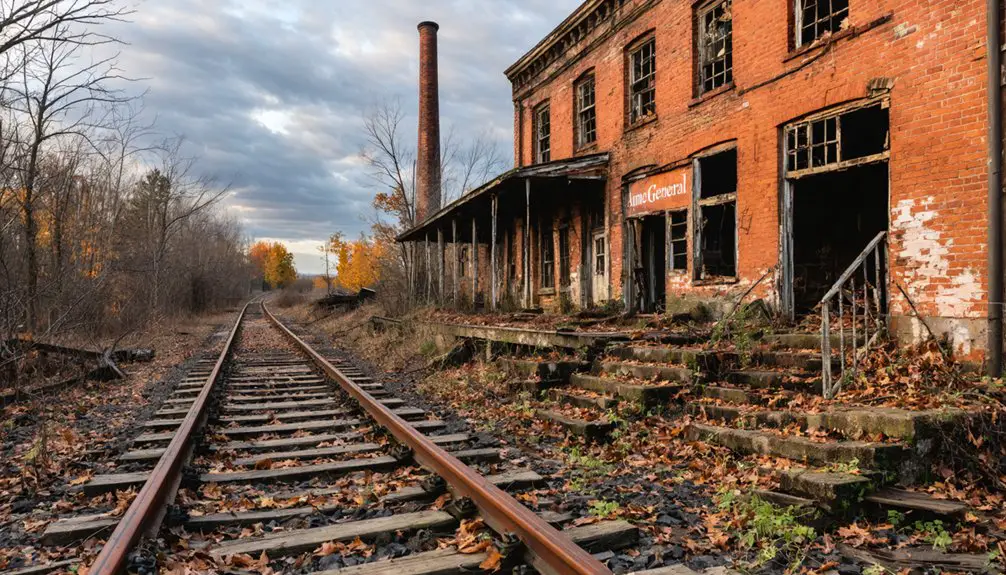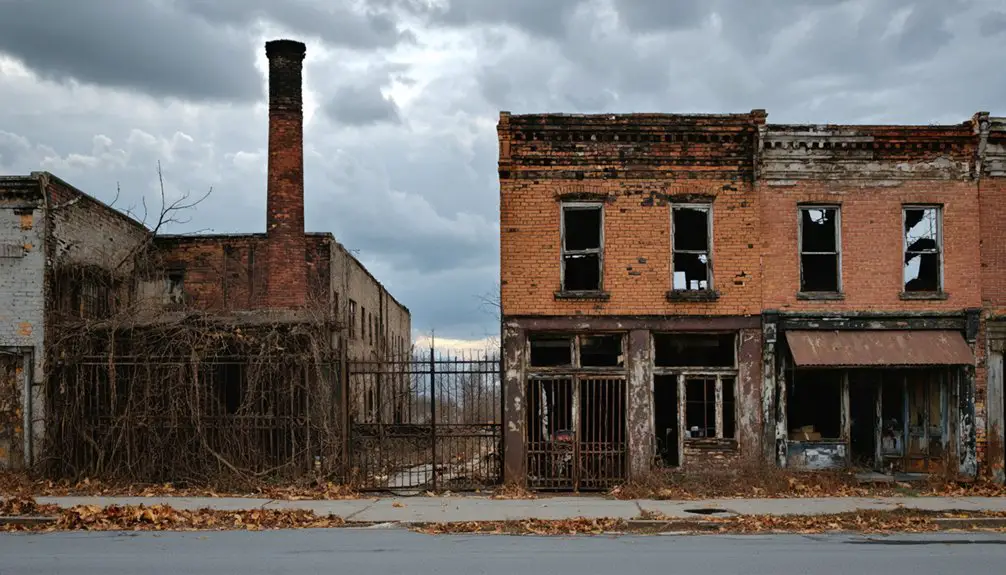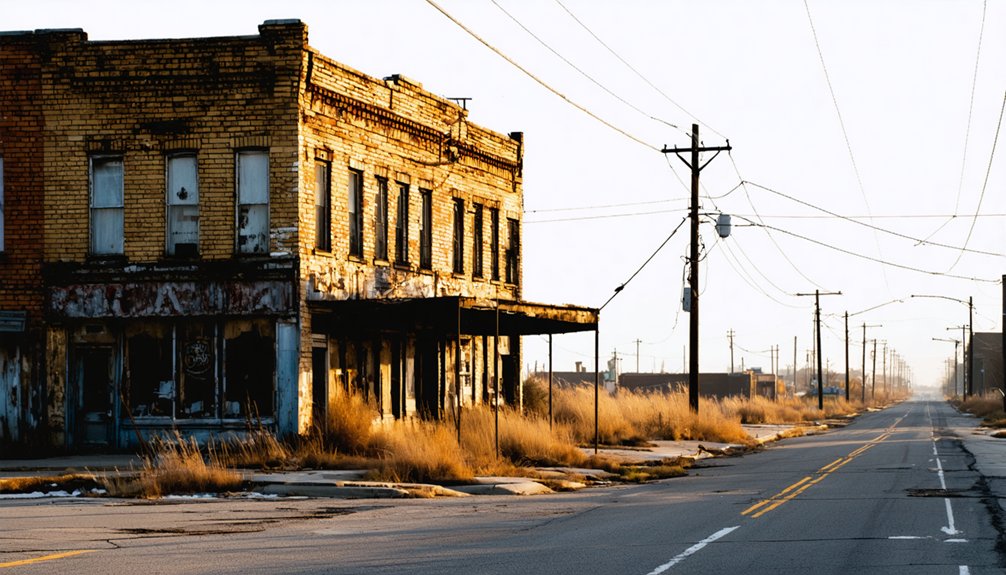
Planning a ghost town road trip through Nebraska and Pennsylvania puts you face-to-face with America’s forgotten history. Nebraska’s Cass and Otoe counties alone hold over 30 documented ghost towns, while Pennsylvania’s industrial ruins offer a striking contrast. You’ll want to visit between May and early October for the best access and atmosphere. Respect private land, pack smart, and stay flexible with your route. Keep exploring to uncover everything you need to know before hitting the road.
Key Takeaways
- Nebraska’s Cass and Otoe counties contain over 30 documented ghost towns, making them ideal starting points for your road trip itinerary.
- Visit between May and June for favorable weather, minimal crowds, and longer daylight hours for maximum exploration time.
- Remote Nebraska sites like Arago and Swan City require off-road capability, extra supplies, and advance land access permissions.
- Verify Pennsylvania ghost town locations through state archives, local historical societies, satellite imagery, and county offices before visiting.
- Avoid winter and early spring travel due to frozen ground, mud, and inaccessible terrain at remote sites.
Why These Two States Are a Ghost Town Hunter’s Dream
Nebraska and Pennsylvania might seem like an unlikely pairing for a ghost town road trip, but together they offer a remarkably diverse window into America’s abandoned past. Nebraska pulls you into concentrated clusters of 19th-century settlements across Cass and Otoe counties, where over 30 documented ghost towns sit within driving distance of each other.
You’ll witness urban decay frozen in time, from Oreopolis to El Dorado, each site reflecting economic collapse and westward shifts.
Pennsylvania adds a contrasting layer of historical preservation opportunities rooted in entirely different industrial and colonial abandonment patterns.
Together, these states let you explore freedom on your own terms — open roads, forgotten places, and raw American history waiting to be uncovered without crowds or constraints defining your journey.
What Killed Nebraska’s Towns: and Why Their History Still Matters
Across the windswept plains of Cass and Otoe counties, dozens of once-thriving communities like Oreopolis, California City, and Condit didn’t just fade — they collapsed under the weight of economic forces that 19th-century settlers never saw coming.
Railroad rerouting triggered rapid economic decline, stranding towns that depended entirely on trade routes suddenly drawn elsewhere. Population shift followed immediately — families packed up, businesses shuttered, and entire communities dissolved within a generation.
You’re not just visiting ruins when you explore these sites. You’re standing inside a cautionary story about over-dependence on single industries and fragile infrastructure.
Nebraska’s ghost towns reflect a broader American truth: freedom to build also means vulnerability to collapse. Understanding what killed these towns sharpens your appreciation for every crumbling foundation and overgrown main street you’ll encounter on this road trip.
The Best Nebraska Ghost Towns to Add to Your Itinerary
Your Nebraska ghost town itinerary really comes together when you organize it around three distinct categories: Cass County’s well-documented must-visits, Otoe County’s lesser-known hidden gems, and the remote solitary sites that reward serious explorers.
In Cass County, you’ll find concentrated clusters like Oreopolis, Cassville, and Rock Bluff, making multi-stop days efficient and rewarding.
Push further into Otoe County and beyond, though, and you’ll uncover places like El Dorado and the rugged outliers Swan City and Arago, which demand more preparation but deliver a rawer, more isolated experience.
Cass County Must-Visits
Cass County is your starting point for an unforgettable Nebraska ghost town adventure, packing over a dozen abandoned settlements into one concentrated region. You’ll find Oreopolis, Cassville, Mt. Pleasant, Rock Bluff, and Kanosha all within striking distance of each other, making efficient multi-stop exploration completely achievable.
Urban decay tells a vivid story here — crumbling foundations and overgrown lots reveal the economic shifts that silenced these once-thriving communities. Waterville, Avoca, and Brooklyn round out your options, each carrying its own chapter of 19th-century settlement history.
While preservation efforts remain limited in some areas, that raw, untouched quality is exactly what makes these sites compelling. Plan your route carefully, respect private land boundaries, and bring your own navigation tools for the most rewarding experience.
Otoe County Hidden Gems
Otoe County holds 5 standout ghost towns that deserve a spot on your Nebraska road trip itinerary. California City, Condit, Delaware City, El Dorado, and Erie each tell a distinct story of 19th-century ambition and eventual abandonment.
You’ll witness raw urban decay firsthand — crumbling foundations, overgrown lots, and silent streets that once buzzed with settlers chasing opportunity.
Unlike more clustered sites, these towns sit along accessible routes, making multi-stop exploration straightforward and rewarding. El Dorado and Erie offer particularly striking remnants worth photographing.
Where preservation efforts exist, you’ll notice stabilized structures that provide genuine historical context rather than pure ruin. Come prepared with maps, since signage is sparse.
Otoe County rewards curious, independent travelers who appreciate history without the tourist crowds.
Remote Sites Worth Exploring
Beyond the county clusters, Nebraska’s solitary ghost towns offer a wilder, more immersive experience for road trippers willing to venture off the beaten path. Sites like Arago, Swan City, Homerville, and Claramont carry hidden histories that county-concentrated tours simply can’t replicate.
You’ll encounter abandoned architecture standing in near-total isolation — crumbling structures that speak volumes about 19th-century ambition and eventual defeat.
These remote locations demand preparation. Pack extra fuel, emergency supplies, and reliable navigation tools before heading out. Many sites lack clear signage or paved access roads, so off-road capability helps considerably.
Legal access restrictions may also apply, so research land ownership beforehand. The reward for your effort is unfiltered, uncrowded history — raw, authentic, and entirely yours to discover on your own terms.
Cass County Ghost Towns: Oreopolis, Cassville, and Beyond
Cass County offers some of Nebraska’s most accessible ghost town clusters, with Oreopolis and Cassville standing as prime examples of 19th-century settlements that thrived briefly before economic shifts left them abandoned.
As you explore these sites, you’ll uncover the rise-and-fall patterns that defined frontier settlement in the region.
Beyond these two towns, you can extend your route to include Mt. Pleasant, Rock Bluff, and Kanosha, making Cass County a remarkably efficient destination for multi-site ghost town exploration.
Oreopolis And Cassville History
Nestled within Cass County, Oreopolis and Cassville stand as two of Nebraska’s most compelling ghost towns, each telling a story of 19th-century ambition that ultimately gave way to economic reality. You’ll find that urban decay here isn’t just ruin — it’s history made visible.
Both towns reflect settlement patterns that once promised prosperity but couldn’t sustain growth. Historical preservation efforts help you understand what was lost. When visiting, keep these key facts in mind:
- Oreopolis was platted during Nebraska’s early territorial expansion
- Cassville developed alongside regional agricultural ambitions
- Both towns experienced economic abandonment by the late 1800s
- Remaining remnants offer tangible connections to frontier-era life
Exploring these sites gives you direct access to Nebraska’s forgotten past on your own terms.
Exploring Nearby Abandoned Settlements
Oreopolis and Cassville are just the beginning of what Cass County offers ghost town explorers. You’ll find Mt. Pleasant, Rock Bluff, and Kanosha waiting nearby, each preserving its own layer of 19th-century history.
As you drive between these sites, you’ll notice ghost town architecture ranging from crumbling foundations to weathered storefronts that once anchored thriving communities. Abandoned industries left behind physical evidence of mills, trade depots, and agricultural operations that fueled early settlement.
Waterville, Avoca, and Brooklyn round out the county’s remarkable collection, giving you a concentrated route where you can cover multiple sites efficiently. You’re not just sightseeing — you’re moving through a landscape that reveals exactly how and why communities rise, struggle, and ultimately disappear from the American map.
Otoe County Ghost Towns Worth the Detour
Just a short drive from Cass County, Otoe County offers its own collection of ghost towns that’ll reward curious road-trippers with rich historical depth. Urban decay marks these settlements visibly, yet preservation efforts have kept their stories alive.
Plan your route around these four standout sites:
- California City – A 19th-century settlement reflecting early frontier ambition
- El Dorado – Named with bold optimism, now silent and overgrown
- Erie – Accessible roads make this a practical first stop
- Marietta – A compelling example of economic collapse and community disappearance
Each location tells a distinct story of founding, struggle, and abandonment.
You’ll move through landscapes where entire communities once thrived, giving you unfiltered access to America’s forgotten past on your own terms.
How to Confirm Pennsylvania Ghost Towns Before You Plan Your Route

Before you map out Pennsylvania’s portion of your road trip, you’ll need to verify that your target sites actually exist and are accessible.
Start by consulting Pennsylvania state historical archives, which hold records of abandoned settlements that don’t always appear in general searches.
You can also contact local Pennsylvania historical societies directly, as they’ll point you toward confirmed ghost town locations and save you from routing around sites that exist in name only.
Consult State Historical Archives
Since Pennsylvania’s ghost towns aren’t as neatly cataloged as Nebraska’s, you’ll need to dig into state historical archives before you can confidently map your route. Archival research reveals verified locations that never appear in casual searches.
Historical documentation gives you real coordinates, not just legends.
Start your research with these four key resources:
- Pennsylvania State Archives in Harrisburg
- County-level historical societies across the state
- Pennsylvania Historical and Museum Commission records
- Local library genealogy and plat map collections
Each source reveals abandoned communities through land records, census data, and township maps.
You’re essentially doing detective work before you ever start the engine.
This prep separates a frustrating, wasted drive from a genuinely rewarding ghost town adventure through Pennsylvania’s forgotten landscapes.
Verify Sites Before Routing
Once you’ve gathered your archival leads, confirming each site’s physical existence and accessibility should be your next move before you touch a map.
Pennsylvania’s ghost town data remains incomplete, so don’t assume every listed location still holds visible abandoned architecture worth photographing. Cross-reference archival findings with satellite imagery on Google Earth to spot structural remnants before committing to a detour.
Contact local county offices or ghost town preservation groups who track site conditions actively. They’ll tell you whether a location sits on private land, has been demolished, or remains accessible to visitors.
Build routing flexibility into your itinerary since conditions change. Locking in two or three confirmed Pennsylvania sites beats chasing five unverified ones across unfamiliar back roads. Confirm first, then route with confidence.
Contact Pennsylvania Historical Societies
How do you separate Pennsylvania’s confirmed ghost towns from historical rumor before you’ve burned fuel chasing dead ends? Contact historical societies directly — they’ll distinguish genuine historical landmarks from local legends that never materialized into real locations.
Before routing your trip, take these four steps:
- Email the Pennsylvania Historical and Museum Commission for verified abandoned settlement records.
- Request county-level documentation confirming physical site existence.
- Ask specifically whether locations are accessible or on restricted private land.
- Cross-reference responses against regional historical society databases.
You’re building a road trip around freedom and discovery, not frustration. Pennsylvania’s ghost town data remains incomplete in general sources, so primary verification protects your time and resources. A quick outreach effort now prevents wasted miles later.
Mapping a Route That Covers Both States Efficiently
Planning a ghost town road trip that spans Nebraska and Pennsylvania takes some strategic thinking, but you can pull it off efficiently by anchoring your route around the two most ghost-town-dense areas: Cass and Otoe counties in Nebraska.
Anchor your ghost town road trip in Nebraska’s Cass and Otoe counties—the most historically dense starting point for this cross-country adventure.
Start there, exploring hidden histories embedded in abandoned architecture across Oreopolis, Cassville, El Dorado, and Erie.
Then head east toward Pennsylvania, but confirm specific sites with historical societies before committing to detours. Since Pennsylvania ghost town data remains incomplete, build flexibility into your schedule.
Use remote Nebraska sites like Arago and Swan City as your adventure baseline, then treat Pennsylvania stops as bonus discoveries.
Keep fuel topped off, carry navigation backups, and you’ll move between both states without losing momentum or missing critical sites.
Exploring ghost towns isn’t just about finding them on a map—you’ll also need to respect the legal and physical boundaries that come with abandoned territory. Land ownership complicates access at sites like Arago and Claramont, where trespassing rules carry real legal consequences. Before you roll in, verify who owns the property.
Follow these four steps to stay safe and legal:
- Research land ownership through county records before visiting any site
- Contact landowners directly to request access permits
- Check trespassing rules specific to Nebraska and Pennsylvania counties
- Pack emergency supplies, sturdy footwear, and a charged GPS device
Abandoned structures can collapse without warning, and remote sites offer zero cell coverage. Respecting boundaries doesn’t limit your freedom—it protects it.
What to Pack for Nebraska’s Most Remote Ghost Town Sites
When you’re heading to remote Nebraska sites like Swan City or Arago, your pack can make or break the trip. These locations lack signage, services, and reliable road access, so your packing essentials need to reflect that reality.
Start with safety gear: a first aid kit, emergency blanket, and a charged portable battery. Carry enough fuel for unexpected detours, plus extra water for at least two days. Navigation tools matter here — download offline maps since cell service disappears fast in rural Cass and Otoe counties.
Bring sturdy boots for unstable terrain around abandoned structures. Pack a flashlight, multi-tool, and weather-appropriate layers. A physical compass backs up digital tools when technology fails. Prepare smart, and you’ll explore freely.
The Best Time of Year to Visit Nebraska and Pennsylvania Ghost Towns
Timing your visit right can mean the difference between a memorable adventure and a miserable slog through mud or frozen terrain. Nebraska and Pennsylvania ghost towns reveal their best character during specific seasons, giving you freedom to explore cultural preservation sites without battling nature.
The ideal visiting windows are:
- Late spring (May) – mild temperatures, dry roads, wildflowers framing abandoned structures
- Early summer (June) – long daylight hours maximize exploration time
- September – harvest-season atmosphere enhances local legends and historical ambiance
- Early October – dramatic foliage frames ruins beautifully before winter closes remote access roads
Avoid winter and early spring entirely. Frozen ground and mud render remote Nebraska sites like Swan City nearly unreachable, and Pennsylvania’s terrain becomes equally unforgiving.
Frequently Asked Questions
Are There Guided Ghost Town Tours Available in Nebraska or Pennsylvania?
You’ll find guided ghost town tours tied to historical preservation efforts in Nebraska’s Cass and Otoe counties. Seek out local historical societies sharing local legends—they’re your best resource for organized, freedom-fueling ghost town exploration adventures!
Can Children Safely Accompany Adults on Ghost Town Road Trips?
Like open roads stretching toward adventure, children can join you, but child safety demands constant adult supervision. You’ll want to shield your little explorers from hazardous structures and restricted ghost town sites throughout Nebraska.
Is Drone Photography Permitted at Nebraska Ghost Town Sites?
You’ll need to check local drone regulations before flying your photography gear over Nebraska’s ghost town sites, as many locations sit on private land where restrictions actively apply to aerial exploration.
What Photography Equipment Works Best for Capturing Abandoned Structures?
For abandoned structures, you’ll want versatile camera gear like a wide-angle lens and tripod. Master natural lighting techniques by shooting during golden hour — it’ll dramatically enhance textures, shadows, and the hauntingly beautiful decay of forgotten spaces.
Are There Nearby Campgrounds Close to Nebraska’s Remote Ghost Town Locations?
With 30+ ghost towns clustered in Cass and Otoe counties, you’ll find campgrounds nearby! Seek sites supporting historical preservation, swap local legends around the fire, and embrace freedom exploring Nebraska’s abandoned past under open, starlit skies.
References
- https://history.nebraska.gov/wp-content/uploads/2017/12/doc_publications_NH1937GhostTowns.pdf
- https://blog.batchgeo.com/ghost-towns/