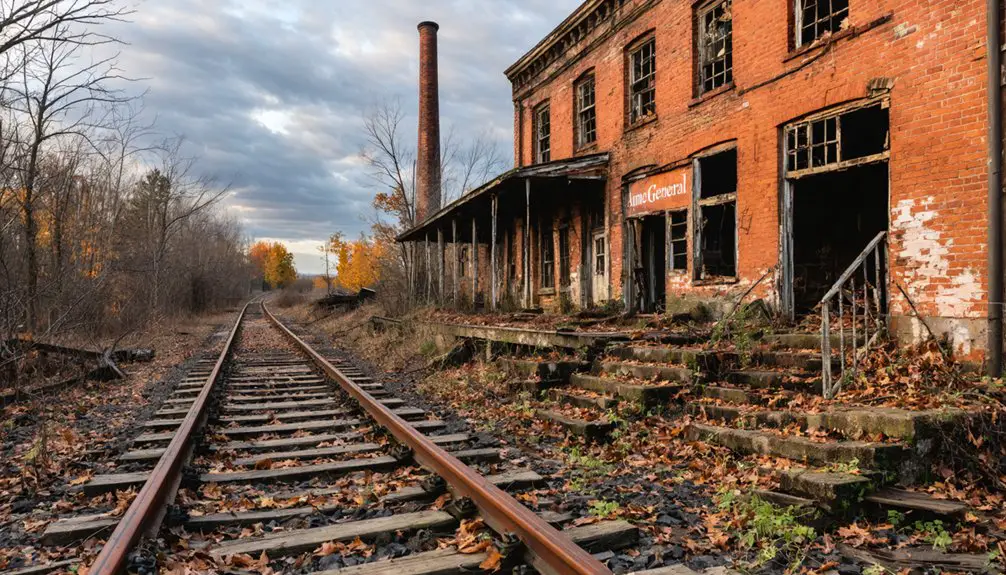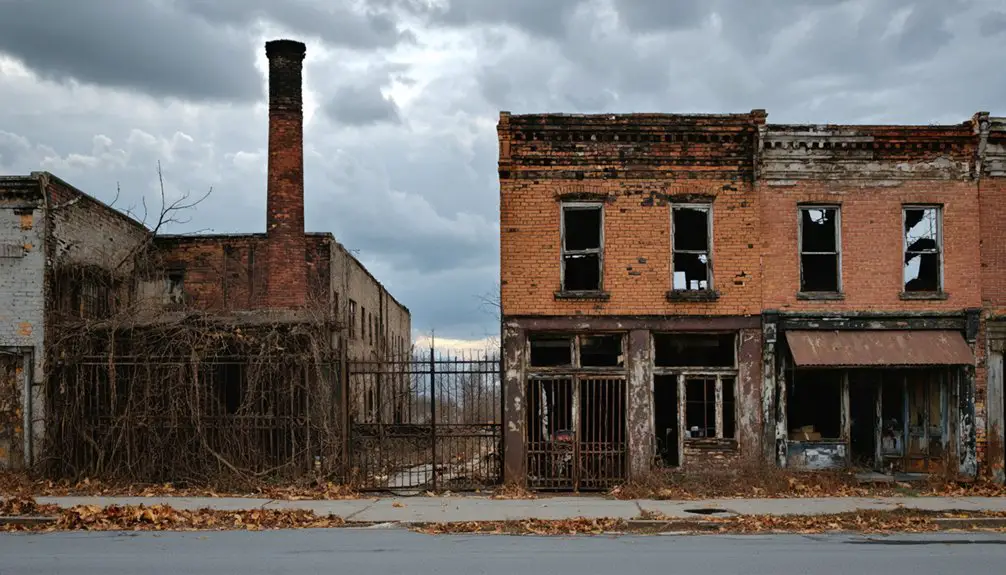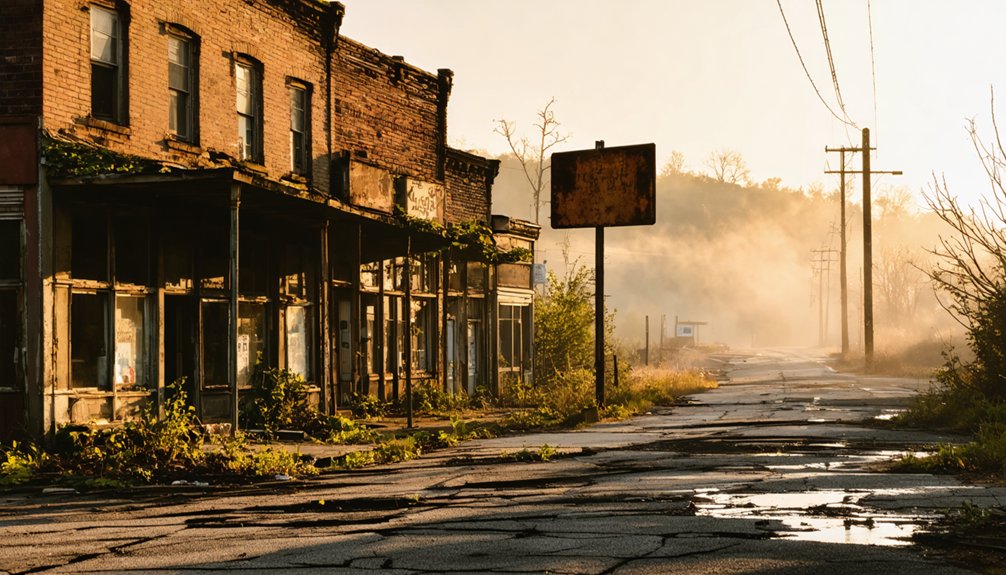
Planning a ghost town road trip to Hicksville, Pennsylvania means embracing raw, unfiltered history with no tourist crowds or staged attractions. You’ll find abandoned structures, weathered facades, and views of Avonmore across the Kiskiminetas River. Download offline maps before you go—there’s no signage to guide you. Stock up on supplies in nearby Avonmore, since Hicksville has zero infrastructure. It’s a quieter, more authentic alternative to Centralia’s fame, and there’s far more to this forgotten village‘s story than first meets the eye.
Key Takeaways
- Hicksville offers an authentic, crowd-free ghost town experience with abandoned structures, quiet streets, and no tourist infrastructure or official signage.
- Download offline maps before visiting, as Hicksville lacks signage; nearby Avonmore provides dining, fuel, and supplies for your trip.
- Cross the Kiskiminetas River heading north and watch for Route 156, which runs directly through Hicksville’s unstructured, unmarked landscape.
- Hicksville’s decline stemmed from regional competition and shifting infrastructure, leaving behind an abandoned Pennsylvania Canal bed and railroad-era remnants.
- Located roughly two hours west of Centralia, Hicksville serves as a quieter, less dramatic alternative for Pennsylvania ghost town road trips.
What Makes Hicksville, Pennsylvania a Ghost Town?
While Hicksville, Pennsylvania lacks the dramatic backstory of Centralia’s underground coal mine fire, it’s earned its ghost town reputation through quiet abandonment rather than catastrophe. You won’t find official ghost town designations here, but the evidence speaks for itself — minimal economic activity, no census population data, and abandoned structures that whisper local legends of a once-promising village.
Hicksville originally held a railroad advantage over nearby Apollo, yet neighboring Avonmore ultimately overshadowed it completely. Armstrong County’s boundaries nearly converge to a point here, almost as if geography itself tried to erase the village from the map.
What remains is a historically significant but largely forgotten settlement where the past feels more present than the future. For travelers craving authentic, unfiltered history, that’s exactly the appeal.
What You’ll Actually See When You Arrive in Hicksville?
When you roll into Hicksville via Route 156, you’ll notice the quiet village streets offer little fanfare but plenty of atmosphere.
Look toward the Kiskiminetas River and you’ll catch striking views of Avonmore sitting just across the water, a thriving contrast to Hicksville’s stillness.
Head west and you’ll find the abandoned Pennsylvania Canal bed, a tangible remnant of the region’s industrial past stretching from Leechburg toward the village.
Historic Canal Bed Remnants
Perhaps the most tangible piece of history you’ll encounter in Hicksville is the abandoned bed of the Pennsylvania Canal, stretching westward from the village toward Leechburg. This quiet corridor once moved goods and people through western Pennsylvania, and you can still trace its path today.
Historic preservation efforts haven’t glamorized this spot, which actually works in your favor — you’re walking through raw, unfiltered history. Local legends suggest the canal shaped Hicksville’s early economic ambitions before the railroad era ultimately redirected regional growth.
Run your hand along the earthen contours and you’ll feel the weight of that bygone infrastructure. No interpretive signs will guide you here, so bring your curiosity, a good map, and the willingness to read the landscape on your own terms.
Kiskiminetas River Views
What greets you first in Hicksville isn’t a building or a sign — it’s the Kiskiminetas River, rolling past with quiet authority along the village’s southern edge. The water separates you from Avonmore across the way, and that distance feels intentional, like Hicksville carved out its own world here.
You’ll notice the river shapes everything — the mood, the light, even the local legends that linger around abandoned structures half-swallowed by vegetation. Stand near the bank and you’re looking at the same current that once powered commerce and ambition along this stretch of Armstrong County.
The views aren’t dramatic, but they’re honest. The river doesn’t perform for visitors. It simply moves, indifferent and steady, reminding you that this place existed long before you arrived and will continue long after.
Route 156 Village Streets
Route 156 cuts through Hicksville with little ceremony, announcing itself not through signage or commercial strips but through silence and open space. You’ll notice Adair Road intersecting quietly, framing what remains of this forgotten village.
Abandoned structures line your path, their weathered facades holding local folklore about railroad ambitions that never quite materialized. Nobody’s rushing you here — you move at your own pace, reading the landscape like an open book.
The road itself follows terrain shaped by the old Pennsylvania Canal bed, giving every bend historical weight. You won’t find traffic lights or parking meters.
What you’ll find instead is unfiltered access to a place that time consciously bypassed, where the streets themselves become your most honest guide through Hicksville’s quiet, stubborn existence.
Why Hicksville Boomed, Then Disappeared
When you dig into Hicksville’s past, you’ll discover a village that once held a genuine railroad advantage over nearby Apollo, positioning it for serious growth.
Avonmore, sitting just across the Kiskiminetas River, ultimately stole the spotlight and absorbed the economic momentum Hicksville should’ve claimed.
All that’s left to mark the boom years is the abandoned Pennsylvania Canal bed stretching west from the village, a quiet trail of what could’ve been.
Railroad Advantage Fueled Growth
Though it seems like an unlikely contender, Hicksville once held a genuine railroad advantage over the better-known nearby town of Apollo. That edge drew settlers, commerce, and ambition to this small Armstrong County village, shaping its historic architecture and fueling early optimism. You can almost sense the energy that once pulsed through here when you walk its quiet roads today.
Local legends suggest the railroad connections promised a thriving future, positioning Hicksville to outpace regional competitors. Yet that promise never fully materialized. Avonmore, sitting directly across the Kiskiminetas River, absorbed much of the economic momentum instead.
The railroad advantage that should have cemented Hicksville’s growth ultimately became a footnote — a quiet irony that makes exploring this forgotten village all the more compelling for the independent traveler.
Avonmore Overshadowed Hicksville
Avonmore didn’t just grow alongside Hicksville — it quietly swallowed its future. While Hicksville held a genuine railroad advantage, Avonmore thrived just across the Kiskiminetas River, drawing commerce, residents, and attention away from its smaller neighbor.
Hicksville never converted its infrastructure edge into lasting economic momentum, and Avonmore’s prosperity made that failure permanent.
Today, you’ll find local legends suggesting Hicksville once rivaled Avonmore as a regional hub, but the evidence tells a quieter story — one of slow decline rather than dramatic collapse.
Preservation efforts remain limited, leaving little structured history for visitors to engage with. That absence is part of what makes Hicksville compelling.
You’re not touring a curated site; you’re reading a landscape that competition and geography simply moved past.
Canal Bed Left Behind
Hicksville’s story doesn’t start with decline — it starts with water. The Pennsylvania Canal once pushed commerce through this valley, connecting communities and driving economic life along the Kiskiminetas River. When you walk the abandoned canal bed stretching west from the village toward Leechburg, you’re tracing the spine of what made Hicksville relevant.
That infrastructure brought promise. Boats, trade, and movement defined this corridor before railroads rewrote the rules. Today, the old canal bed stands as one of the most tangible historical artifacts the area offers curious travelers like you.
Local legends suggest the canal’s abandonment directly accelerated Hicksville’s fade into obscurity. Once the water stopped moving, so did opportunity. You can still feel that silence walking the overgrown path — history preserved in stillness.
How to Get to Hicksville via Route 156 and Adair Road
Reaching Hicksville is straightforward once you know your route. Navigate to Route 156, your primary corridor into this forgotten corner of Armstrong County. From there, Adair Road connects you directly into the village, where abandoned structures and local legends quietly wait.
Keep these navigation tips in mind before you go:
- Cross wisely: If you’re coming from Avonmore in Westmoreland County, you’ll cross the Kiskiminetas River heading north.
- Watch for Route 156: The road shifts to the north side of the river just west of Hicksville — don’t miss the turn.
- Plan for solitude: No visitor centers or signage exist, so download offline maps beforehand.
Freedom-seekers will appreciate Hicksville’s raw, unfiltered access — no crowds, no gates, just open road and history.
How Does Hicksville Compare to Centralia and Other PA Ghost Towns?
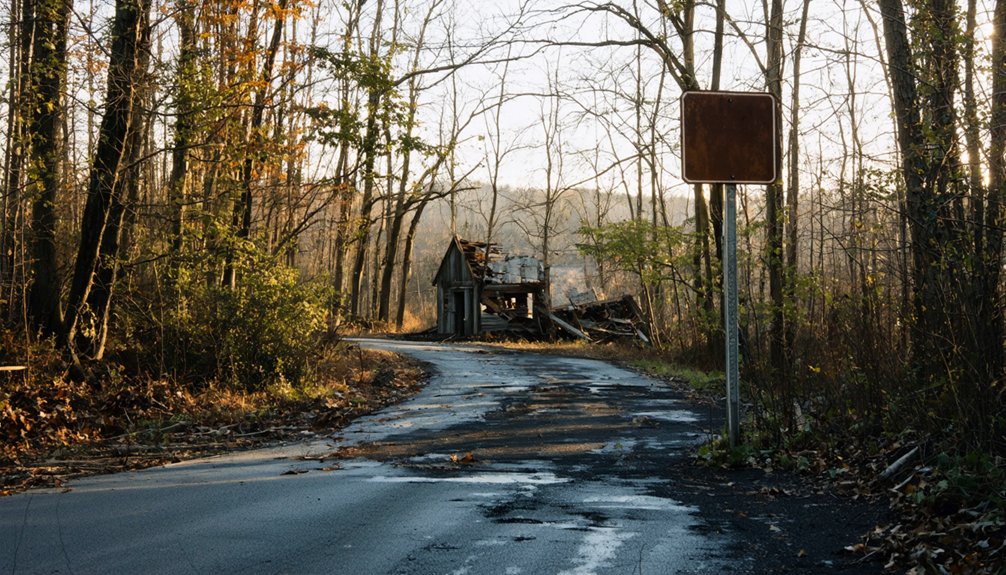
While Centralia dominates Pennsylvania ghost town conversations, Hicksville offers a quieter, equally compelling alternative. Centralia’s underground coal fire gave it global notoriety, a documented population of just four, and endless media coverage. Hicksville doesn’t compete with that dramatic history, and that’s precisely its appeal.
Hicksville lacks Centralia’s fiery notoriety — and that’s exactly what makes it worth visiting.
You’ll find no tourist crowds here, no staged attractions — just abandoned structures, local folklore, and the raw authenticity that freedom-seeking travelers crave. Hicksville sits at Armstrong County’s southernmost edge, shaped by canal history and railroad ambition that never quite materialized.
Unlike Centralia’s cautionary tale, Hicksville’s story is one of quiet fading.
If you want a ghost town experience without the spectacle, Hicksville delivers something Centralia can’t — genuine solitude and unexplored historical mystery waiting for you to uncover it.
Where to Stop Near Hicksville for Food and Amenities?
Since Hicksville offers no dedicated tourist infrastructure, you’ll need to plan your meals and supplies around nearby Avonmore, just across the Kiskiminetas River. Cross the bridge and you’ll discover a practical base for your adventure.
Avonmore gives you the freedom to explore without going hungry or underprepared.
Here’s what to prioritize before heading into Hicksville:
- Local dining options: Avonmore’s small-town restaurants serve hearty, unpretentious meals perfect for fueling historical exploration.
- Nearby convenience stores: Stock up on snacks, water, and road trip essentials before crossing back toward Route 156.
- Fuel stops: Fill your tank in Avonmore since Hicksville has no services waiting for you.
Planning ahead keeps your ghost town experience smooth, spontaneous, and completely on your terms.
Planning a Pennsylvania Ghost Town Road Trip From Hicksville
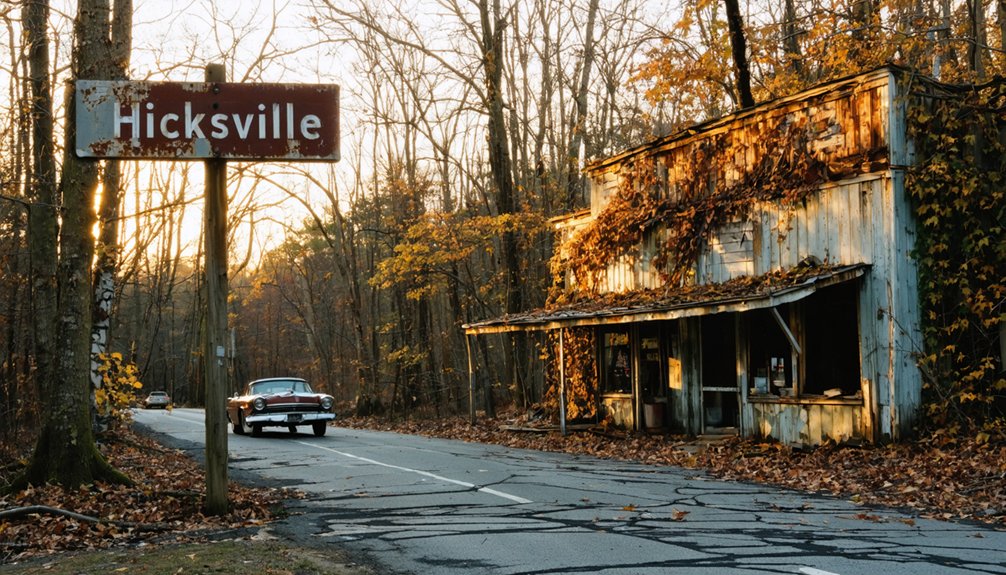
Hicksville makes a natural launching point for a broader Pennsylvania ghost town road trip, and with Centralia sitting roughly two hours east in Columbia County, you’ve got a compelling second destination already mapped out.
Centralia’s population of four makes it one of America’s most striking ghost towns, fueled by local legends surrounding its still-burning underground coal mine fire. The contrast between Hicksville‘s quiet riverbank obscurity and Centralia’s notorious history gives your road trip real narrative depth.
Centralia’s population of four and its still-burning underground mine fire make it America’s most haunting ghost town.
Along the route, you’ll encounter preservation efforts protecting remnants of Pennsylvania’s industrial and canal-era past. Travel Route 156 out of Hicksville, then plan your highway connections eastward.
Each stop rewards curiosity, offering raw, unfiltered glimpses into communities time has bypassed without fully erasing.
Frequently Asked Questions
Is There an Entrance Fee or Permit Required to Visit Hicksville?
You don’t need an entrance fee or permit to visit Hicksville! There aren’t any tourist regulations restricting access. Explore its historical preservation freely, soaking in the abandoned Pennsylvania Canal bed and riverside scenery at your own pace.
What Is the Best Time of Year to Visit Hicksville?
Like Thoreau seeking nature’s rhythm, you’ll find late spring or early fall ideal for visiting Hicksville. These seasons offer mild seasonal weather and clearer views for historical preservation exploration, letting you roam freely without summer crowds or winter’s harsh grip.
Are There Any Guided Ghost Town Tours Available in Armstrong County?
You won’t find official guided ghost town tours in Armstrong County, but you can freely explore historical landmarks and uncover local legends on your own terms, making Hicksville’s mysterious, untamed atmosphere even more thrillingly personal.
Is It Legal to Explore the Abandoned Pennsylvania Canal Bed Nearby?
Like a pioneer with a GPS, you can explore the canal bed, but respect historical preservation laws and minimize environmental impact — always check local regulations before you venture out to avoid legal trouble!
Are There Any Overnight Camping Options Close to Hicksville?
You’ll find no designated campsites directly in Hicksville, but nearby accommodations and camping regulations in Armstrong County’s parks offer you freedom to rest. Avonmore’s amenities across the river make it your best overnight base!
References
- https://www.abc27.com/digital-originals/history-of-centralia-a-pennsylvania-ghost-town/
- https://www.livingplaces.com/PA/Armstrong_County/Kiskiminetas_Township/Hicksville.html
- https://www.visitindianacountypa.org/members/ghost-town-trail/