Planning a ghost town road trip from Tulsa puts you at the perfect launching pad for exploring Oklahoma’s forgotten backroads. You’ll find weathered Route 66 filling stations, crumbling roadside cafes, and abandoned storefronts scattered across the region. Ghost towns like Ingalls, Chelsea, and New Alluwe sit within easy striking distance, each holding ruins and historic relics worth tracking down. Download offline maps, pack extra fuel, and bring sturdy shoes before heading out — there’s far more to uncover than you’d expect.
Key Takeaways
- Tulsa serves as the ideal base camp, offering modern amenities before venturing into backroads filled with ghost towns and Route 66 relics.
- Ghost towns like Chelsea, New Alluwe, and Ingalls lie northeast of Tulsa, featuring weathered storefronts, abandoned stations, and historic monuments.
- Over a dozen abandoned stops, including rusted filling stations and collapsed cafes, line Route 66 between Tulsa and Stroud.
- Download offline maps before leaving Tulsa, carry extra fuel, and pack water due to limited services in remote areas.
- Explore responsibly by photographing without touching, respecting private property boundaries, and leaving all structures and artifacts undisturbed.
Tulsa as Your Ghost Town Road Trip Base Camp
Whether you’re chasing abandoned filling stations or crumbling Route 66 roadside relics, Tulsa makes the perfect base camp for your Oklahoma ghost town road trip. The city balances urban renewal with deep historical roots, giving you modern comforts before you head into the forgotten corners of the state.
From Tulsa, you can push east or west along historic Route 66 alignments, connecting more than a dozen small towns, ghost towns, and roadside ruins in a single drive. Local legends attached to weathered churches, bypassed bridges, and decayed service stops add texture to every mile.
You’re not just sightseeing — you’re tracing the bones of communities that time left behind. Start here, fuel up, and let the open road lead you straight into Oklahoma’s abandoned past.
Ghost Towns Near Tulsa Worth Driving Out to See
Once you’ve set Tulsa in your rearview mirror, the real exploration begins. Away from urban revitalization projects and modern development corridors, Oklahoma’s backroads reveal a quieter, forgotten world worth chasing.
Oklahoma’s backroads don’t announce themselves — they wait, quietly, for the travelers willing to leave the familiar behind.
Head northeast toward Chelsea and you’ll find weathered storefronts and abandoned service stations frozen in Route 66’s heyday.
New Alluwe sits between Bowlin Springs and Chelsea, offering remnants that reward curious travelers willing to leave the main highway.
Farther out, Ingalls delivers something more layered — a hotel replica and a stone monument marking the 1893 Battle of Ingalls.
If you push south, Fallis and Adamson offer documented ghost-town stops with accessible roads and genuine abandonment.
Each location carries its own distinct texture, making every detour feel earned rather than accidental.
Forgotten Route 66 Stops Between Tulsa and Stroud
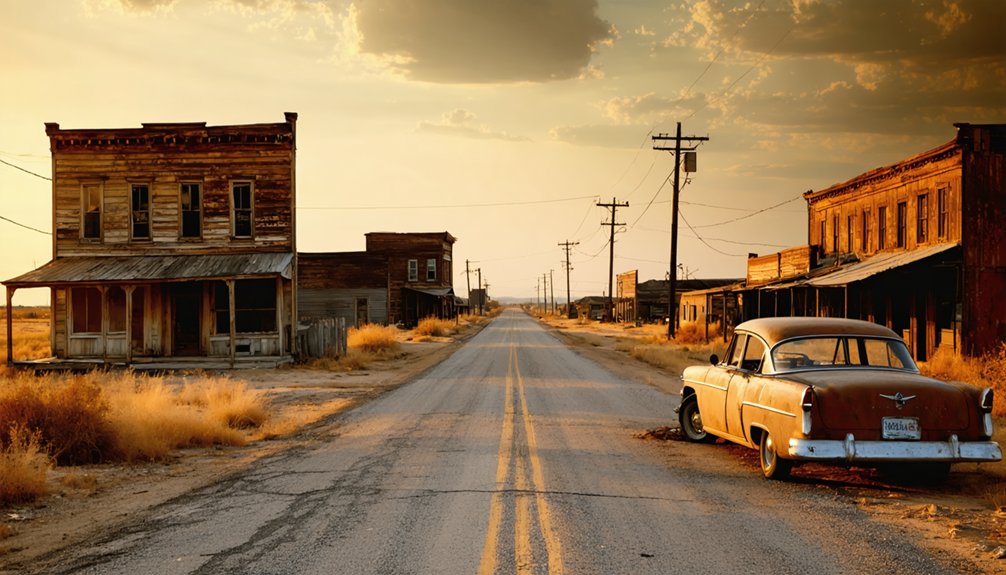
Once you leave Tulsa and head southwest toward Stroud, Route 66 opens up into a corridor of weathered ruins, bypassed small towns, and forgotten roadside businesses that interstate travel left behind.
You’ll pass abandoned filling stations, crumbling cafes, and isolated structures that once served a steady stream of cross-country drivers.
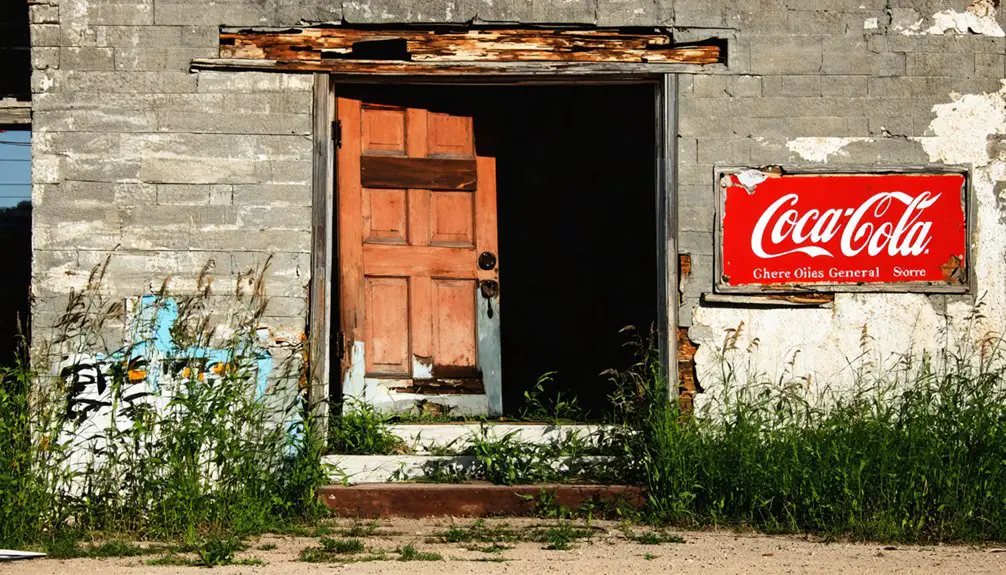
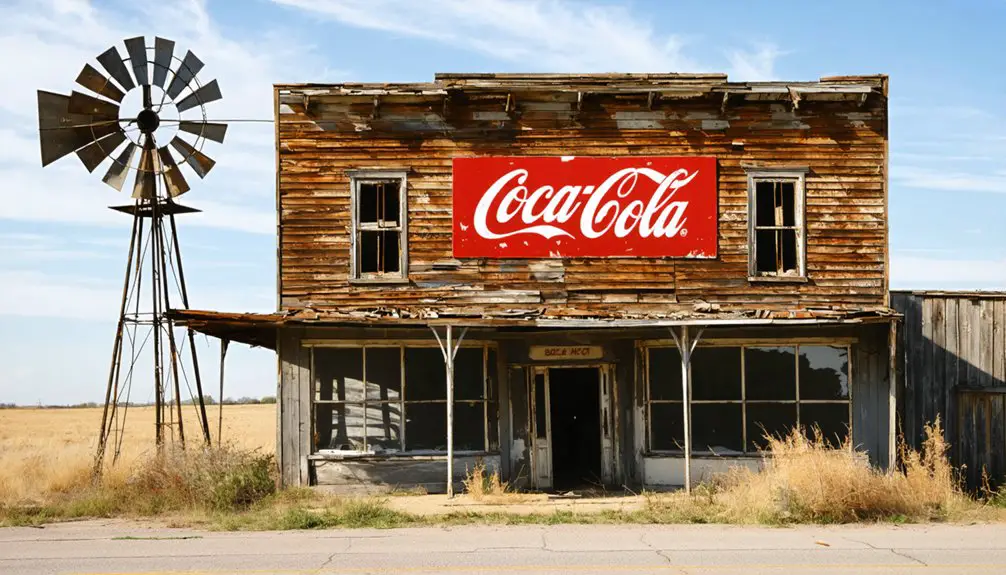
The stretch connects more than a dozen stops where history shows up not in museums but in peeling paint, overgrown lots, and weathered signs still clinging to brick walls.
Route 66 Abandoned Stops
Stretching west from Tulsa toward Stroud, the old Route 66 alignment hides more than a dozen forgotten stops that interstate travel buried decades ago. You’ll pass crumbling filling stations, collapsed garages, and roadside cafes where ghost town architecture tells the story better than any history book.
Faded signage, rusted pump covers, and weathered storefronts preserve fragments of Route 66 memorabilia that collectors and road trippers still seek out today. These bypassed communities didn’t disappear overnight — Interstate 40 simply rerouted traffic and starved them slowly.
Driving the original alignment puts you directly in front of that decay. Pull over when something catches your eye. The freedom of this route is that nobody’s rushing you. The road belongs to curious travelers willing to look closer.
Small Towns Along The Way
Between Tulsa and Stroud, the old Route 66 alignment threads through a string of small towns that interstate traffic forgot — and that’s exactly what makes them worth finding.
You’ll pass through more than a dozen stops where faded storefronts, crumbling diners, and weathered filling stations tell stories no highway marker captures. Local folklore clings to these places — tales of travelers, outlaws, and communities that once thrived on through-traffic.
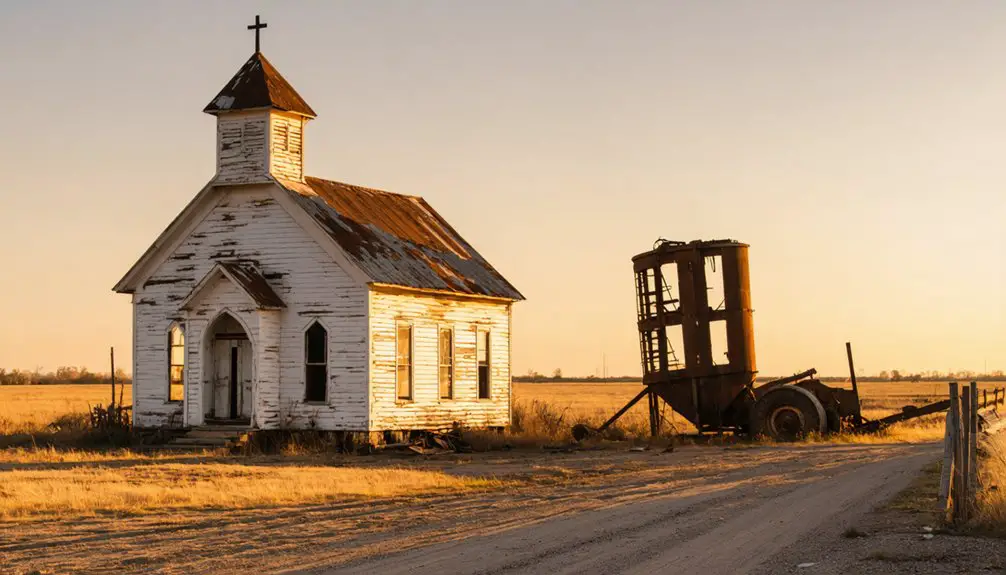
Preservation challenges are visible everywhere: peeling paint, sagging rooflines, and overgrown lots signal how quickly history disappears without intervention. Some towns still hold small, stubborn communities. Others exist only as a church or a foundation.
Slow down, pull over, and look closely. The most honest version of Route 66 lives on these forgotten backroads, not the polished tourist corridors.
Historic Roadside Ruins
The old Route 66 alignment between Tulsa and Stroud is a graveyard of American ambition — abandoned filling stations still wearing sun-bleached paint, collapsed garages where mechanics once worked twelve-hour days, and roadside cafes that fed thousands of travelers before the interstate made them invisible.
Unlike urban renewal projects that bulldoze the past, these ruins simply stand where time left them. You’ll find crumbling concrete canopies, rusted pump islands, and fractured neon sign frames scattered along bypassed alignments.
Historic preservation efforts have saved a handful of structures, but most remain unprotected and raw. Pull over when something catches your eye. These fragments aren’t just decay — they’re physical proof of a transportation culture that valued the road itself, and they’re yours to witness before they’re gone.
Ingalls, Chelsea, and Historic Sites to Add Along the Route
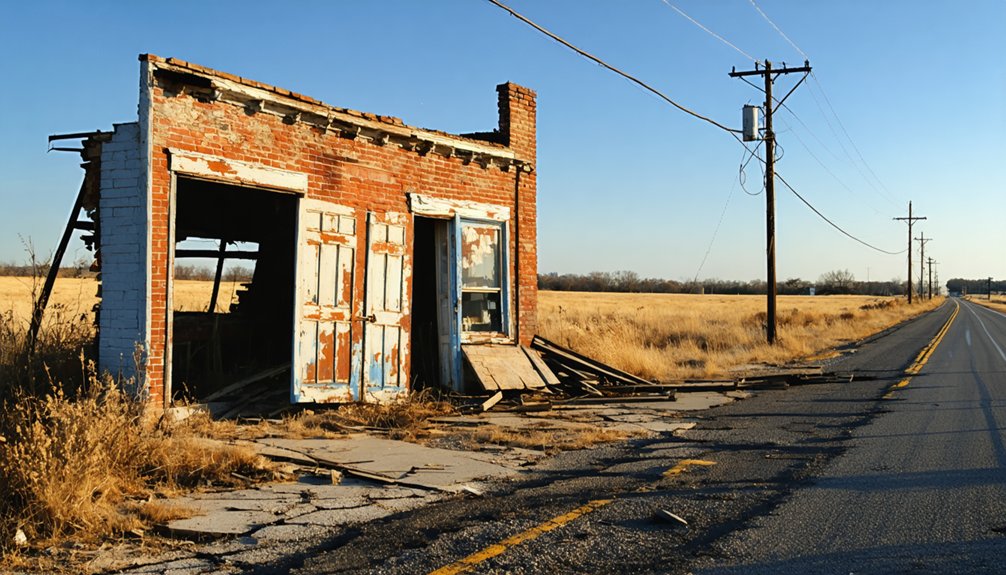
As you push deeper into Oklahoma’s backroads, Ingalls rewards you with the Battle of Ingalls Stone Monument and the Ingalls Hotel Replica, two stops that anchor the town’s dramatic outlaw history.
Further north, Chelsea pulls you in with its weathered Route 66 corridor, old bridges, and roadside curiosities tucked between active storefronts and forgotten structures.
Scatter abandoned filling stations and crumbling cafe ruins throughout your route, and you’ll build an itinerary that balances living history with the quiet decay that defines classic Route 66 travel.
Ingalls Historical Monuments
Scattered along this stretch of backroads, a handful of historical monuments reward curious travelers willing to veer off the main corridor. Ingalls stands out as a compelling detour, offering the Ingalls Hotel Replica and the Battle of Ingalls Stone Monument — both markers of a violent frontier past that shaped Oklahoma’s identity.
These sites represent genuine cultural preservation efforts, ensuring that lawless chapters of territorial history aren’t erased by time. You’ll find the monuments accessible by marked roads, making navigation straightforward.
While urban revitalization drives growth in larger Oklahoma cities, places like Ingalls remind you that preservation also means honoring the raw, unpolished edges of history. Stop here, read the markers, and let the stillness of the surrounding landscape reinforce just how remote this country once was.
Chelsea Backroads Stops
Continuing northeast from Ingalls, you’ll find the backroads toward Chelsea threading through a mix of ghost-town remnants, historic bridges, and small communities that reward unhurried exploration.
New Alluwe sits along this corridor, offering weathered structures tied to local legends about settlement-era life that didn’t survive the modern highway era.
Chelsea itself presents a counterpoint — a small town with signs of urban revitalization alongside Route 66 relics that haven’t changed in decades. You’ll spot abandoned filling stations, aging storefronts, and roadside curiosities that define this stretch.
Pull over when something catches your eye, because the best discoveries here aren’t always on a map. Keep your route flexible, your tank full, and your camera ready as the landscape shifts between living communities and quietly fading ones.
Route 66 Roadside Ruins
The roadside ruins along this Oklahoma corridor tell a quieter story than the ghost towns themselves — one written in crumbling concrete, rusted pump housings, and hand-painted signs that weather a little more each year. Abandoned filling stations and forgotten cafes line bypassed Route 66 alignments where Interstate 40 redirected everything that once kept them alive.
Near Ingalls, you’ll find the Battle of Ingalls Stone Monument and the hotel replica anchoring the site’s cultural heritage against steady decay. Chelsea adds weathered storefronts and structural remnants that contrast sharply with any urban revitalization happening miles away in Tulsa.
Pull over often. These ruins aren’t obstacles — they’re evidence. Each collapsed canopy and faded sign marks a community that once moved, served, and mattered along this road.
How to Drive the Backroads Without Getting Lost
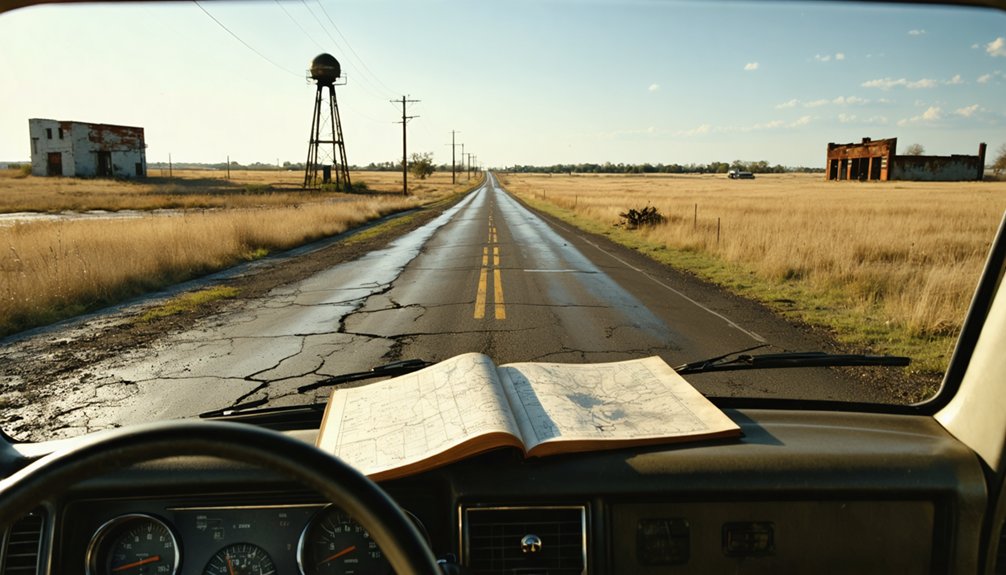
Finding your way through Oklahoma’s backroads is easier than it sounds if you come prepared with a mix of digital and paper tools. Download offline maps before leaving Tulsa, since cell service drops fast once you leave the main corridors. Pair that with a printed Oklahoma road atlas as a backup.
TravelOK lists turn-by-turn directions for several ghost-town sites, which makes road safety far more manageable on unmarked rural stretches. Watch for gravel roads that turn muddy after rain and always check your fuel level before heading south or east of Route 66.
Historical preservation signs often mark significant stops, so slow down and look for them. Freedom on the backroads comes from preparation, not improvisation.
What New Tulsa Actually Is and Where to Find It
Before you pack the car and head out expecting a city on a map, you should know that “New Tulsa” isn’t an official place name or incorporated town. It’s more of a conceptual frame — a way of describing the broader Tulsa region as a launching point for exploring Oklahoma’s forgotten backroads and abandoned settlements.
What you’re actually chasing is a corridor of ghost towns, roadside ruins, and historical stops stretching outward from Tulsa along Route 66. Tulsa itself has seen genuine urban revitalization and hosts local cultural festivals worth catching before you leave.
But once you hit the old alignments heading east or south, the landscape shifts fast — living communities give way to weathered storefronts, collapsed garages, and the quiet that only abandoned places carry.
Gear and Essentials for an Oklahoma Backroads Trip
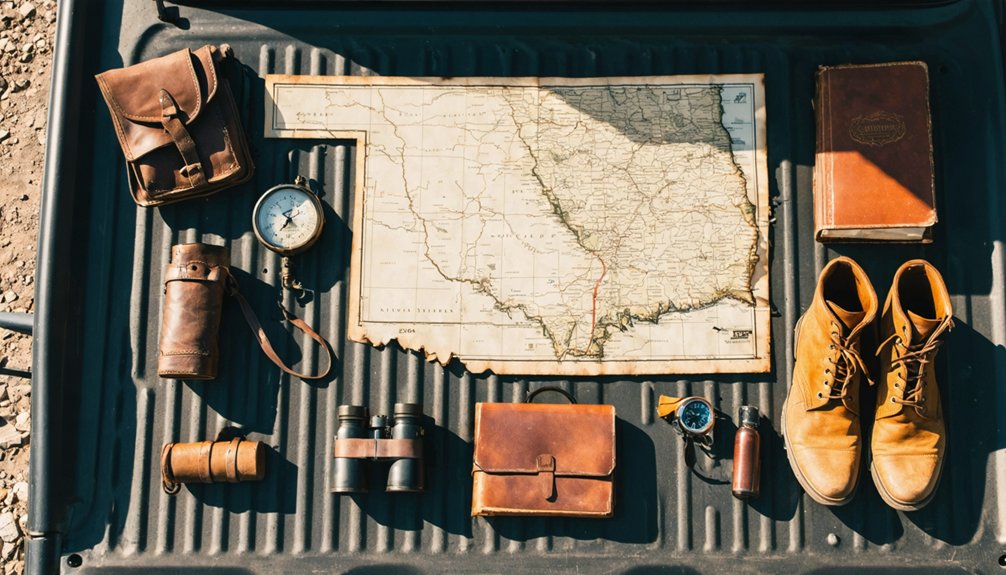
Packing for an Oklahoma backroads trip means thinking beyond a standard highway drive — you’re heading into corridors where cell service drops out, gas stations disappear for long stretches, and some ghost-town turnoffs aren’t marked at all. Unlike urban renewal zones with modern amenities on every block, these roads reward preparation over convenience.
Backroads don’t forgive the unprepared — cell service vanishes, gas stations thin out, and ghost towns hide in plain sight.
Bring these four essentials before you leave Tulsa:
- Offline maps downloaded for eastern and central Oklahoma corridors
- Extra fuel carried in an approved container for remote stretches
- Water and snacks since roadside stops between ghost towns are scarce
- A physical Oklahoma road atlas as backup when GPS fails completely
Sturdy shoes matter too — gravel lots, uneven foundations, and overgrown paths are standard at abandoned sites. Pack light, plan practically, and move freely.
How to Explore Abandoned Sites Without Causing Damage
Exploring an abandoned Oklahoma site responsibly starts with a simple rule: look without touching, and leave without taking. Weathered structures along Route 66 corridors near Tulsa carry both history and fragility — a kicked beam or pried door accelerates irreversible decay.
Stick to accessible entry points rather than forcing your way inside. Photograph everything, disturb nothing. Local folklore and urban legends surrounding these sites add atmosphere, but they don’t justify vandalism or trespassing.
Check property ownership before you visit. Some ghost-town stops remain on private land, and respecting boundaries protects your freedom to explore future sites legally.
Carry out every piece of trash you bring in.
Your goal is preservation through presence — witness what’s left standing so others can experience it too.
Frequently Asked Questions
Are Permits Required to Photograph Abandoned Buildings on Private Oklahoma Land?
Yes, you’ll need permission from the owner before photographing abandoned buildings on private property in Oklahoma. Ignoring legal considerations can lead to trespassing charges, so always respect boundaries and secure proper consent before exploring.
What Is the Best Time of Year to Visit Oklahoma Ghost Towns?
Spring and fall are your sweet spots—nature’s curtain call frames Oklahoma ghost towns beautifully. You’ll enjoy ideal photography regulations compliance in softer light while honoring historical preservation without summer’s brutal heat or winter’s muddy, inaccessible backroads.
Can Children Safely Participate in Oklahoma Ghost Town Road Trips?
Yes, your kids can safely join Oklahoma ghost town road trips! Take safety precautions near unstable structures, and use these stops to spark conversations about historical preservation, turning every crumbling ruin into an engaging, freedom-filled family adventure.
Are There Guided Ghost Town Tours Available Departing From Tulsa?
You’ll find that dedicated guided exploration options from Tulsa are limited, but you can join local historical preservation tours, hire private guides, or follow self-guided Route 66 itineraries that deliver equally thrilling ghost town adventures.
How Long Does a Typical Oklahoma Ghost Town Road Trip Take?
Like sand slipping through your fingers, time flies on these trips! You’ll typically spend two to three days exploring, balancing historical preservation stops and checking photography regulations at each hauntingly beautiful, abandoned site along Oklahoma’s open roads.
References
- https://www.youtube.com/watch?v=Ul_SD5WVxJk
- https://www.youtube.com/watch?v=W3PQeBFxxmo
- https://www.travelok.com/articles/oklahomaghosttowns
- https://www.youtube.com/watch?v=nWkVUmCTL9M
- https://www.youtube.com/watch?v=bpb3rpk8V-U
- https://www.onlyinyourstate.com/trip-ideas/oklahoma/scary-places-road-trip-ok
- https://en.wikipedia.org/wiki/List_of_ghost_towns_in_Oklahoma