Planning a ghost town road trip to Gotebo, Oklahoma means discovering a town that’s still technically alive but frozen in time. With a population of just 174, it’s what some call a “disappearing town,” quietly holding onto its railroad-era storefronts and aging architecture. You’ll find wide, walkable streets and decades of rural history shaped by the 1901 reservation opening. Stick around, and there’s much more to this forgotten Oklahoma gem than first meets the eye.
Key Takeaways
- Gotebo, Oklahoma, is an endangered “disappearing town” with 174 residents, offering a quiet, frozen-in-time atmosphere rooted in rural decline.
- The town originated from the 1901 Kiowa, Comanche, and Apache Reservation opening, giving it deep historical and cultural significance.
- Explore remnants of railroad-era storefronts, aging architecture, and a small commercial district best experienced on foot.
- Gotebo was originally named Harrison before a railroad depot and mail confusion prompted its official name change in 1904.
- From Oklahoma City, drive southwest via I-44 and US-62; from Lawton, head northwest on US-62, then west on Highway 9.
What Kind of Ghost Town Is Gotebo, Oklahoma?
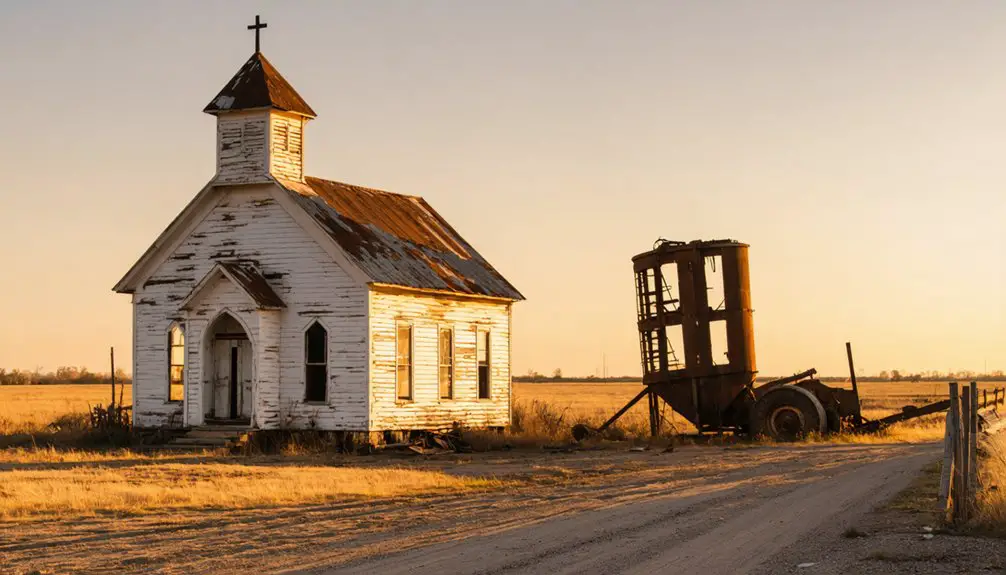
Gotebo isn’t your classic ghost town—no crumbling saloons, no tumbleweeds rolling through a completely empty street. Instead, you’ll find something rarer: a disappearing town still holding on. Abandoned Oklahoma classifies Gotebo as endangered, documenting its commercial district, government structures, and school as surviving built features worthy of historical preservation.
With only 174 residents recorded in the 2020 Census, the town moves slowly and quietly—exactly the kind of place that rewards curious travelers. You’re not walking through total abandonment; you’re witnessing decades of rural decline frozen in place. That distinction matters.
Gotebo carries genuine cultural significance as a settlement born from the 1901 opening of the Kiowa, Comanche, and Apache Reservation. It’s history you can still stand inside, not just read about.
What’s Left to See in Gotebo Today?
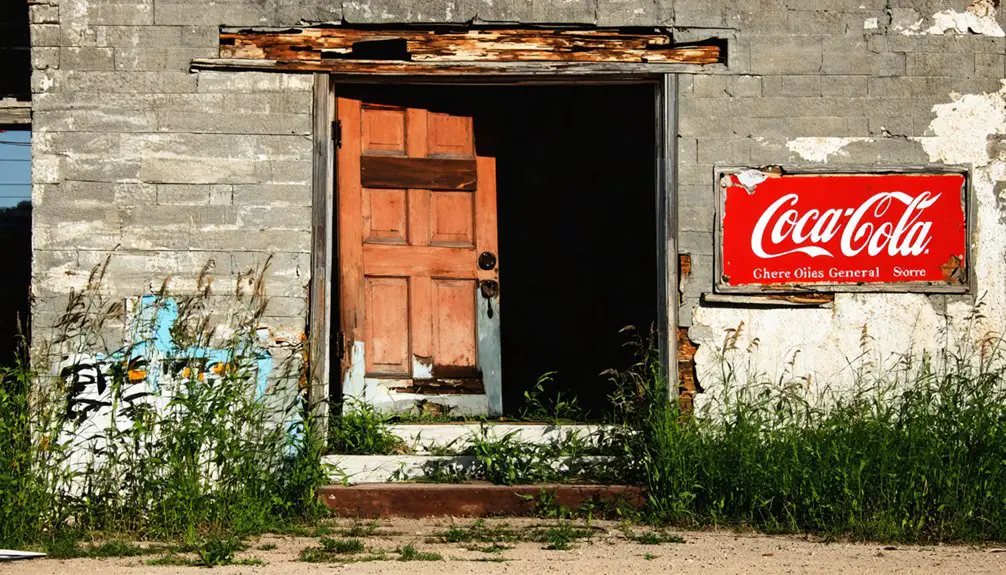
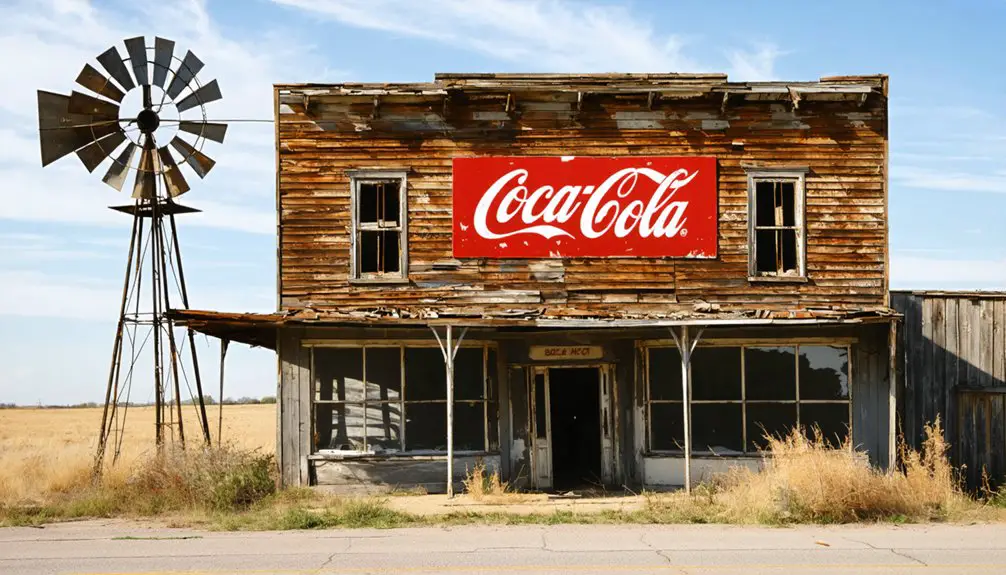
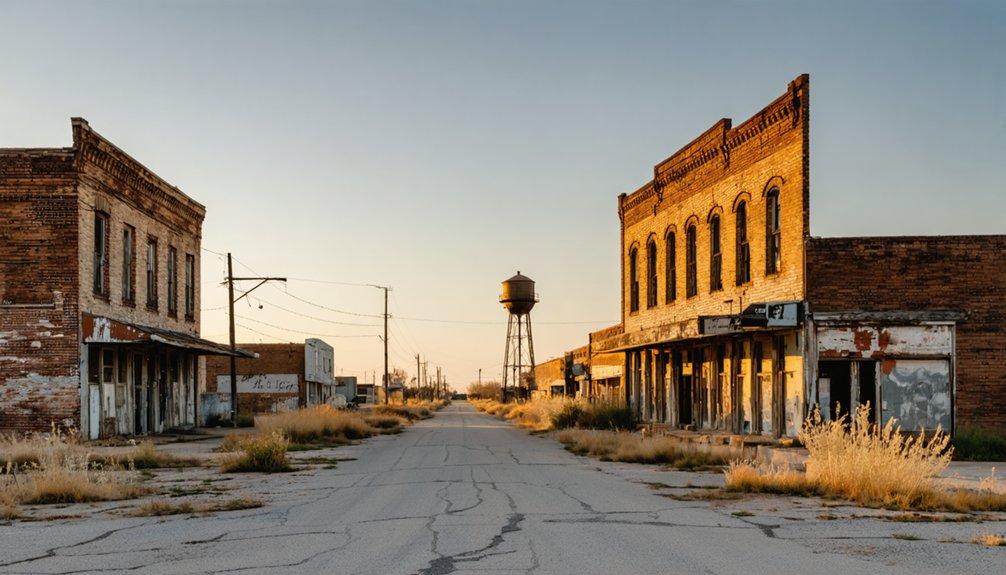
What remains in Gotebo won’t fill a full afternoon, but it’ll leave an impression. You’ll find remnants of historic architecture scattered through the small commercial district — aging storefronts and structures that quietly reflect the town’s early railroad-era identity.
A few government and school buildings still stand, giving you a sense of how this once-growing settlement was organized.
Walk the streets slowly. Gotebo rewards the curious traveler who looks closely rather than drives through fast.
Local legends tied to the town’s name change from Harrison to Gotebo give every corner a storytelling quality.
With only 174 residents recorded in 2020, you won’t encounter crowds — just open sky, faded facades, and the kind of stillness that makes southwestern Oklahoma‘s disappearing towns worth seeking out.
How Did Harrison Become Gotebo?
Before the town carried its unusual name, this small Kiowa County settlement went by something far more familiar — Harrison, a nod to President Benjamin Harrison.
When the railroad arrived around 1901, it brought a depot with its own name: Gotebo. That’s where the confusion started.
Mail kept getting misrouted, and the town naming mismatch created real headaches for residents. By 1904, officials made the practical call — rename the town to match the depot and end the problem.
That railroad history shaped more than just logistics. It gave this southwestern Oklahoma stop a distinctive identity that’s stuck for over a century.
When you roll through today, you’re driving into a place that owes its very name to the iron rails that once defined American expansion.
Gotebo’s Roots in the 1901 Reservation Opening
When you trace Gotebo’s origins, you land squarely in one of Oklahoma’s most significant land rushes. In 1901, the federal government opened the Kiowa, Comanche, and Apache Reservation to settlement, and early arrivals wasted no time staking their claim to the area that would become Gotebo.
That single event set the town’s entire story in motion.
Reservation Land Opens
The story of Gotebo starts with a single, sweeping moment: the 1901 opening of the Kiowa, Comanche, and Apache Reservation to outside settlement. Through historical land grants, the federal government released this vast stretch of southwestern Oklahoma, and settlers rushed in to claim their share.
You’re standing on ground that carries deep Native American heritage, land the Kiowa, Comanche, and Apache peoples had called home long before that pivotal year. When the reservation opened, new communities sprang up almost overnight. Gotebo was one of them.
That origin gives this small town a layered history that goes far beyond faded storefronts and quiet streets. When you roll into town, you’re not just visiting a disappearing place — you’re touching the edge of a defining chapter in Oklahoma’s past.
Town Founded In 1901
Gotebo took its first breath in 1901, born directly from that reservation opening that reshaped southwestern Oklahoma. When the Kiowa, Comanche, and Apache lands became available, settlers moved fast, staking their claim in what would become Kiowa County’s newest community.
Early town development followed the railroad depot’s arrival, giving the settlement both purpose and momentum.
You’re looking at a place with genuine historical significance — a town that emerged almost overnight from raw reservation land into a functioning community with commerce, government, and schools.
Settlers initially called it Harrison, honoring President Benjamin Harrison. That name wouldn’t stick, but the town did.
Understanding this 1901 founding context helps you appreciate what you’re walking into — not just a fading dot on the map, but a place with real roots worth exploring.
How to Get to Gotebo, Oklahoma
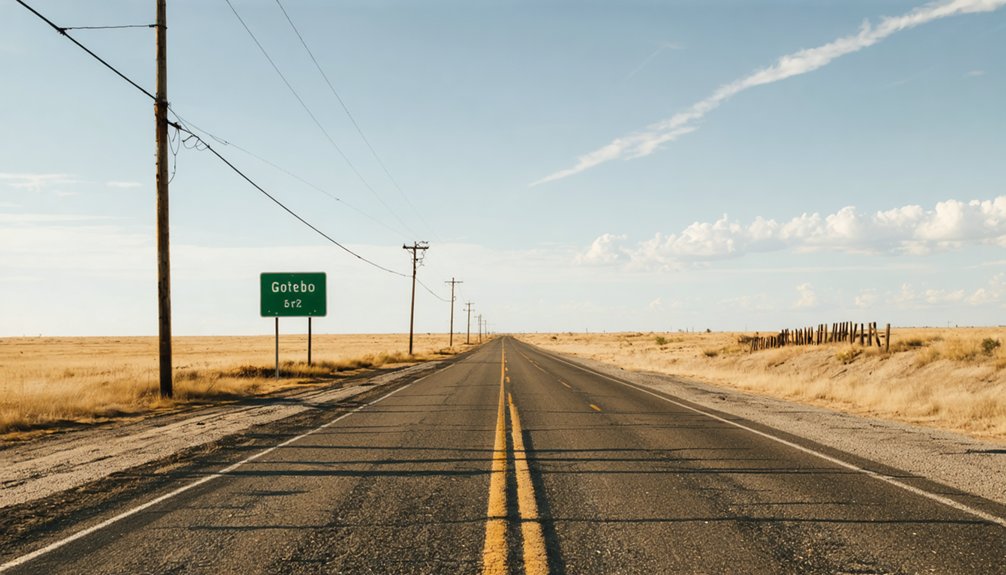
Tucked into the rolling plains of southwestern Oklahoma, Gotebo sits in Kiowa County and it’s easier to reach than you might expect. From Lawton, head northwest on US-62 toward Mountain Park, then follow State Highway 9 west into town. The drive takes roughly an hour and cuts through open ranch land and red-dirt back roads that feel like the Oklahoma most travelers never see.
If you’re coming from Oklahoma City, budget about two hours heading southwest on I-44, then shifting to US-62. Once you roll into Gotebo, you’ll find a compact town where historical landmarks and local legends are easy to explore on foot.
There’s no complicated navigation here — just wide skies, quiet streets, and the freedom to move at your own pace.
Nearby Kiowa County Stops Worth Adding to Your Drive
While Gotebo makes a worthy destination on its own, Kiowa County gives you plenty of reason to keep driving. The region rewards curious travelers with historic architecture, local legends, and open roads that feel genuinely off the beaten path.
Gotebo is worth the trip — but Kiowa County will give you every reason to keep going.
Add these stops to your route:
- Hobart – Kiowa County’s seat offers historic courthouse architecture and a classic small-town square worth exploring.
- Snyder – A quiet town carrying its own local legends from the early reservation-era settlement days.
- Quartz Mountain State Park – Dramatic rocky landscapes that break up the flat southwestern Oklahoma terrain beautifully.
- Carnegie – Home to the Kiowa Tribal Museum, where you’ll connect the land’s deeper Indigenous history to everything you’ve seen.
Each stop adds real context to your drive through this corner of Oklahoma.
What to Expect Before Visiting a Disappearing Oklahoma Town?
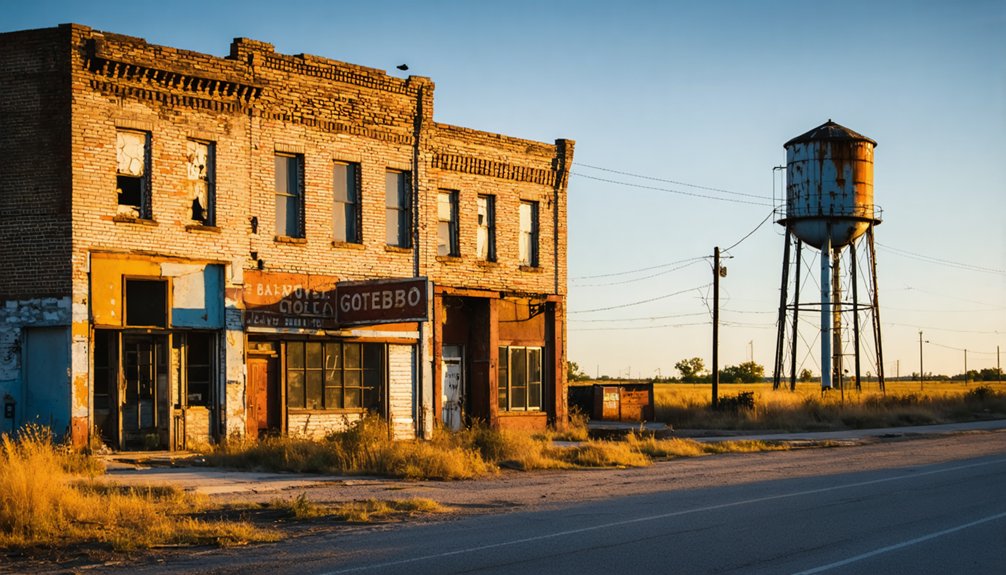
Visiting a disappearing town like Gotebo means adjusting your expectations before you arrive. You won’t find bustling Main Street shops or polished tourist attractions. What you’ll find instead is quiet, open space, weathered storefronts, and a town holding on with a population of just 174.
Streets may feel empty, and some buildings show serious wear. Come prepared with a full gas tank, your own water, and a flexible mindset. Research local legends before you go, since the story behind the town’s name change from Harrison to Gotebo adds real depth to what you’ll see.
Don’t expect formal preservation efforts or guided tours. Gotebo rewards curious, self-directed travelers who appreciate raw history over polished presentation. Bring a camera and let the silence speak.
Frequently Asked Questions
What Is the Current Population of Gotebo, Oklahoma?
You’ll find Gotebo’s current population sits at just 174 residents, per the 2020 Census. As you explore its historical landmarks and seek out local cuisine, you’re discovering a beautifully quiet, disappearing slice of southwestern Oklahoma.
Is Gotebo, Oklahoma Safe to Visit for Tourists?
You’ll find Gotebo safe to visit, explore its historical landmarks, and sample local cuisine with ease. It’s a quiet, small-town escape where you’re free to roam, discover, and soak in rural Oklahoma’s unhurried charm.
What County Is Gotebo, Oklahoma Located In?
You’ll find Gotebo nestled in Kiowa County, Oklahoma! As you explore its historical landmarks and sample local cuisine, you’re embracing true southwestern freedom in this quietly fading, yet beautifully authentic rural destination.
Are There Any Hotels or Lodging Options Near Gotebo?
With only 174 residents, Gotebo offers no in-town lodging, but you’ll find local bed and breakfasts and nearby camping options within Kiowa County, giving you the freedom to explore this disappearing town on your own terms.
What Is the Best Time of Year to Visit Gotebo?
Spring and fall offer you the best seasonal weather for exploring Gotebo’s quiet streets. You’ll enjoy mild temperatures, stunning Oklahoma landscapes, and you might even catch local festivals celebrating the region’s rich frontier heritage.
References
- https://en.wikipedia.org/wiki/Gotebo
- https://abandonedok.com/gotebo-ok/
- https://www.facebook.com/groups/historichaven/posts/1348831266860429/
- https://www.youtube.com/watch?v=7UHrVYQF-D0