Planning a ghost town road trip from North Cambridge, Vermont puts you within reach of some of New England’s most haunting forgotten landscapes. You’ll explore Glastenbury’s overgrown railbeds and Greenbank’s Hollow’s crumbling mill foundations, where forest has quietly swallowed entire communities. Bring high-clearance vehicles, offline maps, and solid boots, because these backcountry roads don’t forgive the unprepared. Stick around, and you’ll uncover exactly why these villages vanished and what secrets they’ve left behind.
Key Takeaways
- North Cambridge serves as an ideal hub for exploring Vermont ghost towns, offering access to abandoned mill villages, railroad stops, and folklore-rich landscapes.
- Glastenbury features a Class 4 unmaintained road with railroad remnants from 1872–1898, graded embankments, and legends of mysterious disappearances.
- Greenbank’s Hollow preserves Civil War-era wool mill foundations, cellar holes, and forest-reclaimed stone walls with significant historical atmosphere.
- Backcountry roads require high-clearance vehicles, offline maps, and full fuel tanks, as conditions change rapidly after rain or snow.
- Pack water, first aid supplies, sturdy boots, layered clothing, a flashlight, portable charger, and cash for remote exploration preparedness.
Why North Cambridge Is the Right Base for a Vermont Ghost Town Road Trip
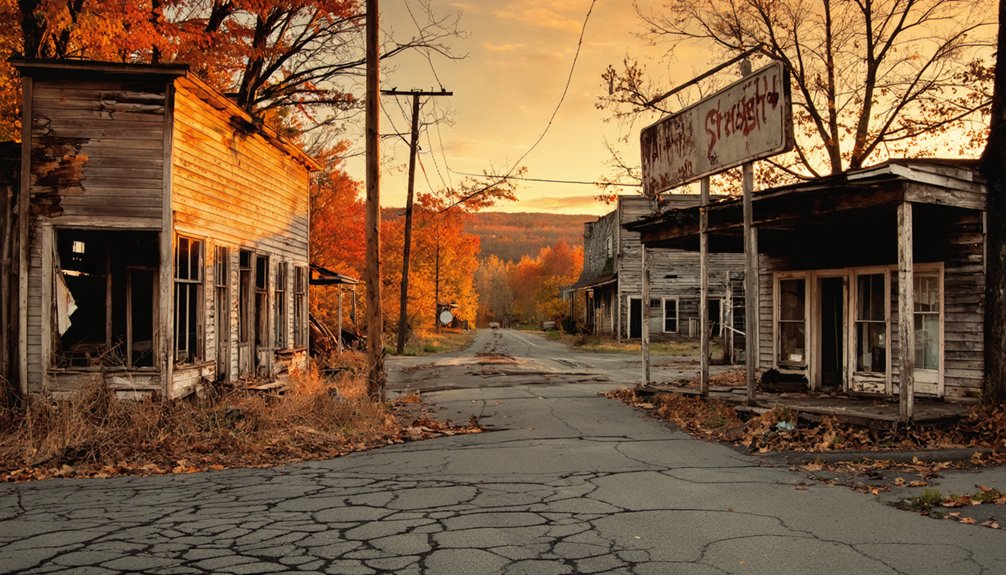
Because it sits in the heart of northwestern Vermont, North Cambridge puts you within striking distance of some of the state’s most compelling abandoned settlements, old mill ruins, and backroad ghost-town sites. You’re not locked into a single destination here. Instead, you’ve got a flexible hub that connects you to former mill villages, forgotten railroad stops, and landscapes still marked by collapse and time.
The area carries its own layer of local folklore, with haunted legends woven into the surrounding hills and hollows. That cultural texture makes North Cambridge more than a convenient starting point — it becomes part of the story itself.
Pack light, check your road conditions, and plan your first drive out. The abandoned Vermont you’re looking for is closer than you think.
The Vermont Ghost Towns Worth Building Your Route Around
Once you’ve settled on North Cambridge as your base, the next step is figuring out which ghost towns are actually worth the drive. Two destinations stand out immediately.
Glastenbury offers the deeper backcountry experience. Its railroad history stretches back to the 1870s, and local folklore around disappearances adds an unsettling layer to the landscape. The access road is open but unmaintained, so seasonal access matters — spring mud and early snow can close it fast.
Greenbank’s Hollow suits those drawn to industrial history. A massive wool mill once anchored this community, supplying uniforms during the Civil War. After the mill burned, the town followed. Today you’re walking through foundations, cellar holes, and forest-swallowed walls.
Build your route around both, and you’ll cover the full range of Vermont’s ghost-town story.
What You’ll Actually Find at Glastenbury and Greenbank’s Hollow
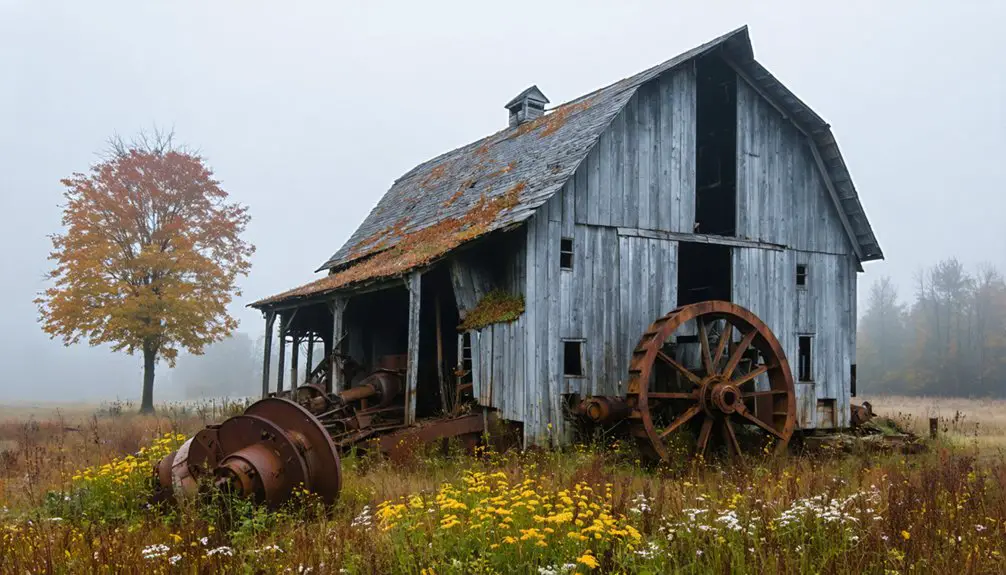
At Glastenbury, you’ll walk a rough, unmaintained Class 4 road where the old railroad grade still cuts through the forest, a physical echo of the charcoal retrieval operations that ran from 1872 to 1889. The landscape itself tells the story — graded embankments, overgrown roadbeds, and the quiet geometry of a rail line that passenger trains last used in 1898.
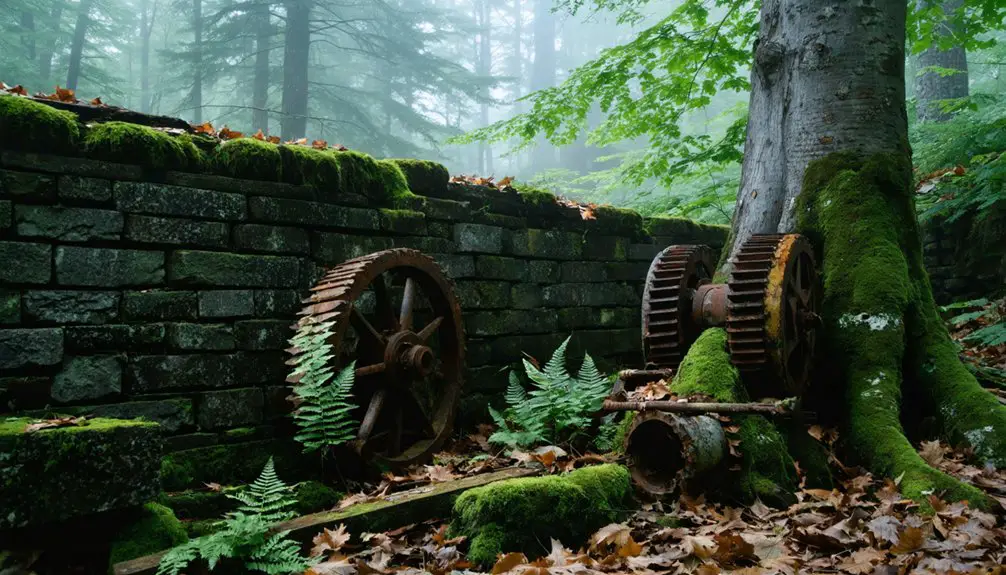
At Greenbank’s Hollow, you’ll find something more intimate: stone foundations, root cellars, and collapsed walls slowly being reclaimed by trees, all that remains of a wool mill once considered one of the largest in the country.
Glastenbury’s Abandoned Railroad Remnants
When you walk the old railroad grade at Glastenbury, you’re stepping onto ground that once supported a working charcoal operation running from 1872 to 1889.
Followed by a short-lived passenger line that folded by 1898. The forest has reclaimed most of it, but you’ll still spot the flattened grade cutting through the trees, a quiet reminder of industrial ambition that didn’t survive.
Local folklore ties this corridor to the broader mystery of Glastenbury’s disappearance as a functioning community.
Look carefully and you’ll find subtle evidence of historic architecture in the stonework and structural fragments scattered along the route. Nothing’s marked or restored, so you’re reading the landscape directly.
That rawness is exactly what makes this stretch worth the rough drive in.
Greenbank’s Hollow Mill Ruins
Glastenbury’s railroad grade gives you industrial history in outline form, but Greenbank’s Hollow hands you something more tactile. You’re walking through a former wool empire, one that once clothed Civil War soldiers.
Here’s what you’ll find:
- Stone foundations swallowed by decades of forest growth
- Root cellars still intact beneath the leaf litter
- Crumbled wall lines tracing streets nobody walks anymore
- Cellar holes where families lived before the mill burned and everything collapsed
Local folklore wraps this place in quiet grief. Haunted legends follow abandoned mill towns for good reason — the human investment here was enormous, and the loss was sudden.
You’re not just reading history; you’re standing inside it, boots on the actual ground where it happened.
How to Handle Vermont’s Backcountry Roads and Class 4 Conditions
Before you head out to any of Vermont’s backcountry ghost-town sites, you’ll want to understand what Class 4 roads actually mean for your trip. These roads aren’t maintained, which means no plowing, no grading, and no guarantees after heavy rain or snow. Seasonal road conditions shift fast in Vermont’s hill terrain, turning a passable track into a muddy, washed-out mess overnight.
You’ll want a high-clearance vehicle, a downloaded offline map, and a full tank before you leave paved roads behind. Check conditions locally before departing since no website updates these roads in real time.
Wildlife encounters are also real on these routes, so slow down and stay alert. The freedom these roads offer comes with personal responsibility, so come prepared and leave nothing to chance.
Why These Vermont Villages Vanished: Mills, Rails, and Collapse
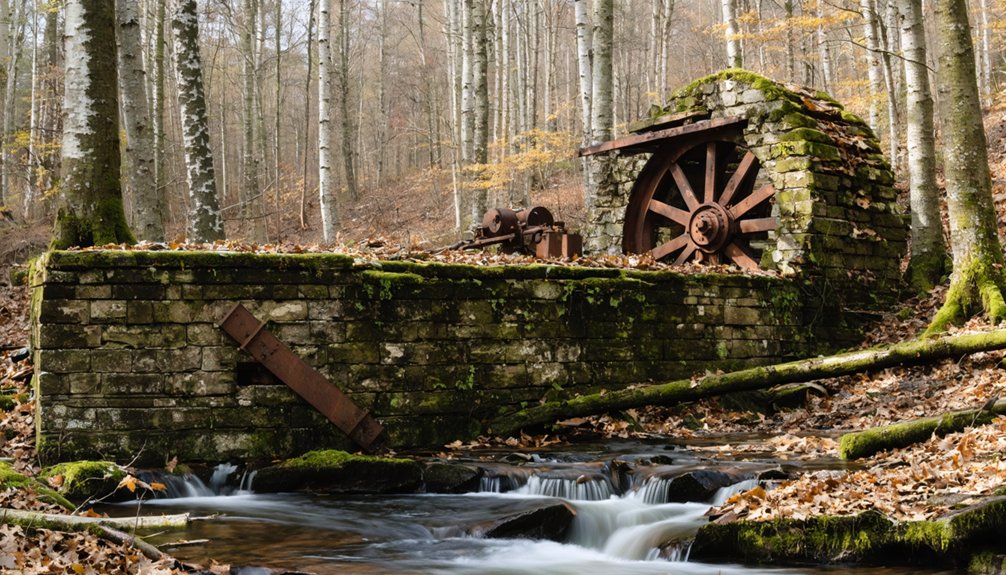
Once you understand what the roads demand, it helps to understand why you’re driving them in the first place. These villages didn’t quietly fade — they collapsed when their economic foundations disappeared.
- Mills burned or closed, erasing the single industry keeping communities alive
- Rail lines shut down, cutting off markets and isolating towns overnight
- Workers left, following jobs elsewhere and leaving homes to the forest
- Local folklore preserved what records couldn’t — stories carried longer than the buildings
What remains today reflects both loss and resilience. Historic preservation efforts protect cellar holes, foundations, and railroad grades so you can read the landscape like a timeline.
Every crumbling wall tells you something precise: a community once thrived here, then the system holding it together simply broke.
What to Pack Before You Leave North Cambridge
Packing smart matters more than packing light when you’re heading into Vermont’s backroads. Cell service disappears fast, roads turn rough without warning, and the nearest fuel stop may be miles behind you. Bring reliable navigation tools—a downloaded offline map or a paper road atlas works better than a signal-dependent app.
Pack enough water, snacks, and a basic first aid kit to handle unexpected delays. If you’re planning to stay overnight near Glastenbury or another remote site, lightweight camping gear gives you flexibility without locking you into a rigid schedule.
Layer your clothing for Vermont’s unpredictable weather, and wear sturdy boots for walking cellar holes and foundation lines. A flashlight, portable charger, and extra cash round out everything you’ll realistically need.
Frequently Asked Questions
Are There Guided Ghost Town Tours Available Near North Cambridge, Vermont?
Formal guided tours aren’t widely available, but you’ll find self-guided trails weaving through abandoned structures and sites steeped in haunted legends. Explore Glastenbury and Greenbank’s Hollow independently, where Vermont’s forgotten history reveals itself around every overgrown corner.
Can Children Safely Visit Abandoned Vermont Ghost Town Sites?
Carefully chosen, children can certainly visit these sites! You’ll want to supervise every step, respect preservation efforts, and frame haunted legends as history lessons. Stick to accessible, well-marked ruins and avoid unstable structures or unmaintained backroads.
Is Camping Permitted Near Glastenbury or Greenbank’s Hollow Overnight?
Camping regulations vary by land ownership, so you’ll need to verify overnight permissions before pitching a tent near Glastenbury or Greenbank’s Hollow. Check with Vermont’s Green Mountain National Forest and local land managers first.
What Is the Best Season to Visit Vermont Ghost Towns?
Late summer through early fall is your best window. You’ll find dry roads supporting historical preservation efforts, vibrant foliage framing ruins beautifully, fewer wildlife encounters blocking trails, and you won’t battle mud compromising unmaintained Class 4 backroads.
Are There Entrance Fees or Permits Required for These Abandoned Sites?
Most sites don’t require fees or permits, but you’ll want to respect historical preservation rules and watch for access restrictions. You’re free to explore, wander, and discover — just tread lightly and leave everything untouched.
References
- https://www.youtube.com/watch?v=YrQNbrIrNT8
- https://www.facebook.com/groups/BenningtonBlotter/posts/2084150884950089/
- https://www.reddit.com/r/vermont/comments/b0b64m/glastenbury_vermont_ghost_town_hotel_casino_1898/
- https://www.hauntedplaces.org/cambridge-vt/
- https://newenglandhistoricalsociety.com/six-new-england-ghost-towns/
- https://urbexunderground.com/ghost-towns-in-vermont/