To plan your ghost town road trip to Owens Station, Delaware, head east out of Greenwood on Route 16 toward the intersection of Beach Highway and Owens Road in Sussex County. You won’t find tracks or a depot waiting for you — just weathered houses, quiet fields, and the atmospheric silence of a railroad town that faded when its purpose disappeared. Autumn’s golden light makes the experience even more compelling, and there’s far more to this story than the map reveals.
Key Takeaways
- Owens Station sits along Delaware Route 16 east of Greenwood, at the intersection of Beach Highway and Owens Road in Sussex County.
- The town declined after Queen Anne’s Railroad shut down, leaving scattered weathered structures and abandoned lots as its only remnants.
- Autumn is the best season to visit, offering fall foliage and golden light that enhance the ghost town’s atmospheric decay.
- Expect subtle signs of history like old house foundations and weathered structures rather than dramatic, easily recognizable ghost town landmarks.
- Nearby Greenwood and Ellendale share similar railroad-dependent histories, making them ideal stops on a Sussex County ghost town road trip.
What Was Owens Station, Delaware?
Once a small but active railroad community in Sussex County, Delaware, Owens Station built its entire identity around the Queen Anne’s Railroad, which connected Ellendale and Greenwood. Its historical significance lies in how completely a single rail line could shape a settlement’s rise and fall.
By 1900, 18 people called it home. By 1925, that number had climbed to 62, reflecting real community transformation tied directly to rail traffic. When the railroad shut down and crews pulled up the tracks, the town had no alternative foundation to stand on.
People left, buildings disappeared, and the land quietly returned to its previous owners.
Today, you’ll find the site along Delaware Route 16, east of Greenwood, where a few original houses and a road sign are nearly all that remain.
Why Did Owens Station Disappear When the Railroad Left?
When you look at Owens Station’s decline, you won’t find a dramatic fire or flood that wiped it off the map — just the quiet, inevitable pull of obsolescence.
Once the Queen Anne’s Railroad shut down its line between Ellendale and Greenwood, the tracks came up, the land returned to prior owners, and the reason for the community’s existence simply vanished.
Owens Station didn’t collapse; it faded, which makes its story both less dramatic and far more common than you might expect.
Railroad Departure Erased Everything
You won’t find a dramatic disaster story here — no fire, no flood. The town simply became obsolete. Its historical significance rests entirely on what the railroad made possible during those peak years between 1900 and 1925.
Once that purpose vanished, so did the people.
What kept Owens Station alive in community memory wasn’t brick or mortar — it was the name itself, preserved today on road signs and the Owens Station Hunting Preserve.
Obsolescence Over Catastrophe
Most ghost towns carry the weight of some dramatic final chapter — a mine collapse, a fire, a flood that swallowed everything overnight. Owens Station offers no such spectacle. What erased it was quieter and, in many ways, more honest: pure obsolescence.
When the Queen Anne’s Railroad stopped running, the economic reason for Owens Station’s existence simply vanished. Residents drifted elsewhere. Buildings aged without purpose. Urban decay worked gradually, reclaiming what the railroad had briefly animated.
No disaster gave this place a story worth dramatizing — just the slow arithmetic of abandonment. For travelers drawn to historical preservation and authentic remnants, that understated ending makes Owens Station more compelling, not less.
You’re not visiting a wound. You’re visiting the quiet aftermath of a town that outlived its only reason to exist.
What’s Left of Owens Station Today?
When you arrive at the former Owens Station site today, you’ll find a handful of historic houses still standing near the intersection of Beach Highway and Owens Road, quiet reminders of the community that once thrived here.
You won’t spot a single rail or tie from the old Queen Anne’s Railroad line, as every trace of track has long since disappeared.
The name itself survives through the Owens Station Hunting Preserve, keeping the settlement’s identity alive even as its physical footprint has nearly vanished.
Standing Historic Houses Remain
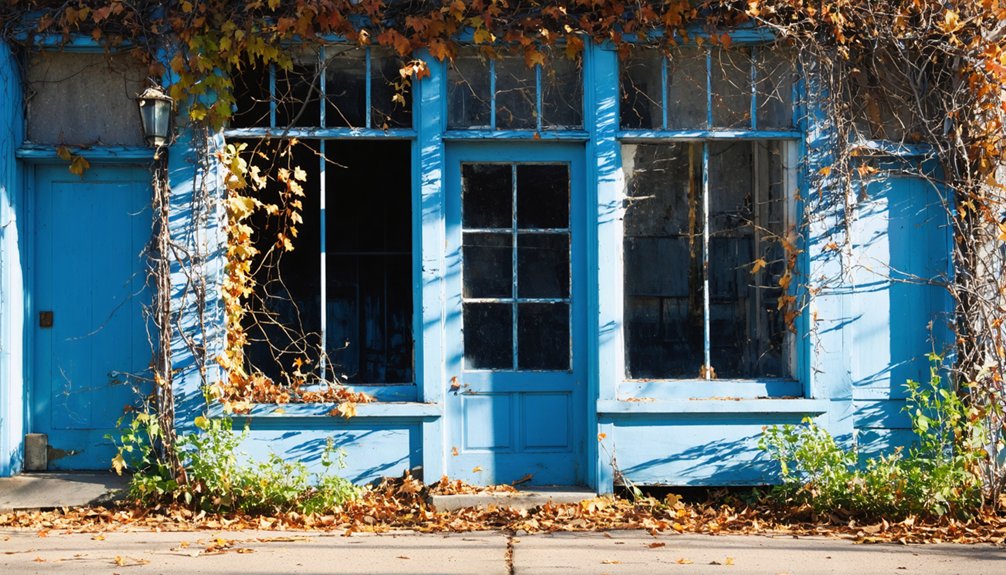
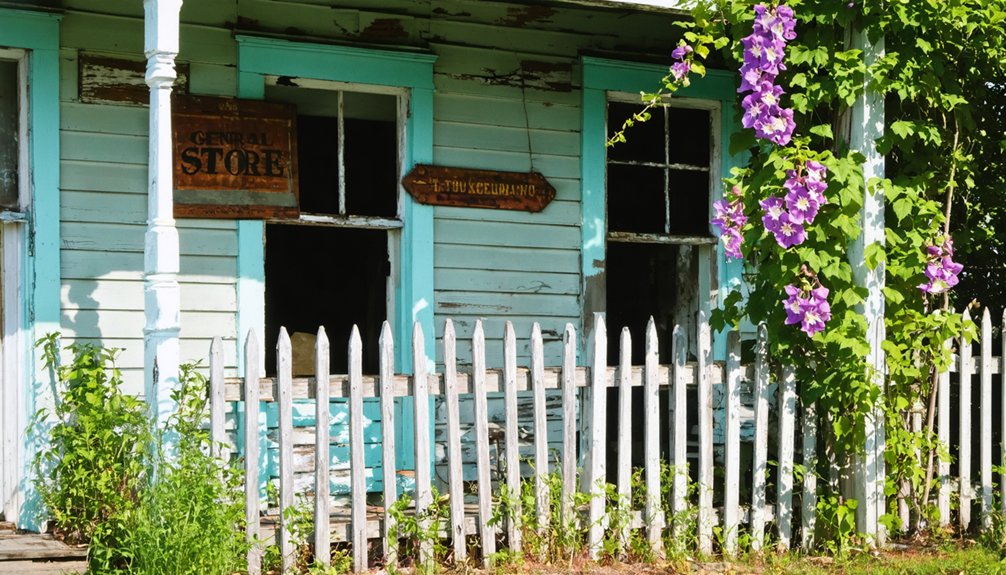
Though the railroad has long since vanished, a few historic houses near Beach Highway and Owens Road still stand as quiet evidence that a real community once existed here. You’ll notice the signs of urban decay if you look closely — weathered structures slowly reclaiming their place in the landscape.
Yet they haven’t disappeared entirely, and that matters. Historical preservation isn’t always formal or funded; sometimes it’s simply time moving slowly enough that a few walls survive.
These houses aren’t museum pieces, but they carry the weight of a community that once grew around rail service and then quietly faded when that service ended. Drive through and take a moment to appreciate what remains — it’s more honest than a restored attraction ever could be.
Owens Station Hunting Preserve
Perhaps the clearest sign that Owens Station hasn’t vanished entirely from the map is the Owens Station Hunting Preserve, which carries the settlement’s name forward even as the physical town has nearly disappeared. When you visit, you’ll find a landscape shaped by layers of history.
- Open fields and wooded corridors teeming with local wildlife, from white-tailed deer to migratory birds.
- Remnants of historic architecture scattered along the preserve’s edges, quietly anchoring the past to the present.
- Unobstructed rural skies that reward anyone craving space and solitude.
The preserve lets you experience Owens Station beyond just reading a roadside sign. You’re stepping into land that once supported a railroad community, and now supports a completely different kind of life — wild, unhurried, and free.
No Tracks Survive Today
Beyond the preserve’s boundaries, the physical evidence of Owens Station thins out fast. You won’t find a single rail or tie remaining from the Queen Anne’s Railroad. The tracks are gone, reclaimed by landowners after the line shut down, leaving no steel corridors to trace through the countryside.
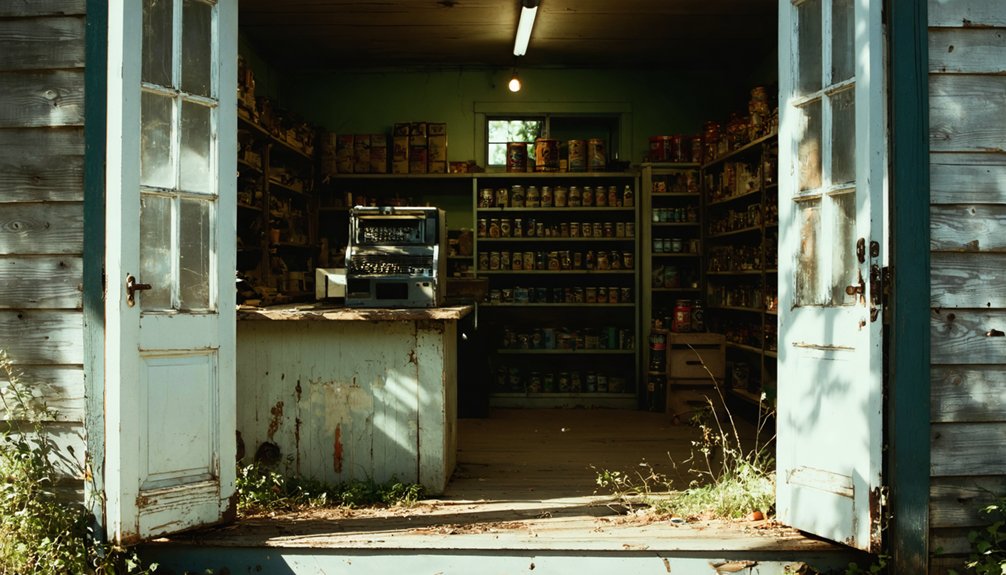
What you’ll find are scattered abandoned structures and a handful of aging houses that quietly mark where a living community once stood. Landmarks preservation hasn’t formally intervened here, so what survives does so largely on its own.
The road signs bearing “Owens” carry the settlement’s name forward more reliably than any building. Drive slowly through the intersection of Beach Highway and Owens Road, and you’re fundamentally standing in the middle of what used to be a functioning railroad town.
How Do You Find Owens Station on Delaware Route 16?
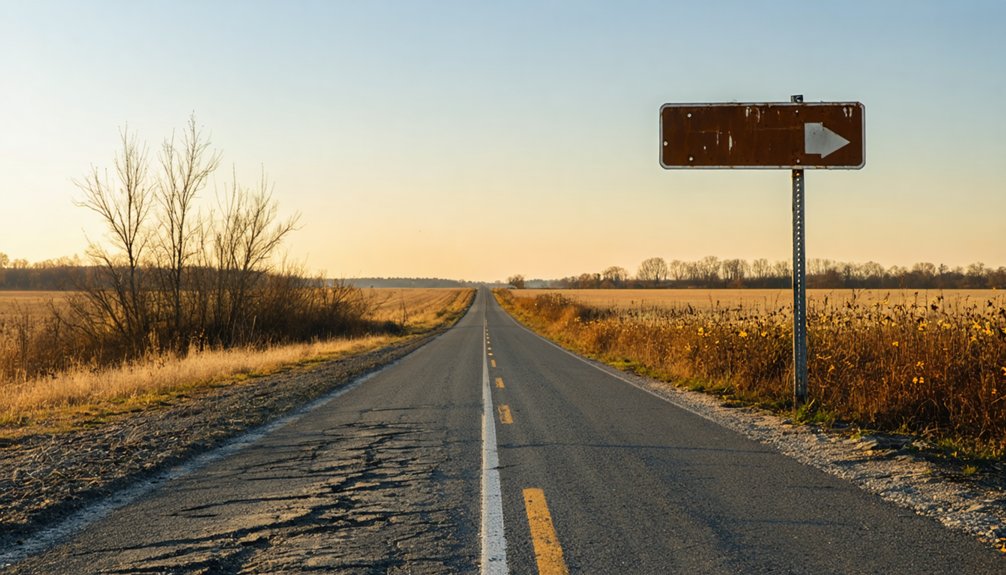
Finding Owens Station is straightforward once you know where to look: head east out of Greenwood on Delaware Route 16 until you reach the intersection of Beach Highway and Owens Road. That crossroads is your landmark.
Once you arrive, here’s what you’ll notice:
- A quiet rural intersection where weathered houses hint at the community that once bustled with railroad traffic and local legends.
- Flat Delaware farmland stretching in every direction, replacing what was once a small but active rail stop.
- Signage referencing the Owens Station Hunting Preserve, keeping the name alive despite the urban legends suggesting nothing remains.
You don’t need a map app to navigate this spot — just Route 16, sharp eyes, and an appreciation for places that survived through memory rather than momentum.
What Can You Actually See When You Arrive at Owens?
When you pull up to the intersection of Beach Highway and Owens Road, you’ll find a quiet rural scene that offers more atmosphere than spectacle. A handful of historic houses still stand near the roadside, survivors of a community that once hummed with railroad activity.
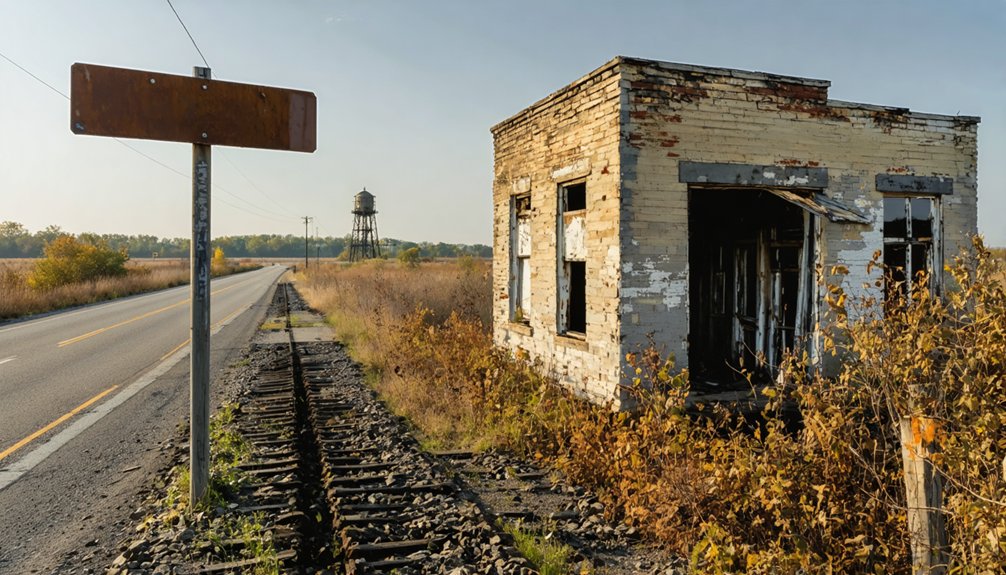
No tracks remain, no depot, no platform — just open Delaware countryside carrying the weight of local legends about a town that vanished through quiet obsolescence rather than dramatic collapse.
Don’t expect urban legends of fire or disaster here. Owens Station’s story is subtler — a place that simply faded when the Queen Anne’s Railroad stopped running.
The Owens Station Hunting Preserve keeps the name alive nearby. Pull over, look around, and let the stillness tell you what 62 people once called home.
When Is the Best Time to Visit This Delaware Ghost Town?
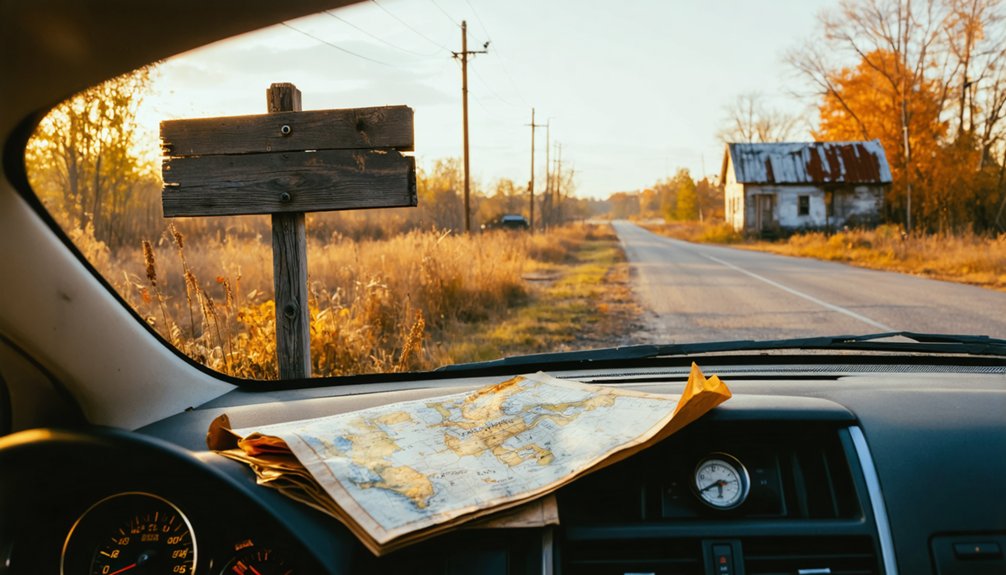
Autumn earns its reputation as the best season to visit Owens Station, and it’s easy to see why. The mild temperatures free you to explore without humidity slowing you down. Delaware’s fall foliage adds atmosphere to a site already rich with local legends and whispered urban legends about the railroad’s forgotten dead.
Autumn is the undisputed best season to visit Owens Station, where cool air and fall foliage make history hauntingly alive.
Picture your visit unfolding like this:
- Golden light filters through aging trees lining Beach Highway, casting long shadows across the old house foundations.
- Cool air carries the quiet that only abandoned places produce, making history feel immediate.
- Empty fields stretch where rail platforms once stood, letting your imagination reconstruct the 1925 community of 62 residents.
Winter visits remain manageable thanks to mild conditions, but autumn simply delivers the most rewarding ghost town experience.
Which Delaware Ghost Towns Near Owens Station Are Worth the Detour?
Delaware keeps its ghost towns close together, so once you’ve stopped at Owens Station, you’re already positioned to chase a few more along central Sussex County‘s back roads.
Greenwood sits just west on Route 16, carrying its own layers of urban decay visible in weathered storefronts and quiet streets that once hummed with railroad commerce.
Ellendale, the other anchor town on the old Queen Anne’s Railroad line, rewards a short drive with glimpses of historic preservation efforts alongside obvious decline.
Both towns share Owens Station’s story of rail-dependent growth followed by slow fade.
You’re not hunting dramatic ruins here — Delaware’s ghost towns reveal themselves subtly, through place names, abandoned lots, and stubborn old structures.
That quiet honesty makes the detour genuinely worth your time.
How Do You Make the Most of an Owens Station Road Trip?
Planning your Owens Station road trip works best if you treat the site as a starting point rather than a destination. Its historical significance lies in what’s absent—no tracks, no depot, just quiet roads tracing a community transformation from railroad hub to rural memory. Autumn offers the sharpest visibility and most comfortable temperatures for exploring.
Owens Station rewards curiosity over spectacle—a place where absence tells the story better than any surviving landmark.
- Pull over near Beach Highway and Owens Road, where surviving historic houses anchor the former town’s footprint.
- Photograph the road signs—they’re the clearest evidence that Owens Station’s name outlasted its buildings.
- Drive Delaware Route 16 toward Greenwood, mentally tracing the Queen Anne’s Railroad corridor that once gave this place purpose.
Keep your expectations open, and the site rewards curiosity far more than spectacle.
Frequently Asked Questions
Was Owens Station Ever Officially Incorporated as a Delaware Town?
“Here today, gone tomorrow” — Owens Station never earned official incorporation. You’ll find its historical significance lives in local legends, old roads, and a few remaining houses, proving freedom thrives beyond bureaucratic boundaries.
Are There Any Guided Tours Available at the Owens Station Site?
You won’t find guided tours here, but you’re free to explore independently! Drive past the historic architecture lining Beach Highway, soak in local legends, and uncover Owens Station’s railroad past entirely on your own adventurous terms.
Is the Owens Station Hunting Preserve Open to the Public?
Details about whether the Owens Station Hunting Preserve follows public wildlife conservation access policies aren’t confirmed. Like many private preserves governed by strict hunting regulations, you’d want to contact them directly before planning your visit.
Did the Queen Anne’s Railroad Serve Any Other Delaware Ghost Towns?
The knowledge doesn’t confirm other Delaware ghost towns on the Queen Anne’s Railroad, but you can explore its historic train routes connecting Ellendale and Greenwood, uncovering ghost town landmarks like Owens Station scattered across Sussex County’s forgotten rail corridor.
Are There Any Historical Markers or Signs at Owens Station Today?
From a peak of 62 residents in 1925, almost nothing remains. You won’t find formal historical preservation efforts or visitor amenities like markers or signs — but the name “Owens Station Hunting Preserve” quietly keeps the memory alive.
References
- https://en.wikipedia.org/wiki/Owens_Station
- https://www.youtube.com/watch?v=ex8Hld_imPU
- https://kids.kiddle.co/Owens_Station
- https://nvtami.com/2024/04/26/owens-valley-ghost-towns/
- https://33travels.com/ghost-towns-abandoned-places-delaware/
- https://www.ghosttowns.com/states/de/owensstation.html
- https://usabynumbers.com/ghost-towns-in-delaware/
- https://www.wikiwand.com/en/articles/List_of_ghost_towns_in_Delaware