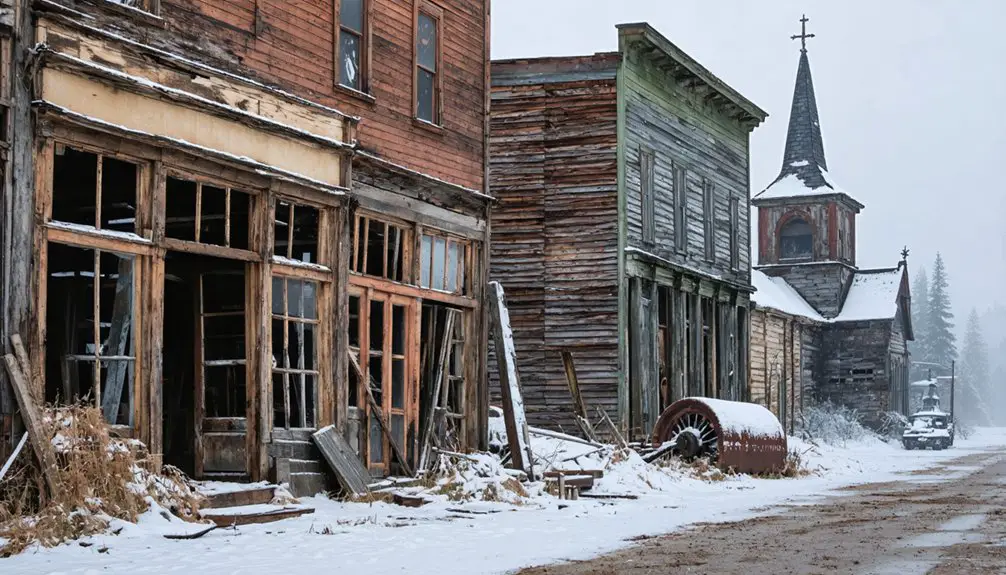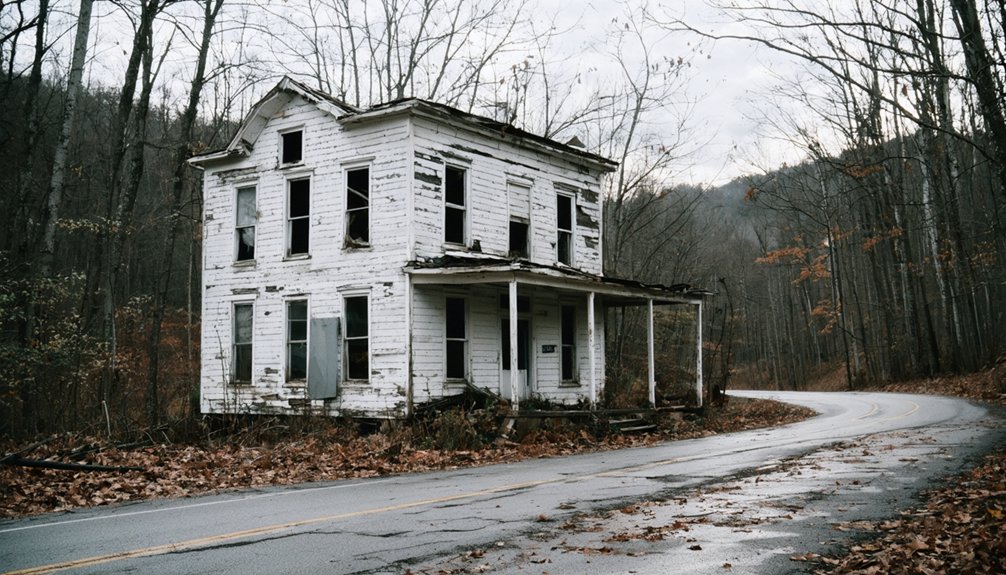
Planning a ghost town road trip to Gaymont, West Virginia means stepping into Fayette County’s forgotten coal history, where 125 coking ovens once burned and a full community thrived before disappearing by the 1930s. You’ll navigate back roads to crumbling foundations, nature-reclaimed ruins, and eerie silence where miners once lived. Pair it with nearby ghost towns like Kaymoor and Stone Cliff for a full day of exploration. There’s far more to uncover before you go.
Key Takeaways
- Gaymont, located in Fayette County, West Virginia, is an abandoned coal mining town accessible via back roads at approximately 38.11472°N, 81.09639°W.
- Late spring or early fall offers the best visiting conditions, with mild weather and clearer sightlines through the overgrown landscape.
- Pack sturdy boots, water, a first-aid kit, offline maps, and bug spray, as no amenities or visitor infrastructure exist on-site.
- Combine Gaymont with nearby ghost towns Kaymoor and Stone Cliff for an immersive Fayette County coal history road trip experience.
- Respect the site by leaving all ruins and artifacts untouched, walking carefully among crumbling foundations and remnants of coke ovens.
What Is Gaymont, West Virginia?
Tucked into the hills of Fayette County, West Virginia, Gaymont is a ghost town that once thrived as a coal mining community along the New River Gorge region. You’ll find it listed under the alternate name Camont, completely deserted and stripped down to ruins and foundations.
At its peak, Gaymont supported a full coal camp operation, complete with roughly 32 houses and 125 coking ovens by 1906. Today, only abandoned structures and local legends remain, hinting at the lives once built around the mines.
The Great Depression, devastating fires, and depleted coal seams collectively silenced the town by the 1930s. If you crave open-road exploration and forgotten history, Gaymont offers a raw, unfiltered glimpse into West Virginia’s coal country past.
How Gaymont Went From Coal Boom to Ghost Town
Coal mining kicked off in Gaymont in 1878, and by 1906 the town had scaled up to an impressive 125 coking ovens alongside roughly 32 company-built houses.
That boom didn’t last — the Great Depression, repeated fires, and dwindling coal reserves hit Gaymont hard throughout the 1930s.
Today, you’ll find nothing but ruins and foundations where a once-thriving mining community stood.
Coal Mining Begins
Mining in Gaymont took root in 1878, when coal operators first tapped into the rich seams beneath Fayette County’s rugged hills. Advances in mining technology drove rapid expansion, allowing crews to extract coal at a scale that quickly transformed the landscape.
You can almost picture it — raw wilderness giving way to tipples, rail lines, and the clatter of industrial machinery. By 1906, the operation had grown bold enough to support 125 coking ovens burning day and night.
Alongside that industrial muscle, town architecture took shape in the form of roughly 32 company-built houses, creating a tight-knit settlement carved from the hillsides. It was a hard, purposeful place — built not for permanence, but for production.
That ambition, unchecked, would eventually set the stage for Gaymont’s dramatic collapse.
Peak Production Era
At its height, Gaymont hummed with industrial purpose — 125 coking ovens burning through the night, rail lines threading the hollow, and company houses packed with miners and their families.
By 1906, roughly 32 homes supported a workforce extracting coal at full throttle, feeding regional industry with relentless energy.
You can almost feel the weight of that era walking the site today. Local legends describe the glow of those ovens visible for miles, a man-made sunrise that never quite set.
That vivid past makes preservation efforts feel urgent — without them, even the ruins of foundations risk disappearing entirely.
Gaymont’s peak production era wasn’t just economic output; it was a self-contained world built on coal, community, and controlled ambition — all of it now quietly waiting to be rediscovered.
Decline And Abandonment
What the coal boom built, the Great Depression began to dismantle. By the 1930s, Gaymont’s economy had buckled under the weight of coal depletion, financial collapse, and devastating fires. Workers abandoned their company houses, the ovens went cold, and the town quietly surrendered to time.
Today, no modern developments occupy the site — just foundations and ruins where 32 homes and 125 coking ovens once defined daily life. You’ll hear urban legends whispered about forgotten mining communities like this one, stories of sudden departure and lives left behind.
Gaymont fits that haunted narrative perfectly.
For travelers craving genuine freedom from over-curated destinations, Gaymont delivers raw, unfiltered history — a place where the silence speaks louder than any museum exhibit ever could.
What You’ll Actually See at Gaymont Today
When you arrive at Gaymont, you won’t find standing structures or preserved buildings — just scattered ruins and crumbling foundations reclaimed by the surrounding landscape.
You’ll walk ground that once supported around 32 miners’ homes and 125 coking ovens, with only broken remnants hinting at the community that once thrived here.
The site is completely deserted, so you’ll need to bring your imagination along with your map.
Ruins And Foundations
Though little remains of Gaymont’s once-bustling coal camp, you’ll still find scattered ruins and crumbling foundations that hint at the community’s former life. These abandoned structures stand as silent markers of the roughly 32 homes and 125 coking ovens that once defined this company town.
Walking among the foundations, you’ll piece together the layout of a community that thrived from 1878 until the Great Depression and subsequent fires brought everything down.
Local legends surrounding Gaymont’s rapid collapse add an eerie layer to your exploration. There’s no guided tour, no interpretive signs — just raw, unfiltered history beneath your feet.
That freedom to wander and interpret the landscape yourself makes Gaymont a compelling stop for anyone serious about West Virginia’s coal-mining past.
Deserted Site Conditions
Arriving at Gaymont today, you’ll find a landscape that’s returned almost entirely to nature. The forest has quietly reclaimed what coal once built, leaving scattered foundation ruins as the only evidence of a working community.
Don’t expect modern developments like visitor centers, marked trails, or cultural festivals celebrating the town’s heritage — Gaymont offers none of that. What you get instead is raw, unfiltered silence and the freedom to explore on your own terms.
Crumbling stonework emerges from undergrowth where houses and coke ovens once stood. The site remains completely uninhabited, with no services, signage, or maintained access. That absence is precisely the point.
You’re stepping into a forgotten chapter of West Virginia’s coal history, reading it directly from the earth itself.
When Is the Best Time to Visit Gaymont?
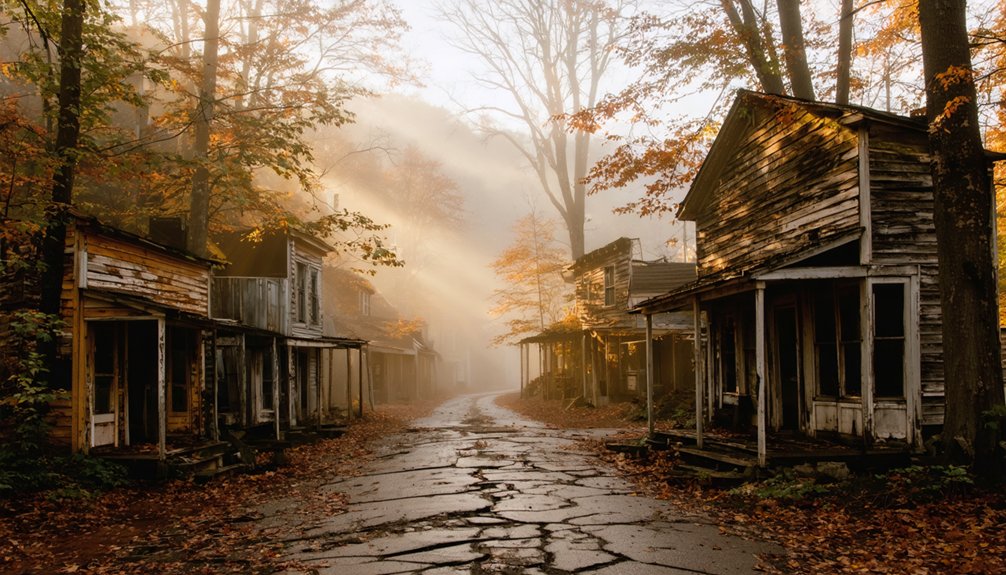
Since Gaymont sits in the rugged hollows of Fayette County with no maintained trails or facilities, the season you choose can make or break your visit. Late spring and early fall deliver the best seasonal weather — mild temperatures, manageable undergrowth, and clear sightlines to the ruins and foundations scattered across the site.
Summer brings thick vegetation that swallows what little remains, making exploration frustrating. Winter mud and ice create genuine hazards on unimproved terrain. If local legends of the town’s fiery decline and Depression-era collapse intrigue you, autumn visits hit differently — the fading light and bare trees sharpen the atmosphere considerably.
Arrive early in the day regardless of season. You’re orienteering a completely deserted, uninhabited site with no services, so daylight is your most valuable resource.
How to Get to Gaymont in Fayette County
Gaymont sits at approximately 38.11472°N, 81.09639°W in Fayette County, tucking itself into the same rugged New River Gorge country as fellow ghost towns Kaymoor and Stone Cliff — so if you’re already plotting a southern West Virginia coal-town circuit, you’re in the right territory.
Fayette County’s back roads reward explorers who come prepared with offline maps, since cell coverage thins out fast in these hollows. Local legends about the old coke ovens and vanished miners circulate among longtime residents who can sometimes point you toward the foundations.
No formal preservation efforts exist here, meaning the site remains raw and unmanaged — so respect what’s left. Arrive with sturdy footwear, daylight hours to spare, and a willingness to navigate terrain that hasn’t softened for tourists.
What to Bring on a Gaymont Ghost Town Visit

Once you’ve sorted out how to reach Gaymont, packing smart becomes your next real task — because this site offers no amenities, no rangers, and no safety nets. You’re walking into a deserted coal camp where foundations crumble and silence runs deep.
Bring sturdy boots for uneven terrain, plenty of water, and a first-aid kit. Pack a camera to document the ruins and any historical artifacts you spot — but leave everything exactly where you find it. A notebook helps you record local legends you might research before arriving, giving crumbling walls real context.
Carry a downloaded offline map since cell service is unreliable. Dress in layers, bring bug spray, and tell someone your plans. Freedom out here demands personal responsibility.
Ghost Towns Near Gaymont to Add to Your Route
Fayette County holds more ghost towns than most travelers realize, so you’d be foolish to stop at Gaymont alone. Kaymoor sits nearby within the New River Gorge and rewards curious visitors with dramatic ruins, old mine structures, and visible historical artifacts scattered across its wooded terrain. Preservation efforts there have kept key remnants accessible, making it one of the region’s most rewarding stops.
Stone Cliff offers another compelling chapter in southern West Virginia’s coal story, its quiet landscape carrying the weight of a community that once thrived and vanished. Linking these three sites into a single route creates a genuinely immersive experience.
You’ll trace the full arc of the coal boom’s rise and collapse across a tight geographic corridor worth every mile you drive.
The Best Fayette County Ghost Town Road Trip Itinerary
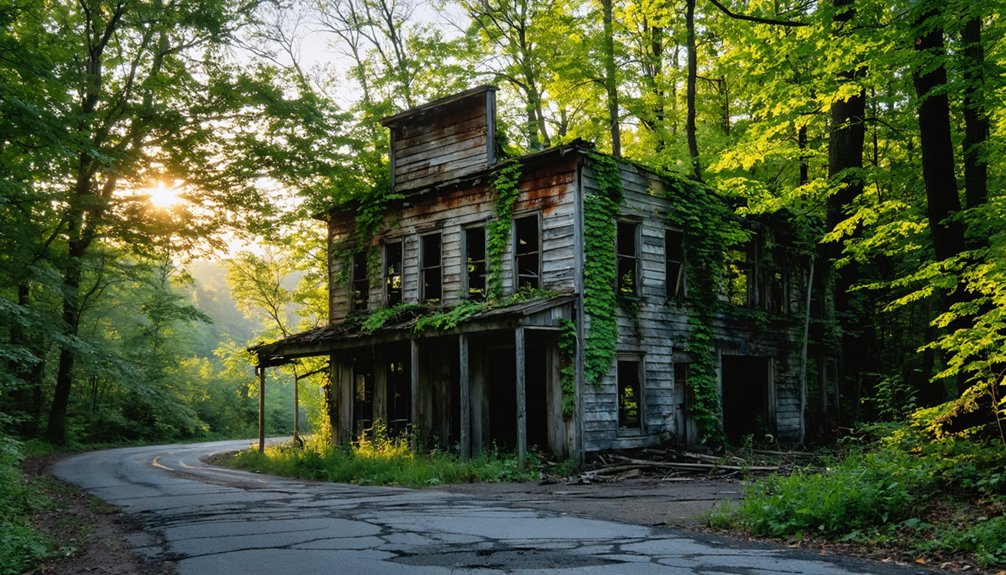
Building a tight itinerary through Fayette County’s ghost towns means starting early and moving deliberately. Hit Kaymoor first, where preservation efforts have kept trail access intact and the coke ovens remain hauntingly visible.
By midday, push toward Stone Cliff, a quieter stop where the silence speaks louder than any historical marker.
Save Gaymont for late afternoon, when low light sharpens the foundation ruins and rewards patient explorers.
Urban legends trail this area — miners’ ghosts, lantern lights in the hollow — so arrive with curiosity rather than skepticism.
Carry water, wear sturdy boots, and respect what remains. These sites aren’t curated attractions; they’re raw, unfiltered history.
Move through them deliberately, document what you find, and leave everything exactly as you discovered it.
Frequently Asked Questions
Is Gaymont Also Known by Any Other Name?
You’ll find Gaymont also called Camont—an alternate name steeped in local legends and historical preservation efforts. Embracing both names connects you to this forgotten coal town’s layered, evocative past, where freedom-seekers uncover raw, unfiltered Appalachian history.
How Many Ghost Towns Exist Across West Virginia in Total?
Like scattered embers of a forgotten fire, you’ll find roughly 69 ghost towns dotting West Virginia’s landscape. These sites fuel historical preservation efforts and tourism development, inviting you to freely explore their haunting, coal-dusted stories.
How Many Coking Ovens Did Gaymont Have at Its Peak?
At its peak, you’d have witnessed 125 coking ovens blazing across Gaymont’s coal mining complex. These remarkable remnants of historic preservation tell a powerful story of industrial freedom, ambition, and the raw energy that once defined this West Virginia community.
Are There Any Entrance Fees to Visit Gaymont?
You won’t pay any entrance fees to explore Gaymont’s haunting historical preservation site. As one of West Virginia’s raw, unpolished tourist attractions, you’re free to roam its crumbling foundations and breathe in untamed Appalachian history.
What Are the GPS Coordinates for Finding Gaymont?
You’ll find this abandoned mining site at 38.11472°N, 81.09639°W. Plug these coordinates in, and you’re steering directly toward one of West Virginia’s most hauntingly beautiful historic landmarks, waiting to be freely explored.
References
- https://en.wikipedia.org/wiki/List_of_ghost_towns_in_West_Virginia
- https://en.wikipedia.org/wiki/Gaymont
- https://kids.kiddle.co/List_of_ghost_towns_in_West_Virginia
- https://en.wikipedia.org/wiki/Westerly
- https://www.wvgazettemail.com/news/marion-county-town-of-hammond-disappeared-long-ago/article_97ef2e23-eb5f-5f90-a0ae-963422235a2c.html
- https://en.wikipedia.org/wiki/List_of_ghost_towns_in_Virginia
- https://wvtourism.com/5-wv-ghost-towns/
- https://wvexplorer.com/ghost-towns-in-southern-west-virginia/
- http://www.maps.eshikshya.org/kiwix/content/wikipedia_en_all_maxi_2023-05/A/Gaymont