Planning a ghost town road trip to Owensville, California starts with using Bishop as your base and heading north on U.S. Route 6. You’ll find California Historical Landmark #230 marking the site where Owens Valley’s first permanent white settlement stood — and vanished — all within a decade. There are no facilities, so pack water, snacks, and a charged phone. Nearby ghost towns like Cerro Gordo and Chloride City make the journey even more rewarding when you know what to look for.
Key Takeaways
- Owensville, California Historical Landmark #230, sits along U.S. Route 6 north of Bishop in Inyo County’s Owens Valley.
- No standing structures remain, but a roadside historical marker commemorates the site of the earliest permanent Owens Valley settlement.
- Use Bishop as your base camp to explore Owensville, Laws Railroad Museum, and nearby ghost towns along U.S. Route 6.
- Nearby ghost towns like Cerro Gordo, Chloride City, Bend City, and San Carlos offer additional stops for a fuller road trip experience.
- Pack water, snacks, layered clothing, and a charged phone, as Owensville offers no facilities, services, or formal visitor amenities.
What Was Owensville and Why Does It Matter?
Tucked along U.S. Route 6 north of Bishop, Owensville is one of California’s most overlooked ghost towns. Its settlement origins trace back to August 1861, when A. Van Fleet and three companions drove cattle into Owens Valley and built a sod-and-stone cabin near the Owens River’s big bend.
In August 1861, A. Van Fleet and three companions built Owensville — now one of California’s most overlooked ghost towns.
By late 1862, it had grown into the northern valley’s largest settlement, fueled by mining speculation in the White Mountains. But when the expected riches never came, the town collapsed fast.
By 1871, the last resident had gone, and locals floated historical artifacts — salvaged lumber — downstream to Independence, Lone Pine, and Big Pine.
Today, California Historical Landmark #230 marks the site, honoring it as the “First Permanent White Habitation in Owens Valley.” It’s a stop worth making.
How Owensville Rose and Fell in Less Than a Decade
Few ghost towns burned bright and faded as quickly as Owensville. Its mining history unfolded fast, driven by speculation in the White Mountains that pulled settlers into the northern Owens Valley through the early 1860s.
Here’s what shaped its rapid rise and collapse:
- By late 1862, it had become the largest settlement in northern Owens Valley.
- Mining speculation fueled growth, but the expected mineral riches never arrived.
- Water diversion and environmental pressures accelerated regional decline.
- By 1871, the last resident had left, and buildings were dismantled for lumber.
You’re looking at a town that fundamentally lived and died within a single decade. That compressed timeline makes Owensville one of the most striking examples of boom-and-bust settlement in California’s Eastern Sierra.
Where Owensville Is and How to Get There
You’ll find Owensville’s historic site in Inyo County, California, positioned north of Bishop along U.S. Route 6.
It is located west of where the town of Laws would later develop.
The site sits near the big bend of the Owens River at the northern end of the Owens Valley, placing it within easy reach of one of Eastern California’s most scenic and historically rich corridors.
If you’re driving in from Bishop, you’re already on the right road — just head north and watch for the landmark area along the route.
Owensville’s Location In California
Owensville sits in Inyo County, California, along U.S. Route 6, north of Bishop and west of the Laws townsite. This remote stretch of the Eastern Sierra puts you close to historical artifacts and local legends buried beneath the high desert landscape.
Here’s what anchors this location on your road trip radar:
- U.S. Route 6 runs directly past the site, making access straightforward from Bishop
- Bishop serves as your nearest base for fuel, lodging, and supplies
- Laws lies just east, adding another historic stop to your route
- Owens River once defined the settlement’s position at the valley’s northern end
You’re not chasing a developed attraction here — you’re chasing raw history in open country.
Reaching Owensville By Road
Getting to Owensville is straightforward once you’re on U.S. Route 6, heading north of Bishop. The site sits west of Laws, tucked along one of the Owens Valley‘s most historically traveled transportation routes.
This corridor carried miners, settlers, and supply wagons during the region’s mid-1800s mining history, and today it remains an open, accessible stretch of Eastern Sierra highway.
From Bishop, you’ll drive north on U.S. Route 6 and watch the valley unfold around you. There’s no dramatic entrance or signpost marking Owensville as a destination — it’s a ghost town site, not a park.
Come prepared with a map, a full tank, and a sense of adventure. The freedom of the open road here is part of the experience.
What Survives at the Owensville Site Today?
When you arrive at the Owensville site today, don’t expect standing structures — the last residents dismantled every building by 1871, floating the lumber downstream to towns like Independence and Big Pine.
What you’ll find is California Historical Landmark #230, a marker that anchors the site’s identity as the first permanent white habitation in Owens Valley.
You’ll spot the location along U.S. Route 6 north of Bishop, making it an easy stop you can check off without leaving the main road.
No Standing Structures Remain
Unlike ghost towns with preserved storefronts or crumbling facades, Owensville leaves almost nothing for your eyes to land on. The last resident walked away by 1871, and locals dismantled every structure shortly after. That lumber didn’t disappear — it floated downstream, shaping the community impact of towns like Independence, Lone Pine, and Big Pine.
What historical preservation looks like here is mostly absence. Still, the site quietly holds its story:
- No buildings, foundations, or walls remain standing
- California Historical Landmark #230 marks the location
- Salvaged lumber physically built neighboring communities downstream
- The land sits along U.S. Route 6, north of Bishop
You’re standing on significant ground without visual proof — and that contrast makes Owensville’s silence genuinely powerful.
Landmark Marker Still Present
What actually survives at Owensville comes down to a single marker — California Historical Landmark #230, planted at a site where buildings, foundations, and human presence have otherwise vanished completely.
That marker carries real landmark significance, recognizing Owensville as the “First Permanent White Habitation in Owens Valley” and connecting you directly to 1861, when Van Fleet and his companions first drove cattle into this remote corridor.
Historical preservation here isn’t a museum or a guided tour — it’s a roadside plaque standing along U.S. Route 6 north of Bishop. You’ll read the designation text, absorb the context, and move on.
But don’t dismiss that simplicity. The marker anchors an otherwise invisible history to a specific patch of California ground, giving you something tangible to stand beside and genuinely understand.
Site Along Route 6
Standing beside that marker, you’ll notice what the landscape itself tells you — there’s nothing left of Owensville beyond the sign and the flat, open ground stretching along U.S. Route 6 north of Bishop. Ghost town preservation here means protecting memory, not structures. The buildings were dismantled long ago, their lumber floated downstream to Independence, Lone Pine, and Big Pine.
What you’re actually standing inside is pure historical significance — the earliest permanent settler footprint in Owens Valley. The site rewards visitors who appreciate open horizons over restored facades.
What the Owensville site offers today:
- Unobstructed views of the northern Owens Valley corridor
- Proximity to Laws and Bishop for context-building stops
- A quiet, uncrowded experience off U.S. Route 6
- Direct connection to California Historical Landmark #230
Which Ghost Towns Near Owensville Are Worth the Detour?
Owensville sits at the heart of one of California’s richest ghost-town corridors, so you won’t have to travel far to find more abandoned history worth chasing. Bend City and San Carlos offer compelling mining history along the Owens River.
While Cerro Gordo delivers dramatic ghost town preservation high in the Inyo Mountains above Keeler. Chloride City rewards adventurous drivers willing to tackle rougher terrain for striking desert ruins.
If you want preserved structures and guided access, Bodie State Historic Park stands as the region’s crown jewel, frozen in time with remarkable authenticity. Pairing these stops with Owensville creates a full Owens Valley circuit that traces the valley’s cycles of boom, speculation, and abandonment across a surprisingly compact stretch of Eastern Sierra landscape.
How to Plan an Owens Valley Ghost Town Road Trip From Owensville
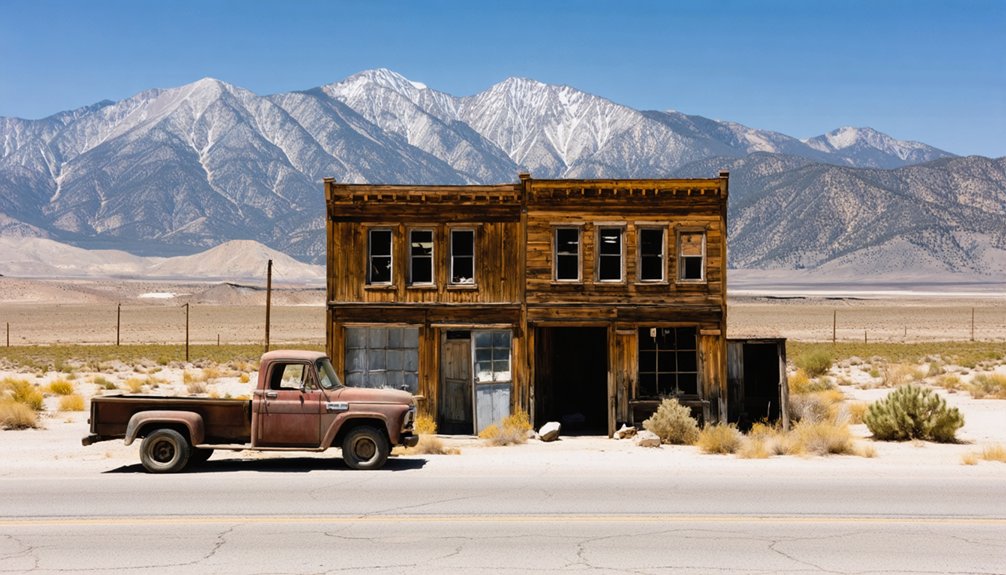
Planning a ghost town road trip through Owens Valley starts with anchoring your route around Bishop, which puts you within easy reach of Owensville, Laws, and a string of abandoned settlements stretching north and south along U.S. Route 6.
Bishop is your base camp — gateway to ghost towns, rail relics, and forgotten settlements along Route 6.
From there, you can explore mining history and ghost town preservation sites at your own pace.
Build your itinerary around these key stops:
- Owensville – California Historical Landmark #230, rich in early settler history
- Laws Railroad Museum – preserved rail heritage just outside Bishop
- Bodie State Historic Park – one of California’s best ghost town preservation sites
- Cerro Gordo – dramatic mining history high above Owens Lake
Pair each stop with research beforehand, since most sites offer no services.
Freedom here means self-sufficiency and curiosity.
What to Know Before You Visit Owensville and Nearby Sites
Before you hit the road, knowing what to expect at Owensville and its neighboring sites will save you frustration and sharpen the experience. Owensville isn’t a developed tourist stop — there are no services, restrooms, or marked facilities. You’re visiting a historic marker along U.S. Route 6 north of Bishop, so pack water, snacks, and a charged phone.
Weather conditions in the Owens Valley shift fast, especially if you’re moving between valley floors and higher elevations near the White Mountains. Layers are smart. Watch for local wildlife, including rattlesnakes near rocky terrain and open desert brush. Respect the landscape — this site carries California Historical Landmark status.
Combining your stop with Bishop, Laws, and Bodie maximizes your time and keeps the broader ghost-town story connected.
Frequently Asked Questions
Did Owensville Ever Have a School or Church During Its Existence?
The available ghost town history doesn’t confirm a school or church in Owensville. You’ll find the abandoned structures that existed were dismantled quickly, with lumber floated downstream before the town completely vanished by 1871.
What Was the Population of Owensville at Its Peak?
Like a spark that flared and faded fast, Owensville’s exact peak population isn’t recorded in available ghost town history. You won’t find firm numbers, but it’s worth exploring tourist attractions nearby to piece together its story.
Is Camping Allowed Near the Owensville Historical Landmark Site?
The knowledge doesn’t confirm camping regulations near Owensville’s historical landmark. You’ll want to check with local Inyo County authorities to make certain you’re respecting historical preservation rules before setting up camp near this protected site.
What Native American Groups Lived in the Owens Valley Before Owensville?
The Paiute people called Owens Valley home long before settlers arrived. You’ll find their rich Native American tribes presence woven deeply into Owens Valley history, shaping a land they’d freely inhabited for thousands of years.
Are There Guided Tours Available at the Owensville Landmark Site?
Like a blank canvas, Owensville offers raw exploration — but you won’t find guided tour options or visitor center amenities here. You’re free to roam this historic landmark independently, making your own discoveries along U.S. Route 6.
References
- https://en.wikipedia.org/wiki/List_of_ghost_towns_in_California
- https://nvtami.com/2024/04/26/owens-valley-ghost-towns/
- https://www.monocounty.org/places-to-go/bodie/
- https://www.facebook.com/VisitCalifornia/videos/calico-ghost-town/985648840586340/
- https://en.wikipedia.org/wiki/Owensville
- https://www.lawsmuseum.org/long-gone-river-towns-owens-valley
- https://kids.kiddle.co/Owensville
- https://www.tripadvisor.com/Attraction_Review-g28926-d126947-Reviews-Owensville-California.html
- https://www.npshistory.com/publications/manz/hrs/chap6.htm