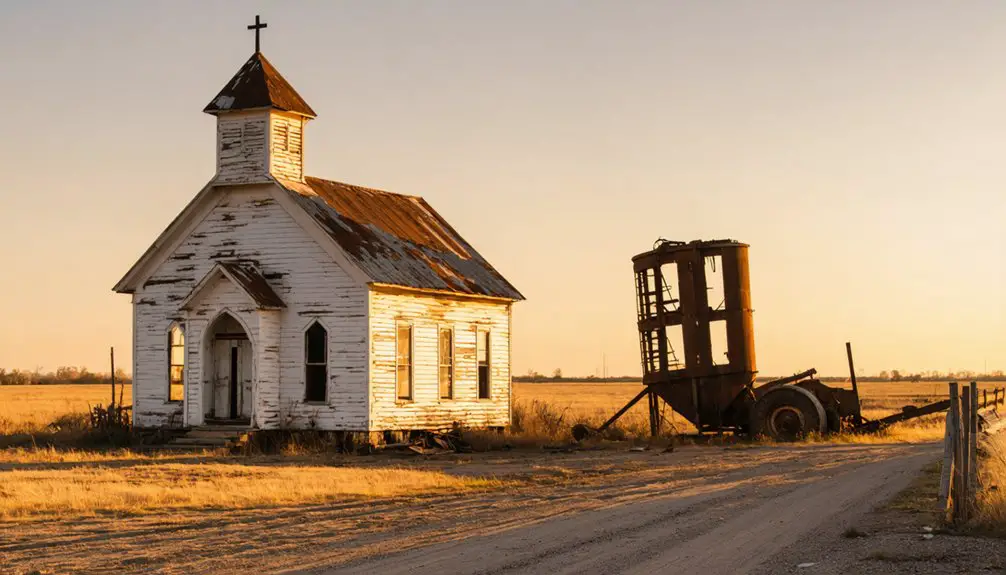
Planning a ghost town road trip to Piney, Oklahoma means stepping into one of the state’s most quietly significant historic sites. Tucked in Adair County’s hilly terrain, Piney served as the Cherokee Nation–West’s capital from 1824 to 1828 before fading into a peaceful rural crossroads. You won’t find dramatic ruins here, but you’ll find layers of Cherokee heritage, frontier history, and local legend waiting to be uncovered. Stick around, and there’s much more to discover.
Key Takeaways
- Piney, located in Adair County, is best accessed from Stilwell via scenic rural roads using offline maps due to unreliable cell service.
- The site offers understated landmarks, including Duncan O’Bryant’s grave and a converted school building, rather than dramatic ruins.
- Piney served as the Cherokee Nation–West capital from 1824–1828, making it historically significant for Cherokee heritage exploration.
- Nearby towns like Bunch, Grayson, and Westville provide additional historic stops to enrich your road trip itinerary.
- Pack sturdy shoes, water, sun protection, a camera, and a notebook to fully engage with this quiet, place-based destination.
What Made Piney, Oklahoma a Ghost Town?
Once a thriving Cherokee head town and informal capital of the Cherokee Nation–West, Piney didn’t fade overnight—it unraveled across two centuries of shifting borders, dwindling populations, and changing times.
Once a proud Cherokee capital, Piney unraveled slowly—undone by shifting borders, shrinking populations, and relentless change.
When Indian Territory’s eastern boundary was redrawn in 1828, placing the line just one mile east of the settlement, many Cherokee residents moved west, and Piney’s political importance evaporated.
The post office closed in 1921, and by 1940, civic life had largely dissolved.
Today, local legends keep the community’s memory alive, and history enthusiasts exploring northeastern Oklahoma can connect with that Cherokee heritage where historical reenactments help bring the Old Settler era into focus.
Piney’s Cherokee Roots and Why This Oklahoma Ghost Town Still Matters
When you visit Piney, you’re stepping onto ground that served as the head town of the Cherokee Nation–West from 1824 to 1828, making it one of the oldest and most historically significant communities in northeastern Oklahoma.
The Old Settler Cherokees built their informal capital here, and early family names like Adairs, Wrights, and Twists echo through the land’s history long after the original settlement faded.
That layered Cherokee legacy is exactly what separates Piney from a typical ghost town and gives your road trip a deeper cultural purpose.
Cherokee Settlement Origins
Before there were ghost towns in Oklahoma, there were settlements—and Piney was one of the first. When you trace Piney’s origins back to 1824, you’re stepping into living Cherokee history. The Old Settler Cherokees established Piney in the Arkansaw Territory as their head town and informal capital of the Cherokee Nation–West, holding that role from 1824 to 1828.
Walking this land means walking where Native traditions shaped early governance and community life. In 1828, the eastern boundary of Indian Territory was drawn roughly one mile east, prompting many Cherokee residents to move further west.
What they left behind were historical artifacts, stories, and a foundation that outlasted the original settlement by more than a century. That’s a legacy worth driving to see.
Ghost Town Cultural Legacy
What the Cherokee left behind at Piney didn’t disappear when the boundary shifted in 1828—it embedded itself into the land, the family names, and the community structures that followed. Names like Adair, Wright, and Twist still echo through local records, connecting you directly to the Old Settler Cherokees who built something lasting here.
That legacy shapes how you should experience Piney today. You’re not just chasing ruins—you’re tracing art preservation through cultural memory, community institutions, and a missionary’s grave that still marks the earth. Local legends tied to early Cherokee life give this ghost town a depth that most abandoned settlements simply don’t carry.
When you visit, you’re walking through living history, and that distinction makes Piney worth every mile.
From Cherokee Capital to Quiet Crossroads: Piney’s Rise and Decline
When you trace Piney’s story back to its roots, you’ll find that it once carried real political weight as the head town and informal capital of the Cherokee Nation–West from 1824 to 1828.
That era ended quickly when Indian Territory’s eastern boundary was redrawn just one mile east of the settlement, pushing most Cherokee residents farther west and stripping Piney of its central role.
The community held on for decades after, even reaching a modest peak around 1916, but the slow drain of people and purpose eventually left it as the quiet, faded crossroads you’ll explore today.
Cherokee Capital Origins
Though it’s easy to overlook a quiet rural crossroads in Adair County, Piney, Oklahoma carries a founding story that reaches back to 1824, when the Old Settler Cherokees established it as the head town of the Cherokee Nation–West in what was then Arkansaw Territory.
For four years, from 1824 to 1828, Piney functioned as the council seat and informal capital of a displaced people rebuilding their governance on new land. That cultural significance runs deep.
When the eastern boundary of Indian Territory was redrawn in 1828, placing the line just one mile east of the settlement, many residents moved west. What remained still carried weight.
Historic preservation efforts recognize Piney as one of northeastern Oklahoma’s oldest communities, rooted in Cherokee resilience and early nation-building in the American frontier West.
Community Decline Timeline
After the boundary shift of 1828 pushed most Cherokee residents westward, Piney entered a long, slow shift from capital to crossroads. The community didn’t vanish overnight. A Baptist missionary, Duncan O’Bryant, stayed behind and died there in 1834, his grave now standing as one of the most tangible markers of historical preservation the site offers.
Piney later rallied around a post office, a general store, a gristmill, and a blacksmith’s shop, reaching its peak population around 1916. By 1921, the post office closed, and the town incorporated until 1940 before fading further.
What remains today lives largely through community storytelling and local Cherokee heritage records. You’re not visiting ruins here — you’re tracing a living memory embedded in the landscape.
What’s Actually Left to See at Piney Today?
Piney won’t dazzle you with rows of crumbling storefronts or dramatic ruins, but that’s not really the point. What you’ll find here rewards curiosity over spectacle.
The grave of Baptist missionary Duncan O’Bryant, who died in 1834, stands as the site’s most tangible touchstone of historical preservation. It connects you directly to the community’s earliest days.
The former school building, later converted into a community space, offers another quiet landmark worth locating.
Beyond the physical markers, Piney carries the weight of local legends tied to Old Settler Cherokee families — the Adairs, Wrights, Twists, and others who shaped this land.
You’re not just passing through a ghost town. You’re standing inside a layered Cherokee and frontier story that most road maps completely ignore.
How to Reach Piney in Adair County
Tucked into the hills of Adair County in northeastern Oklahoma, Piney sits in a region where rural roads reward drivers who pay attention to the landscape rather than just the destination. You’ll want to approach from Stilwell, the county seat, which gives you access to scenic routes that wind through wooded terrain and small farming communities.
From Stilwell, head northeast and watch for county road markers, since Piney doesn’t advertise itself loudly. Before you leave town, grab local cuisine from one of Stilwell’s diners — you won’t find restaurants near the site itself.
A paper map or downloaded offline directions serve you better than relying on cell service, which can drop in these hills. Give yourself extra time to explore without rushing the drive.
Other Adair County Ghost Towns Worth Pairing With Piney
Once you’ve mapped your route through Adair County’s back roads to reach Piney, you’d be shortchanging yourself to stop there. Adair County holds several other forgotten communities worth threading into your itinerary. Bunch, Grayson, and Westville all carry remnants of historical architecture and local legends tied to Cherokee settlement patterns, agricultural booms, and population collapses that mirror Piney’s own story.
Each site adds a different chapter to the same regional narrative. Bunch, for instance, reflects the railroad-era rise and fall common across northeastern Oklahoma. Combining these stops lets you trace a fuller arc of how communities formed, thrived briefly, and quietly disappeared.
Pack your camera, keep your tank full, and treat Adair County as one continuous open-air history lesson rather than a single destination.
What to Pack for a Piney Ghost Town Visit
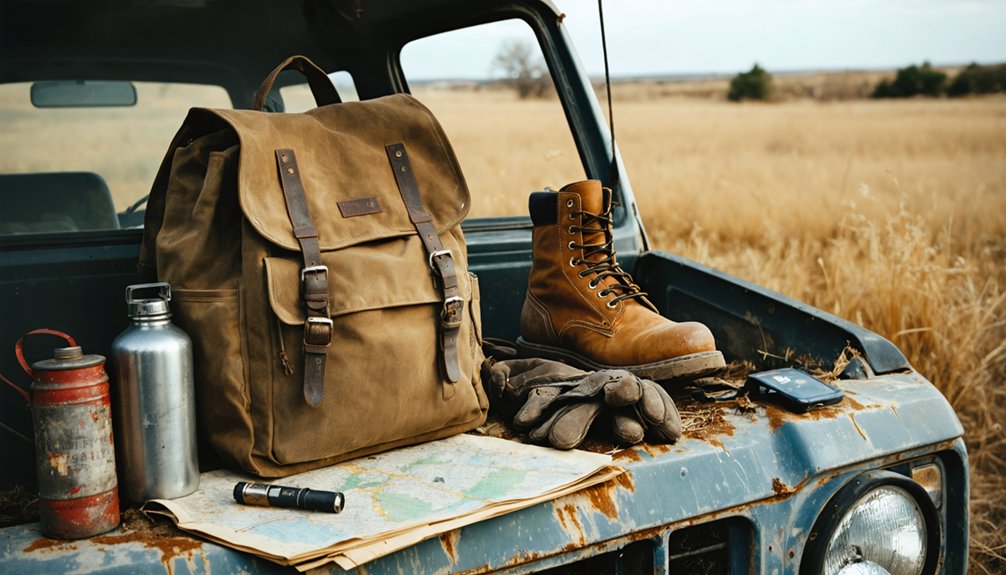
Visiting a quiet heritage site like Piney means you’ll want to pack differently than you’d for a ruin-heavy ghost town crawl. The terrain is rural and understated, so bring sturdy walking shoes, water, and sun protection.
Since you won’t encounter fenced museums or guided tours, carry a small notebook to record your own observations about local legends tied to the Cherokee settlers and early missionary life. A camera helps you document landscape details and any remaining landmarks, including Duncan O’Bryant’s grave.
Avoid disturbing anything that could qualify as historical artifacts, since Cherokee heritage sites deserve respectful engagement.
Download offline maps before you leave, because rural Adair County cell service is unreliable.
Pack light, stay curious, and let the land tell its story on its own terms.
Is Piney Right for Your Oklahoma Road Trip?
Whether you’re chasing Cherokee history or simply want a road trip that goes beyond the obvious tourist stops, Piney delivers a quietly compelling case for itself. It’s not loaded with haunted sites or dramatic urban legends, but its understated depth rewards curious travelers.
Piney fits your itinerary if you:
- Want Cherokee cultural history rooted in the 1824–1828 council era
- Prefer off-the-beaten-path destinations over crowded attractions
- Appreciate small landmarks like Duncan O’Bryant’s historic grave
- Enjoy northeastern Oklahoma’s layered ghost-town landscape
- Value freedom to explore community heritage on your own terms
If you’re expecting extensive ruins, reconsider. But if authentic, place-based storytelling fuels your travels, Piney earns its spot on your Oklahoma road trip map.
Frequently Asked Questions
Is There an Entrance Fee to Visit the Piney Ghost Town Site?
Like open prairie stretching endlessly, you’ll find no entrance fee here — historical preservation keeps Piney freely accessible. Visitor amenities are minimal, so pack your own supplies and explore this Cherokee heritage site at no cost.
Are Pets Allowed When Exploring the Piney Historic Community Area?
No official pet policies are confirmed for Piney, but you’ll want to prioritize pet safety by keeping your furry companion on a leash. Leash requirements help protect both your pet and the historic surroundings you’re freely exploring.
What Is the Best Time of Year to Visit Piney, Oklahoma?
Spring and fall are your sweet spots! You’ll dodge brutal Oklahoma summers while enjoying ideal conditions for historical preservation exploration and wildlife viewing. Cool breezes make wandering Piney’s Cherokee heritage sites invigoratingly comfortable for freedom-seeking adventurers like yourself.
Are There Any Guided Tours Available at the Piney Historic Site?
You won’t find formal guided tours at Piney, but that’s part of the adventure! You’ll explore history preservation independently, discovering Duncan O’Bryant’s grave and community landmarks where tour availability means crafting your own unforgettable Cherokee heritage journey.
Is the Piney Area Accessible for Visitors With Mobility Limitations?
Piney’s rural terrain may challenge mobility, as it’s a historic open-air site without confirmed accessibility features or wheelchair access. Since 80% population decline defines ghost towns, you’ll find wide, open spaces that invite your exploration freely.
References
- https://en.wikipedia.org/wiki/Piney
- https://www.okhistory.org/publications/enc/entry?entry=GH002
- https://en.wikipedia.org/wiki/List_of_ghost_towns_in_Oklahoma
- https://www.facebook.com/groups/kansascitycherokeecommunity/posts/5612089968832194/
- https://archive.org/stream/ERIC_ED473968/ERIC_ED473968_djvu.txt
- https://eric.ed.gov/?id=ED473968
- https://www.travelok.com/articles/oklahomaghosttowns
- https://en.wikipedia.org/wiki/Picher
- https://freepages.rootsweb.com/~gtusa/history/usa/ok.htm