To visit Pittsburg, Florida, set your coordinates to 27°39.2’N, 81°30.1’W and head five miles north of Avon Park into southern Polk County. You won’t find it on any current map, but you’ll find it inside an orange grove, where brick foundations, rusted iron, abandoned wells, and scattered rail remnants tell the story of a phosphate boomtown that vanished as quickly as it rose. Stick around — there’s far more to this ghost town than coordinates alone can reveal.
Key Takeaways
- Pittsburg, Florida, lies five miles north of Avon Park in Polk County; use coordinates 27°39.2’N, 81°30.1’W for precise navigation.
- The ghost town was built during Florida’s phosphate boom and declined after deposits were exhausted in the early 20th century.
- Visible remnants include brick foundations, old water tanks, iron scraps, and graded corridors marking former railway lines.
- Roads to the site accommodate standard 2WD vehicles; Trout Lake serves as a helpful nearby landmark confirming your proximity.
- Pack sturdy boots, water, and a compass; visit early morning for cooler temperatures, better lighting, and active wildlife sightings.
What’s Left of Pittsburg, Florida Today
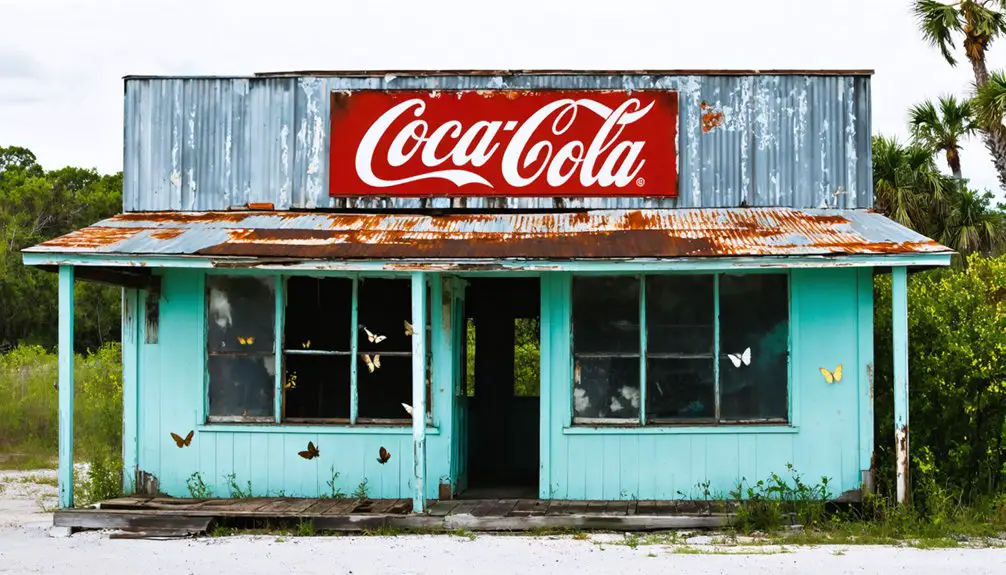
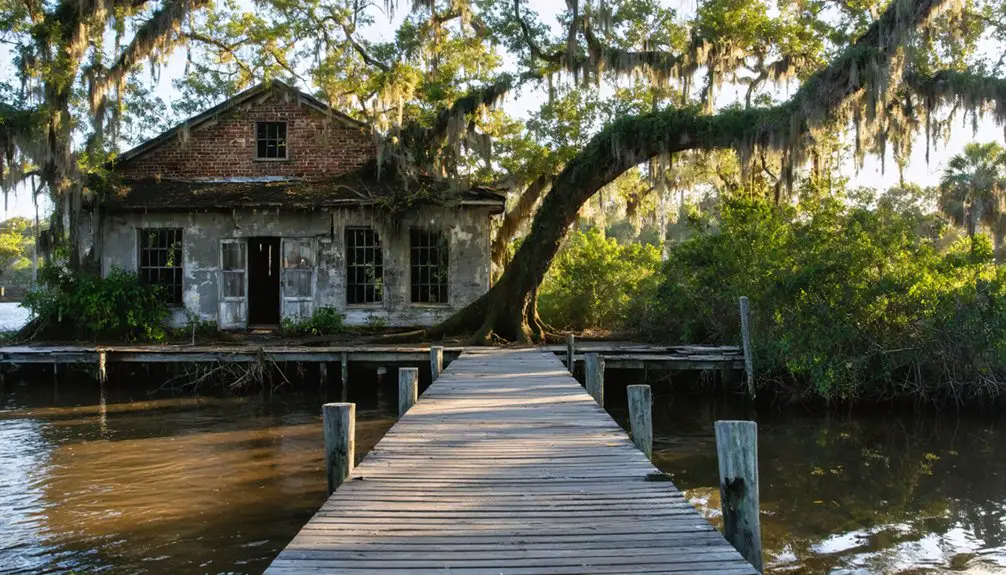
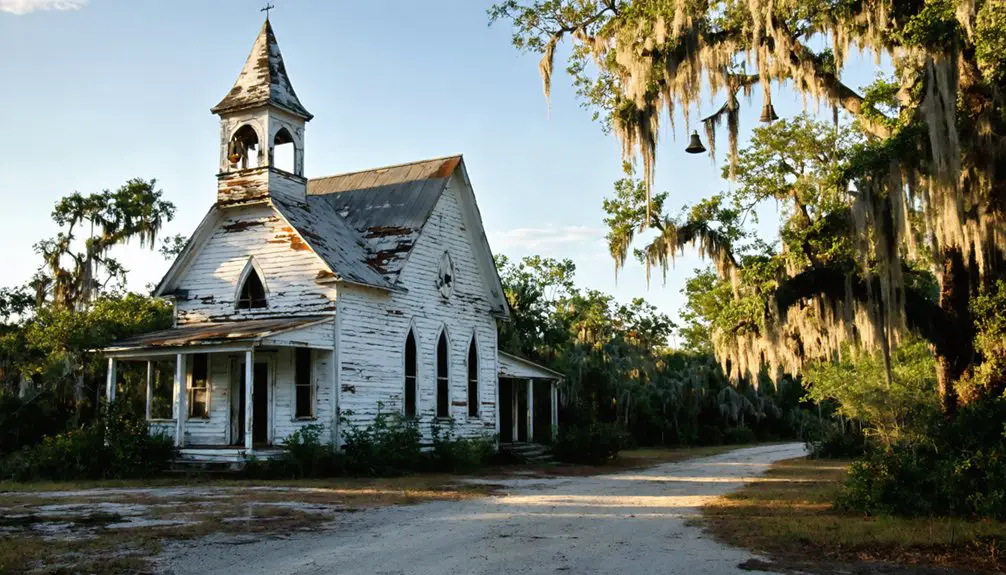
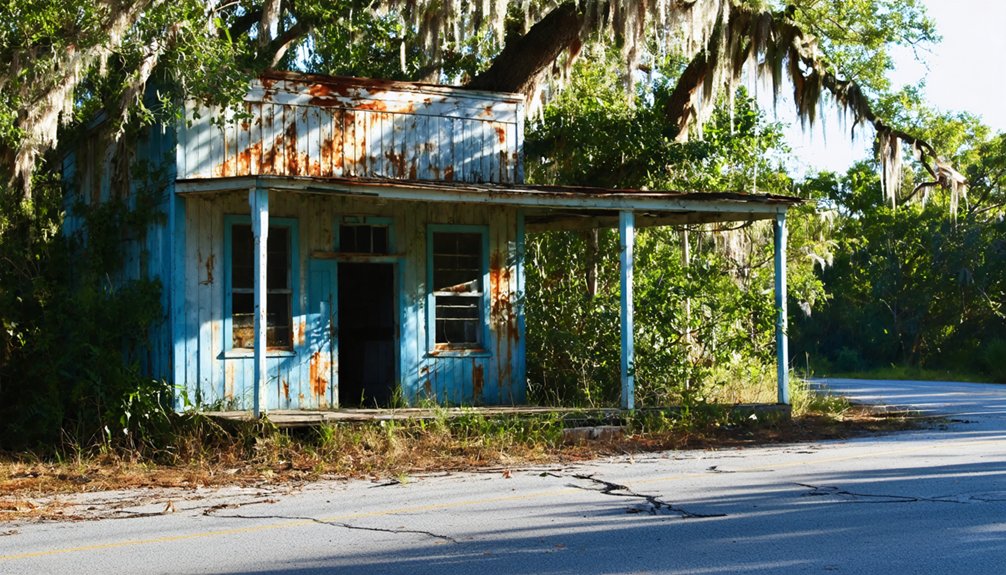
Though nature has reclaimed much of Pittsburg, Florida, you’ll still find tangible remnants of its industrial past scattered across the landscape. Brick foundations, old water tanks, and crumbling wells emerge from within a sprawling orange grove, offering a striking contrast between human history and thriving local flora.
Brick foundations and crumbling wells rise from the orange grove, where Pittsburg’s industrial past meets untamed Florida nature.
Rail infrastructure remnants still mark where three converging lines once drove Florida’s phosphate industry forward.
You’re exploring a site where pine flatwoods and mixed hardwood forests have quietly transformed abandoned structures into wildlife habitats, giving the ruins an untamed, living quality. The elevation sits at 105 feet, providing a surprisingly open vantage point across this rural setting.
Every crumbling wall tells a direct story about a community that rose fast, worked hard, and disappeared just as quickly.
The Phosphate Boom That Built Pittsburg: and Erased It
Florida’s phosphate boom didn’t just build Pittsburg — it defined every nail, rail line, and heartbeat of the place. In the early 20th century, miners struck phosphate-rich earth here, and the town exploded into existence almost overnight. Worker housing, stores, and processing facilities rose fast, all feeding a hungry industrial machine.
Three railway lines converged at Pittsburg, locking it into Florida’s broader transportation grid and cementing its mining legacy. The Atlantic Coast Line Railroad hauled phosphate out and kept the town alive.
Then the deposits ran dry.
When the phosphate disappeared, so did everything else — the rail spur, the workers, the commerce. That industrial history didn’t vanish quietly, though. It left behind brick foundations, old wells, and ruins you can still explore today.
Brick Foundations, Rail Remnants, and Wells Still Visible on Site
What the phosphate boom left behind, you can still touch. Walk the grove and you’ll find historical artifacts hiding in plain sight — silent proof of an industrial past swallowed by Florida’s landscape.
Here’s what you can expect to discover on site:
- Brick foundations — Crumbling outlines of worker housing and processing buildings still mark the earth.
- Rail remnants — Scattered iron and graded corridors reveal where three railway lines once converged to haul phosphate out of Polk County.
- Water tanks and wells — These mining equipment support structures kept operations running and still stand as eerie landmarks today.
You don’t need a guided tour. The ruins speak for themselves, and every step deeper into the grove uncovers another chapter worth finding.
Finding Pittsburg: Coordinates, Access Roads, and Grove Landmarks
Getting to Pittsburg isn’t complicated, but you’ll need the right bearings before you head out. Lock in coordinates 27°39.2’N, 81°30.1’W and head roughly five miles north of Avon Park in southern Polk County. Your standard 2WD vehicle handles the access roads fine, so no off-road rig required.
Once you’re close, Trout Lake serves as a solid natural landmark to confirm your position. The sprawling orange grove surrounding the ruins signals you’ve arrived. Navigate carefully through the grove, staying alert to local wildlife that now calls this abandoned landscape home.
Deer, birds, and the occasional snake share this territory, so visitor safety means watching your step around crumbling foundations and overgrown terrain. The site sits at 105 feet elevation, quietly waiting for explorers ready to uncover its industrial past.
What to Bring and What to Know Before You Visit
Before you set foot in Pittsburg’s overgrown ruins, pack smart and go in with clear expectations. You’re entering a remote orange grove with no services, so preparation separates a great adventure from a frustrating one.
Pack smart before exploring Pittsburg’s overgrown ruins — preparation separates a great adventure from a frustrating one.
- Wear sturdy boots – Brick foundations, hidden wells, and tangled roots make closed-toe footwear essential.
- Bring water and a compass – Cell service is unreliable, and Florida heat doesn’t negotiate.
- Respect historical artifacts – Don’t remove remnants. Local legends suggest the site holds deeper stories, and leaving everything intact honors that history.
Your standard 2WD vehicle handles the access roads fine, so no off-road rig is needed.
Visit anytime, but early mornings keep the heat manageable and the atmosphere undeniably cinematic.
Frequently Asked Questions
Was Pittsburg, Florida Named Directly After Pittsburgh, Pennsylvania?
Yes, you’ll find that Pittsburg, Florida was named directly after Pittsburgh, Pennsylvania’s industrial region. Its historical architecture echoes that gritty heritage, and local legends tie this freedom-seekers’ ghost town to Pennsylvania’s powerful, resource-driven spirit.
Are There Any Guided Tours Available at the Pittsburg Ghost Town?
“You’re on your own here!” No guided tours exist for Pittsburg’s haunted legends — you’ll freely explore tour highlights independently. Adventure awaits you amid crumbling ruins, so blaze your own trail through this forgotten Florida ghost town!
Is the Pittsburg Site Privately Owned or Open to the Public?
The knowledge doesn’t confirm if it’s public or private, so you’ll want to verify before chasing urban legends and haunted stories among its crumbling ruins. Research access rights first, then adventure freely into Pittsburg’s mysterious, phosphate-scarred past!
Have Any Artifacts From Pittsburg Been Preserved in Local Museums?
While records don’t confirm it, you’ll likely discover historic artifacts and museum exhibits at nearby Avon Park or Polk County historical societies — they’ve actively preserved Florida’s phosphate mining heritage, connecting you to Pittsburg’s adventurous, industrial past.
Did Any Descendants of Pittsburg Residents Remain in the Surrounding Area?
You’ll find that some descendants likely stayed nearby—dive into local family histories and genealogical records in Avon Park to uncover compelling personal connections to Pittsburg’s phosphate-era past waiting to be discovered!
References
- https://en.wikipedia.org/wiki/List_of_ghost_towns_in_Florida
- https://www.ghosttowns.com/states/fl/pittsburg.html
- https://en.wikipedia.org/wiki/Pittsburg