Planning a ghost town road trip to Wallman, Maryland means chasing a destination that official records can’t confirm exists. You won’t find it in USGS databases, Maryland’s ghost town registry, or any historical archive. No coordinates, highway markers, or maintained roads point the way. What you will find is folklore, rural mystery, and unanswered questions. Pack your gear, download offline maps, and keep exploring — because Wallman’s full story is far more fascinating than a simple address.
Key Takeaways
- Wallman, Maryland lacks verified historical records, coordinates, or official recognition, making it a mystery anchor rather than a confirmed ghost town destination.
- Maryland has nine documented ghost towns; pair your Wallman search with verified sites like Glen Echo or Simpkinsville for meaningful exploration.
- Carry offline maps, a satellite communicator, and emergency supplies, as rural Maryland has unreliable cell service and unmarked roads.
- The site may be private property with no confirmed structures, so respect posted signage and avoid trespassing during your visit.
- Stay near central hubs like Frederick or Hagerstown, book accommodations early, and use GasBuddy to locate fuel stations along rural routes.
Does Wallman, Maryland Actually Exist?
When you start researching Wallman, Maryland as a ghost town destination, you’ll quickly hit a wall — it doesn’t appear in any credible records. Maryland’s documented ghost towns number just nine, and Wallman isn’t among them.
No archaeological evidence confirms it ever existed as an abandoned settlement, and USGS geographic name databases draw a blank.
You might encounter urban legends or vague online references suggesting it’s a hidden, forgotten community, but these claims don’t hold up under scrutiny. The name could be a misspelling of another location or confusion with a private rural property mislabeled somewhere online.
Before you load up the car and chase this destination, verify its existence through the Maryland Historical Trust or state historical archives — your freedom to explore deserves accurate information first.
Wallman’s Place in Maryland’s Forgotten Ghost Town History
Though Maryland’s ghost town record holds just nine documented sites, Wallman doesn’t claim a spot among them — and that absence speaks volumes. Urban legends and folklore mysteries often fill gaps where official records fall silent, and Wallman lives precisely in that shadow.
Before you chase this elusive name, consider what Maryland’s forgotten history actually confirms:
- No state archives document Wallman as a verified settlement
- USGS geographic records don’t recognize the name
- Confusion with misspelled or misidentified locations runs deep
- Private, unregistered rural sites often fuel ghost town myths
- Maryland Historical Trust holds no archaeological evidence of Wallman
You’re essentially pursuing a rumor carved into the landscape of possibility. That freedom is thrilling — but knowing the difference between documented history and legend keeps your road trip grounded.
How to Reach Wallman and What Roads to Expect
Getting to Wallman means steering through a landscape where solid road information is nearly impossible to verify — because no confirmed coordinates, highway markers, or route references for Wallman, Maryland exist in current geographic databases. That uncertainty itself tells a story.
Local folklore often fills the gaps where official records go silent, and Wallman lives somewhere in that shadow. Before you hit the road, download offline maps, because rural Maryland’s cell service disappears fast.
Expect degraded infrastructure, uneven terrain, and roads that may dead-end without warning. Drive something with high clearance.
Preservation efforts in Maryland focus on documented sites, leaving unverified locations like Wallman largely uncharted. Treat every mile as exploratory rather than guided.
Freedom comes with that territory — so does responsibility. Verify conditions locally before you go.
What You’ll Find at Wallman: and What the Records Say Isn’t There
When you arrive at what’s supposed to be Wallman, you’ll likely find overgrown land, rural quiet, and little else to confirm you’ve reached a genuine ghost town.
Maryland’s historical records don’t document Wallman as an actual abandoned settlement, leaving you without the crumbling foundations or weathered structures that define verified sites.
What you’re experiencing, in other words, isn’t a hidden historical gem — it’s a location that official archives, archaeological surveys, and geographic databases simply can’t confirm exists.
Historical Records Show Nothing
If you dig into Maryland’s historical archives hoping to uncover Wallman’s past, you’ll come up empty-handed. Myth verification attempts consistently return zero credible results, exposing potential historical inaccuracies behind this location’s reputation.
Here’s what the records confirm:
- No USGS geographic database lists Wallman as a recognized place
- Maryland Historical Trust holds zero documentation on this settlement
- Archaeological surveys reveal no abandoned community matching this name
- State ghost town registries omit Wallman entirely
- Search queries across historical databases produce no credible matches
You deserve accurate information before hitting the road. Wallman may be a misspelling, a fabricated location, or private rural land mislabeled online.
Don’t waste your freedom chasing a destination that doesn’t exist in any verified historical record.
What Visitors Actually Encounter
Because no verified records place Wallman on any Maryland map, what you’d actually encounter there remains impossible to confirm. Missing records mean you’re fundamentally chasing urban legends rather than documented history.
Unlike Maryland’s nine confirmed ghost towns, Wallman leaves no paper trail — no USGS coordinates, no historical trust filings, no archaeological surveys.
What you might find depends entirely on who’s telling the story. Some claim crumbling foundations hide behind dense woodland. Others describe nothing but empty fields and silence. Without credible documentation, you can’t distinguish genuine historical remnants from misidentified private property or rural decay.
If you drive out expecting a classic abandoned settlement, you’re gambling on secondhand accounts. Your time and fuel deserve better than a destination that official records simply don’t recognize.
What to Bring on a Remote Maryland Ghost Town Road Trip
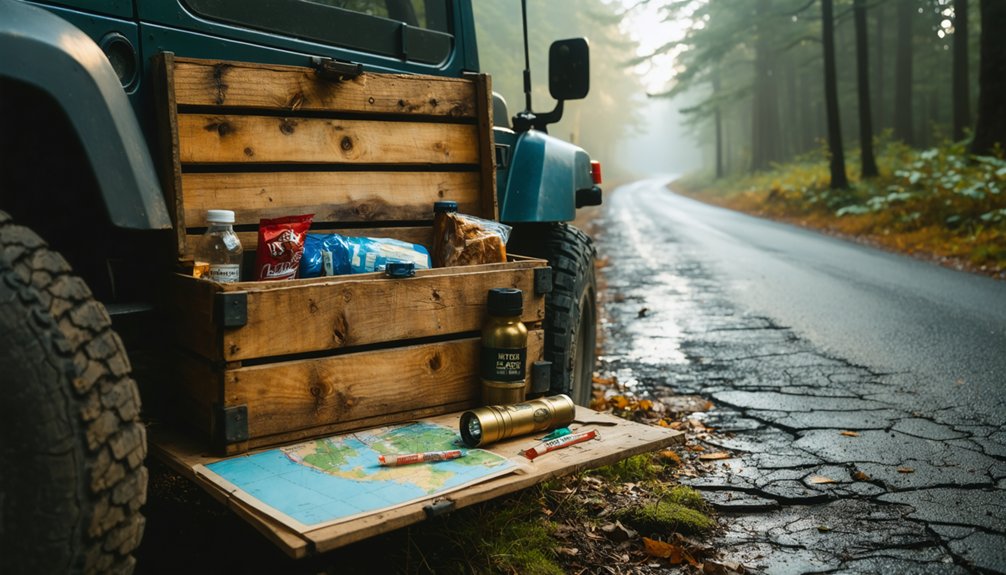
Before you head out to explore remote Maryland ghost towns, you’ll want to pack the essentials: water, snacks, sun protection, sturdy footwear, a flashlight, and a first aid kit.
Since cell service is unreliable in many of these abandoned areas, download offline maps and carry a backup communication device before you leave.
You’re venturing into rough, uneven terrain, so a high-clearance vehicle and pre-planned fuel stops will keep your road trip from turning into an unexpected survival story.
Essential Safety Gear
Whether you’re heading to one of Maryland’s nine documented ghost towns or venturing into remote rural terrain, packing the right gear can mean the difference between a great adventure and a dangerous situation. Chasing historical myths and local legends sounds thrilling until you’re stranded without supplies.
Pack these essentials before you go:
- Water and snacks to sustain energy across long stretches of rural Maryland
- Sturdy, closed-toe footwear built for uneven, debris-covered terrain
- A flashlight or headlamp for dimly lit structures or overcast conditions
- A first aid kit to handle minor injuries quickly and confidently
- Emergency communication tools since cell service disappears fast in remote areas
Download offline maps beforehand. Don’t assume signal coverage. Preparation keeps your focus where it belongs — exploring Maryland’s forgotten history.
Navigation And Communication Tools
Once you leave the last gas station behind, reliable navigation becomes your most critical asset on a remote Maryland ghost town road trip. Download offline maps before departure, since cell service disappears fast in rural areas surrounding sites of historical significance. Don’t rely solely on your phone’s signal — it’ll fail you exactly when you need it most.
Carry a physical backup map and a portable GPS device for redundancy. A fully charged power bank keeps your devices alive through long stretches of dead zones.
For genuine emergencies, a satellite communicator like a Garmin inReach lets you call for help where no towers exist.
These preservation challenges demand respect — remote terrain means slow rescue response times.
Smart communication tools give you freedom without recklessness.
What You Can and Cannot Do at Wallman and Other Abandoned Maryland Sites
Exploring abandoned sites like Wallman and other Maryland ghost towns comes with a clear set of rules you’ll want to follow. These places carry cultural significance and local legends worth preserving for future explorers.
You can:
- Photograph buildings, landscapes, and historical remnants
- Research local legends and document your findings
- Walk carefully through accessible areas open to the public
- Share your experience to raise historical awareness
You cannot:
- Remove artifacts, bottles, or debris — it’s illegal
- Trespass on private property surrounding abandoned sites
- Vandalize structures or disturb the historical integrity
- Ignore posted signage or landowner boundaries
Respecting these boundaries keeps the history intact and protects you legally. Treat every site like the irreplaceable piece of Maryland’s past that it genuinely is.
9 Verified Maryland Ghost Towns to Visit Instead Of: or Alongside: Wallman
Beyond knowing what to do when you arrive, it helps to know where you’re actually headed. Since Wallman lacks verified documentation, Maryland’s nine confirmed ghost towns give you real destinations worth your drive. Each carries its own urban legends and local legends that’ll pull you deeper into the state’s forgotten past.
Consider exploring Glen Echo, Simpkinsville, and seven other abandoned communities scattered across Maryland’s varied landscape. These sites offer genuine historical weight, crumbling architecture, and stories that locals still whisper about.
You can visit them legally, document what you find, and leave with memories instead of fines.
Use Wallman as your road trip’s mystery anchor, then build your itinerary around verified stops that reward curiosity with actual history you can see and feel.
Where to Stay and Fuel Up Near Wallman
Since Wallman’s exact location remains unverified, you’ll want to anchor your lodging and fuel stops around the broader rural Maryland region where you’re exploring. Smart planning keeps your adventure moving without unexpected setbacks.
Prioritize these essentials before hitting the road:
- Book local accommodations early — rural Maryland fills up fast during travel season
- Identify fuel stations along your route using apps like GasBuddy before departing
- Choose lodging near Frederick or Hagerstown for central access to western Maryland’s abandoned sites
- Download offline maps since remote areas drop cell service unexpectedly
- Keep your tank above half — fuel stations thin out quickly in rural stretches
Flexibility defines the best road trips. With solid prep around local accommodations and fuel stations, you’ll explore freely without scrambling for basics.
Safety Rules for Visiting Wallman and Remote Maryland Ghost Towns
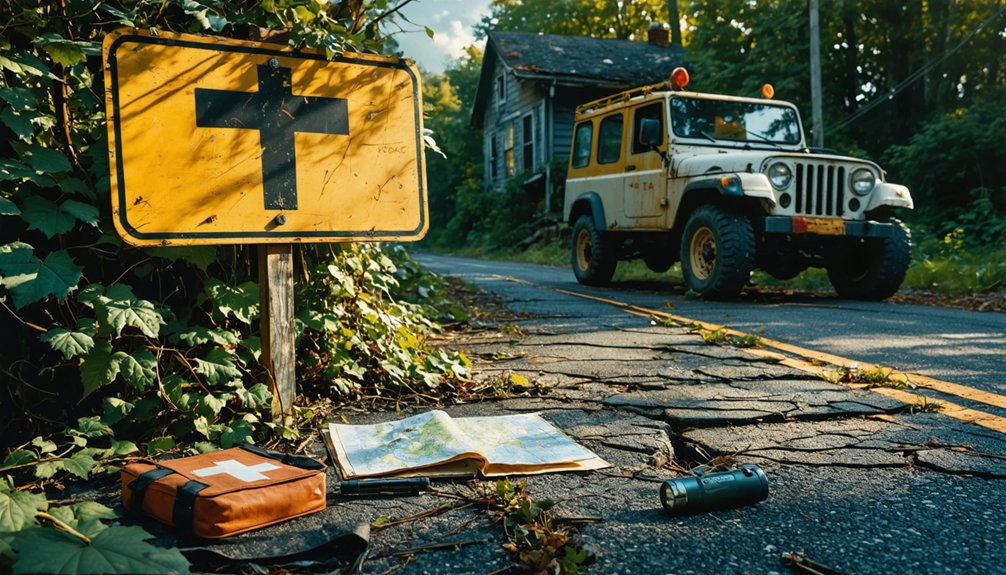
Once you’ve locked down your lodging and fuel stops, keeping yourself safe on-site becomes your next priority. Remote Maryland ghost towns carry real preservation challenges, from crumbling structures to uneven terrain that’ll catch you off guard fast.
Pack water, snacks, sturdy footwear, a flashlight, and a first aid kit before you leave.
Download offline maps since cell service disappears quickly in rural areas. You’ll also want emergency communication tools on hand.
Don’t let historical myths about “finders keepers” fool you — removing artifacts or debris is illegal and destroys irreplaceable history. Trespassing on adjacent private property carries legal consequences too.
Respect the land, follow posted boundaries, and move through these sites as a careful observer. Your freedom to explore depends on protecting these places for everyone who comes after you.
Frequently Asked Questions
Are There Guided Ghost Town Tours Available in Rural Maryland?
Like hidden treasure, guided tours of rural Maryland’s haunted legends await you! You’ll find tours supporting preservation efforts at documented ghost towns, letting you explore freely while respecting history’s fragile remnants responsibly.
What Is the Best Time of Year to Visit Maryland Ghost Towns?
Spring and fall offer you the best conditions for exploring Maryland’s ghost towns. You’ll enjoy mild temperatures, vibrant scenery, and fewer crowds, enhancing historical preservation efforts while maximizing tourist amenities, making your adventure both comfortable and unforgettable.
Can Children Safely Accompany Adults on Maryland Ghost Town Road Trips?
Carefully consider child safety before bringing little ones! Kids can join family activities at Maryland ghost towns if you’ve packed proper gear, planned safe paths, and you’re supervising closely throughout your adventurous, freedom-filled exploration.
Are There Photography Restrictions at Abandoned Maryland Historical Sites?
You’ll find few restrictions on ground photography, but drone regulations apply near historical sites. Always respect preservation rules, avoid disturbing artifacts, and you’re free to capture Maryland’s hauntingly beautiful abandoned landscapes through your lens.
Do Any Maryland Ghost Towns Have Visitor Centers or Informational Signage Nearby?
Like hidden gems waiting to be discovered, some Maryland ghost towns feature informational signage near historic landmarks. You’ll find these markers highlighting preservation efforts, guiding your exploration with context and history to enrich your adventure freely.
References
* https://ghost-towns.close-to-me.com/states/maryland/