Planning a ghost town road trip to Portsmouth Station, Rhode Island means stepping into a layered mystery. You won’t find an officially recognized ghost town, but you’ll discover something more intriguing—the graffiti-covered ruins of Glen Farm’s abandoned power station, hidden inside a forested crevice called “The Glen,” alongside legends of the vanished 1730s trading hub, Hanton City. Pack your hiking boots, plan for uneven terrain, and get ready—there’s far more to uncover than the myths let on.
Key Takeaways
- Portsmouth Station blends myths of Hanton City, a 1730s trading hub, with Glen Farm’s abandoned industrial power station ruins in forested terrain.
- Access the ruins by parking at Glen Farm’s main entrance off Glen Road, then following the creek downhill into The Glen.
- Fall is the best season to visit, offering improved visibility, manageable mud, crisp air, and fewer crowds.
- Wear ankle-support boots, long clothing, and bring a headlamp, as forest canopy significantly limits natural light inside the ruins.
- Extend your road trip by visiting nearby abandoned sites, including Hanton City’s stone foundations and hurricane-devastated Napatree Point.
What Is Portsmouth Station: and Is It Actually a Real Ghost Town?
Although the name “Portsmouth Station” sounds like a forgotten relic of Rhode Island’s past, it doesn’t actually appear on any official ghost town list or historical record.
You’re likely encountering a blend of historical myths and urban legends that merge two distinct places: Hanton City, Rhode Island’s most documented ghost town, and the abandoned power station ruins tucked within Glen Farm in Portsmouth.
These two locations share no direct connection, yet they’ve fused into a single mysterious identity online. Hanton City peaked in the 1730s as a rural trading stop, while Glen Farm’s power station quietly powered a working farm until the mid-1900s.
Understanding what you’re actually visiting sharpens the experience. You deserve accurate history, not a recycled legend dressed up as fact.
The Real History Behind Glen Farm’s Abandoned Power Station
When you step into “The Glen,” you’re entering the forgotten world of a power station that Henry A. Taylor likely built alongside Glen Farm in the late 19th or early 20th century to harness energy from the rushing creek below.
The station powered the farm for several decades into the mid-1900s before workers abandoned it entirely, leaving its concrete bones to decay beneath layers of graffiti and forest overgrowth.
Today, you’ll find no plaques or guided tours marking this obscure piece of industrial history — just crumbling ruins slowly disappearing into Portsmouth’s past.
Station’s Origins And Construction
Nestled within the forested crevice locals call “The Glen,” Glen Farm‘s abandoned power station carries a surprisingly practical origin story. Henry A. Taylor established Glen Farm in the 1880s, and the station emerged alongside it, harnessing the rushing creek’s energy to power daily farm operations.
- Construction likely occurred between the late-19th and early-20th centuries
- Creek waters provided the station’s primary energy source
- The station kept Glen Farm running well into the mid-1900s
Urban exploration enthusiasts now discover graffiti-covered ruins hidden beneath thick forest.
Historical preservation efforts remain absent, leaving the structure to deteriorate freely.
You’re stepping into a forgotten chapter of Rhode Island’s industrial past when you visit. No guided tours, no velvet ropes — just raw, unfiltered history waiting for you to uncover it yourself.
Ruins And Forgotten Legacy
What remains of Glen Farm’s power station tells a quiet, crumbling story that most visitors never encounter. Tucked inside The Glen’s forested crevice, the ruins sit forgotten beneath graffiti and decades of decay. The creek that once powered the farm still rushes past the deteriorating structure, indifferent to its collapse.
Urban exploration here rewards the curious — you’ll find raw industrial history without roped-off exhibits or guided tours. No preservation efforts have surfaced to stabilize the site, leaving it to disappear on its own terms. That freedom cuts both ways; the ruins remain authentic but increasingly fragile.
Portsmouth rarely acknowledges this hidden chapter of its past. If you visit, you’re experiencing something genuinely overlooked — a working piece of history that most locals don’t even know exists.
How to Reach the Hidden Ruins Inside Glen Farm’s Forest
Finding the hidden power station ruins at Glen Farm requires a bit of traversing through “The Glen,” a narrow forested crevice tucked away from the farm’s main tourist areas. Thick forest surrounds you on all sides as a rushing creek guides your path toward the decaying structure.
Tucked deep within The Glen, the forgotten power station ruins wait — hidden, overgrown, and completely worth the journey.
Urban exploration here means maneuvering steep slopes while respecting historical preservation of what remains.
- Park at Glen Farm’s main entrance off Glen Road in Portsmouth
- Follow the creek downhill into the forested crevice
- Watch for steep, uneven terrain along the slopes
- Look for graffiti-covered stone ruins near the water’s edge
- Visit during daylight hours for the safest experience
You’ll feel the isolation immediately — this forgotten industrial relic sits completely off the beaten path, rewarding curious adventurers willing to explore.
What You’ll Find at the Power Station: Creek, Stone, and Graffiti
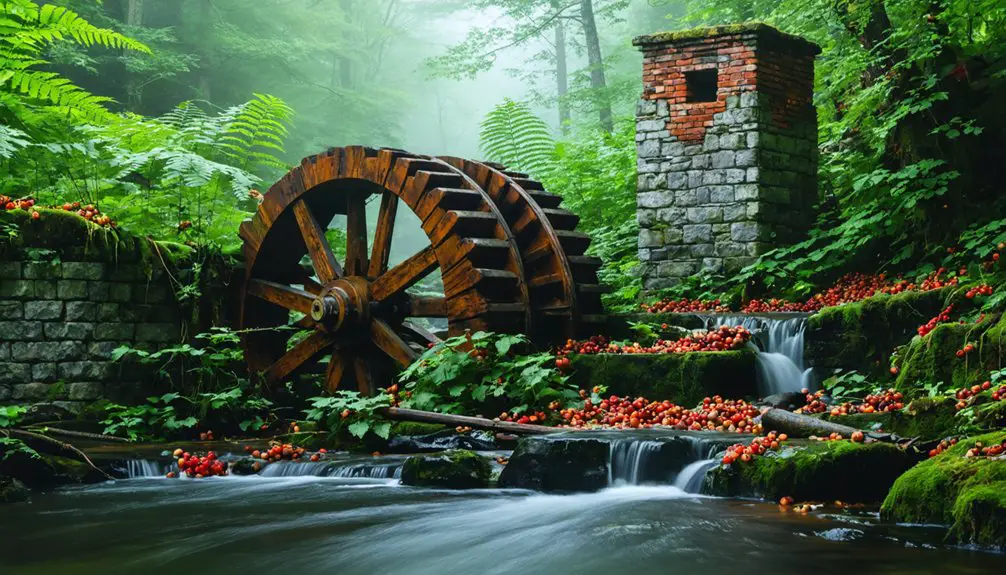
Once you’ve made your way down into The Glen, the power station ruins come into view as a striking collision of nature and industrial decay. Stone walls still stand despite decades of abandonment, reclaimed steadily by moss and creeping vines. The creek that once powered this forgotten station rushes past unchanged, indifferent to history.
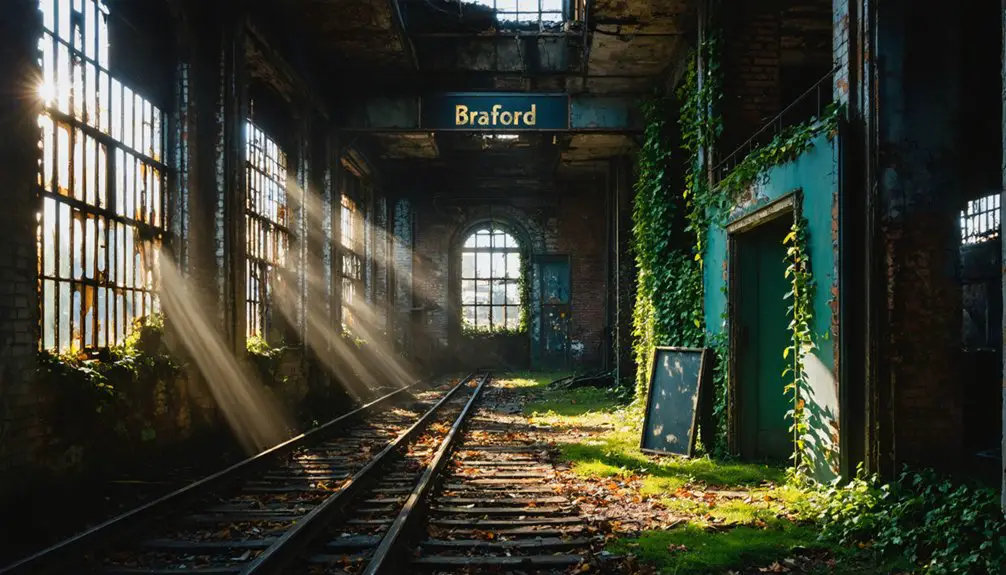
You’ll notice graffiti covering much of the remaining structure — a hallmark of urban exploration culture that raises real questions about historical preservation. Some see it as vandalism; others see it as layered storytelling. Either way, the ruins demand your attention.
The rushing water, cold stone, and fractured walls create an atmosphere that no curated museum can replicate. This is raw, unfiltered history sitting quietly in Portsmouth’s forested backyard, waiting for those willing to find it.
Where Portsmouth Station Fits Rhode Island’s Ghost Town Trail
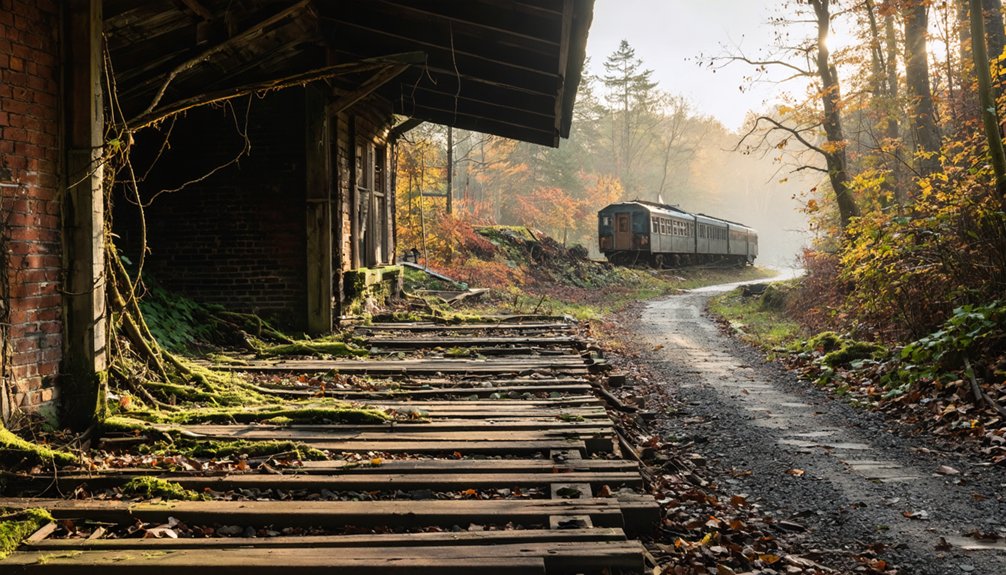
Rhode Island’s ghost town trail runs deeper than most visitors realize, and Portsmouth Station fits into that story as one of the state’s more obscure industrial relics. Alongside documented stops like Hanton City and Napatree Point, it represents a different layer of abandonment — industrial rather than colonial.
Here’s where Portsmouth Station stands among Rhode Island’s forgotten places:
- Hanton City peaked in the 1730s; Portsmouth Station came centuries later during industrial expansion
- Both sites share historical preservation challenges with no active redevelopment plans
- Urban exploration connects these locations as off-the-beaten-path discoveries
- Rhode Island’s ghost town trail spans ferries, mills, taverns, and power stations
- No official state trail exists, making self-guided research part of the adventure
You’re fundamentally building your own map through history.
Best Season to Visit Portsmouth’s Forgotten Industrial Ruins
Late spring and early fall give you the best conditions for exploring Portsmouth’s forgotten industrial ruins, when moderate temperatures and thinning foliage make the terrain easier to navigate without summer’s oppressive humidity or winter’s icy slopes.
If you visit during peak summer months, you’ll find the dense forest around The Glen lush but potentially obscuring key structural details of the crumbling power station.
Off-season visits in late autumn strip the canopy bare, exposing the ruins more fully while keeping crowds minimal, though you’ll want sturdy footwear to handle wet leaves and muddy creek-side paths.
Ideal Visiting Seasons
Although the ruins of Portsmouth’s forgotten power station sit tucked within The Glen’s thick forest year-round, autumn and spring offer the clearest sightlines through the trees. Bare branches reveal crumbling walls that summer foliage completely swallows. Urban legends surrounding the site thrive during October visits, adding atmosphere to every crumbling corner. Preservation efforts, while minimal, make the ruins still explorable across most seasons.
- Autumn: Stripped trees expose the full structure; crisp air makes hiking comfortable.
- Spring: Muddy but rewarding; creek runs strongest, echoing through the glen.
- Summer: Dense canopy conceals ruins; mosquitoes dominate the forested crevice.
- Winter: Snow creates dramatic contrast against graffiti-covered stone walls.
- Avoid: Heavy rain seasons when steep slopes become dangerously slick.
You’ll capture the best experience arriving early morning before light fades beneath the thick canopy.
Weather And Terrain Conditions
Knowing when to visit shapes the entire experience, but understanding *why* certain seasons work better comes down to what the terrain actually does to your body and your camera.
The Glen’s steep slopes and creek-side paths turn slippery and dangerous after heavy rain or winter ice. Spring flooding makes low trails nearly impassable. Summer humidity fogs lenses and thickens the air inside the narrow forested crevice.
Fall strips the canopy just enough to reveal the ruins clearly while keeping mud manageable. Unlike polished tourist attractions with maintained walkways, these deteriorating structures demand real footing and situational awareness.
Historical preservation efforts here are nonexistent, so you’re orchestrating raw, forgotten terrain entirely on your own terms — which is exactly the kind of freedom this place rewards.
Peak Versus Off-Season
Fall earns its reputation as the prime visiting window for The Glen’s power station ruins, and once you’re standing on those creek-side slopes with the canopy thinned out, you’ll understand why. Visibility improves dramatically, urban legends feel sharper in the crisp air, and you’re not fighting summer tourist attractions crowds for quiet reflection.
- Fall (September–November): Best visibility through thinned foliage, comfortable temperatures
- Winter: Stark and atmospheric, but icy slopes create genuine hazards
- Spring: Creek runs high and fast, adding drama but complicating access
- Summer: Dense canopy obscures ruins; humidity and bugs frustrate exploration
- Early morning visits: Any season benefits from arriving before noon for softer light and solitude
Choose fall, move freely, and let the ruins speak without obstruction.
Other Abandoned Sites Near Portsmouth Worth a Detour
Rhode Island packs more forgotten history into its small footprint than most states three times its size, so if you’ve made the trek to Portsmouth, you’d be foolish not to swing by a few other abandoned gems nearby.
Hanton City, a crumbling ghost town that peaked in the 1730s, draws curious explorers with its stone foundations and whispered urban legends about why residents vanished so completely. It sits on land trust property, and while preservation efforts remain minimal, the ruins have survived over three centuries remarkably intact.
Napatree Point offers another eerie detour, a barrier spit largely wiped out by the 1938 hurricane. Each site rewards the adventurous traveler willing to step off the tourist trail and read Rhode Island’s quieter, darker chapters firsthand.
Gear, Footwear, and Safety Essentials Before You Go

Before you set foot in The Glen or pick your way through Hanton City’s overgrown foundations, pack smart—these sites will punish the unprepared. Rugged terrain, decaying structures, and dense forest demand respect for both visitor safety and historical preservation.
- Sturdy ankle-support hiking boots — wet creek-side rocks and uneven stone foundations will twist an unprotected ankle fast
- Long pants and sleeves — briars, ticks, and poison ivy thrive in both locations year-round
- First aid kit — you’re far from immediate help once you’re deep in The Glen
- Headlamp or flashlight — thick forest canopy kills natural light quickly
- Gloves — crumbling graffiti-covered concrete and moss-slicked stone walls aren’t forgiving on bare hands
Travel light, stay alert, and leave every stone exactly where you found it.
Where to Eat and Stay Near Portsmouth, Rhode Island
After a full day of picking through crumbling ruins and overgrown foundations, you’ll want a solid meal and a comfortable bed within easy reach of Portsmouth.
Newport sits minutes away, offering everything from raw oyster bars to upscale farm-to-table dining that honors the region’s agricultural roots.
Budget-conscious urban exploration travelers can grab hearty pub fare along Thames Street before calling it a night.
For lodging, Newport‘s inns and boutique hotels cater to independent travelers who move on their own schedule.
If you prefer camping, Melville Ponds Campground keeps you close to Portsmouth’s forested terrain.
Historical preservation efforts throughout Aquidneck Island mean your surroundings stay rich with context even off-site.
Book accommodations early during summer months, as coastal Rhode Island fills fast.
How to Visit the Ruins Without Leaving a Mark

Exploring forgotten places like the Glen Farm power station ruins carries an unspoken responsibility: you don’t disturb what time has already claimed. Art preservation matters even here, where graffiti removal would erase layers of raw, unfiltered human expression. Tread carefully and leave the site exactly as you found it.
- Stay on established paths to avoid destabilizing crumbling foundations
- Photograph everything, but pocket nothing — rocks, bricks, and debris belong to the site
- Resist adding your own markings; the existing graffiti tells its own story
- Carry out every wrapper, bottle, and scrap you bring in
- Visit during daylight hours to navigate steep slopes and rushing creek terrain safely
Your freedom to explore depends on protecting these ruins for the next curious traveler.
Frequently Asked Questions
Can Children Safely Explore the Glen Farm Power Station Ruins?
You shouldn’t let children freely explore the Glen Farm power station ruins. It’s a decaying, graffiti-covered site with unstable structures. Follow strict exploration guidelines to prioritize child safety, keeping young adventurers close and aware of potential hazards.
Are Guided Tours Ever Offered at Glen Farm’s Abandoned Power Station?
You won’t find guided tours at Glen Farm’s abandoned power station. You’ll explore its haunted legends and industrial decay solo, wandering freely through graffiti-covered ruins tucked within The Glen’s thick, atmospheric forest entirely on your own terms.
Is Photography Permitted Inside the Power Station Ruins at Glen Farm?
You’ll find no official photography restrictions at the ruins, making it a prime urban exploration spot. Grab your camera, capture the decaying walls and graffiti-covered remnants, and document this forgotten piece of Portsmouth’s industrial history freely.
Has Rhode Island Ever Attempted to Officially Preserve Hanton City?
Ironically, Rhode Island hasn’t officially pursued historical preservation for Hanton City — it’s simply forgotten it exists! You’ll find no state-backed efforts, leaving urban exploration enthusiasts free to discover its crumbling stone foundations on their own terms.
Do Any Local Historians Host Events at Portsmouth’s Forgotten Abandoned Sites?
You’ll find local historians occasionally hosting events around Portsmouth’s forgotten ruins, weaving historical legends and local ghost stories into immersive experiences at sites like Glen Farm’s abandoned power station, letting you uncover the town’s hauntingly obscure industrial past freely.
References
- https://www.youtube.com/watch?v=kpy7zlXYrAU
- http://freepages.rootsweb.com/~gtusa/history/usa/ri.htm
- https://en.wikipedia.org/wiki/List_of_ghost_towns_in_Rhode_Island
- https://www.youtube.com/watch?v=cGm_JFIxCg4