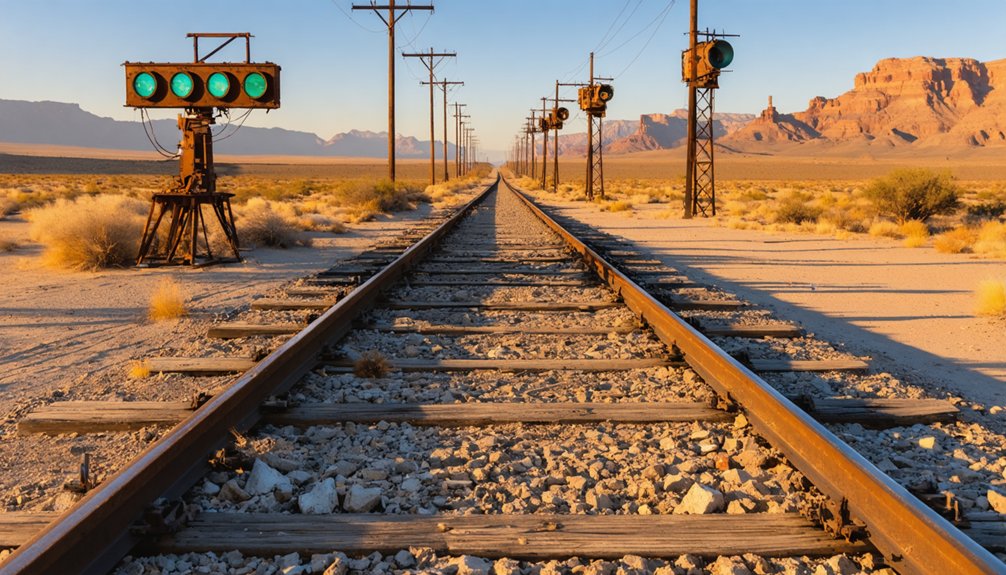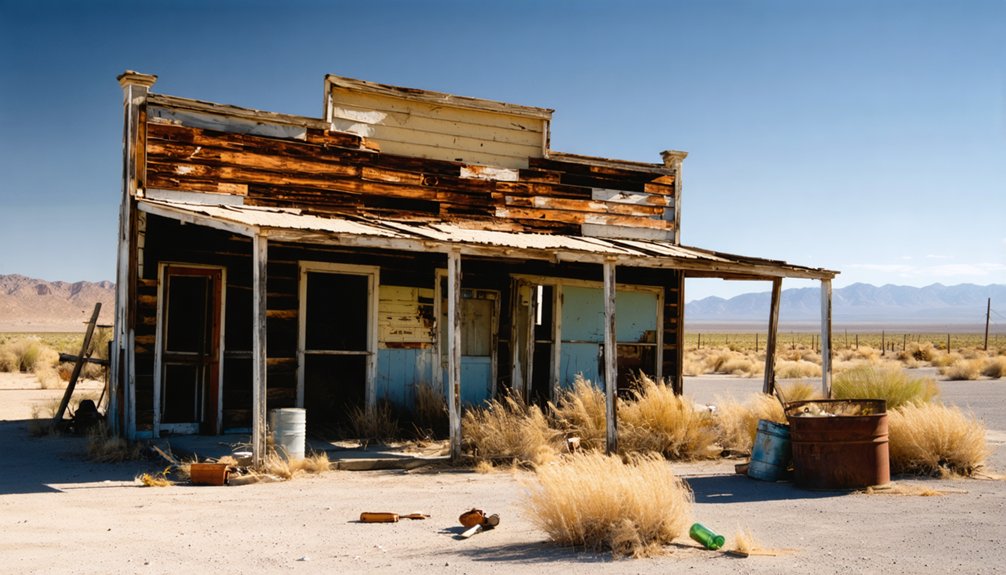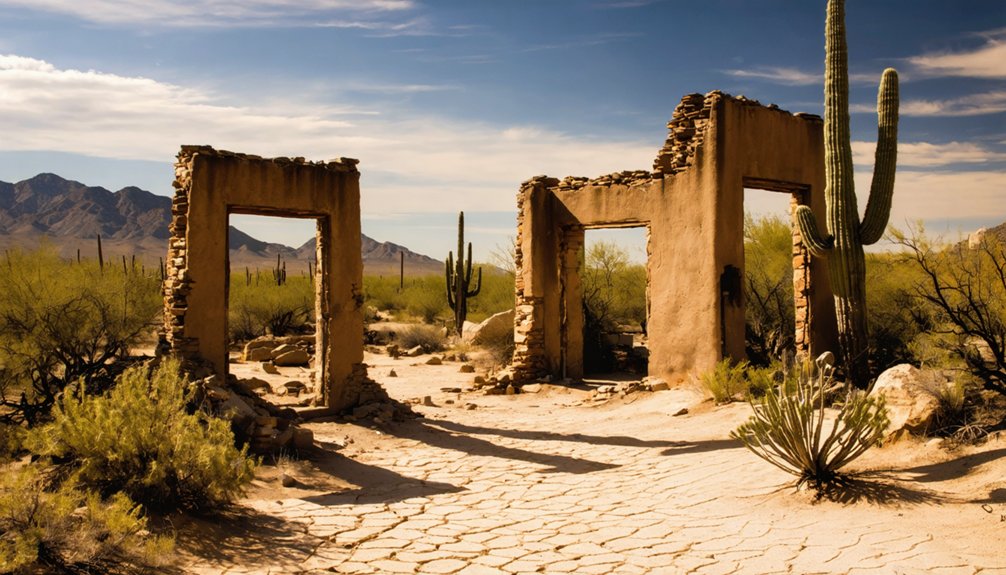
Planning a ghost town road trip to Sasco, Arizona means trading city noise for desert silence and crumbling history. You’ll find a towering smelter stack, ruins of Hotel Rockland, an eerie cemetery marked with plain concrete crosses honoring Spanish flu victims, and an intact jail frozen in time. Located west of Red Rock in Pinal County, this forgotten 1906 smelter town peaked at 600 residents before collapsing into abandonment by 1921. Stick around to uncover everything you need before you go.
Key Takeaways
- Sasco, located west of Red Rock in Pinal County, is best visited in fall or spring to avoid monsoon flooding and extreme heat.
- High-clearance vehicles are recommended, and 4WD is essential beyond the main ruins, particularly near the Santa Cruz River crossing at mile 5.3.
- Key landmarks include the dominant smelter stack, Hotel Rockland ruins, an intact jail, and a cemetery containing Spanish flu victims marked by concrete crosses.
- Check weather conditions before visiting, as the unbridged Santa Cruz River crossing becomes extremely dangerous after rainfall, especially during monsoon season.
- Pack extra water, a first aid kit, offline maps, and photography gear, and stay alert for rattlesnakes frequently encountered near rocky ruins.
What Is Sasco, Arizona and Is It Worth the Drive?
Tucked west of Red Rock in Pinal County, Sasco is a ghost town that’s equal parts history and haunting atmosphere — a relic of Arizona’s mining boom that’s barely an hour’s drive from Tucson. Built in 1906 as a smelter town for the Southern Arizona Smelter Company, it once supported 600 residents before bankruptcy, the Spanish flu, and violence brought it to its knees by the early 1920s.
Today, you’ll find crumbling ruins, a cemetery, and open desert silence. Local wildlife roams freely through the abandoned foundations, adding raw life to the decay. It’s a dream location for photography tips worth acting on — golden hour light against volcanic stonework creates unforgettable shots.
If you crave unfiltered history and wide-open exploration, Sasco absolutely earns the drive.
The Rise and Fall of Sasco: Arizona’s Forgotten Smelter Town
When you stand among Sasco’s crumbling ruins, you’re looking at the remains of a town that rose fast and collapsed even faster. The Development Company of America established Sasco in 1906 as a company town built around the Southern Arizona Smelter Company, processing ore from the Silverbell Mine 12 miles southwest.
What killed it wasn’t just one blow — bankruptcy, the Spanish flu pandemic, and violent saloon incidents all hit within years of each other, leaving the town abandoned by the early 1920s.
Sasco’s Mining Town Origins
Nestled in the Sonoran Desert of Pinal County, Sasco didn’t start as a ghost town — it started as an ambition. In 1906, the Development Company of America built this company town to support cutting-edge mining technology at the first Silverbell Mine, 12 miles southwest. The name itself tells the story: Southern Arizona Smelter Company.
At its peak, Sasco’s town architecture reflected real permanence:
- A post office, hotel, jail, and saloons served roughly 600 residents
- Rail lines connected the smelter directly to the mine
- Over 240,000 tons of ore moved through operations
- The smelter ran actively from 1907 to 1910
You’d never guess this bustling industrial hub would fall silent within 15 years — but the desert had other plans.
Decline and Abandonment Factors
What brought Sasco down wasn’t a single blow — it was a brutal combination of economic collapse, public health catastrophe, and outright violence. The Development Company of America declared bankruptcy, the Spanish flu swept through claiming lives now marked by plain concrete crosses in the Sasco Cemetery.
Wilson’s Saloon became the backdrop for deadly confrontations. By 1919, the post office shuttered.
By 1921, the town was fundamentally gone.
When you visit today, you’ll feel that haunted stillness — broken only by local wildlife moving through the desert scrub. Weather considerations matter here too; the same harsh Arizona climate that made survival brutal for residents can make your road trip equally unforgiving.
Sasco didn’t fade quietly. It collapsed under the weight of forces no frontier town could outrun.
Sasco Cemetery and the Spanish Flu Victims Still Buried There
Though Sasco’s ruins tell the story of a boom-and-bust mining town, its cemetery delivers the most haunting chapter of all. Located northeast of the site, it holds Spanish flu victims marked by plain concrete crosses — historical artifacts that stand as silent witnesses to the 1918 pandemic’s reach into Arizona’s remote mining communities.
The cemetery northeast of Sasco holds Spanish flu victims — silent witnesses to pandemic’s reach into Arizona’s forgotten mining communities.
You’ll also notice wildlife encounters are common here, so stay alert.
What you’ll find at Sasco Cemetery:
- Plain concrete crosses marking Spanish flu victims from the early 1920s
- A quiet, largely undisturbed burial ground northeast of the main ruins
- Minimal signage, giving the space a raw, unfiltered atmosphere
- Evidence of how quickly disease overtook an already struggling community
Respect the grounds, tread carefully, and let the place speak for itself.
What Ruins Can You Actually See at the Sasco Ghost Town?
When you arrive at Sasco, you’ll find more standing ruins than most ghost towns offer. The massive smelter stack dominates the landscape, surrounded by scattered concrete foundations from the stamp mill and old railroad platforms.
You can also walk through the Hotel Rockland, explore the intact jail building, and pay your respects at the cemetery, where plain concrete crosses mark the graves of Spanish flu victims.
Standing Structures Still Visible
Despite over a century of abandonment, Sasco still holds a remarkable collection of ruins you can explore on foot. Local flora creeps along crumbling walls, and wildlife sightings add unexpected life to this eerily quiet landscape. You’ll find yourself walking through genuine frontier history with every step.
Key standing structures worth seeking out include:
- Smelter stack – the site’s most dominant landmark, rising above scattered stamp mill foundations
- Hotel Rockland – a striking volcanic stone building near Sasco Road
- Jail building – a frontier-era structure that remains surprisingly intact
- Concrete fountain structures – well-preserved examples of early settler craftsmanship
Each structure tells a distinct story, letting you piece together what daily life looked like when 600 residents called this desert outpost home.
Smelter Stack And Foundations
As you approach the heart of Sasco, the smelter stack commands your attention before almost anything else does — a towering remnant that’s outlasted every other industrial structure on the site. It processed over 240,000 tons of ore between 1907 and 1910, and standing beside it, that scale becomes viscerally real.
Surrounding the stack, scattered foundations trace the ghost of the stamp mill and railroad platforms. These historical artifacts aren’t roped off or sanitized — you’re free to walk among them, read the land, and piece together what once hummed with industrial energy.
Local legends tie this ground to hard lives, sudden fortunes, and faster losses. Every crumbling foundation tells part of that story, and exploring them on your own terms makes the experience genuinely unforgettable.
Sasco Cemetery Grave Markers
Northeast of the main ruins, the Sasco Cemetery holds some of the most sobering markers you’ll encounter on any ghost town visit. These historical artifacts connect you directly to lives cut short by the Spanish flu pandemic, and the cemetery significance extends beyond simple commemoration.
Plain concrete crosses mark the graves of pandemic victims, standing as stark reminders of how quickly illness reshaped this once-thriving community.
You’ll notice:
- Simple concrete crosses replacing traditional headstones
- Minimal inscriptions reflecting rushed burials during crisis
- Clustered grave groupings suggesting simultaneous losses
- Sparse desert vegetation framing the weathered markers
Walk slowly through this space. It demands respect.
The cemetery outlasted every saloon, every foundation, and every ambition Sasco ever held, making it the town’s most enduring and honest testament.
How to Get to Sasco From Tucson
Located about 35 miles northwest of Tucson, Sasco is surprisingly easy to reach if you’ve got the right vehicle and know what to expect. Take Interstate 10 to Exit 226 at Red Rock, then head west on Sasco Road.
The first 3–4 miles are paved, but the road soon shifts to packed dirt running along an abandoned railroad grade. At mile 5.3, you’ll cross the Santa Cruz River — no bridge, just open wash.
Skip this drive after rain or during monsoon season when that crossing gets dangerous fast.
Along the way, you’ll find opportunities for wildlife spotting and can stop in Red Rock for local dining before heading into the desert.
A high-clearance vehicle handles the terrain best.
Does Sasco Road Require a 4WD Vehicle?
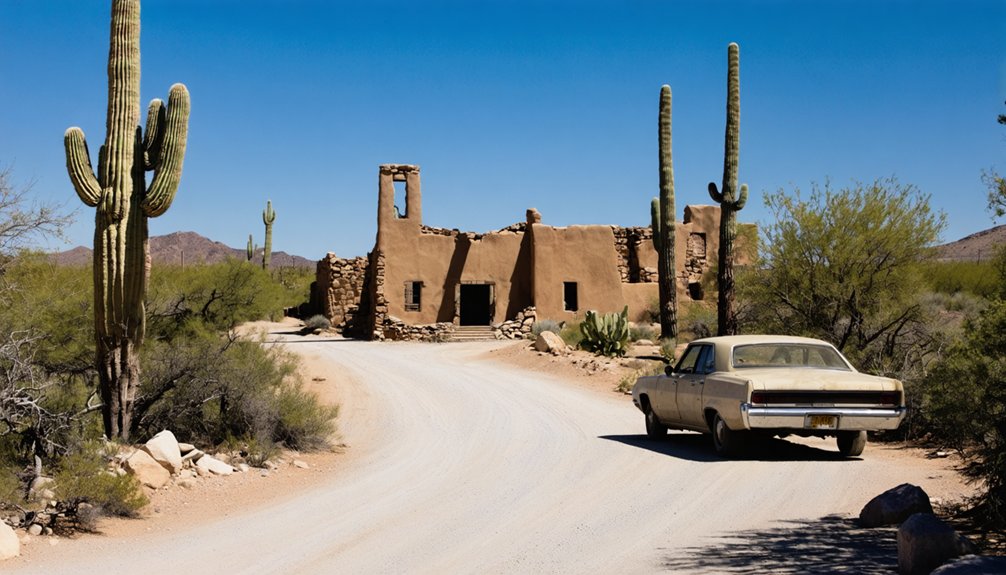
Sasco Road doesn’t demand a 4WD vehicle for the entire route, but you’ll want one if you’re pushing beyond the main ghost town ruins. The first 3–4 miles are paved, easing you into the adventure before the dirt road takes over along the old railroad grade.
Here’s what to keep in mind before you roll out:
Here’s what to keep in mind before you roll out — because Sasco Road rewards the prepared and punishes the careless.
- Mile 5.3 brings an unbridged Santa Cruz River crossing — skip it after rain.
- High-clearance 4WD becomes essential between the old and new Silverbell Mines.
- Wildlife encounters increase on remote western trails, so stay alert.
- Historical preservation means staying on established paths near fragile ruins.
The western alternate route from Avra Valley Road skips the river crossing entirely but demands more high-clearance driving throughout.
Should You Cross the Santa Cruz River to Reach Sasco?
Crossing the Santa Cruz River at mile 5.3 is one of the trip’s biggest decision points, and it’s not one you want to take lightly. There’s no bridge here — just open water that rises fast during monsoon season or after recent rainfall.
Before you commit, check current weather conditions and recent rainfall reports for the area. A crossing that looks manageable can turn dangerous within hours.
If you’re traveling during monsoon season, consider the western alternate route through Avra Valley Road instead.
Beyond the risk to your vehicle, disturbing a swollen wash disrupts local wildlife that depends on those fragile riparian corridors.
Play it smart — if rain’s in the forecast or the river looks questionable, turn around. Sasco will still be waiting when conditions clear.
When Is the Best Time to Visit Sasco?
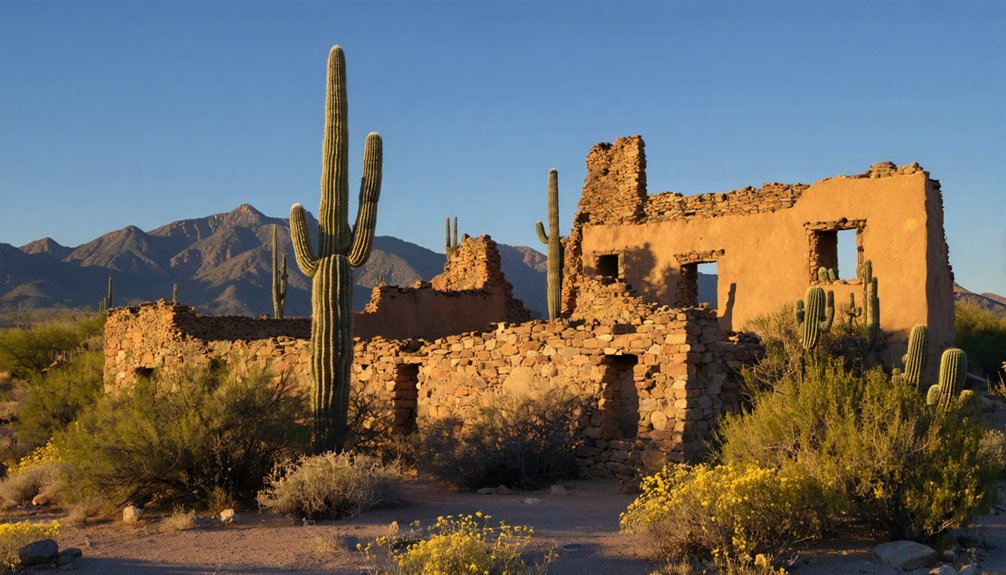
Fall and spring are your best windows for visiting Sasco — temperatures stay manageable, the desert landscape looks its most alive, and you won’t have to worry about monsoon-swollen washes turning your road trip into a recovery operation. Each season brings distinct advantages worth considering:
- Fall (October–November): Cooler air invites longer exploration; wildlife encounters increase as animals grow more active
- Spring (March–April): Wildflowers frame ruins beautifully, offering exceptional photography tips for golden-hour shots
- Summer: Avoid it — monsoon rains flood the Santa Cruz River crossing and create dangerous wash conditions
- Winter: Passable but cold mornings limit comfortable exploration time
Whatever season you choose, arrive early. Morning light transforms crumbling stonework dramatically, crowds stay minimal, and desert wildlife moves freely before midday heat settles in.
What to Bring Before You Drive Out to Sasco
Before you turn off the pavement onto Sasco Road’s dirt stretch, make sure your vehicle and pack are ready for what the desert demands. High-clearance 4WD handles the rougher sections, especially near the Silverbell Mine corridor.
Pack extra water, a first aid kit, and check the Santa Cruz River crossing conditions before heading out — monsoon season makes that crossing dangerous fast.
For wildlife encounters, carry binoculars and stay alert near washes where desert animals move freely. Rattlesnakes frequent rocky ruins, so watch your step around foundations and old structures.
For photography tips, arrive during golden hour to capture the smelter stack and Hotel Rockland in warm, dramatic light. Bring a wide-angle lens — the sprawling ruins reward big compositions.
A charged phone and downloaded offline maps are non-negotiable.
Frequently Asked Questions
Is There an Admission Fee or Permit Required to Visit Sasco?
You don’t need an admission fee or permit to explore Sasco’s haunting ruins! There’s no strict visitor regulations blocking your adventure, though practicing historical preservation by respecting the site guarantees future explorers can enjoy it too.
Are Pets Allowed When Exploring the Sasco Ghost Town Ruins?
Think pets roam freely here? You can bring them, but pet safety demands you keep them leashed. Leash requirements protect your furry companion from sharp debris, hidden hazards, and rugged terrain throughout Sasco’s ancient ruins.
Is Camping Overnight Permitted Anywhere Near the Sasco Ghost Town?
The knowledge doesn’t specify camping regulations or overnight permissions near Sasco. You’ll want to contact Pinal County or the Bureau of Land Management directly to confirm whether you’re allowed to camp near the ghost town ruins.
Are There Any Guided Tours Available at the Sasco Ghost Town?
Sadly, structured guided tours aren’t available at Sasco’s stunning site. You’ll freely forge your own footpath, discovering historical landmarks and capturing breathtaking photography opportunities among haunting ruins that whisper wild stories of Arizona’s fascinating, forgotten mining past.
Does Sasco Have Any Cell Phone Signal or Emergency Services Nearby?
Don’t count on cell phone coverage at Sasco’s remote desert ruins. You’ll find no emergency services nearby, so pack a first aid kit, share your itinerary, and embrace the wild freedom responsibly before venturing out.
References
- https://southernarizonaguide.com/sasco-forgotten-ghost-town/
- https://www.youtube.com/watch?v=wSsbW0Qp9y8
- https://azoffroad.net/sasco
- https://en.wikipedia.org/wiki/Sasco
- https://www.arizonahighways.com/article/arizona-ghost-towns
- https://www.azplaces.com/best-camping-locations/sasco-ghost-town
- https://www.youtube.com/watch?v=q8BfscCaPV0