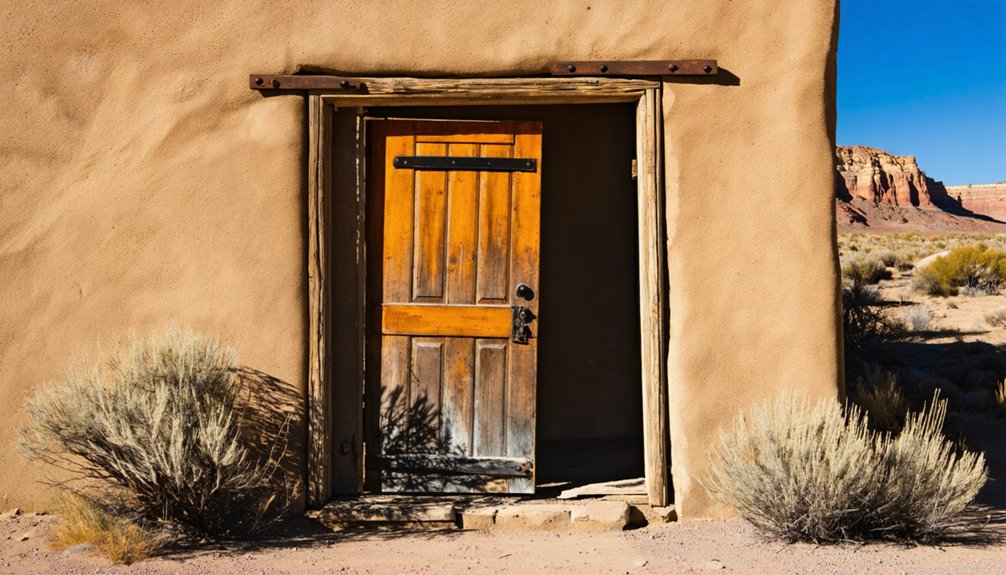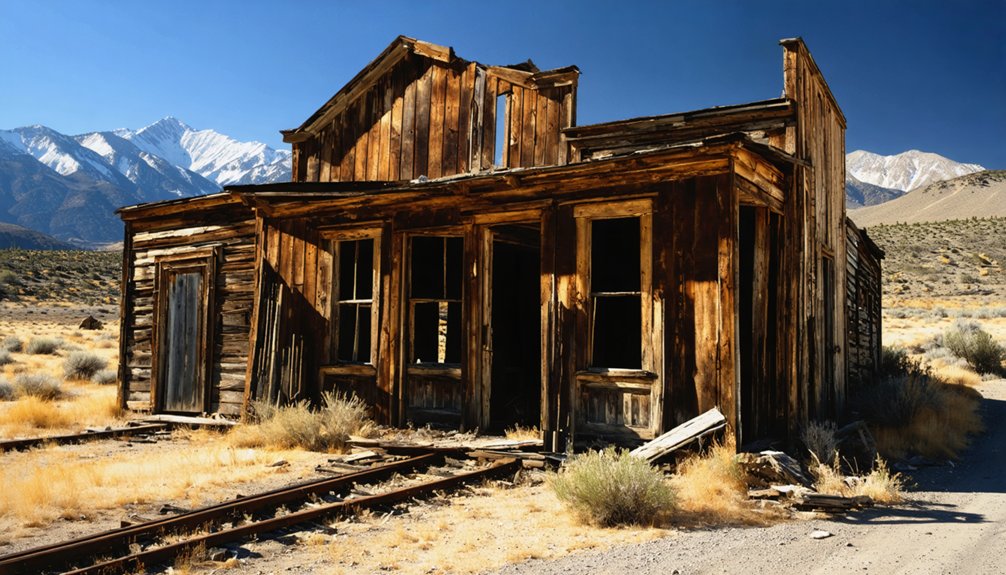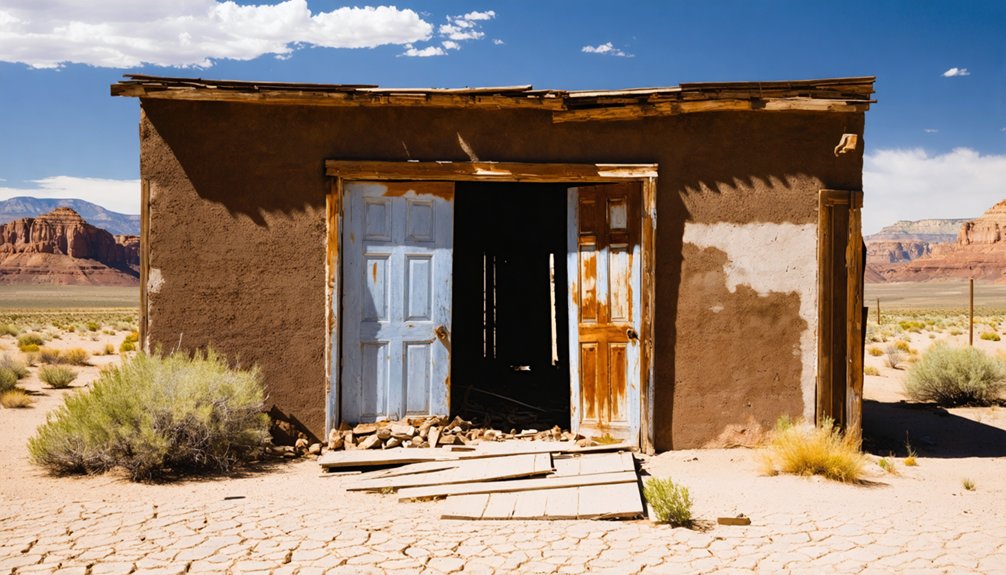
Scranton, Utah drops you into the heart of an 1880s silver and lead mining district, where collapsed shafts, crumbling adits, and rugged canyon trails wait largely undiscovered. You’ll want to visit in spring or fall when temperatures stay manageable and trails stay accessible. Start from Five Mile Pass, pack a compass, and pre-load your coordinates before cell service disappears. There’s far more to uncover about this remote ghost town than most road-trippers ever expect.
Key Takeaways
- Visit in spring (March–May) or fall (September–November) for mild temperatures, better trail access, and optimal wildlife activity.
- Begin at Five Mile Pass, heading south into Barlow Canyon; pre-record coordinates (39.015°N, 109.425°W) due to limited cell service.
- Plan 5–7 days covering 600–800 miles, incorporating nearby ghost towns like Frisco, Sego, and Grafton for a richer experience.
- Pack a physical map, compass, flashlight, first aid kit, layered clothing, and sturdy boots for this remote, rugged terrain.
- Never enter mine tunnels or lean over open shafts; wildlife, unstable ground, and structural hazards pose serious safety risks.
Why Scranton, Utah Is Worth the Drive?
Although ghost towns are scattered across Utah’s vast landscape, Scranton stands out as a destination that rewards the effort it takes to reach it. Nestled within the Scranton Mining District, this former silver and lead mining hub sits between 6,000 and 7,000 feet elevation, offering you dramatic terrain that feels genuinely untamed.
You’ll explore remnants of adits, horizontal tunnels, and massive mine shafts that echo with local folklore about miners who built their lives here during the 1880s boom years.
Spring visits treat you to wildflower bloom along the canyon trails, making the landscape even more striking. Unlike heavily visited sites, Scranton demands navigation skills and preparation, which means you’ll experience it without crowds, giving you the raw, unfiltered freedom that defines true adventure travel.
When To Visit Scranton Ghost Town for the Best Conditions?
You’ll find the best conditions at Scranton Ghost Town during spring (March to May) or fall (September to November), when mild temperatures make hiking and exploring far more enjoyable.
If you visit in summer, you’re risking dangerous midday heat that can exceed 100°F, turning an exciting adventure into a grueling endurance test.
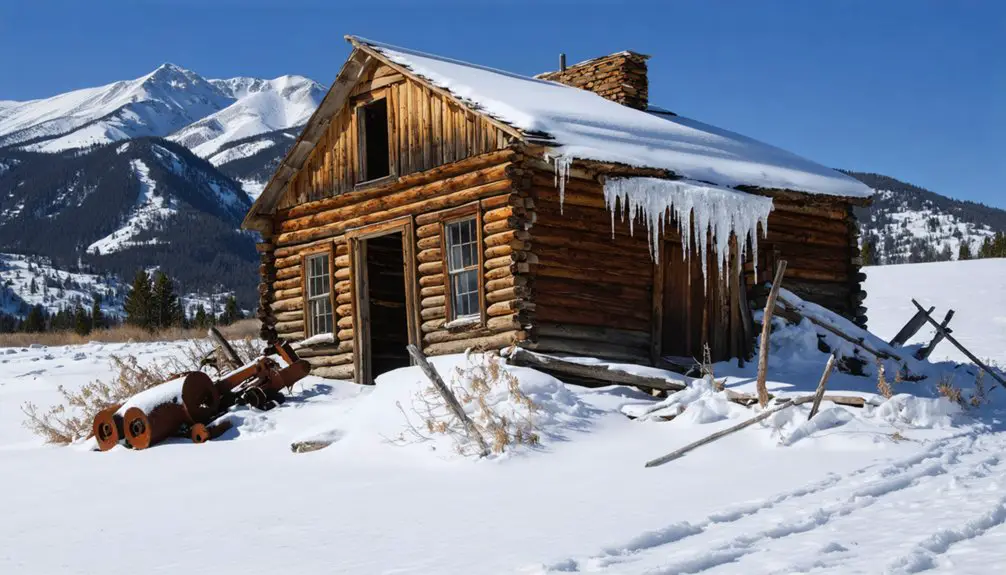
Winter brings its own challenges, as heavy snowfall at higher elevations can block road access entirely, potentially requiring specialized vehicles just to reach the site.
Optimal Seasons For Visiting
Timing your visit to Scranton Ghost Town can make the difference between an unforgettable adventure and a miserable slog. Spring (March to May) and fall (September to November) deliver the sweet spot — mild temperatures, manageable trails, and ideal conditions for exploring historical artifacts without battling extreme heat or snow-blocked roads.
Summer temperatures regularly exceed 100°F, turning midday travel into a genuine hazard. You’ll exhaust yourself before reaching the main shafts.
Winter brings heavy snow to elevations between 6,000 and 7,000 feet, potentially cutting off access entirely unless you’re equipped for it.
Spring and fall also increase your chances of wildlife encounters along the canyon trails, adding unexpected rewards to your journey. Plan around these seasons, and Scranton rewards you generously.
Summer Heat Hazards
Summer heat at Scranton turns the ghost town into a crucible. Temperatures frequently exceed 100°F, baking the exposed geological formations and radiating heat back at you from every rock face and canyon wall.
Midday travel becomes genuinely dangerous, draining your water supply faster than you’d expect while slowing every step.
Wildlife encounters increase unpredictably during summer months. Rattlesnakes seek shade beneath rock overhangs, and desert creatures grow defensive when heat stresses their habitat. You’re entering their territory on their terms.
Start any summer visit before dawn, reach your key sites by mid-morning, and retreat before noon hits full force.
If you ignore this rhythm, the canyon won’t forgive you. Scranton rewards the prepared and punishes the reckless, especially when summer owns the landscape.
Winter Road Accessibility
Winter closes its fist around Scranton fast. Snow accumulates quickly at elevations between 6,000 and 7,000 feet, blocking roads and cutting off your access entirely. Without a specialized vehicle, you’re not getting through. Don’t gamble on it.
When snow buries the terrain, historical artifacts become impossible to locate, and the mining techniques displayed through visible adits and shaft structures get swallowed beneath drifts. You’d miss everything worth seeing.
Stick to September through November if fall is your window. Roads stay passable, the air sharpens beautifully, and the site opens up fully before winter locks it down.
If you’re planning a winter visit, you’ll need four-wheel drive, chains, and serious preparation. Freedom out here demands respect for what the season actually controls.
How To Get to Scranton Ghost Town
Reaching Scranton Ghost Town takes you through some of Utah’s most rugged and rewarding terrain. Start from Five Mile Pass and head south into Barlow Canyon, where narrow gorges reveal layers of mining history carved into the rock.
Key navigation points to remember:
- Begin at Five Mile Pass and follow the trail south toward Barlow Canyon’s mouth.
- Enter the canyon carefully, watching for steep side trails leading to rebar-covered mine shafts.
- Write down coordinates (39.015°N, 109.425°W) before leaving — cell service won’t save you out here.
- Practice trail safety by carrying a compass and detailed map for remote sections.
A fun trail behind the main shaft climbs higher up the mountain, rewarding you with stunning elevation views.
The Mining Ruins and Shafts You’ll Find at Scranton
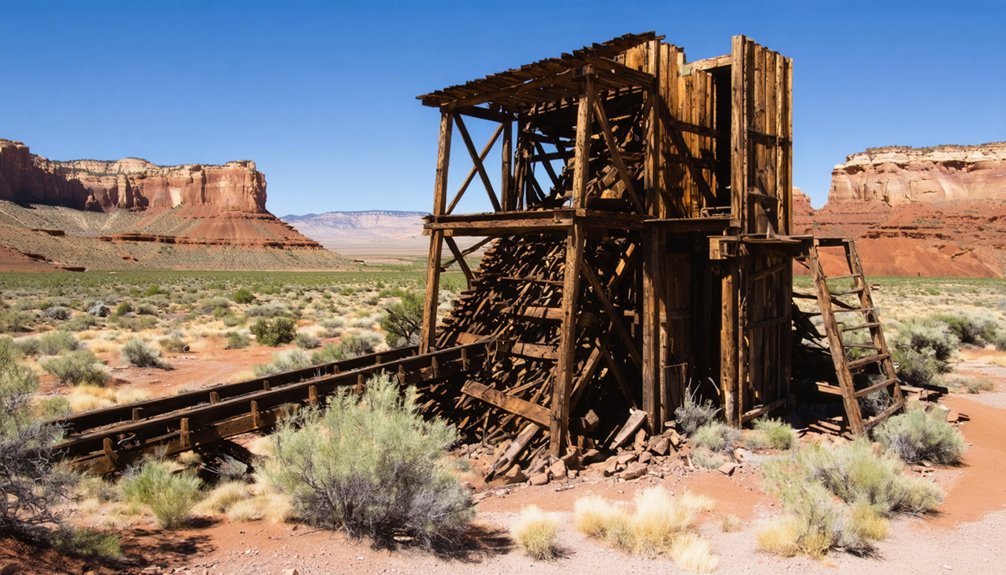
Once you arrive at Scranton, you’ll discover the remnants of a once-thriving silver and lead mining operation scattered across the mountainside.
The site features adits and horizontal tunnels carved directly into the rock, giving you a glimpse into the underground world miners navigated daily.
You’ll also spot large mine shafts sealed with rebar or metal fencing, installed to keep curious visitors from falling into the dangerous openings below.
Adits And Horizontal Tunnels
As you explore Scranton’s remains, you’ll encounter two primary types of mining ruins: adits and horizontal tunnels bored directly into the mountainside. These openings tell a vivid story of mining history, revealing how 19th-century miners extracted silver and lead from the earth.
During trail navigation, watch for these key features:
- Horizontal tunnel entrances carved at ground level, allowing direct access into the ore-bearing rock
- Timber reinforcements lining tunnel walls, now aged and structurally compromised
- Ventilation shafts positioned strategically to circulate air through deep passages
- Debris fields of discarded rock scattered outside tunnel mouths, marking past excavation efforts
Bring a flashlight to peer safely inside without entering. Metal fencing and rebar frequently block dangerous openings, so respect these barriers and explore responsibly from the outside.
Large Rebar-Covered Shafts
Scattered across Scranton’s hillside, the large rebar-covered shafts stand as the most striking remnants of the town’s mining past. You’ll spot them along a steep trail branching left from the main path, their metal grating a nod to historical preservation efforts that keep curious explorers safe while maintaining the site’s raw authenticity.
Peer through the rebar and you’ll glimpse the darkness dropping deep into the earth below. These shafts once delivered miners to rich veins of silver and lead.
Today, they serve a quieter purpose — wildlife observation reveals bats and small animals that’ve claimed these voids as habitat.
Don’t attempt to remove or bypass the rebar. Respect the barriers, absorb the history, and let the shafts tell their story on their own terms.
Barlow Canyon’s narrow gorge winds through the mountains like a natural corridor, drawing you deeper into the rugged terrain surrounding Scranton’s ghost town. You’ll enter from Five Mile Pass heading south, where trails branch toward distinct destinations worth exploring.
Barlow Canyon pulls you south through Five Mile Pass, deeper into the wild terrain surrounding Scranton’s ghost town.
Navigate smartly by keeping these trail options in mind:
- Left steep trail — climbs directly to the rebar-covered mine shaft and historic architecture remnants
- Main shaft trail behind — ascends higher up the mountain toward expansive elevation views
- Canyon floor path — follows the gorge naturally, where local wildlife frequently appears along rocky ledges
- Whitmore Reservoir crossing — provides water access points connecting additional trail networks
Each route rewards deliberate exploration. You’re moving through land that resists shortcuts, so carry your compass, trust your map, and stay alert.
Staying Safe Around Open Mine Shafts at Scranton
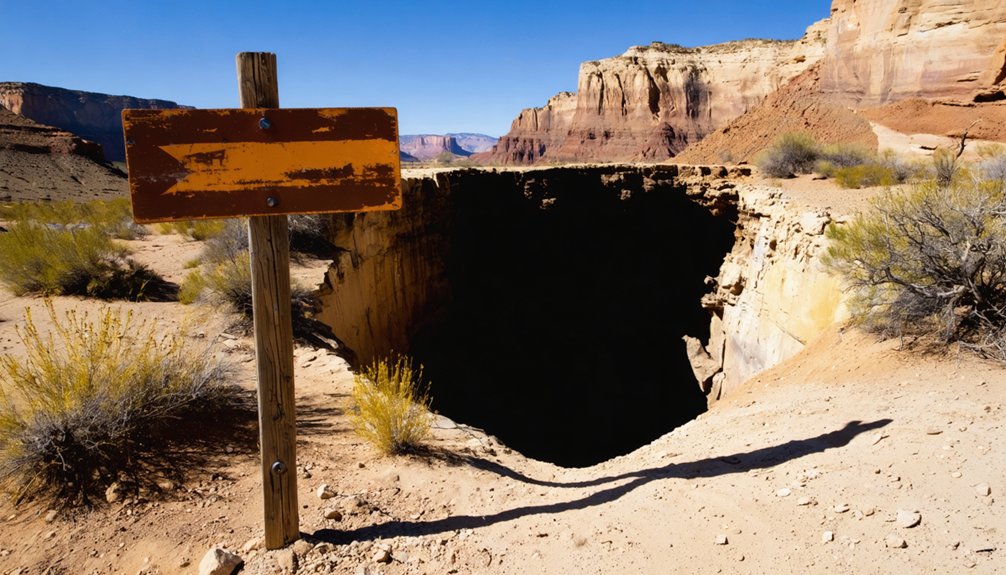
Once the trails pull you closer to Scranton’s mining remnants, the landscape shifts from scenic to genuinely hazardous. Large mine shafts covered with rebar demand your full attention — don’t treat them as photo opportunities without first securing your footing.
For photography tips, shoot from stable ground, use a wide-angle lens to capture scale, and never lean over open openings for a better angle.
Stay alert for wildlife encounters too, as snakes and small mammals frequently shelter near dark tunnel entrances. Keep your distance and never reach into shadowed crevices. Carry a flashlight to assess tunnel interiors safely without entering them.
Respect posted signage marking private property boundaries, and write down coordinates before you arrive — cell service won’t save you if things go wrong out here.
What To Pack for a Remote Mine Site Visit?
Preparing for a remote mine site visit like Scranton means packing smarter, not heavier. You’re heading into terrain with no cell service, unpredictable wildlife encounters, and historical artifacts worth documenting carefully.
Prioritize these essentials:
- Navigation tools – Carry a physical map, compass, and pre-written coordinates since GPS signals aren’t reliable here
- Portable phone charger – Keep your devices alive for photos and emergency communication
- Flashlight – You’ll need it to safely inspect dark tunnel interiors without disturbing anything
- First aid kit – Remote terrain demands self-sufficiency
Dress in layers, wear sturdy boots, and respect posted signage regarding private property.
Freedom out here depends entirely on your preparation before you leave the trailhead.
Other Utah Ghost Towns Worth Adding to This Trip
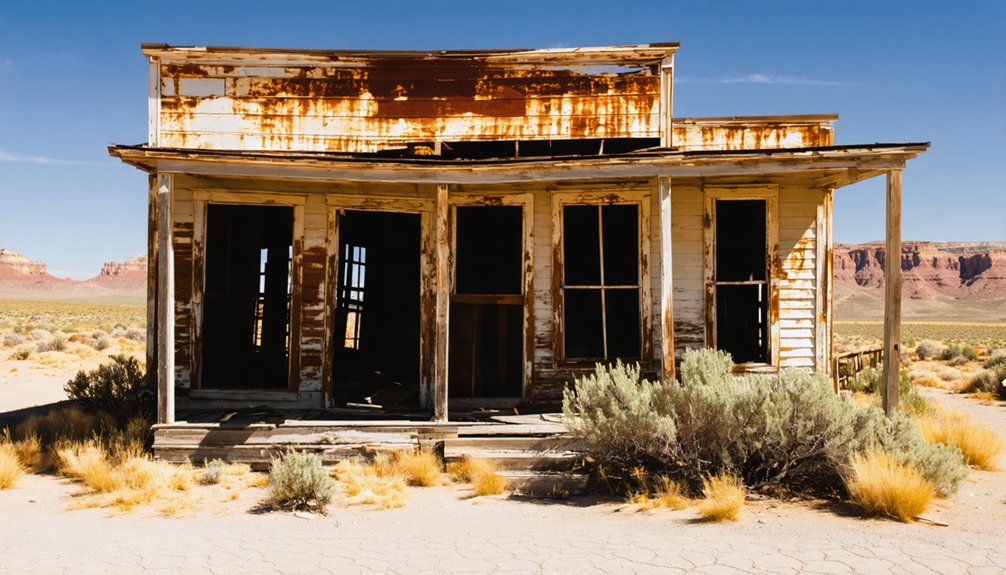
Scranton’s haunted silence is just the beginning — Utah’s desert and canyon country hides dozens of forgotten towns worth threading into your itinerary.
Frisco, once a booming silver camp in Beaver County, delivers striking historical preservation through its intact charcoal kilns and crumbling stone walls. Local legends swirl around its violent past, making every crumbling structure feel charged with stories.
Head north of Moab off Interstate 70, and you’ll find Sego Ghost Town, where abandoned company buildings and Native American petroglyphs share the same canyon walls.
Grafton, near Zion National Park, offers another accessible stop with a restored schoolhouse and cemetery.
Each town adds texture to your road trip, turning mileage into meaning and solitude into something worth chasing.
How Many Days Do You Need for This Road Trip?
You’ll want to set aside 5 to 7 days for this road trip, covering roughly 600 to 800 miles as you loop through approximately 10 ghost towns starting and ending in Salt Lake City.
Plan your daily mileage around the terrain, since remote canyon roads and trail hikes will slow your pace considerably compared to highway driving.
Time your trip for spring or fall to avoid summer heat exceeding 100°F and winter snow that can block high-elevation access roads entirely.
Ideal Trip Duration
Planning a ghost town road trip through Utah doesn’t have to feel overwhelming if you map out a realistic timeline from the start. A 5 to 7-day itinerary covers roughly 600 to 800 miles, giving you enough room to explore historical landmarks without rushing.
Here’s what a well-paced trip includes:
- Days 1–2: Depart Salt Lake City, stop for local cuisine, and reach your first ghost towns
- Day 3: Explore Scranton’s mine shafts and Barlow Canyon trails
- Days 4–5: Visit surrounding sites like Frisco and Sego Ghost Town
- Days 6–7: Return loop with flexibility for unexpected discoveries
You’ll move at your own pace, uncover forgotten history, and still have breathing room to enjoy everything Utah’s backcountry offers.
Daily Mileage Breakdown
Spreading your drive across 5 to 7 days keeps daily mileage manageable, typically landing between 100 and 160 miles per day across the full 600 to 800-mile loop departing from Salt Lake City. That pacing gives you breathing room to absorb historical preservation efforts at each stop, photograph fading structures, and actually absorb local folklore from interpretive markers or fellow travelers you’ll meet along the route.
Rushing this loop wastes its value. Each ghost town carries its own story, and Scranton alone rewards a slower approach once you’re exploring Barlow Canyon on foot.
Build in buffer days for unexpected detours, weather delays, or a spontaneous side trail you hadn’t planned. Freedom on a road trip isn’t just about miles covered — it’s about what you discover between them.
Seasonal Timing Considerations
How many days you’ll need depends heavily on when you go. Each season shapes your experience differently, affecting road conditions, comfort, and even historical preservation efforts at active restoration sites.
- Spring (March–May): Mild temperatures make exploring trails and wildlife observation ideal, with animals returning to canyon areas.
- Fall (September–November): Cooler air and golden landscapes create perfect conditions for photography and extended hiking.
- Summer: Midday heat exceeds 100°F, compressing your active hours and demanding careful planning.
- Winter: Snow blocks higher elevation roads, requiring four-wheel drive and advanced preparation.
A 5 to 7-day itinerary covers roughly 600 to 800 miles, starting from Salt Lake City.
Choose spring or fall to maximize your freedom, safety, and overall road trip quality.
Building Your Salt Lake City Loop: Mileage and Stops
A well-structured loop starting from Salt Lake City lets you cover 600 to 800 miles across roughly 10 ghost town stops in just 5 to 7 days. You’ll move efficiently between sites rich in mining history, from Scranton’s collapsed shafts to the weathered bones of Grafton.
Plot your route before you leave, writing down coordinates rather than relying on addresses. Trail navigation gets tricky in remote sections, so a physical map keeps you oriented when your phone loses signal.
Work Sego Ghost Town north of Moab into your eastern leg, then swing back through central Utah to close the loop. Each stop adds depth to the story you’re piecing together mile by mile.
Frequently Asked Questions
Is Scranton Ghost Town on Public or Private Property?
Signage tells the story — you must observe posted markers to confirm legal access. Historical preservation and private ownership concerns mean you’ll want to verify current property status before exploring Scranton’s fascinating remnants of Utah’s mining past.
What Coordinates Should I Save Before Visiting Scranton Ghost Town?
Save 39.015°N, 109.425°W before you go! These coordinates reveal Scranton’s historical significance and incredible photography opportunities, guiding you straight to this remote mining ghost town where you’ll explore fascinating ruins without getting lost.
Are There Water Crossings Required to Access Scranton Ghost Town?
Yes, you’ll encounter water crossings near Whitmore Reservoir, adding exciting access challenges to your journey. Embrace the adventure as you navigate these natural obstacles, they’re part of the rugged, liberating experience of reaching Scranton Ghost Town!
Can Beginners Hike the Trails Around Barlow Canyon Safely?
You can safely explore Barlow Canyon’s trails as a beginner if you’re prepared! Follow these beginner tips: carry a map, compass, and flashlight. You’ll enjoy the adventure while prioritizing trail safety throughout every winding, breathtaking step.
What Elevation Should Visitors Expect at Scranton Ghost Town?
You’ll explore terrain sitting between 6,000–7,000 feet, where thin mountain air amplifies every step toward historical preservation. The breathtaking elevation releases stunning photography opportunities, making you feel gloriously untethered from civilization’s grip.
References
- https://www.standard.net/lifestyle/recreation/2022/apr/21/atv-adventures-scranton-utah-a-ghost-town-i-aint-afraid-of-no-ghosts/
- https://www.onlyinyourstate.com/trip-ideas/utah/road-trip-ut-ghost-towns
- https://www.youtube.com/watch?v=P_Ep1sMRsE0
- http://freepages.rootsweb.com/~gtusa/history/ontheroad/us6e.htm
- https://www.tripadvisor.com/Attractions-g28965-Activities-c47-t14-Utah.html
- https://expeditionutah.com/forum/index.php?threads/ghost-town-tour-2020-trip-report.6936/
- https://www.roadtripryan.com/go/t/utah/moab/sego-ghost-town
- https://www.utah.com/things-to-do/attractions/old-west/ghost-towns-in-utah/
- https://www.standard.net/lifestyle/recreation/2023/jun/15/atv-adventures-young-powersports-presents-the-ride-utah-challenge/
- https://www.youtube.com/watch?v=JIOT9pKSGhA