Planning a ghost town road trip to Stibnite, Idaho means driving 39 rugged miles from McCall through the Payette National Forest in a 4WD vehicle. You’ll find abandoned machinery, crumbling historic buildings, underground tunnel entrances, and the haunting Glory Hole open pit — remnants of a mining era spanning gold, antimony, and tungsten. Visit in summer or fall for the best road conditions. There’s far more to this forgotten mountain town than first meets the eye.
Key Takeaways
- Stibnite is approximately 39 miles from McCall via mountain roads through Payette National Forest and the Salmon River Mountains.
- A 4WD vehicle is mandatory due to loose gravel, steep grades, and rugged mountain terrain along the route.
- Pack essential gear including extra fuel, a first aid kit, and recovery equipment before departing for Stibnite.
- The best times to visit are spring, summer, and fall; winter roads are typically impassable due to heavy snow.
- Key attractions include the Glory Hole open pit, abandoned machinery, historic buildings, and accessible underground tunnel entrances.
What’s Left to See at Stibnite Ghost Town?
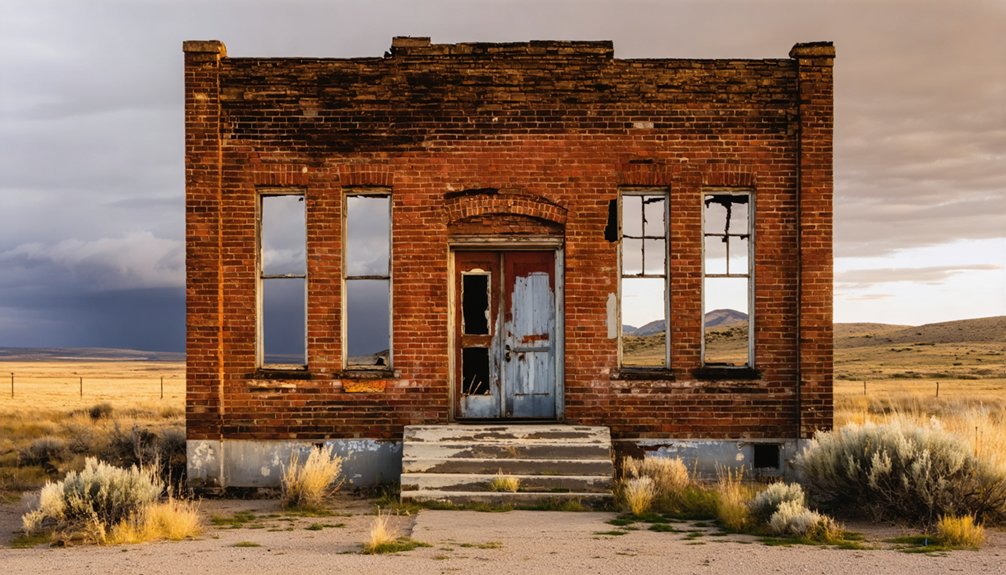
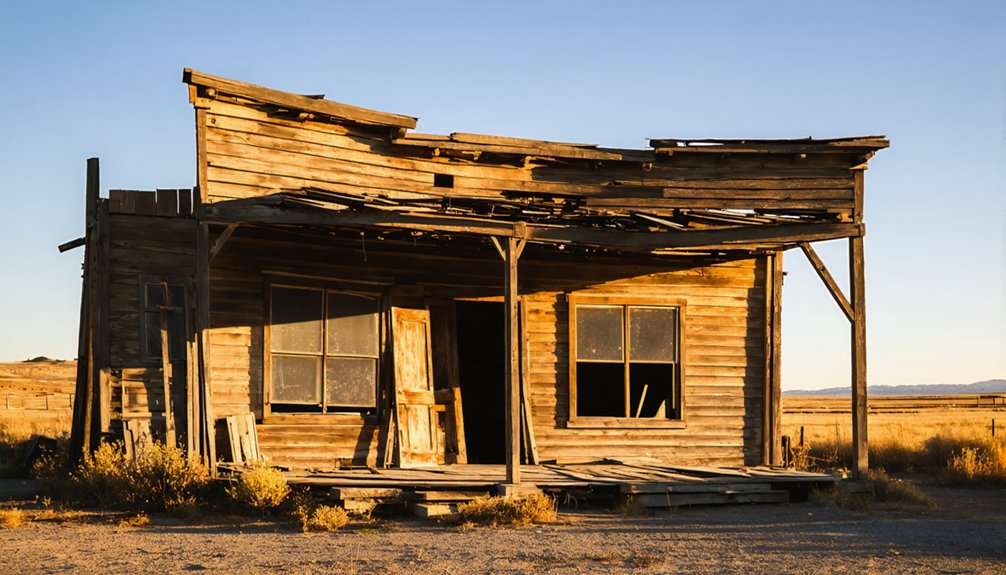
Although much of Stibnite’s industrial infrastructure was dismantled after the post-war closure in 1947, you’ll still find striking remnants of its mining past scattered across the landscape. Abandoned machinery sits frozen in time, slowly surrendering to the mountain elements.
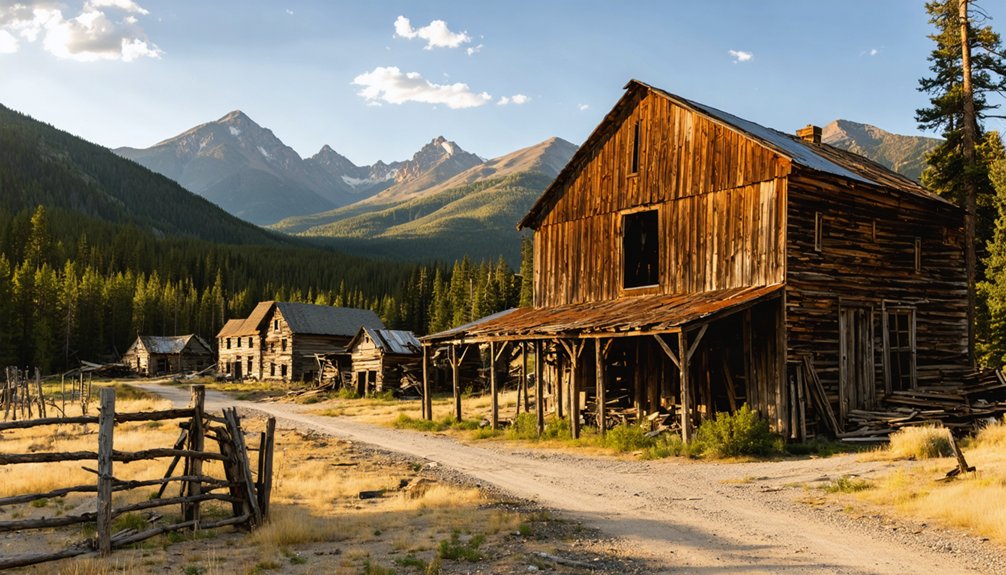
Historic buildings lean against the weight of decades, quietly narrating stories of a once-bustling village that housed 900 residents at its peak.
The infamous “Glory Hole” dominates the terrain — a massive open pit surrounded by stripped earth, dead grass, and a sluggish waste pond.
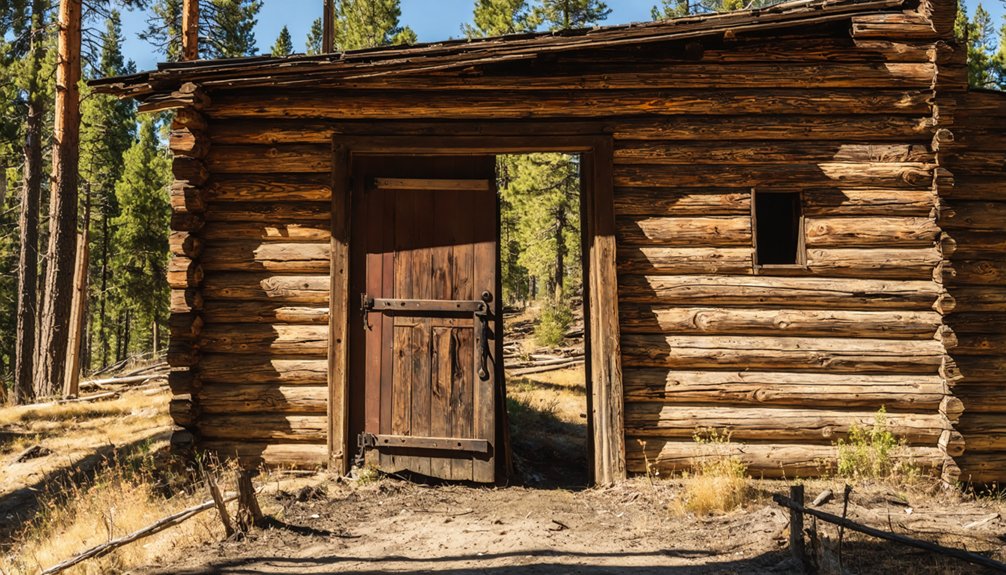
You’ll also notice underground tunnel entrances carved into the hillsides before open-pit methods took over during World War II. It’s raw, unpolished history you can walk through, making Stibnite one of Idaho’s most compelling ghost town destinations for free-spirited explorers.
The Mining History Behind What You’ll See at Stibnite
When you stand at the edge of Stibnite’s Glory Hole, you’re looking at over a century of layered ambition that began with the 1899 Thunder Mountain gold rush. Mining techniques evolved dramatically here, shifting from underground shaft operations to open pit extraction during World War II, when tungsten became critical to Allied forces.
The historical artifacts scattered across the site tell that story visually:
- Underground tunnels carved before open pit methods replaced them
- Remnant mill structures from Bradley Mining Company’s Yellow Pine operation
- War-era excavations that transformed the landscape into what you see today
Stibnite produced gold, antimony, mercury, and tungsten before shutting down in 1997. Every stripped hillside and rusted remnant reflects genuine decisions made by real people chasing survival, profit, and purpose.
How to Get to Stibnite From Mccall
Reaching Stibnite from McCall means committing to roughly 39 miles of mountain road that’ll test both your patience and your vehicle. Head east through the Payette National Forest, where the route climbs into the Salmon River Mountains and rewards you with raw, untamed scenery.
You’ll want a 4WD vehicle — these roads don’t forgive unprepared travelers.
Watch for local wildlife crossing the path; deer and elk claim these mountain corridors as freely as you’re claiming the open road.
As you near Stibnite, historical landmarks begin emerging — remnants of tunnels, aged structures, and the haunting Glory Hole pit that signals your arrival.
Spring, summer, and fall offer the most forgiving conditions.
Winter snows can seal the route entirely, so time your journey wisely.
Road Conditions, Gear, and Access: What to Know Before You Go
Before you load up and head out, know that Stibnite’s roads demand respect — rugged mountain terrain carved through the Salmon River Mountains doesn’t accommodate casual driving. Vehicle preparation isn’t optional here; it’s survival logic for reaching one of Idaho’s most storied ghost towns.
Pack smart and plan ahead:
- 4WD is mandatory — soft shoulders, loose gravel, and steep grades make two-wheel drive vehicles a liability
- Weather awareness saves trips — fall, spring, and summer offer the best windows, but mountain conditions shift fast
- Carry essentials — extra fuel, a first aid kit, and recovery gear belong in your rig before you leave pavement behind
Stibnite rewards the prepared traveler with stripped earth, haunting silence, and decades of forgotten history waiting to be rediscovered.
The Best Time to Visit Stibnite
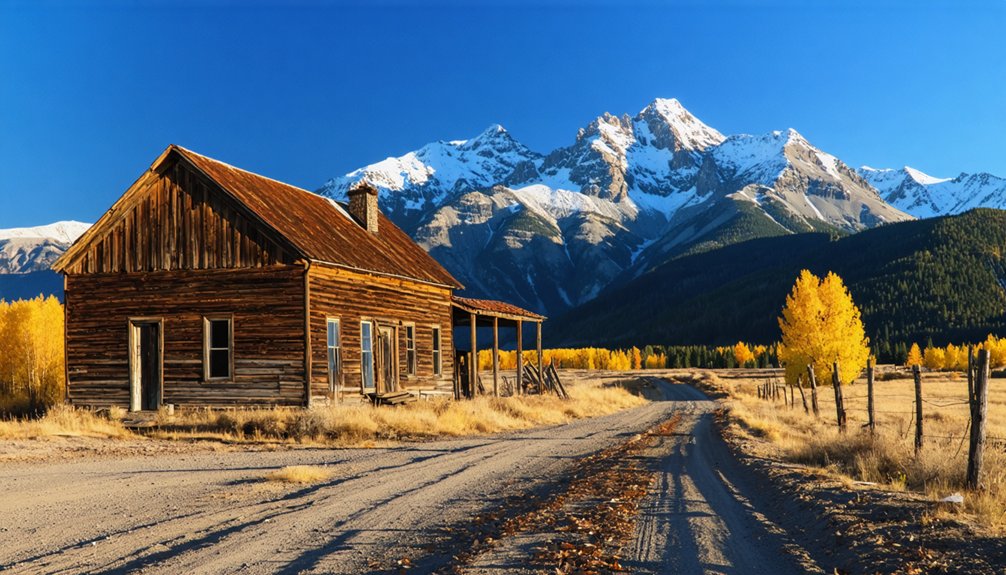
Timing your visit to Stibnite shapes everything — the roads you’ll navigate, the skies overhead, and the mood of the landscape itself. Seasonal weather defines your experience here.
Winters bring heavy snow that renders mountain roads impassable, cutting off the site entirely. Spring thaws open the paths gradually, painting the hillsides with wildflowers and increasing your chances of wildlife encounters along the route.
Summer offers the clearest skies and most reliable road conditions, letting you explore the remnants at your own pace. Fall delivers crisp air, golden foliage, and a quiet solitude that feels fitting for a ghost town’s haunted atmosphere.
Whichever season calls you, avoid winter entirely. The mountains don’t negotiate — and Stibnite rewards those who arrive prepared.
Frequently Asked Questions
Is Stibnite Ghost Town Listed on Any Official Historical Registries?
Yes, you’ll find Stibnite listed with the Idaho State Historical Society, making it a recognized site for historic preservation. Its rich mining legacy fuels tourism development, connecting you to a nostalgic era of frontier freedom.
What Strategic Minerals Made Stibnite Important During World War II?
You’ll find that Stibnite’s mineral extraction of mercury, antimony, gold, and tungsten made it crucial to wartime supply efforts. These strategic resources fueled the Allied push for freedom, cementing Stibnite’s proud, irreplaceable legacy during World War II.
Are There Any Current Proposals to Reopen Mining at Stibnite?
Yes, you’ll find the Stibnite Gold Project actively proposes reopening this storied site. It’s balancing mining environmental impact with community revitalization, breathing new life into land your adventurous spirit recognizes as historically rich yet ecologically scarred.
How Did Past Mining Operations Affect Fish Migration at Stibnite?
Past mining operations devastated fish habitat, virtually obliterating spawning migrations that once thrived freely. You’ll find the environmental impact left streams struggling, as decades of unchecked mining choked the waters, silencing nature’s once-vibrant, untamed rhythms forever.
What County and Mountain Range Is Stibnite Ghost Town Located In?
You’ll find Stibnite’s rich mining history nestled in Valley County, within Idaho’s rugged Salmon River Mountains. This ghost town preservation site calls to your free spirit, where untamed peaks guard decades of forgotten, yet remarkable, mountain heritage.
References
- https://www.youtube.com/watch?v=OOvdW9kLu3A
- https://www.idahorivers.org/stibnite-history
- https://en.wikipedia.org/wiki/Stibnite_Mining_District
- https://www.youtube.com/watch?v=EolDWZUeskY
- https://www.ghosttowns.com/states/id/stibnite.html
- https://history.idaho.gov/wp-content/uploads/2018/09/Stibnite_Historic_District_87001186.pdf
- https://www.nezperce.org/wp-content/uploads/2019/01/Pioneering-plan-for-scarred-Idaho-tract-may-rock-industry-Article.pdf
- https://www.wealthdaily.com/the-100-billion-metal-hiding-in-idahos-ghost-mine/
- https://yellowpinetimes.wordpress.com/2019/01/06/idaho-history-jan-6-2018/
- https://www.intermountainhistories.org/items/show/625