Sherman isn’t in Vermont—it’s a Colorado ghost town hidden in Hinsdale County’s rugged alpine terrain, and that distinction matters when you’re planning a serious road trip. You’ll base yourself in Lake City, drive 12.2 miles of gravel road, and discover collapsed cabins, stone foundations, and remnants of mining operations that lasted until 1925. Time your visit between June and September for the best access. Stick around, and you’ll uncover everything you need to make this journey unforgettable.
Key Takeaways
- Sherman is a ghost town in Hinsdale County, Colorado, not Vermont, located along the Alpine Loop near White Cross.
- From Lake City, follow CO-149, then travel 13 miles via paved and gravel roads, taking the left fork at mile 12.2.
- Visit during summer (June–September) for optimal road conditions, accessible structures, and safe high-altitude exploration.
- Key sites include one intact cabin, stone foundations, the collapsed Tabasco Mill, and nearby Animas Forks settlement.
- Pack water, a spare tire, layered clothing, first-aid supplies, and a paper map due to limited cell service.
What Is Sherman, Colorado and Why Visit?
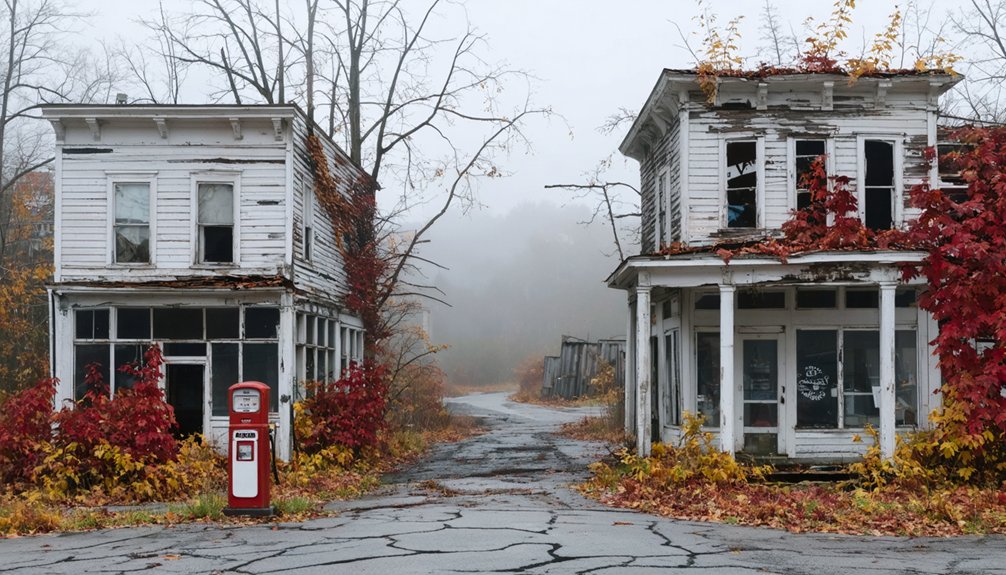
Although the article title points you toward Vermont, Sherman is actually a ghost town tucked into Hinsdale County, Colorado, and it’s well worth the detour. Situated near White Cross along the legendary Alpine Loop, Sherman carries real historical significance as a former mining settlement that thrived before harsh winters and relentless spring floods forced its abandonment.
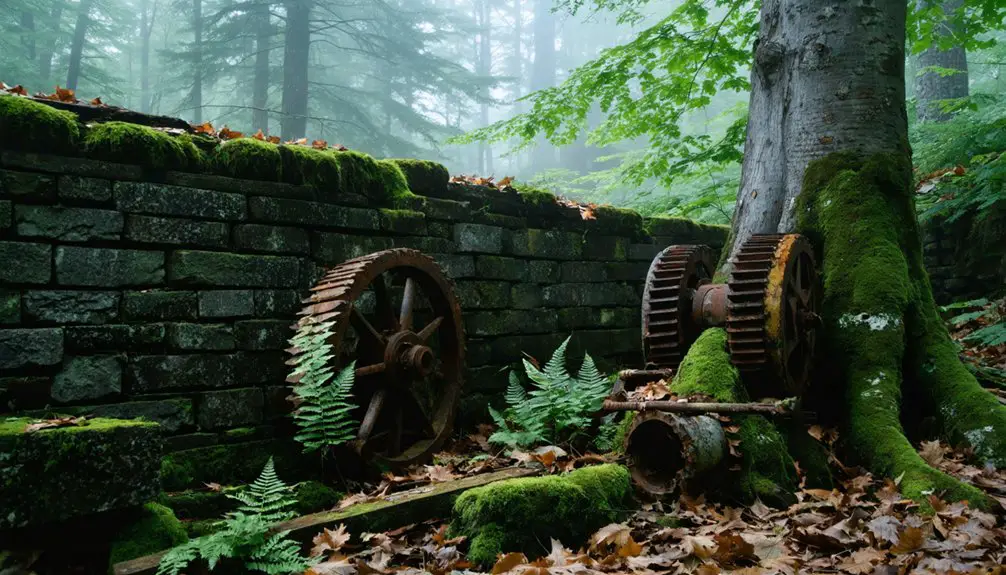
You’ll find one relatively intact cabin still standing, alongside collapsed structures and stone foundations that silently tell the story of the town’s past. Preservation efforts have prompted warning signs and fencing around unstable foundations, so you can explore freely while staying safe.
Mining operations pushed through into the early 1900s, with intermittent activity lasting until 1925. Sherman rewards curious travelers who crave authentic history without the crowds.
Where to Stay in Lake City Before You Go
Before you head out to explore Sherman, you’ll want to secure a comfortable base in Lake City, Colorado — a charming mountain town with lodging options that suit every budget and travel style. You can choose from cozy cabins, rustic inns, and bed-and-breakfasts that put you within easy reach of the Alpine Loop.
If you’d rather sleep under the stars, several campgrounds sit near town and offer stunning high-altitude scenery to kick off your adventure.
Top Lodging Options
Since Lake City serves as your base camp for exploring Sherman, you’ll want to book your lodging well in advance—this small mountain town fills up fast during summer.
You’ve got solid options ranging from cozy cabins to historic bed-and-breakfasts where local legends about the region’s mining past come alive through innkeeper storytelling.
The Crystal Lodge and nearby vacation rentals put you close to trailheads and outfitters who know the Alpine Loop intimately.
Some properties even display historical artifacts recovered from surrounding ghost towns, giving you a head start on understanding the area’s heritage before you hit the road.
Choose a spot with covered parking if you’re bringing a loaded 4WD rig, and always confirm your reservation—cancellations here get snapped up immediately.
Camping Near Town
If roughing it sounds more appealing than a hotel room, Lake City‘s campgrounds deliver stunning high-altitude scenery right outside your tent door. You’ll wake up surrounded by towering peaks, fresh alpine air, and genuine wilderness freedom before heading out to explore Sherman’s historical artifacts and ruins.
Top camping spots near Lake City include:
- Slumgullion Campground – Affordable sites with mountain views and easy highway access
- Williams Creek Campground – Secluded riverside setting perfect for wildlife observation
- Packer Campground – Primitive sites close to the Alpine Loop trailhead
- Crystal Lakes Campground – Ideal for fishing and stargazing at elevation
- Bureau of Land Management dispersed camping – Maximum flexibility along the Gunnison River corridor
Book early since summer sites fill quickly.
When Is the Best Time to Visit Sherman Ghost Town?
You’ll want to plan your visit to Sherman during the summer months, when the roads are clear and the weather is cool but manageable.
Winter brings heavy snow that makes the site virtually inaccessible, so arriving between June and September gives you the best chance of exploring the remains safely.
Timing your trip right means you’ll spend more time discovering the historic cabins and stone foundations instead of battling harsh conditions.
Summer Offers Ideal Conditions
Summer is the best time to visit Sherman, Colorado, as the region’s cold winters and heavy snowfall make the site nearly inaccessible for much of the year. You’ll find the roads manageable and the historical context of this mining ghost town fully visible without snow obscuring foundations and structures.
Preservation efforts are most effective when visitors can clearly see and respect the fenced-off areas.
Plan your summer visit around these key advantages:
- Roads remain passable for 2WD vehicles
- Intact cabins and stone foundations are fully visible
- Fenced warning signs are easier to navigate safely
- Photography conditions are ideal with clear mountain light
- Surrounding trails toward White Cross and Cinnamon Pass are accessible
Don’t wait — summer windows are short at this elevation.
Avoid Winter Snow Months
Winter buries Sherman, Colorado under heavy snow that makes the roads impassable and the site nearly invisible beneath frozen drifts. You’ll find the access route from CO-149 completely unnavigable from late fall through early spring, cutting off any chance of exploring the remaining cabin, stone foundations, and collapsed structures that speak to the site’s historical significance.
Spring flooding adds another layer of danger, washing out gravel sections along the 13-mile route. These seasonal forces are the same ones that originally drove residents away, making winter visits not just impractical but disrespectful to ongoing preservation efforts protecting what little remains.
Plan your trip between June and September. You’ll get stable roads, accessible trails, and clear views of the mining-era ruins without risking your safety or damaging the fragile site.
How to Get to Sherman From Lake City
Getting to Sherman from Lake City is straightforward, though the final stretch trades pavement for gravel. Turn off CO-149 about 2.2 miles south of Lake City’s bridge, where your journey into history begins.
History awaits just off CO-149 — pavement surrenders to gravel, and Sherman reveals itself.
You’ll cruise 4.1 miles of pavement before hitting 8.9 miles of solid gravel.
At 12.2 miles, watch for the fork — Sherman sits 0.8 miles left.
- Turn south off CO-149, 2.2 miles past Lake City’s bridge
- Enjoy 4.1 miles of paved road before gravel begins
- Navigate 8.9 miles of well-maintained gravel road
- Bear left at the 12.2-mile road split
- Travel 0.8 miles to reach Sherman’s historical artifacts and preservation efforts
A standard 2WD vehicle handles this route comfortably, keeping the adventure accessible for every freedom-seeking traveler.
What’s Left at the Sherman Ghost Town Site?
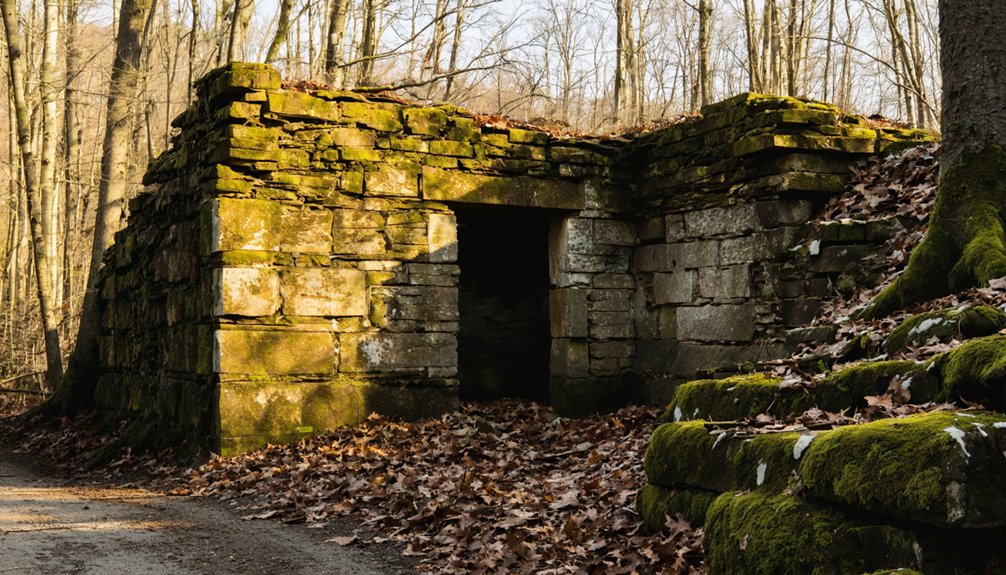
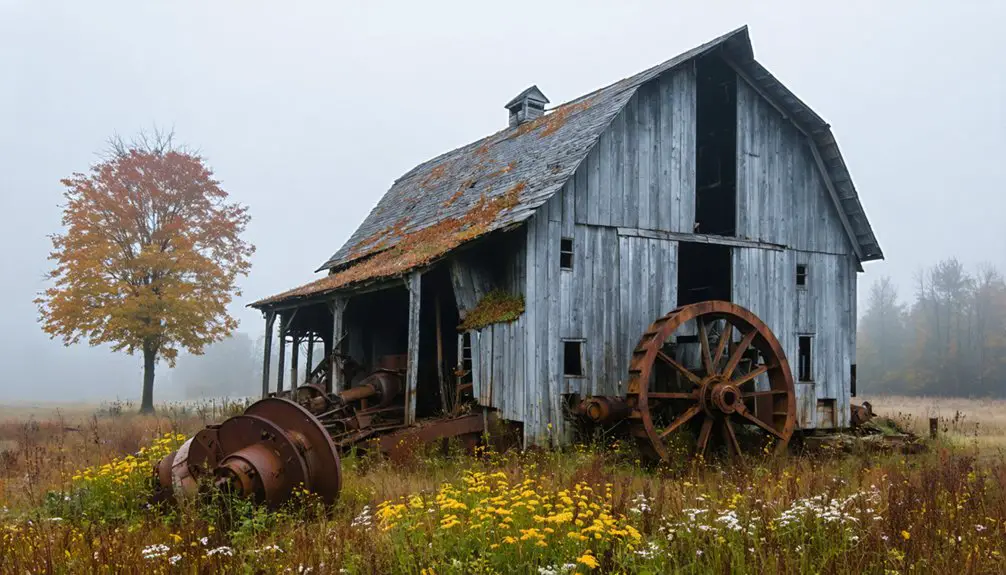
Though time and the elements have claimed most of Sherman, you’ll still find enough standing to spark your imagination. One relatively intact cabin anchors the site, giving you a tangible connection to the miners who once called this place home.
A collapsed structure nearby shows just how brutal Colorado winters can be on historical preservation efforts.
You’ll spot several stone foundations scattered across the property, but don’t get too close — they’re fenced off with warning signs for your visitor safety.
A blocked bridge leads toward dilapidated mining structures and equipment worth photographing from a distance.
One mile further up the trail, the Tabasco Mill sits completely collapsed, offering limited visual interest.
Every remaining structure tells a story of ambition overtaken by snow, floods, and time.
Fenced Foundations and Blocked Bridges: On-Site Hazards at Sherman
Safety comes first when you’re exploring Sherman, so it’s worth knowing exactly what you’re walking into before you arrive.
Historical preservation efforts mean some areas are deliberately restricted, balancing visitor safety with protecting what remains.
Watch for these on-site hazards before you wander:
- Fenced-off stone foundations marked with warning signs throughout the site
- A blocked bridge preventing direct access to dilapidated mining structures and equipment
- Collapsed structures that create unstable ground nearby
- Restricted mining areas where deteriorating materials pose serious risks
- Uneven terrain surrounding remaining cabins and ruins
Respect every barrier you encounter. Those fences aren’t obstacles to your adventure — they’re protecting both you and the site’s historical preservation integrity.
Stay on open paths, keep your eyes sharp, and you’ll explore Sherman safely and fully.
What to Bring for High-Altitude Dirt Road Access
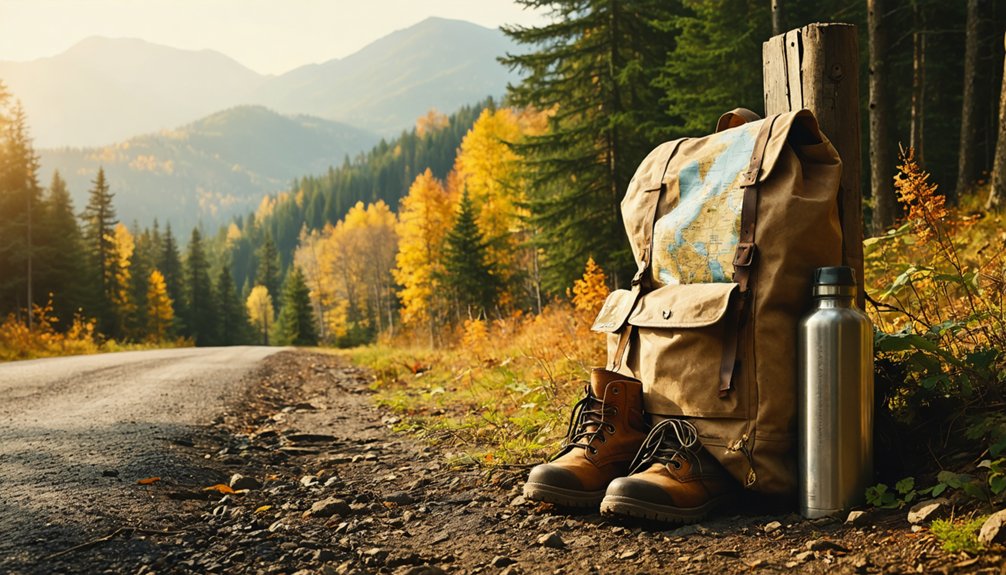
Preparing your vehicle and gear correctly makes the difference between a smooth run to Sherman and a frustrating breakdown on an exposed mountain road.
You’ll tackle 8.9 miles of gravel climbing toward high elevation, so pack accordingly. Bring extra water, a spare tire, a basic tool kit, and a first-aid kit.
Traction matters on loose gravel, so check your tires before departure. Carry sunscreen and layers, since mountain temperatures shift fast.
A paper map backs you up where cell service drops. Respecting historical preservation means leaving tools and artifacts untouched, and visitor safety demands you stay behind fenced foundations and heed posted warning signs.
Fuel up in Lake City before heading out, because you won’t find a gas station once you’re on the Alpine Loop.
Nearby Ghost Towns Worth Adding to Your Route
Once you’ve explored Sherman, the Alpine Loop delivers more ghost towns within easy reach of your route. Historical preservation efforts keep these sites accessible while visitor safety remains a priority throughout.
- White Cross – Located 7.3 miles up the right trail from the Sherman road split.
- Animas Forks – A well-preserved mining settlement visible after crossing Cinnamon Pass.
- Cinnamon Pass – Peaks at 12,680 feet, connecting you to spectacular surrounding sites.
- Tabasco Mill – Sits one mile past Sherman toward Cinnamon Pass, though largely collapsed.
- Lake City – Your base camp, offering supplies and local historical context before heading out.
Each stop adds depth to your journey, rewarding your curiosity with raw, unfiltered glimpses into Colorado’s mining past.
How Far Is It to White Cross and Cinnamon Pass?
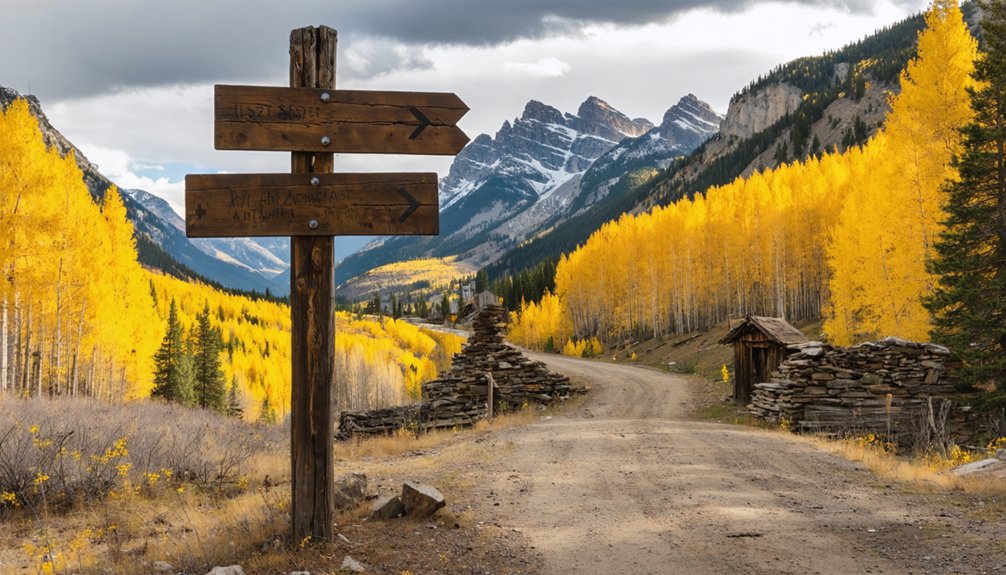
Distances matter when you’re planning how much ground to cover in a single day, and the Alpine Loop rewards those who push a little further beyond Sherman.
Every mile beyond Sherman on the Alpine Loop reveals why distance is the deciding factor between a good day and a great one.
From the road split at 12.2 miles, White Cross sits 7.3 miles up the right trail — a worthwhile detour showcasing historical mining heritage scattered across rugged high-altitude terrain.
Continue past Sherman toward Cinnamon Pass, cresting at 12,680 feet, where Animas Forks appears below like a reward for your persistence.
One mile beyond Sherman, you’ll encounter the collapsed Tabasco Mill, where preservation efforts have largely stalled.
The pass itself opens dramatic views that few ghost town routes can match.
Plan your timing carefully — these elevations shift fast, and daylight is your most valuable resource out here.
Frequently Asked Questions
Is Sherman, Colorado the Same as Sherman, Vermont?
Like two ships passing in the night, they’re not the same. You’ll find Sherman, Colorado’s historic architecture and local legends near Lake City, while Sherman, Vermont doesn’t exist in official ghost town records.
Who Originally Founded the Mining Settlement at Sherman, Colorado?
The knowledge base doesn’t reveal who originally founded Sherman, Colorado’s mining settlement. You’ll want to dig deeper into the site’s settlement origins and mining history through local Hinsdale County records to uncover those pioneering founders yourself!
Are Guided Tours Available at the Sherman Ghost Town Site?
You’ll find Sherman’s historical preservation wonderfully untouched by tourist amenities—no guided tours exist, leaving you gloriously free to explore independently. Navigate fenced foundations and warning signs yourself, embracing the raw, unscripted adventure this Colorado ghost town authentically offers.
Is the Sherman Ghost Town Site on Public or Private Land?
You’ll find Sherman’s abandoned ghost town sits on public land, letting you freely explore its historic landmarks. You can roam the site’s remaining cabin and stone foundations without restrictions, though you’ll want to respect posted warning signs.
Has Sherman, Colorado Ever Been Featured in Films or Documentaries?
No confirmed films or documentaries feature Sherman, Colorado, but you’ll discover its historical architecture and wildlife encounters are cinematically stunning. You can’t miss how its rugged, untamed landscape embodies the freedom of Colorado’s wild, forgotten frontier.
References
- https://www.ghosttowns.com/states/co/sherman.html
- https://en.wikipedia.org/wiki/List_of_ghost_towns_in_Vermont
- https://en.wikipedia.org/wiki/Sherman