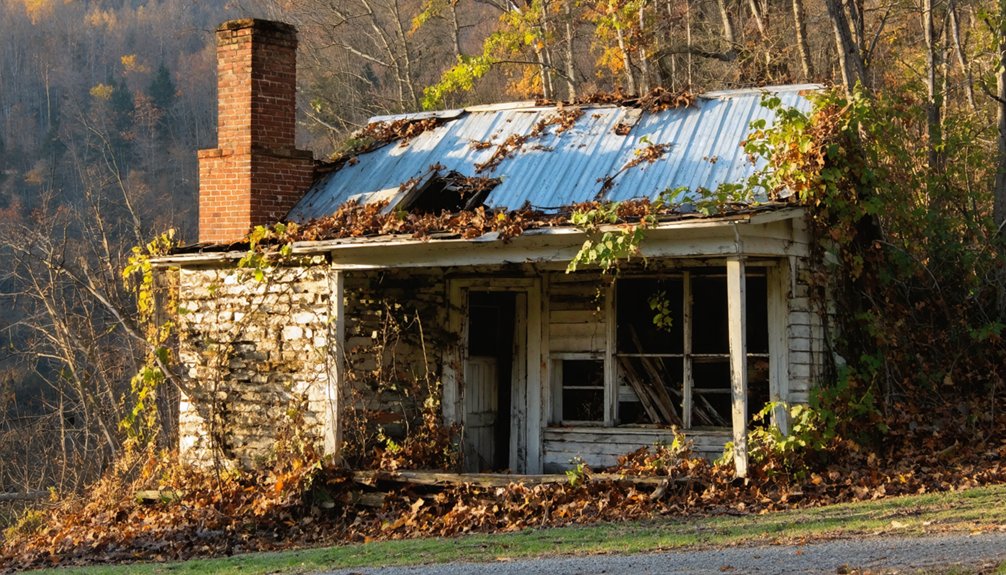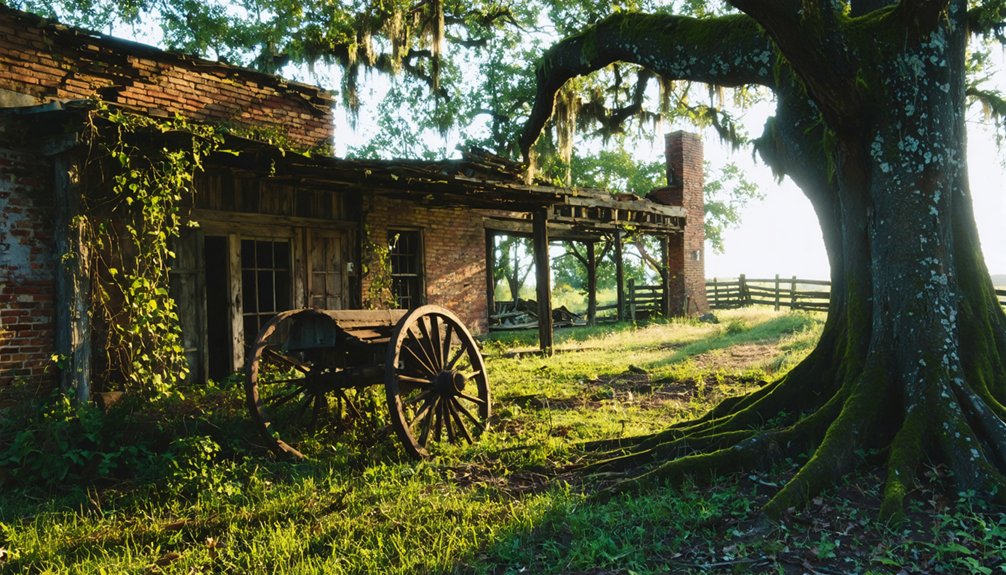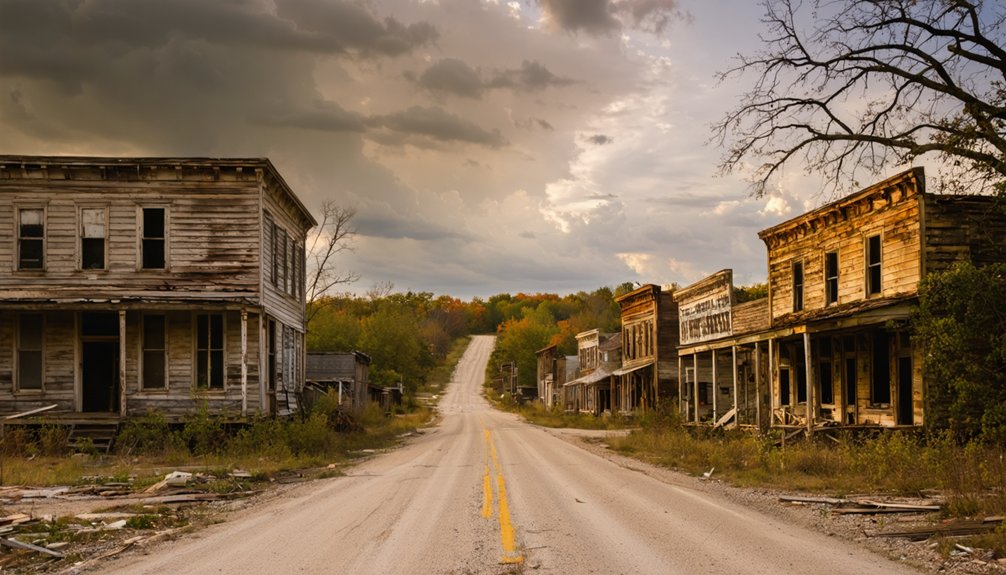
When you road trip to Sneed, Arkansas, you’re visiting a ghost town that an F5 tornado completely erased on April 10, 1929. It’s Arkansas’s only documented F5, and it killed 23 people in a matter of minutes. Today, you’ll find a quiet clearing in northern Jackson County—no signs, no structures, just reclaimed land where a community once stood. There’s far more to this story than the landscape reveals.
Key Takeaways
- Sneed, Arkansas, is a ghost town in northern Jackson County, destroyed by an F5 tornado on April 10, 1929, killing 23 people.
- No structures, street signs, or heritage markers remain; the site is reclaimed by grasses, brush, and trees.
- Access requires high-clearance vehicles and offline maps, as roads are unpaved and potentially muddy after rain.
- Visitors should arrive informed, move respectfully, photograph thoughtfully, and never remove artifacts or fragments from the site.
- Nearby Swifton and Pleasant Valley offer additional historical context, making the region ideal for a self-guided ghost town road trip.
What Made Sneed, Arkansas a Ghost Town?
On April 10, 1929, an F5 tornado — the only one of that intensity ever documented in Arkansas — tore through Sneed and left not a single building standing. The storm was part of a larger outbreak that produced at least eight tornadoes across northeastern Arkansas that same day.
Sneed, already a small rural farming community, never recovered. Twenty-three people died in the immediate area, and rescue teams struggled through blocked roads and heavy debris to reach survivors. Some sheltered under bridges, in barns, or in storm cellars.
Rebuilding efforts followed, but the community gradually faded. The abandoned stories and local legends tied to that single catastrophic afternoon are what draw curious travelers here today.
Where Sneed Sits in Northern Jackson County
You’ll find Sneed tucked into northern Jackson County, a rural stretch of Arkansas that once supported small farming communities scattered across the landscape.
The former settlement sat close to Pleasant Valley, also known as Possum Trot, another ghost town that shared in the devastation of the 1929 tornado outbreak.
To reach the site today, you’ll want to research current county road access, since no maintained heritage infrastructure marks the way to what’s now little more than a clearing.
Northern Jackson County Location
Tucked into northern Jackson County, Arkansas, Sneed sits near the former Pleasant Valley area, a rural stretch once populated by farm communities before the 1929 tornado outbreak erased them from the landscape. You’ll find no street signs marking its boundaries, no restored storefronts hinting at former life.
What greets you instead is a clearing reclaimed by local flora — grasses, brush, and trees quietly covering ground where a church and school once stood side by side.
Ghost town legends often romanticize abandonment, but Sneed’s story carries heavier weight. The land itself holds the memory of a disaster that killed 23 people in a single community.
You’re not visiting a forgotten boomtown — you’re standing on ground that survived Arkansas’ most powerful tornado on record.
Nearby Former Communities
Where Sneed sits in northern Jackson County, Pleasant Valley — locally known as Possum Trot — once stood about two miles to the west, making the two communities close neighbors in both geography and fate.
The April 10, 1929 tornado reached its peak fury near Pleasant Valley before tracking east and erasing Sneed entirely. Today, both communities are ghost towns, and you won’t find abandoned structures at either site — just open land reclaimed by time.
Local folklore keeps the memory of both places alive, passed down through families who lost relatives in the same storm system. When you visit, understanding that these two communities shared the same catastrophic moment gives the landscape a weight that no roadside marker could fully capture.
Getting To Sneed
Sneed sits in northern Jackson County, Arkansas, and getting there means traversing the rural roads that cut through flat Delta farmland. No highway signs mark the destination, so preparation matters. Local folklore keeps the community’s memory alive, though formal preservation efforts remain minimal.
Before heading out, note these essentials:
- Download offline maps — cell service is unreliable across this remote stretch of Jackson County
- Use Swifton as your base town — it’s the nearest recognizable landmark and once served as the disaster’s makeshift morgue
- Drive a high-clearance vehicle — unpaved county roads can turn muddy quickly
- Visit during dry months — spring conditions mirror the wet aftermath rescuers faced in 1929
The clearing where Sneed‘s church and school once stood rewards patient, self-directed travelers willing to seek it out.
The 1929 F5 Tornado That Erased Sneed
On April 10, 1929, an F5 tornado tore through northeastern Arkansas and wiped Sneed off the map entirely. It’s the only tornado of that intensity ever recorded in Arkansas, and it left nothing standing.
On April 10, 1929, Arkansas’s only F5 tornado erased Sneed completely — not a single structure left standing.
The storm stretched roughly half a mile wide at peak strength, first crushing Pleasant Valley before pushing two miles east to finish off Sneed. Not a single building survived.
Twenty-three people died in the Sneed area alone, with at least 59 injured across the devastated communities. Rescue teams fought through debris-choked, muddy roads to reach survivors.
Some rebuilt, but the community never recovered. Today, tornado legends and ghost town legends define this site more than any structure ever could. What you’ll find is a clearing and a powerful story.
How the Storm Killed 23 People in the Sneed Area

When the F5 tornado tore through Sneed on April 10, 1929, it killed 23 people in the immediate area and left between 56 and 59 others injured.
Survivors made it out by sheltering in storm cellars, ducking under a road bridge, or taking cover in a barn or chicken house.
Rescue crews struggled to reach the wounded because blocked roads, heavy timbers, and muddy conditions slowed every step of the effort.
Death Toll And Injuries
The April 10, 1929 tornado didn’t just destroy buildings in Sneed—it killed 23 people in the immediate area, leaving dozens more wounded in its wake. This weather phenomena ranks among Arkansas’ deadliest, and local legends still echo the horror survivors carried with them.
Across the full outbreak, at least 54 people died statewide. Here’s what the human toll looked like:
- 23 deaths occurred in the Sneed area alone
- 56 to 59 people sustained injuries, depending on the source
- 54 total deaths resulted from the broader April 10 outbreak across Arkansas
Rescue crews faced blocked roads, heavy debris, and muddy conditions that slowed every effort.
You’re visiting ground where real people lost everything in minutes.
Survivor Accounts And Rescue
Behind every number in that death toll is a story of split-second decisions that meant the difference between life and death. Survivors dove into storm cellars, huddled under road bridges, pressed themselves into barns, or crowded into chicken houses while the F5 tore through. Those choices saved lives. Others weren’t so fortunate.
After the storm passed, rescue crews faced blocked roads, heavy timber debris, and thick mud that slowed every effort to reach the wounded. A makeshift morgue was established in nearby Swifton. Survivors later received typhoid inoculations in recovery tents.
These accounts became the ghost town legends and tornado legends that define Sneed’s identity today. When you visit this clearing in Jackson County, you’re standing inside one of Arkansas’s darkest and most consequential weather stories.
What You’ll Actually Find at the Sneed Site Today
Arriving at the Sneed site today, you’ll find little more than a clearing where the church and school once stood side by side. There’s no restored heritage park, no interpretive signage, and no standing structures. What remains is open land in northern Jackson County — raw, quiet, and honest about what was lost.
A clearing. Open land. The silence where a church and school once stood — honest about what was lost.
Community memory lives here not through buildings but through absence itself, making historical preservation a personal act of recognition for every visitor.
Before you go, set your expectations clearly:
- No standing buildings remain at the site
- The clearing marks where the church and school once stood
- Roads near the area may still be rural and unpaved
- The site reflects disaster history, not restored architecture
Approach it with respect — you’re walking through a graveyard of an entire community.
The 1929 Outbreak History Worth Reading Before You Visit
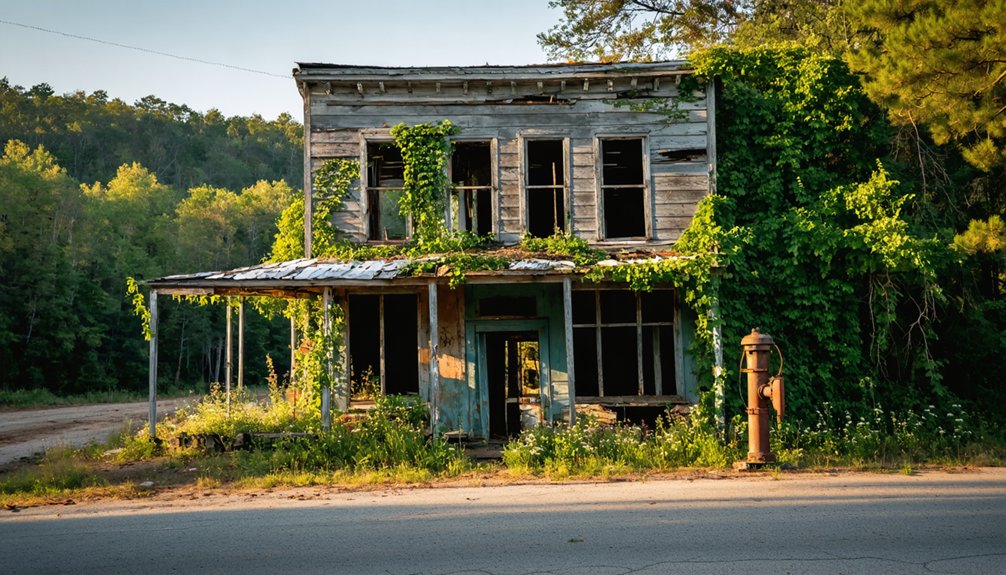
Understanding what erased Sneed from the map makes the clearing far more striking when you finally stand in it. On April 10, 1929, an F5 tornado — Arkansas’s strongest ever recorded — tore through Jackson County, killing 23 people in the Sneed area alone and leaving no building intact.
The storm was part of a larger outbreak producing at least eight tornadoes across northeastern Arkansas that day, causing 54 deaths statewide.
Before you visit, read about that outbreak. You’ll appreciate the historical preservation challenge this site represents — there’s simply nothing left to preserve beyond the land itself.
You’ll also recognize the community resilience that followed: survivors rebuilt, at least partially, before Sneed quietly faded across the following decades. That full arc gives the clearing its real weight.
How to Reach the Sneed Ghost Town Site
Sneed sits in northern Jackson County, and you’ll want to orient your route around the former Pleasant Valley area — historically known as Possum Trot — since that’s the closest named landmark to the site. No signs mark the location, so local legends from longtime residents can genuinely guide you better than most maps.
Preservation efforts here are minimal, meaning you’re finding your way toward a clearing rather than a maintained landmark.
Pack these essentials before heading out:
- Download offline maps covering northern Jackson County
- Research the Pleasant Valley/Possum Trot coordinates specifically
- Contact local Jackson County historical groups for current access details
- Expect unpaved or muddy rural roads, especially after rain
Approach the site with patience — it rewards explorers who prepare rather than those expecting posted directions.
Other Arkansas Disaster and Ghost Town Sites Nearby
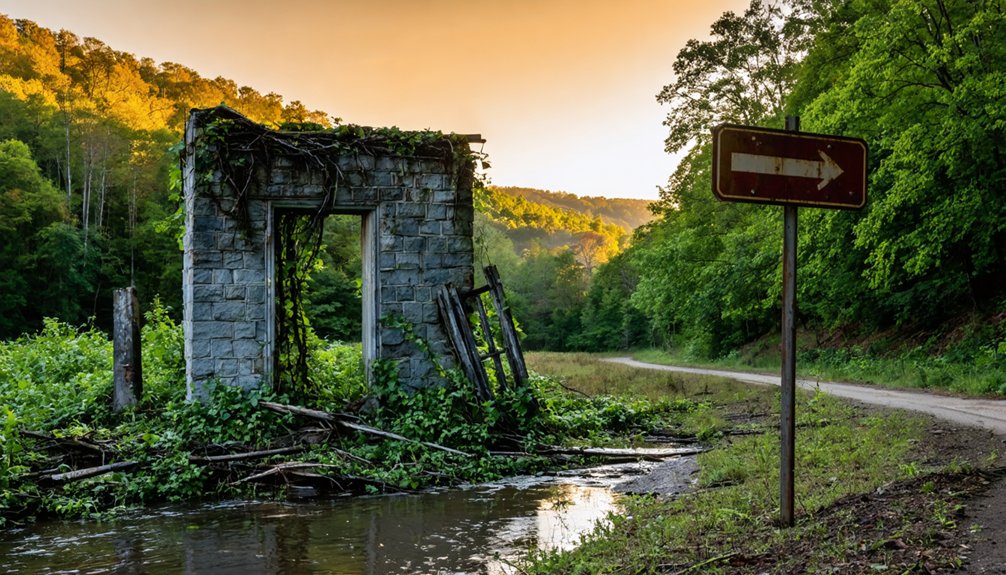
Once you’ve walked the clearing at Sneed, northeastern Arkansas opens up a broader story of rural communities shaped — and erased — by weather and time.
Pleasant Valley, just two miles west, shares Sneed’s fate — another ghost town swallowed by the same 1929 tornado outbreak. Both sites carry local folklore about survivors who rebuilt briefly before eventually leaving for good.
Jackson County’s broader landscape holds additional abandoned rural settlements worth tracing on a map before you drive.
Swifton, where a makeshift morgue received the tornado’s victims, still exists as a small town and offers historical grounding for your visit.
Preservation efforts across the region remain minimal, so you’re largely reading the land itself — a freeing, self-directed kind of history that rewards curiosity over comfort.
Visiting Sneed Without Disrespecting Its History
Shifting from cataloging nearby sites to actually standing at Sneed’s clearing requires a different mindset — one that moves from historical curiosity to something closer to witness. Twenty-three people died here. That fact should shape how you move through the space.
Respectful tourism and historical preservation go hand in hand at sites like this. Keep both in mind:
- Don’t remove anything — even fragments feel like artifacts here
- Stay off private land without confirmed permission
- Photograph thoughtfully — avoid framing the clearing as a novelty backdrop
- Learn before you go — understanding the 1929 outbreak gives the silence meaning
You’re visiting a disaster site, not a theme park. Arrive informed, move quietly, and let the clearing speak on its own terms.
Frequently Asked Questions
Is There a Historical Marker or Sign at the Sneed Site?
The available records don’t confirm any historical markers or signage details at Sneed’s site. You’ll find only a clearing where the church and school once stood, so don’t expect posted landmarks during your visit.
What Is the Best Time of Year to Visit Sneed?
Spring and fall offer the best photography months for visiting Sneed. You’ll enjoy mild seasonal weather, clearer skies, and dramatic light that captures the haunting clearing beautifully. Avoid tornado season’s unpredictable storms for safer exploration.
Are There Any Local Guided Tours Covering the 1929 Tornado Path?
You won’t find formal guided tours covering the 1929 tornado path, but you can independently explore historic disaster sites, research tornado recovery stories, and trace the storm’s route through northern Jackson County at your own pace.
Is the Sneed Clearing on Public or Private Land?
With 40 houses destroyed in 1929, Sneed’s clearing holds heavy history. Available records don’t confirm whether it’s private land or allows public access, so you’ll want to verify locally before visiting.
What Nearby Towns Offer Food and Lodging for Visitors?
You’ll find local dining and lodging options in Newport and Swifton, the closest active towns near Sneed. Both offer basic accommodations and restaurants, giving you a comfortable base for exploring northern Jackson County’s haunting ghost town history.
References
- https://en.wikipedia.org/wiki/Sneed
- https://arkansaslivingmagazine.com/story/haunting-history/
- https://ominous.app/browse/site/18516
- https://encyclopediaofarkansas.net/entries/sneed-tornado-of-1929-8098/
- https://www.nwaonline.com/news/2024/oct/21/arkansas-sightseeing-ghost-towns-are-silent/
- https://www.onlyinyourstate.com/experiences/arkansas/abandoned-ar
- https://en.wikipedia.org/wiki/List_of_ghost_towns_in_Arkansas
- https://www.facebook.com/GarrettNLewis/posts/-the-only-f5-tornado-in-arkansas-history-hit-97-years-ago-todayever-heard-of-sn/1496592585172170/
- https://urbexunderground.com/ghost-towns-in-arkansas/
- https://en.wiktionary.org/wiki/Sneed