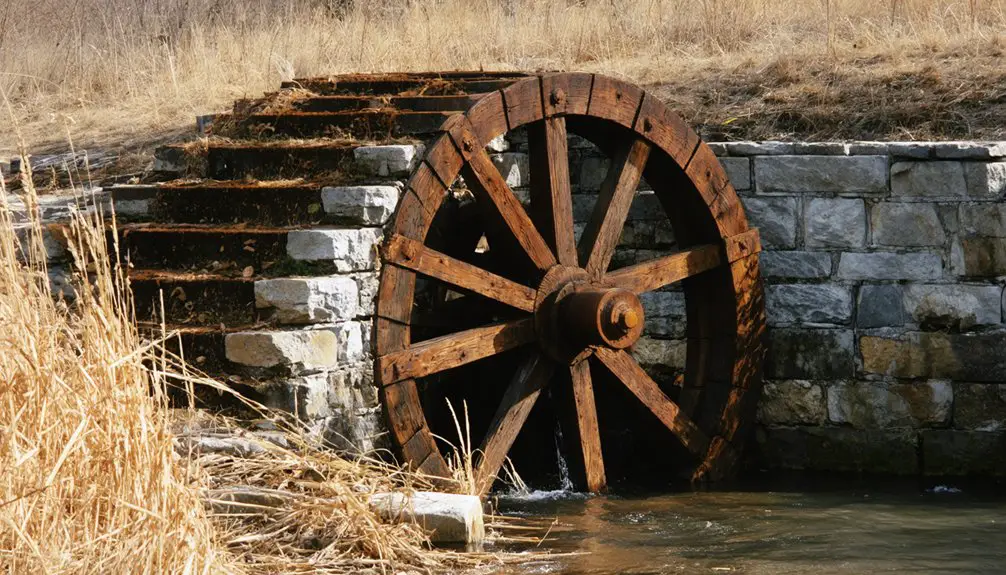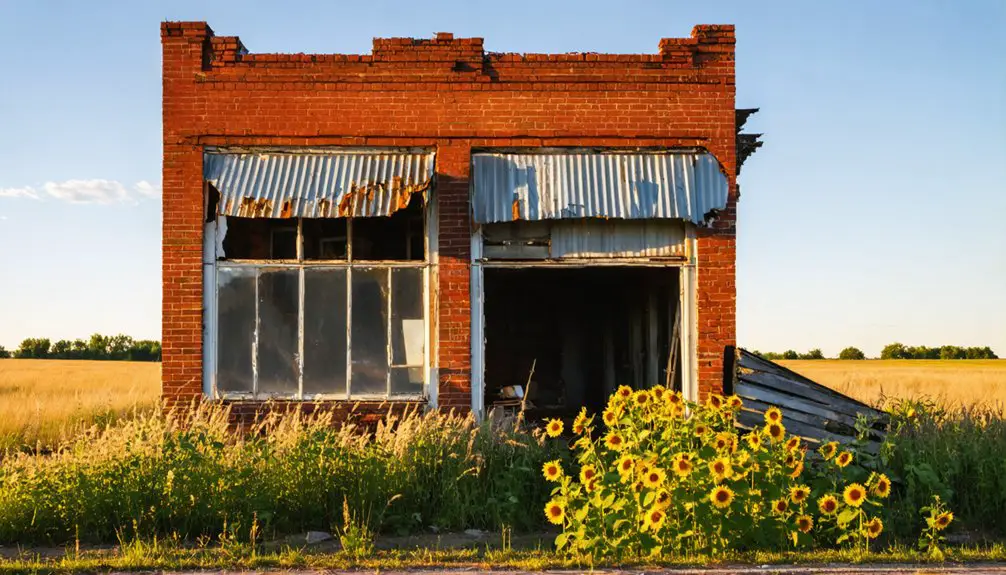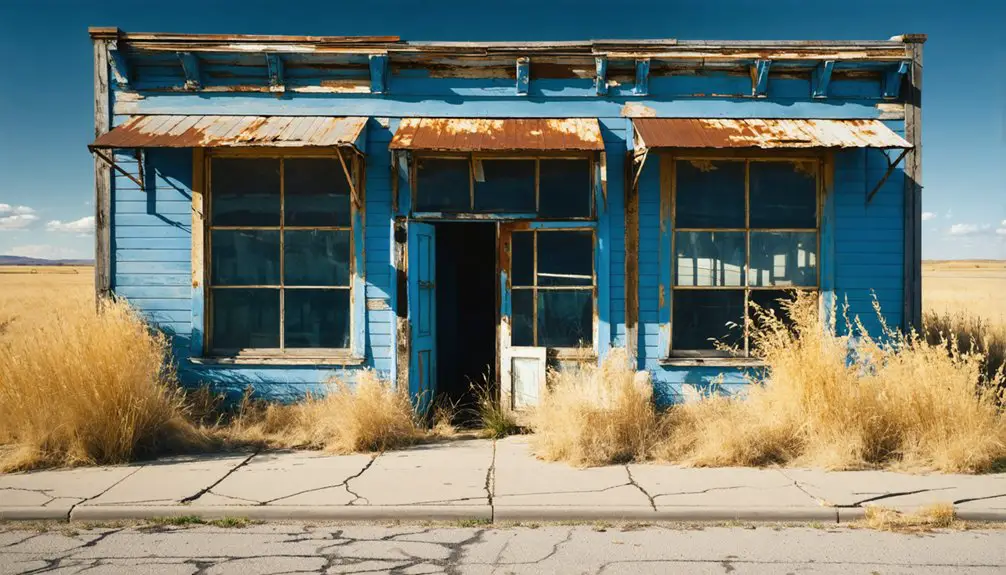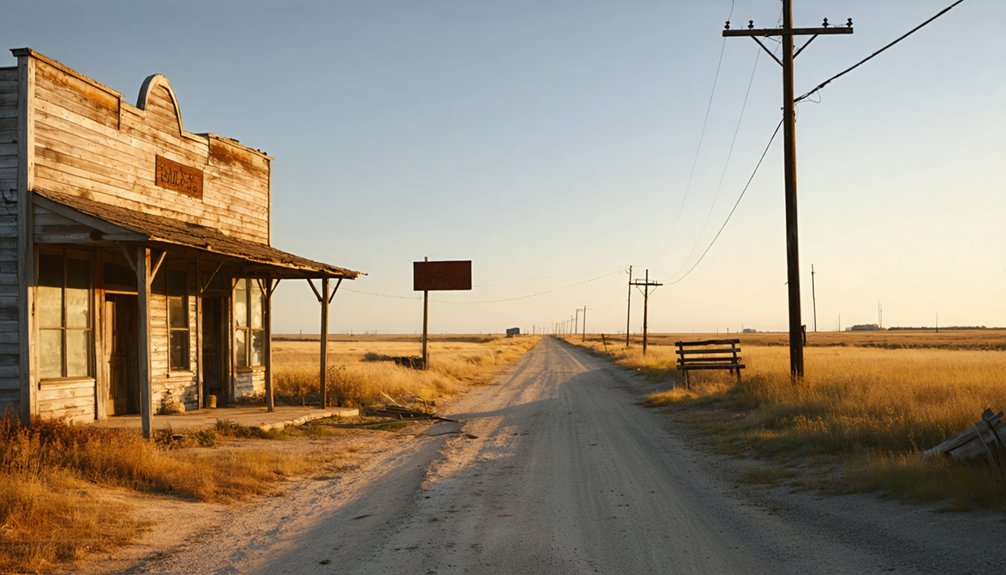
Planning a ghost town road trip to Raymond, Kansas starts with timing your visit in spring or fall, when mild weather keeps rural roads safe and navigable. You’ll want to fuel up in Lyons, just 12 miles away, and download offline maps before losing cell service. Pack water, snacks, and a camera to capture the sweeping prairie landscapes. Raymond’s railroad history, quiet storefronts, and nearby ghost towns make this an adventure worth every mile — and there’s much more to uncover ahead.
Key Takeaways
- Raymond, Kansas, founded in 1871 as a railroad hub, now holds around 85 residents, featuring historic storefronts, grid streets, and authentic prairie character.
- Visit during April–June or September–October for mild temperatures, stable road conditions, and the best overall ghost town exploration experience.
- Pack water, snacks, sturdy shoes, and photography gear, as Raymond’s rural setting offers no nearby services or tourist amenities.
- Download offline maps and check fuel levels in Lyons before departing, since cell service and gas stations near Raymond are extremely limited.
- Nearby historic sites like Ellinwood, Chase, and Plevna complement Raymond, creating a rewarding Kansas ghost town road trip circuit.
What Made Raymond, Kansas a Ghost Town?
Although Raymond, Kansas still has residents, it carries the unmistakable weight of a town that’s outlived its original purpose. Founded in 1871 as a stop on the Atchison, Topeka and Santa Fe Railroad, Raymond once thrived as a shipping hub for grain, livestock, and farm produce. The railroad put it on the map, but railroad abandonment quietly erased its economic reason for existing.
You can feel that shift when you drive through. The bank is gone, the retail bustle has faded, and the population has dropped from 250 in 1910 to roughly 85 today.
Economic decline didn’t happen overnight — it’s been a slow unraveling since the 1950s. Raymond isn’t a deserted ruin, but it’s a living ghost town with a story worth chasing.
What’s Left to See in Raymond, Kansas Today?
What remains in Raymond today is modest but honest — a small incorporated town where the bones of its railroad past still shape the landscape. You won’t find museums or tourist traps here, just authentic town history written across quiet streets and aging structures.
Local landmarks are subtle, but they speak clearly if you’re paying attention.
Watch for these remnants as you roll through:
- Grid-patterned streets laid out during the railroad era
- Sparse storefronts echoing a once-active commercial core
- Residential structures reflecting late 1800s and early 1900s settlement
- Open agricultural land surrounding town, unchanged since farming defined this place
Raymond rewards the curious traveler who values raw, unpolished history over curated attractions. It’s a living snapshot of Kansas prairie heritage — still breathing, still fading.
How to Get to Raymond From Lyons
Once you’ve taken in what Raymond has to offer, getting there from Lyons is straightforward — the county seat sits just 12 miles northeast, making it the natural launch point for this leg of your ghost-town road trip.
Head southwest out of Lyons on local roads cutting through flat Kansas prairie, and you’ll reach Raymond without hassle. The drive itself sets the mood — open skies, agricultural land, and the quiet that defines this region.
Raymond’s historical landmarks and local legends feel more vivid once you’ve traveled the same corridors early settlers and railroad workers once used. Keep your map handy, as signage stays minimal out here.
That isolation is part of the appeal — you’re not just visiting a place, you’re stepping into a quieter, older Kansas.
Kansas Ghost Towns Near Raymond Worth Adding to Your Route
Once you’ve explored Raymond, you can extend your route through Rice County and the surrounding region to take in nearby railroad towns that share the same story of decline after the trains stopped coming.
If mining history draws you in, Kansas has ghost towns like Empire City, where the post office closed in 1913 after the ore ran out, giving you a sharp contrast to Raymond’s agricultural roots.
You’ll also find living ghost towns scattered across the Kansas prairie that, like Raymond, still hold a handful of residents even as their original economic engines have long gone quiet.
Nearby Abandoned Railroad Towns
Raymond fits neatly into a broader Kansas ghost-town circuit, and if you’re already making the drive out to Rice County, you’d be shortchanging yourself by stopping there alone.
The surrounding region holds railroad towns that share Raymond‘s story of historical preservation and local legends carved into the prairie landscape.
Add these stops to stretch your route:
- Empire City – a mining-era ghost town where the post office closed in 1913, leaving silence behind
- Ellinwood – a town with underground tunnels tied to prohibition-era local legends
- Chase – a quiet Rice County remnant where railroad commerce once moved grain east
- Plevna – a small agricultural settlement that mirrors Raymond’s long, slow fade
Each stop deepens the picture of how railroads built Kansas, then quietly left it behind.
Mining Ghost Towns Close By
While Raymond tells a railroad story, the ghost towns scattered across the broader Kansas region carry a different kind of silence—one left behind by mining booms that burned out fast.
Empire City is worth adding to your route. Once active, it collapsed when its mining history ended and its post office closed in 1913—a pattern you’ll recognize from Raymond’s own railroad decline.
These mining towns didn’t fade gradually. They dropped hard once the resource dried up. You’ll notice the contrast immediately: Raymond still has residents; Empire City doesn’t.
That difference makes your road trip richer. You’re not just chasing ruins—you’re tracing how different economic engines failed in different ways, leaving behind distinct layers of Kansas prairie history worth exploring on your own terms.
Living Ghost Towns Worth Visiting
Kansas doesn’t run short of living ghost towns, and if you’re already in Rice County, you’ve got good reason to extend the route. These aren’t fully abandoned sites — they’re places where historical preservation keeps the past visible and local legends give each stop a pulse.
Add these living ghost towns to your drive:
- Raymond – faded railroad streets, a shrinking skyline, and 85 residents holding the line
- Lyons – the county seat that outlasted its smaller neighbors
- Sterling – a small city where prairie heritage stays rooted
- Little River – quiet roads, scattered history, and stories locals still carry
Each town tells you something the highway won’t. Slow down, look around, and let the landscape do the talking.
The Best Time of Year to Visit Kansas Ghost Towns
Spring and fall offer the best conditions for exploring Kansas ghost towns like Raymond, with mild temperatures and stable roads making travel comfortable and enjoyable.
Summer heat on the open prairie can be brutal, often pushing temperatures past 100°F, while winter brings ice and unpredictable storms that can shut down rural routes entirely.
Plan your visit between April and June or September and October to get the clearest skies, the most accessible backroads, and the best light for photographing Raymond’s fading railroad-era landscape.
Ideal Visiting Seasons
Timing your visit to Raymond and other Kansas ghost towns can make the difference between a rewarding road trip and a frustrating one. Each season shapes the experience differently, so choose what matches your style:
- Spring brings wildflowers across the prairie and active wildlife viewing along the Arkansas River corridor.
- Summer delivers long daylight hours and golden seasonal scenery, though heat can be intense on open Kansas roads.
- Fall offers cooler temperatures, harvest-season atmosphere, and dramatic prairie light for photography.
- Winter clears the landscape bare, revealing structural remnants and quiet isolation that feel authentically ghostly.
Late spring and early fall remain the strongest windows. You’ll dodge extreme temperatures while still catching the wide-open Kansas sky at its most photogenic.
Pack water, wear layers, and keep your tank full between stops.
Weather And Road Conditions
Weather shapes every ghost-town road trip, and Kansas doesn’t soften its extremes. Spring brings unpredictable storms, muddy shoulders, and roads that rural road maintenance crews haven’t fully recovered from winter damage.
Summer heat bakes the plains hard, keeping gravel roads firm but demanding extra water and a full tank before you leave the highway.
Fall delivers the clearest skies and the most reliable road conditions, making it your best window for reaching Raymond’s quiet streets without weather interference.
Winter closes fast across Rice County, and icy rural routes can strand you miles from help.
Check Kansas weather patterns before departure regardless of season. Raymond sits on open prairie, and the wind, heat, and cold hit without warning.
Prepare accordingly and the drive rewards you.
What to Bring and Plan Before You Go
Before you load up the car and head toward Raymond, a little preparation goes a long way on a Kansas prairie road trip. Pack your travel essentials and keep these photography tips in mind to capture the town’s quiet, fading character:
A little preparation goes a long way before chasing Raymond’s quiet, fading character across the Kansas prairie.
- Bring a full water bottle and snacks since services near Raymond are minimal.
- Pack a wide-angle lens or use your phone’s panoramic mode to frame the flat prairie horizon.
- Download offline maps before leaving since cell coverage can be unreliable.
- Wear sturdy shoes for walking unpaved areas around the townsite.
Check your fuel gauge before leaving Lyons, roughly 12 miles northeast. Raymond rewards the curious traveler who arrives ready, not the one scrambling for basics on an empty Kansas backroad.
Frequently Asked Questions
Is Raymond, Kansas an Officially Incorporated City or Unincorporated Community?
You’ll find Raymond’s an officially incorporated city in Rice County, Kansas. Its historical preservation keeps this living ghost town alive, making it one of the most authentically adventurous, off-the-beaten-path tourist attractions on the Kansas prairie.
Who Was Emmons Raymond, and Why Was the Town Named After Him?
You’ll find that Emmons Raymond was a Santa Fe Railway official who lent his name to this town. As you explore its vintage architecture, you’re walking through haunted legends tied directly to railroad ambition and prairie-era expansion.
What Was Raymond’s Population at Its Peak Compared to Today?
Once bustling with 250 souls in 1910, Raymond’s historical population decline tells a striking story — today, you’ll find only about 85 residents. Factors affecting town size, like railroad fading and economic shifts, shrunk this prairie pioneer dramatically.
When Was the First Post Office Established in Raymond, Kansas?
You’ll discover that Raymond’s first post office opened in 1872, marking a historical landmark of early settlement. Local legends say this small milestone sparked the town’s adventurous growth into a thriving railroad and agricultural hub worth exploring!
Is It Legal to Enter or Photograph Privately Owned Ghost Town Properties?
Like a locked treasure chest, private property laws protect ghost town owners — you can’t enter or photograph without permission. Photography restrictions apply, so always seek owner consent before you explore freely.
References
- https://legendsofkansas.com/kansas-ghost-town-list/
- https://www.youtube.com/watch?v=8dtIPX7pIqI
- https://thewanderingpigeon.com/2015/10/03/day-of-kansas-ghost-towns/
- https://en.wikipedia.org/wiki/Raymond
- https://www.hhhistory.com/2019/05/ghost-towns-of-kansas.html
- https://en.wikipedia.org/wiki/Raymond_Township
- https://en.wikipedia.org/wiki/List_of_ghost_towns_in_Kansas
- https://www.ksgenweb.org/archives/1912/r/raymond.html
- https://core-docs.s3.amazonaws.com/documents/asset/uploaded_file/3467/rcps/2611715/Raymond_A_Century_of_Growth_1880-1980.pdf
- https://www.youtube.com/watch?v=KBXINX0xqnU