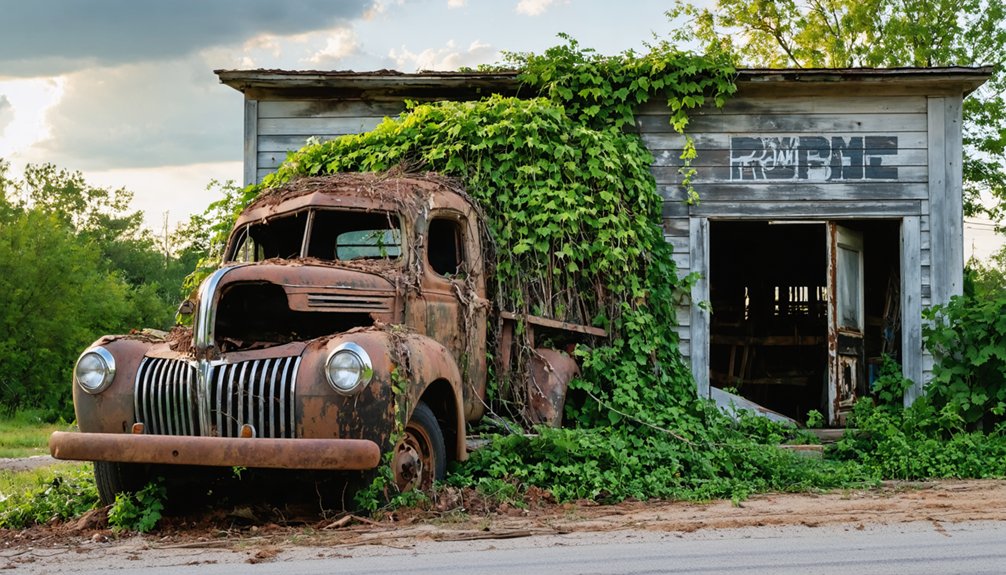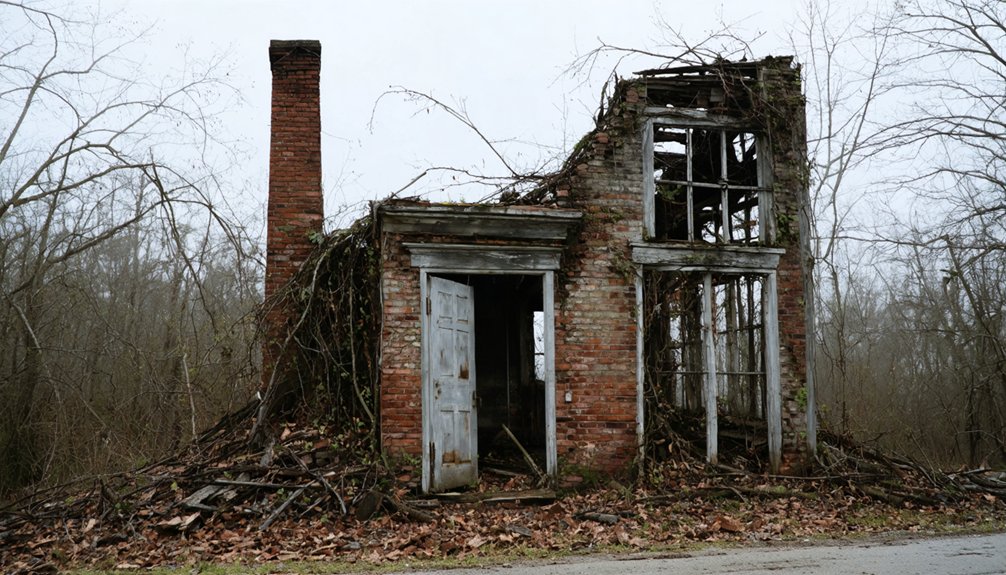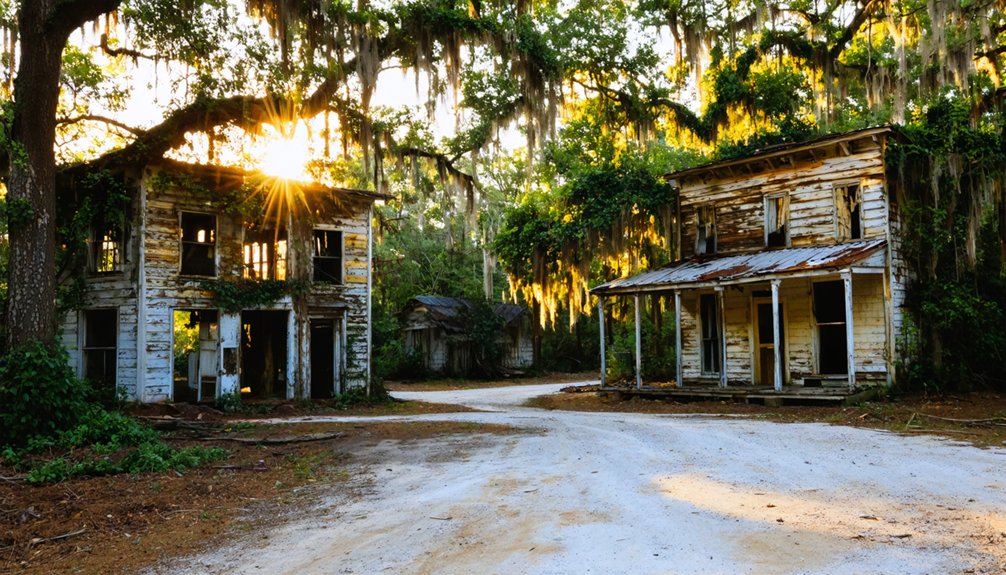
Planning a ghost town road trip to Stanton, Alabama means exploring one of the South’s most hauntingly preserved communities. You’ll walk Civil War battlefield grounds where relics still surface, photograph abandoned storefronts frozen in time, and visit Ebenezer Baptist Church, a resilient state historic landmark. With only 20 residents remaining, Stanton’s quiet, layered history runs deep. Pack water, wear comfortable shoes, and allow at least an hour — there’s far more to this forgotten Alabama town than first meets the eye.
Key Takeaways
- Stanton sits 20 miles north of Selma along State Highway 22, accessible year-round with standard vehicles; spring and fall offer the most pleasant visiting weather.
- Plan 30 minutes to one hour for exploration, bringing water, a camera, and comfortable shoes suited for uneven battlefield terrain.
- The town’s key attractions include abandoned storefronts, the historic Ebenezer Baptist Church, and Civil War battlefield grounds where relics still surface.
- A 1932 tornado killed seven residents and accelerated Stanton’s decline, leaving weathered buildings and a haunting ghost town atmosphere with only 20 residents remaining.
- Fuel up before arriving, as services are sparse in rural Chilton County; check local historical society schedules for Civil War heritage events.
What Makes Stanton, Alabama Worth the Visit?
Tucked along State Highway 22 in Chilton County, Stanton packs a surprising amount of history into a community of roughly 20 residents. You’ll find Civil War battlegrounds, local legends, and historic architecture all within a 30-minute stop.
The Battle of Ebenezer Church unfolded here on April 1, 1865, making it one of the last Confederate military actions in Alabama. Visitors still uncover Civil War relics on the grounds today.
Ebenezer Baptist Church stands as a state historic landmark, anchoring the town’s identity alongside its abandoned storefronts and weathered wooden buildings.
A devastating 1932 tornado killed seven residents, adding another layer to Stanton’s complex story.
If you crave authentic, unfiltered American history off the beaten path, Stanton delivers exactly that.
The Civil War Battle Fought Right Here in Stanton
On April 1, 1865, Confederate forces clashed with Union cavalry right where Stanton stands today, making the Battle of Ebenezer Church one of the final Confederate military actions in Alabama. This engagement unfolded during Wilson’s Raid, a sweeping Union cavalry operation that effectively ended Confederate resistance across the state.
You’re literally walking battle-scarred ground when you visit Stanton. Unlike sites featuring medieval architecture or museum-preserved ancient artifacts behind glass, this battlefield delivers raw, unfiltered history beneath your feet. Visitors still discover Civil War relics scattered across the area, tangible connections to that desperate final chapter.
Ebenezer Baptist Church, a state historic landmark, stands as your anchor point for understanding this clash. Freedom was the defining stakes of that April morning, and you can feel that weight here.
How the 1932 Tornado Permanently Shaped Stanton
As you walk through what’s left of Stanton, keep in mind that a wedge tornado tore through this community on March 21, 1932.
This disaster killed seven residents in a single devastating strike. That event left physical and psychological scars the town never fully recovered from.
It also accelerated its long slide toward the near-ghost-town you’re exploring today.
You’ll notice the sparse, fragmented layout of remaining structures — a quiet affirmation of how one catastrophic March day permanently reshaped Stanton’s fate.
Tornado’s Deadly March Strike
March 21, 1932, brought devastation to Stanton when a wedge tornado tore through the small community, killing seven residents and leaving a permanent scar on the town’s identity. You’ll notice how this tragedy reshaped Stanton’s historic architecture and influenced local folklore that still echoes through the remaining structures today.
When you visit, keep these sobering facts in mind:
- A wedge tornado, one of the most destructive formations, struck without mercy
- Seven lives were lost, dramatically shrinking an already small population
- The disaster accelerated Stanton’s decline, pushing residents away permanently
Walking through Stanton’s abandoned streets, you’re stepping through layers of grief and resilience. The tornado didn’t just destroy buildings — it fundamentally altered the community’s trajectory, transforming a railroad town into the ghost town you’ll explore today.
Community’s Lasting Physical Scars
The 1932 tornado’s death toll tells only part of the story — the physical landscape of Stanton still bears the wounds of that March morning. As you walk through town, you’ll notice abandoned storefronts and weathered wooden buildings that never fully recovered from the destruction.
The school built around 1925 stood as a symbol of community resilience until its demolition in 2001, erasing another piece of Stanton’s fragile identity.
Yet some historic landmarks endured. Ebenezer Baptist Church earned state historic landmark status, standing as a testimony to what survived both the tornado and time itself.
Only two churches remain functioning today among approximately 20 residents. You’re essentially walking through a community frozen mid-collapse — shaped by one violent morning and slowly surrendering to decades of quiet abandonment ever since.
What to See in Stanton, Alabama Today
Despite its small population of roughly 20 residents, Stanton still packs in a surprising number of historic sights worth exploring. You’ll find remnants of a community that once thrived, alongside landmarks that connect you directly to American history. Skip the local cuisine stops and community events — here, the real draw is raw, unfiltered history.
With only 20 residents, Stanton punches above its weight — raw, unfiltered history waits around every corner.
Here’s what you shouldn’t miss:
- Ebenezer Baptist Church – A state historic landmark sitting on the Battle of Ebenezer Church battlefield, where Civil War relics still surface.
- Abandoned storefronts and wooden buildings – Authentic ghost town atmosphere frozen in time.
- Battle of Ebenezer Church site – One of the Confederacy’s last Alabama stands during Wilson’s Raid in April 1865.
Plan roughly 30 minutes to an hour to absorb everything Stanton offers.
How to Get to Stanton, Alabama

You’ll find Stanton tucked away in Chilton County, Alabama, sitting at coordinates 32.615, -86.88 at an elevation of 335 feet.
To reach it, head 20 miles north of Selma along State Highway 22, just south of Maplesville.
The road access is easy, so you won’t need anything beyond a standard vehicle to make the trip.
Geographic Location Overview
Nestled in Chilton County, Stanton sits about 20 miles north of Selma along State Highway 22, just south of the small town of Maplesville. You’ll find this forgotten community at coordinates 32.615, -86.88, resting at an elevation of 335 feet.
The area’s rich timber and local flora make the drive itself worth your time.
Here’s what surrounds you when you arrive:
- Nearby landmarks include the historic Ebenezer Baptist Church battlefield site
- International Paper factory sits just north in Maplesville, marking your approach
- State Highway 22 cuts directly through the heart of the community
The location’s easy road access means you won’t need special gear or permits — just fuel up, set your GPS, and go explore this piece of Alabama history on your own terms.
Driving Route Details
Getting to Stanton is straightforward — head north from Selma on State Highway 22 for roughly 20 miles, and you’ll roll right through the community before you even realize it.
If you’re coming from the north, drop south from Maplesville on the same highway. The route itself is a pleasure — rolling Alabama countryside, timber-heavy landscapes, and open road freedom that makes the drive feel intentional rather than incidental.
Before or after you explore Stanton’s historic landmarks, consider swinging through Maplesville for local cuisine to fuel your adventure.
The town sits at an accessible elevation of 335 feet, and the roads present zero difficulty.
Keep your eyes sharp — Stanton appears quickly, and its quiet roadside presence means inattentive drivers pass right through without stopping.
Road Access Tips
Reaching Stanton requires nothing more than a reliable vehicle and State Highway 22. Located 20 miles north of Selma and south of Maplesville, you’ll find this forgotten community easily accessible with an easy difficulty rating. Local road conditions are generally manageable year-round, making any season a viable time to visit.
Vehicle recommendations stay simple — any standard car handles this route comfortably.
Pack these essentials before heading out:
- A full tank of gas, as services thin out quickly in rural Chilton County
- A camera for capturing abandoned storefronts and weathered wooden structures
- Comfortable walking shoes for exploring the Ebenezer Church battlefield grounds
You’re looking at 30 minutes to one hour on-site, making Stanton a perfect spontaneous detour on your Alabama freedom trail.
When to Visit Stanton and How Long to Stay

Stanton welcomes visitors year-round, so you won’t need to plan around a specific season. Alabama’s local weather stays mild enough for comfortable exploration through most months, though spring and fall offer the most pleasant conditions. Summer brings heat and humidity, while winter remains relatively temperate.
Check for seasonal events hosted by Chilton County’s active historical societies, as these occasionally spotlight the area’s rich Civil War and railroad heritage.
Plan to spend roughly 30 minutes to an hour exploring what remains. You’ll find abandoned storefronts, weathered wooden buildings, and the historic Ebenezer Baptist Church, a state landmark worth lingering near.
Civil War enthusiasts sometimes discover relics scattered across the old Ebenezer Church battlefield. Pack water, wear comfortable shoes, and move at your own pace through this quietly haunting Alabama community.
Before You Go: Safety at Abandoned Sites
Ghost town structures have stood without maintenance for decades. Floors, stairs and roof timbers fail without warning, and a building that looks solid from outside may not hold your weight. Stay out of standing structures unless the site is actively maintained and open to visitors.
Mine workings are the more serious hazard. Vertical shafts can be hundreds of feet deep, are often unfenced, and may be hidden by brush or capped with rotted boards. Never enter an adit, tunnel or shaft: abandoned workings can hold oxygen-poor or toxic air that gives no warning before you lose consciousness.
Enclosed spaces with rodent droppings carry a risk of hantavirus, which is contracted by breathing contaminated dust. Do not sweep or stir up dust inside old cabins and outbuildings.
Cell coverage at these sites is usually poor or absent. Tell someone your route and expected return time, and carry more water than you think you need.
Frequently Asked Questions
Who Was Myron Stanton, and Why Was the Town Named After Him?
“Behind every name lies a story” — Myron Stanton was a railroad superintendent who shaped this region’s growth. You’ll uncover ghost town mysteries and historic preservation efforts honoring him when exploring Stanton, Alabama, named in his honor around 1883.
How Long Did Stanton’s Post Office Continuously Operate Before Closing?
You’ll find Stanton’s post office ran for an impressive 123 years of continuous operation, closing in 2006. This local postal history milestone connects deeply to the town naming origins dating back to 1883.
Are There Active Historical Societies That Organize Guided Tours of Stanton?
Chilton County’s active historical societies breathe life into Stanton’s forgotten streets through local storytelling and preservation efforts. You’ll find passionate locals guiding you through weathered ruins, connecting you to the town’s rich, untamed history.
What Civil War Relics Have Actually Been Found by Visitors in Stanton?
You’ll find that specific Civil War artifacts aren’t documented, but visitor discoveries at Stanton’s Ebenezer Church battlefield have uncovered various relics from the 1865 battle. Bring a metal detector — you might unearth something extraordinary yourself!
Is the Ebenezer Baptist Church Open for Visitors to Enter and Explore?
The knowledge doesn’t confirm if you can enter Ebenezer Baptist Church, but as a state historic landmark amid ghost town legends and abandoned structures, you’ll want to respect the property and contact local historical societies first.
References
- https://en.wikipedia.org/wiki/List_of_ghost_towns_in_Alabama
- https://www.jimwitkowski.com/blog/stanton-the-outlaw-ghost-town/
- https://ghost-towns.close-to-me.com/states/alabama/stanton/
- https://www.ghosttowns.com/states/al/stanton.html
- https://kernelcorn.tripod.com/id16.html
- https://en.wikipedia.org/wiki/Stanton