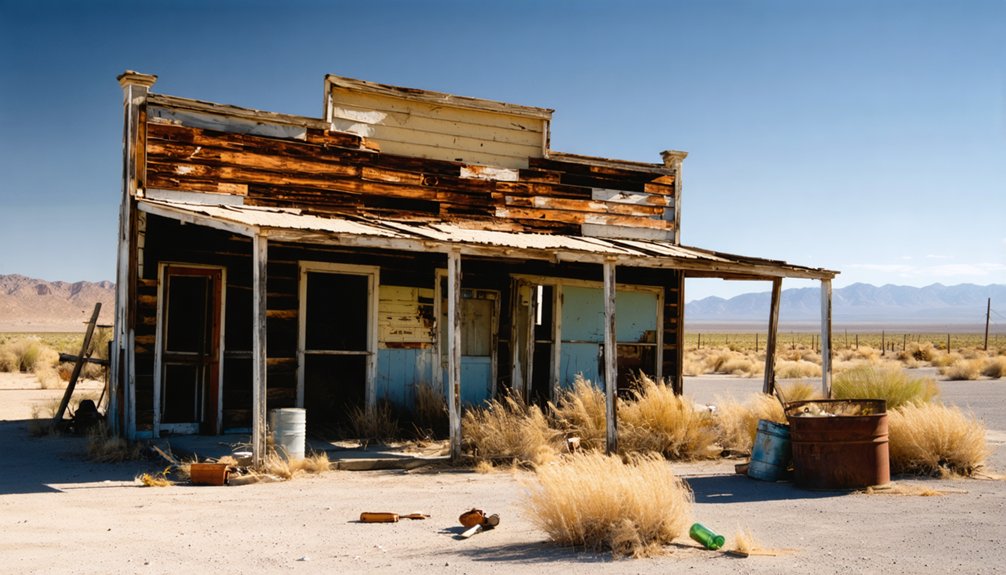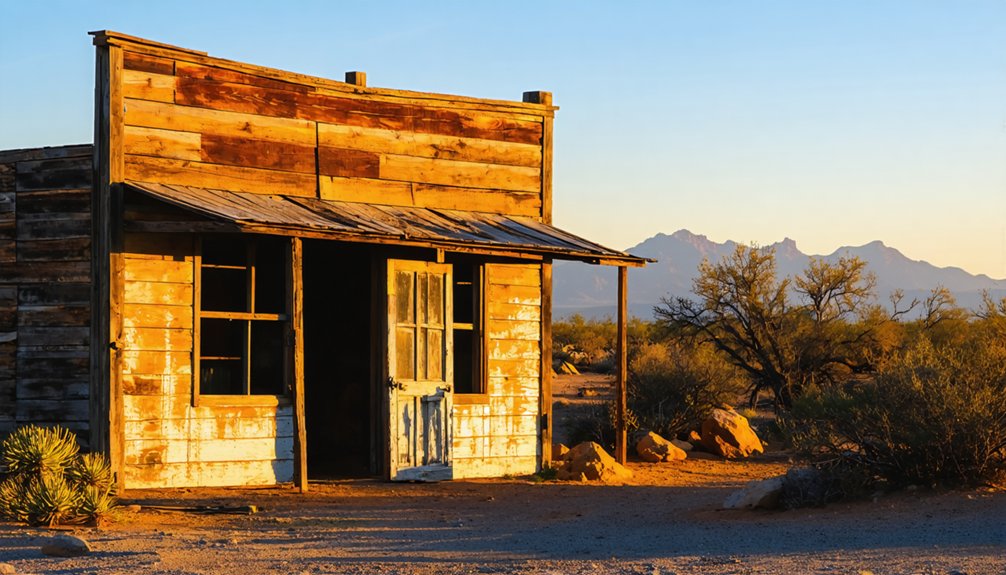
To plan your ghost town road trip to Stanton, Arizona, head out from Phoenix via U.S. Route 93 and SR 89, then wind down Stanton Road into the Weaver Mountains. You’ll find a remarkably preserved frontier town with original buildings, violent history, and real gold prospecting nearby at Rich Hill. Visit between November and March when temperatures hover around 60–70°F. Bring water, sturdy boots, and emergency supplies — there’s far more to this desert time capsule than meets the eye.
Key Takeaways
- Stanton is privately owned by LDMA and access is restricted to members, so non-members should stay near public areas.
- Reach Stanton via U.S. Route 93, SR 89, and Stanton Road from Wickenburg or Phoenix, preparing for unpaved road sections.
- Visit during winter months when temperatures average 60–70°F, with weekdays offering a quieter, less crowded experience.
- Combine visits to nearby ghost towns Weaver and Octave for a comprehensive one-day Arizona gold rush exploration.
- Pack water, sun protection, sturdy footwear, emergency supplies, and a spare tire for this rugged desert road trip.
Who Was Charles P. Stanton: and Why Did Someone Finally Shoot Him?
Charles P. Stanton arrived from Ireland in 1870 and quickly became one of Arizona’s most notorious figures in mining history. He manipulated his way into a postmaster position, renamed the town after himself, and built an iron-fisted monopoly over the local economy.
He’s one of those lawless legends the frontier seems to have manufactured with unsettling ease.
Stanton didn’t just compete with rivals — he’d them killed. Approximately thirty-five violent deaths occurred under his watch, and he faced little accountability for any of them.
His reign finally ended in 1886 when a man named Lucero shot him dead inside his own hotel, reportedly after Stanton insulted his sister.
Sometimes the frontier delivers its own justice, and in Stanton’s case, it just took a while.
The Gold Rush That Turned Stanton, Arizona Into a Boomtown
Before Charles P. Stanton ever schemed his way into power, gold changed everything. In 1863, prospectors struck rich deposits on Rich Hill, and word spread fast. Miners flooded in, and what started as a modest frontier stop called Antelope Station exploded into a boomtown of 3,500 residents.
The mining history here is staggering — that single Rich Hill deposit generated $100,000 in under six months.
Town legends claim the gold practically sat on the surface, waiting to be claimed by anyone bold enough to reach it first.
How Rich Hill Produced $100,000 in Gold in Under Six Months
When gold was struck on Rich Hill in 1863, miners didn’t need to dig deep — they practically scraped it off the surface. The deposit was so concentrated that it generated $100,000 in less than six months, an extraordinary figure for the era. That kind of wealth drew ambitious, restless souls hungry for freedom and fortune, transforming a quiet desert landscape into a roaring boomtown almost overnight.
Today, local legends still circulate about hidden pockets of gold never recovered. Historical artifacts uncovered near the site hint at the feverish pace of that original rush. Walking the area, you’ll sense the raw energy that once drove thousands here.
Rich Hill didn’t just produce gold — it produced an entire chapter of American frontier history worth exploring firsthand.
What Original Buildings Are Still Standing in Stanton Today?
Few ghost towns preserve their original bones quite like Stanton does. Thanks to the Lost Dutchman Mining Association’s preservation efforts since 1976, you can walk through historical architecture that’s survived well over a century.
Stanton’s bones have outlasted a century — and the Lost Dutchman Mining Association has made sure they’ll outlast another.
Here’s what’s still standing on the property:
- Stanton’s Store – one of the original commercial structures still actively used by campground members
- The Saloon and Jail – both remain intact and serve functional roles for visitors today
- Hotel Stanton – now repurposed as a library, kitchenette, and game room, keeping the space alive rather than frozen
You won’t find a velvet rope or a museum placard here. These buildings breathe, and you can actually use them. That hands-on connection to the past makes Stanton unlike almost any other ghost town you’ll visit.
Is Stanton, Arizona Open to the Public?
Those original buildings are impressive, but here’s the catch — you can’t just show up and wander through them. Stanton is privately owned by the Lost Dutchman Mining Association (LDMA), making it a members-only destination. If you’re not a member, you won’t get past the gate.
LDMA acquired the property in 1976 and operates it as an RV park and campground, open six months annually during winter.
Members explore historical artifacts like the original saloon, jail, and store while soaking in the local legends tied to Charles Stanton’s violent reign.
If unrestricted access matters to you, membership might be worth considering. Otherwise, you’ll be admiring this storied ghost town from the outside, which honestly still tells quite a story.
How to Get to Stanton, Arizona From Wickenburg or Phoenix
Reaching Stanton from Wickenburg is straightforward, even if the final stretch trades pavement for dirt. Head northwest on U.S. Route 93 for 5.3 miles, turn north onto SR 89, and continue 11.8 miles to Stanton Road. A right turn puts you 6.5 miles from town.
From Phoenix, you’re looking at roughly 50 miles northwest — an easy half-day escape into serious mining history.
Before you arrive, keep these tips in mind:
- Road conditions matter — unpaved sections are manageable in good weather but check conditions beforehand
- Park at the flagpole and check in at the office before exploring the town architecture
- Visit during winter months — the campground operates only six months annually
Plan accordingly and the drive rewards you beautifully.
What to Expect When You Arrive at the Stanton LDMA Campground
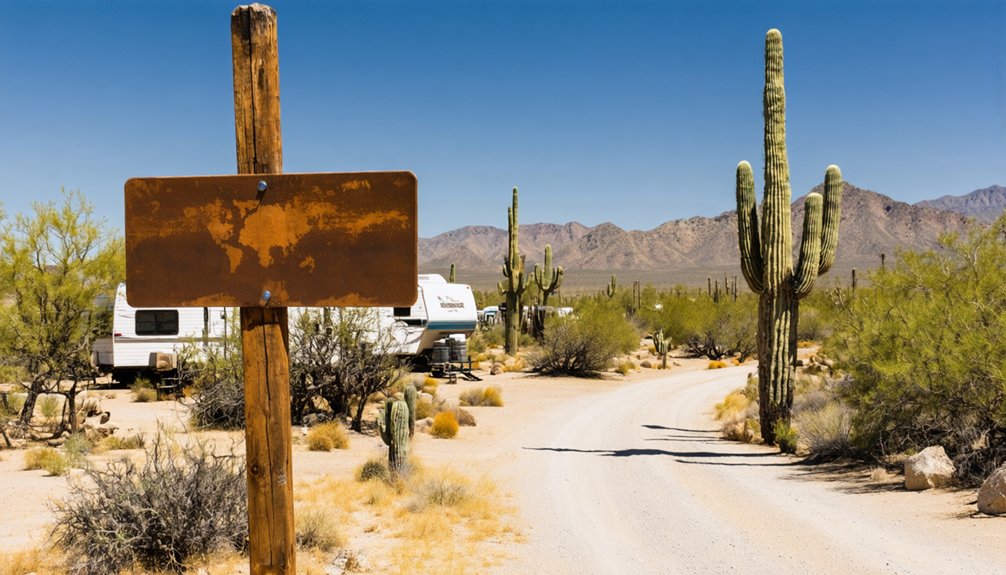
Arriving at Stanton feels like stepping into a working piece of the American West rather than a polished tourist attraction. Park at the flagpole and check in at the office before exploring the grounds.
You’ll find original structures still standing — Stanton’s store, a saloon, and a jail that now serve campers directly. The former Hotel Stanton functions as a library, kitchenette, and game room, where vintage photographs and town legends bring the settlement’s violent, gold-rush past to life.
The LDMA operates this as a members-only RV park and campground, open six months annually during winter. Expect a rugged, functional setup rather than resort amenities. This place rewards the curious traveler willing to trade comfort for an authentic encounter with Arizona’s untamed frontier history.
The Best Time of Year to Visit Stanton, Arizona
Knowing when to go matters just as much as knowing what you’ll find once you’re there. Stanton opens its gates for six months annually, typically running through the winter season, making fall through early spring your prime window.
Arizona’s mild winters let you explore historical artifacts and chase local legends without brutal summer heat slowing you down.
Plan your visit with these considerations:
- Weather: Desert winters stay comfortable, averaging 60–70°F during peak daylight hours
- Availability: The LDMA campground operates on a member-only basis, so confirm the seasonal schedule before you commit
- Crowd levels: Weekday visits offer quieter exploration of the original structures than busy weekends
Timing your trip right means you’ll experience Stanton’s haunted atmosphere on your own terms.
What to Bring for a Desert Ghost Town Visit in Yavapai County

Once you’ve confirmed your visit, packing smart separates a memorable trip from a frustrating one. Yavapai County’s desert climate demands sun protection, plenty of water, and sturdy footwear for uneven terrain. Temperatures swing dramatically between day and night, so layer your clothing accordingly.
Bring a camera to document historical artifacts still visible throughout the grounds — original structures tell stories that local legends only hint at.
A small notebook helps you record observations as you explore Stanton’s remarkably preserved buildings.
Since the site operates as a member-only facility, carry your LDMA membership credentials. Cash is useful if you’re stopping at nearby towns along the route.
Some road sections remain unpaved, so guarantee your vehicle carries a spare tire and basic emergency supplies before you head out.
Ghost Towns Near Stanton Worth Combining Into One Trip
While Stanton alone makes for a compelling day trip, you’d be shortchanging yourself by not exploring the nearby ghost towns of Octave and Weaver, both tucked within the same Weaver Mountains region. Each site carries its own rugged history.
And combining all three into a single route lets you cover a concentrated stretch of Arizona’s gold rush past without excessive backtracking. A little advance planning goes a long way here, since road conditions and access points vary across the area.
Nearby Ghost Towns Overview
Since Stanton sits within the ghost town-rich Weaver Mountains region, it makes sense to bundle your visit with nearby Octave and Weaver, both within close striking distance. Each site carries its own mining history and historical legends worth exploring on your own terms.
Here’s what you’ll find nearby:
- Weaver – Named after mountain man Pauline Weaver, this site connects directly to the 1863 Rich Hill gold strike that sparked the entire region’s boom.
- Octave – A former gold and silver mining camp with crumbling structures that tell a raw, unfiltered story of frontier life.
- Rich Hill – Still draws prospectors today, offering hands-on placer gold opportunities that make history tangible.
Combining all three into one road trip gives you a fuller picture of Arizona’s wild mining past.
Octave And Weaver Highlights
Tucked within the same stretch of the Weaver Mountains, Octave and Weaver each bring something distinct to a combined ghost town road trip. Octave carries deep mining history, once operating one of Arizona’s most productive gold mines well into the twentieth century. You’ll find remnants of industrial-scale extraction scattered across the landscape, offering a raw, unfiltered glimpse into frontier ambition.
Weaver, meanwhile, leans into lawless legends, sharing the same volatile gold rush era that shaped Stanton itself. Both towns sit close enough to visit in a single day without backtracking. Combining all three stops lets you trace a continuous arc of boom, violence, and abandonment across one remarkable region.
It’s the kind of open-road freedom that turns a simple drive into genuine historical discovery.
Planning Your Combined Visit
How you sequence your stops can make or break a ghost town road trip through the Weaver Mountains. Start at Weaver, push through Octave, then finish at Stanton to end on the strongest historical architecture and local legends the region offers.
Keep these priorities in mind:
- Start early — unpaved sections slow travel, and you’ll want daylight for exploring.
- Respect boundaries — Stanton is LDMA-managed, so non-members must stay near public areas.
- Bring cash and supplies — services are nonexistent between these remote stops.
All three sites sit close enough to cover in one full day without feeling rushed. The Weaver Mountains reward travelers who plan deliberately, move freely, and arrive curious about the violent, gold-driven history buried beneath Arizona’s high desert silence.
Frequently Asked Questions
Can Non-Members Ever Visit Stanton, Arizona Under Special Circumstances?
With 35+ violent deaths in its past, Stanton’s private access is strictly member-only. You can’t visit without special permissions from the LDMA, so you’ll need membership to explore this historically rich, haunting Arizona ghost town.
Are Pets Allowed at the LDMA Campground in Stanton?
The available knowledge doesn’t confirm whether pet-friendly accommodations exist at Stanton’s LDMA campground. Before packing up, you’ll want to check their camping regulations directly to guarantee your furry companions can join your freedom-filled adventure!
Is Gold Panning Still Permitted Along Antelope Creek Near Stanton?
The knowledge doesn’t confirm gold prospecting permissions, so you’ll want to check current creek regulations before heading out. Contact the LDMA directly—they’ll know exactly where you can chase that golden dream along Antelope Creek!
Does Stanton Have Any Cell Service or Emergency Facilities Nearby?
With 35 bodies buried from frontier violence, Stanton’s wild isolation lives on! You won’t find reliable cell service or emergency facilities nearby, so pack a first aid kit and download offline maps before you hit those unpaved roads.
Are There Any Documented Ghost Sightings or Paranormal Tours at Stanton?
The knowledge base doesn’t document ghost sightings or paranormal tours, but Stanton’s haunted legends fuel paranormal investigations naturally. You’ll feel the weight of 35 violent deaths as you explore its preserved, atmospheric buildings independently.
References
- https://www.goldmountaintrading.com/stanton.html
- https://www.surgent.net/highpoints/az/hikes/octave.html
- https://azmemory.azlibrary.gov/nodes/view/276843
- https://www.jimwitkowski.com/blog/stanton-the-outlaw-ghost-town/
- https://www.arizonahighways.com/article/arizona-ghost-towns
- https://en.wikipedia.org/wiki/Stanton
- https://www.arizona-leisure.com/stanton-ghost-town.html
- https://www.ghosttowns.com/states/az/stanton.html