Planning a ghost town road trip to Strader, California means heading into Kern County’s remote desert to uncover one of nearly 300 forgotten settlements tied to the state’s boom-and-bust mining era. You’ll want to confirm road access ahead of time, pack water, emergency supplies, and offline maps, since cell coverage is unreliable out here. Strader’s documentation is thin, so setting realistic expectations matters. Stick around to uncover everything you need before you go.
Key Takeaways
- Strader is a lesser-documented Kern County ghost town; research site conditions and verify access through BLM or county contacts before departing.
- Road conditions vary significantly; confirm route passability seasonally and use offline maps with paper backups due to unreliable cell coverage.
- Pack self-sufficiency essentials: one gallon of water per person daily, spare tire, fuel, first-aid kit, and emergency supplies.
- Photograph weathered structures using natural light from stable ground; never remove artifacts or disturb remnants to preserve historical integrity.
- Stay on established paths, respect legal site protections, and inform someone of your route and expected return time before visiting.
What Is Strader, California and Why Visit?
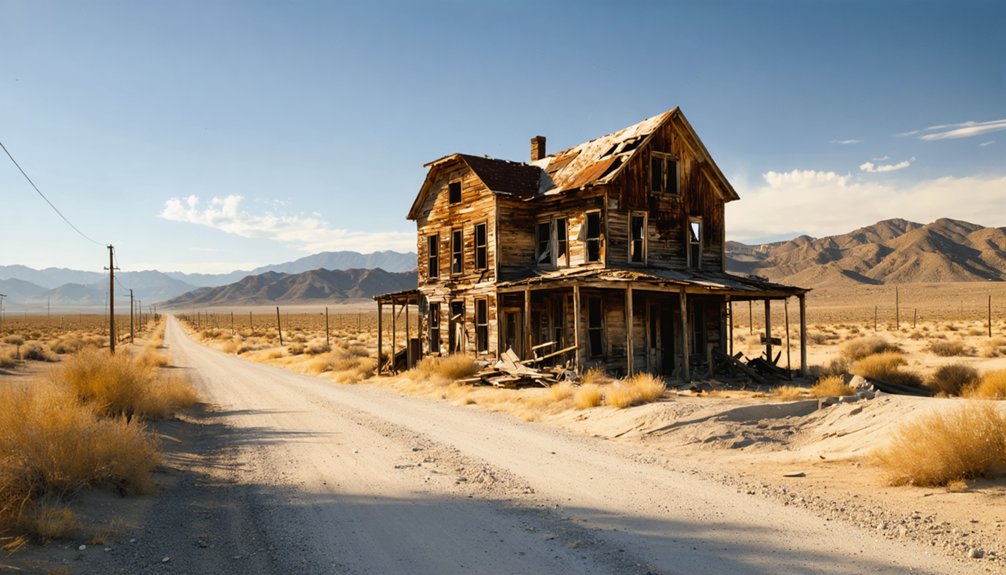
Tucked into the sun-baked landscape of Kern County, Strader, California is one of nearly 300 ghost towns scattered across the state — a forgotten settlement that once played its part in California’s relentless boom-and-bust story. Like so many desert communities, its mining history likely drove its rise and sealed its fate when the ore ran out or the economics shifted.
You won’t find a polished tourist attraction here. Strader is a low-documentation destination, meaning you’ll need to research access and current conditions before you go. Preservation challenges are real — time, weather, and vandalism take a steady toll on sites like this.
But that rawness is exactly the draw. If you crave unfiltered history and open-road freedom, Strader deserves a place on your map.
Where Strader Fits in Kern County’s Ghost Town Story
Kern County carries a long history of communities that flared up around resource extraction and vanished just as fast, and Strader fits squarely into that pattern. Mining booms pulled workers into remote desert terrain, and when the ore played out or transport routes shifted, towns emptied quickly.
Kern County holds dozens of these abandoned settlements, each representing a distinct chapter in California’s boom-and-bust story. Strader stands among the lesser-documented examples, which makes research essential before you go.
Historical preservation concerns are real here — documentation remains thin, and site conditions are unverified. You’ll want to treat visitor guidelines seriously, leave anything you find in place, and confirm land access before planning your route.
Strader rewards the curious traveler willing to dig deeper than the well-worn stops.
What Remains at Strader: and What Probably Doesn’t
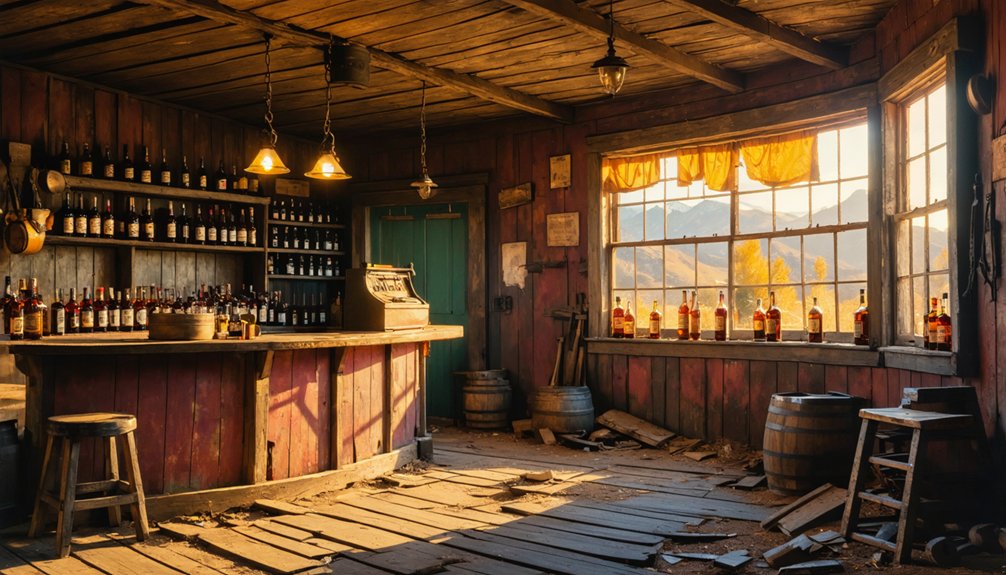
What you’ll actually find at Strader is, honestly, an open question. No confirmed reports document standing structures, interpretive signs, or preserved buildings at the site.
Historical preservation efforts that protected places like Bodie simply never reached every Kern County settlement, and Strader appears to be among the forgotten ones.
Not every California ghost town earned a historic marker. Strader didn’t make the list.
Expect foundations, scatter, or possibly nothing visible at all. Desert conditions, vandalism, and a century of neglect erase towns faster than you’d think.
If you do find remnants, artifact ethics matter. Don’t pocket old bottles, hardware, or china fragments. Leave everything where it sits.
That rusty object half-buried in the dirt tells a more honest story in place than it ever would on a shelf. Respect that, and the site stays meaningful for the next explorer.
How to Reach Strader and Confirm Road Access First
Reaching Strader means traversing Kern County’s sprawling network of paved highways, unpaved desert roads, and routes that can shift from passable to impassable depending on weather and season.
Before you commit to a route, you’ll want to cross-reference current conditions using Kern County road maps, BLM land-status tools, and recent trip reports from other ghost-town explorers.
Don’t assume public access—confirm whether the site sits on private land, and check for seasonal closures or permit requirements before you load up the car.
Getting to Strader, California starts with a single non-negotiable step: confirm road access before you load the car. Kern County roads vary wildly, from paved highways to rutted desert tracks requiring high clearance.
- Check land status — Contact Kern County or BLM to verify whether Strader sits on public or private land.
- Review seasonal closures — Desert roads flood or wash out unpredictably, especially after winter storms.
- Use updated mapping tools — Standard GPS often misses unmaintained routes; cross-reference satellite imagery.
- Pack self-sufficiency gear — Remote access means no nearby services, so carry water, fuel, and a spare tire.
Historical preservation depends partly on visitor etiquette — meaning you arrive prepared, stay on established paths, and leave the site exactly as you found it.
Verifying Site Access Conditions
Before you commit Strader to your itinerary, you’ll want to confirm that you can actually reach it — because unlike Bodie or Calico, Strader carries almost no public documentation about road conditions, land access, or site status. Urban legends surrounding forgotten Kern County settlements often outpace verified facts, and Strader is no exception.
Start by contacting Kern County land management offices directly. Ask about public road access, private property boundaries, and seasonal closures.
Check whether any archaeological evidence of structures or foundations has been formally recorded, since that can signal whether the site warrants preservation protections or restricted entry.
Don’t assume accessibility. Desert roads shift, gates appear, and ownership changes quietly. Verify everything before you load the car, so your freedom to explore stays intact.
What to Bring for a Remote Kern County Ghost Town
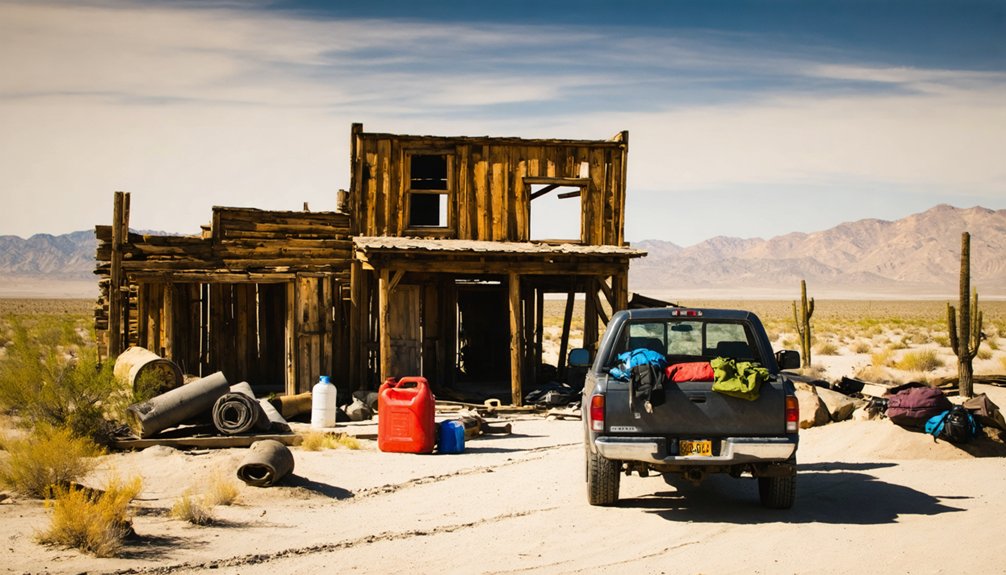
Packing smart before heading to a remote Kern County ghost town like Strader can make the difference between a great day trip and a dangerous situation. You’ll want to load up on desert essentials — extra water, sun protection, a first-aid kit, and enough food to cover unexpected delays — since services along these rural routes are scarce.
Pair those supplies with reliable navigation tools, including a downloaded offline map and a paper backup, because cell coverage in interior California’s ghost-town corridors is notoriously unreliable.
Essential Gear For Desert
A remote Kern County ghost town like Strader demands real preparation—desert heat, limited cell service, and miles of unpaved road won’t forgive an underpacked vehicle. Respecting historical preservation starts before you arrive, and proper gear supports both your safety and visitor etiquette at fragile sites.
Pack these four essentials:
- Water – Carry at least one gallon per person per day; desert dehydration hits fast.
- Navigation tools – Download offline maps and bring a paper backup; cell signals disappear quickly.
- Sun protection – Pack SPF 50+, a wide-brim hat, and UV-blocking layers.
- Emergency kit – Include a first-aid kit, jumper cables, a tire repair kit, and a portable phone charger.
Arriving prepared means you’ll explore smarter and leave Strader exactly as you found it.
Getting lost on a remote Kern County road isn’t just inconvenient—it can turn dangerous fast. Download offline maps before you leave cell range, because service disappears quickly in desert terrain.
Carry a paper backup covering Kern County’s back roads—technology fails, paper doesn’t.
A GPS device with topographic layers helps you read the land accurately, especially near unmarked turnoffs leading to low-documentation sites like Strader. Pack a fully charged power bank, a whistle, and a basic first-aid kit.
Visitor safety depends on preparation, not luck. Tell someone your route and expected return time before departing.
Respect posted land boundaries—trespassing undermines historical preservation efforts and creates legal exposure. Freedom out here means knowing exactly where you’re and how to get back.
Ghost Towns Worth Pairing With Strader Nearby
Since Strader sits in Kern County, you’re already well-positioned to build a fuller road trip around some of California’s most compelling ghost towns. Each nearby stop offers something distinct, from historical preservation efforts to full tourism development.
- Bodie – California’s gold-standard ghost town, frozen in time with hundreds of original structures still standing.
- Calico – A restored silver-mining camp turned attraction, featuring rides, shops, and hands-on history.
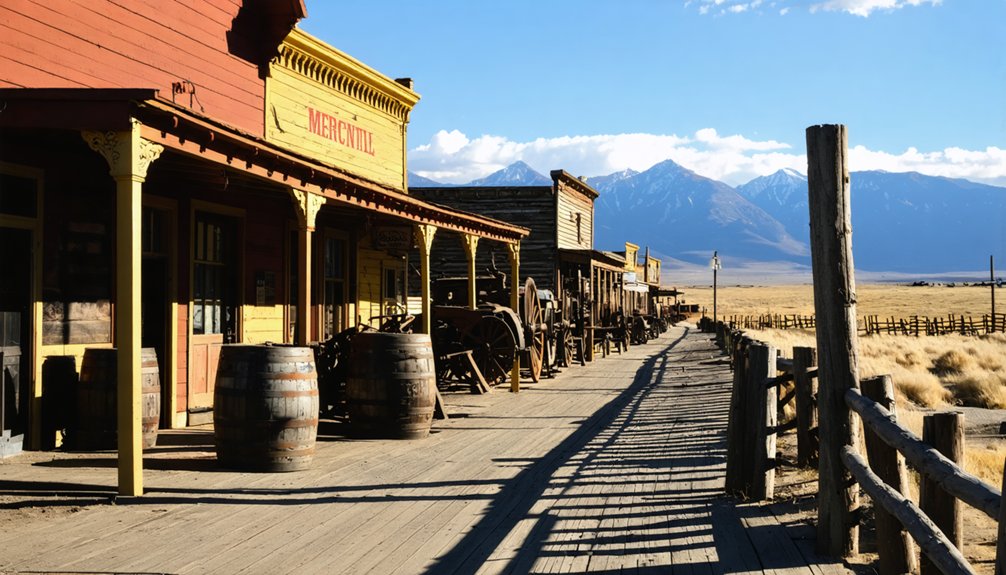
- Randsburg – A living ghost town where roughly 70 residents keep the 1899 mining era alive on dusty streets.
- New Idria – A mercury-mining settlement with over 100 standing buildings, offering raw, unfiltered abandonment.
String these together and you’ve got a road trip that covers California’s entire boom-and-bust story.
How to Photograph Ghost Town Ruins Without Causing Damage
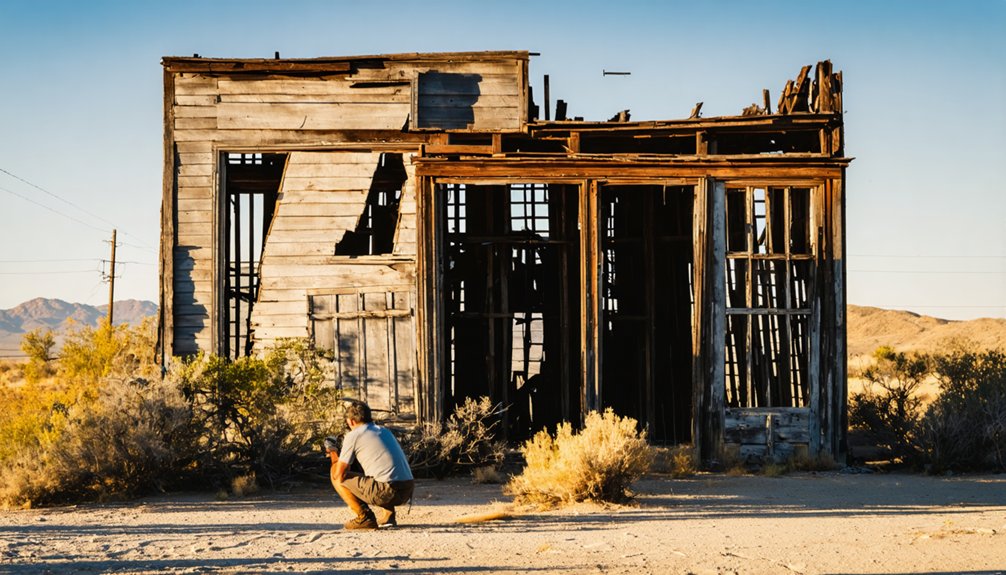
Ghost town photography rewards patience more than aggression — you don’t need to climb a crumbling wall or pry open a rotted door to get a compelling shot. The urban decay you’re chasing is already there, written across weathered wood, rusted metal, and collapsed foundations. Let it speak without interference.
Work with natural light, shoot from stable ground, and resist moving objects to improve your composition. Preservation ethics aren’t just rules — they protect the authenticity that made you drive out here in the first place. If you shift an artifact for a better angle, you’ve altered a record that can’t be restored.
Stay on established paths, keep your footprint small, and leave Strader exactly as you found it. Future explorers deserve the same experience you came for.
Why Ghost Town Artifacts Must Stay Where You Found Them
That rusted tin cup half-buried near Strader’s foundations isn’t just an old piece of junk — it’s a data point. Artifact preservation depends on objects staying exactly where history left them. Pocketing souvenirs is site vandalism, plain and simple, and it erases the record permanently.
That weathered nail poking out of the dirt isn’t trash — it’s testimony. Leave it exactly where history dropped it.
Here’s why you leave everything untouched:
- Context is everything — an artifact’s location tells researchers how people lived and worked.
- Removal is irreversible — once it’s gone, that story disappears forever.
- Federal and state laws protect these sites — penalties are real.
- Your restraint protects future visitors — everyone deserves the same discovery experience you had.
Photograph it. Document it. Walk away. That’s how free-minded travelers protect the places they love.
Frequently Asked Questions
Is Strader, California Officially Protected as a Historic Landmark?
Among California’s nearly 300 ghost towns, Strader lacks confirmed landmark designation or official historical preservation status. You won’t find verified records protecting it, so research access independently before visiting this low-documentation, freedom-calling desert mystery.
Are There Guided Ghost Town Tours Available in Kern County?
You’ll find guided ghost town tours in Kern County that take you through historic landmarks and abandoned settlements. They’re perfect for ghost town photography, letting you explore freely while uncovering California’s fascinating boom-and-bust heritage on your own terms.
What Is the Best Time of Year to Visit Strader?
Spring and fall offer you the best seasonal weather for visiting Strader, delivering mild temperatures that maximize your photography opportunities. You’ll capture dramatic desert light without battling summer’s punishing heat or winter’s unpredictable conditions.
Can You Camp Overnight Near Strader or in the Area?
You’ll find camping options on surrounding Kern County public lands, but overnight restrictions may apply near Strader itself. Verify access rules before you go, and embrace the freedom of sleeping under California’s vast, star-filled desert sky.
Does Strader Appear on Official California State Historical Maps?
“The proof is in the pudding” — you’ll need to verify whether Strader appears on official California historical maps yourself, as its ghost town significance remains low-documented, making your independent research essential before exploring.
References
- https://www.facebook.com/groups/CalHistory/posts/490500677827388/
- https://en.wikipedia.org/wiki/List_of_ghost_towns_in_California
- https://www.facebook.com/californialandmarkfoundation/videos/california-ghost-town-bodie-california-is-one-of-the-best-preserved-boomtowns-fr/1639090977198276/
- https://en.wikipedia.org/wiki/Stedman
- https://www.youtube.com/watch?v=sad1wCDdvBE
- https://www.visitcalifornia.com/road-trips/ghost-towns/
- https://dornsife.usc.edu/magazine/echoes-in-the-dust/
- https://en.wikipedia.org/wiki/New_Idria