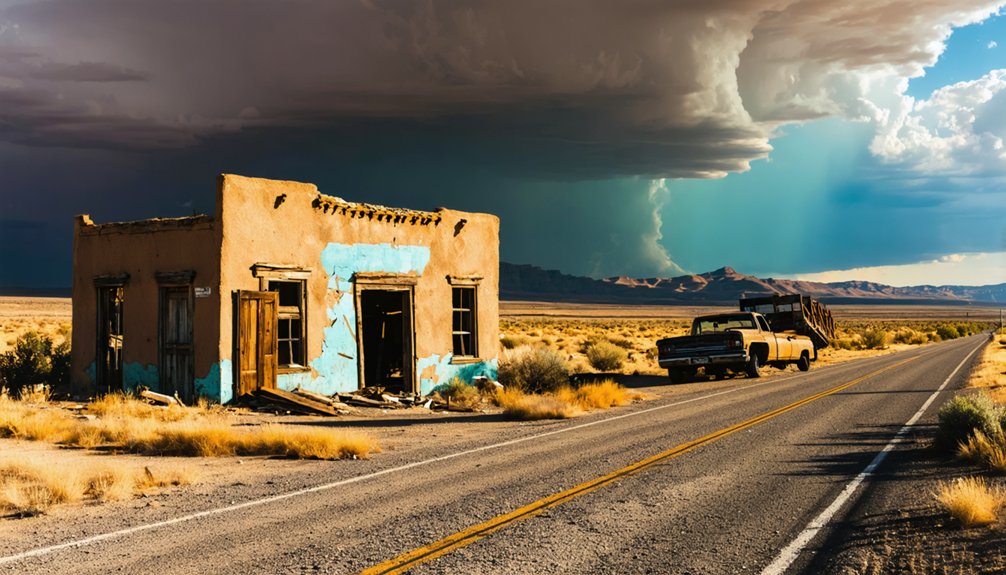
Tierra Amarilla, New Mexico rewards the curious traveler with crumbling ballrooms, a still-active 1917 courthouse, and layered history stretching from Spanish land grants to railroad-era betrayal. You’ll find abandoned storefronts and weathered motels alongside a town that refuses to fully disappear. Visit in spring or fall, stay on public roads, and pair your stop with nearby Chama, Abiquiu, and Ghost Ranch. There’s far more to this haunted landscape than first meets the eye.
Key Takeaways
- Tierra Amarilla retains roughly 297 residents, a functioning 1917 courthouse, and crumbling ballrooms, making it an ideal ghost town road trip destination.
- Photograph Tio’s and Lito’s Ballrooms from public roads only, as deteriorating interiors are unsafe and considered off-limits to visitors.
- Visit in spring or fall for mild weather, open roads, and optimal lighting conditions for photographing historic ruins.
- Extend your trip by including nearby Chama, Abiquiu, and Ghost Ranch, which offer complementary history, scenery, and cultural landmarks.
- Respect private property boundaries and civic spaces throughout town, sticking strictly to public roads and exterior views when exploring.
What Makes Tierra Amarilla a Ghost Town Worth Visiting?
Although Tierra Amarilla never fully emptied out, its crumbling ballrooms, abandoned storefronts, and deteriorating roadside motels give it the unmistakable bones of a ghost town — all while a functioning county courthouse and sheriff’s office remind you that roughly 297 people still call it home. That tension is exactly what makes it worth the detour.
You’re standing inside centuries of layered history — Spanish land grants, Mexican governance, railroad speculation, and slow rural decline — compressed into one small valley.
After exploring the weathered shells of Tio’s and Lito’s Ballroom, you can push further into the surrounding high country for outdoor activities along the Chama River corridor.
Seek out local cuisine from nearby communities to fuel the adventure. Tierra Amarilla rewards the curious traveler chasing authentic, unpolished New Mexico heritage.
The History Behind the Yellow Earth: Spanish Grants, Raids, and Railroad Decline
When you trace Tierra Amarilla’s roots, you’re stepping into a story that begins with the 1832 Tierra Amarilla Grant, when the Mexican government handed Manuel Martinez and a group of Abiquiu settlers a vast tract of northern New Mexico’s yellow clay country.
The peace didn’t hold easily — Ute, Navajo, and Jicarilla Apache raids kept settlers on edge until the 1860s, when stability finally allowed the community to take firmer shape.
Then came the railroads and Anglo land speculators, who reshaped ownership across the old grant lands and set the economic drift that eventually hollowed out the town you’ll walk through today.
Spanish Grants And Raids
Before the first Anglo settler ever set foot in the Chama River Valley, Spanish explorers were already writing about it. By 1776, they’d documented this high-country land as prime pastoral territory, rich with possibility.
In 1832, the Mexican government formalized that promise through the Tierra Amarilla Grant, awarding Manuel Martinez and settlers from Abiquiu a foothold in the yellow earth.
But holding that foothold wasn’t simple. Native American influence shaped every decision made here — Utes, Navajos, and Jicarilla Apaches regularly raided settlements, keeping the community unstable well into the 1860s.
Mining history and agricultural ambition pulled settlers forward despite the danger. Only after raids eased did Tierra Amarilla truly take root, building the foundation you’ll still see written across its weathered landscape today.
Railroad Reshapes Decline
By the late 1800s, the Denver and Rio Grande Railway had threaded its iron ambitions through northern New Mexico, and Tierra Amarilla felt the consequences. Rail routes redirected commerce, drained population, and accelerated land consolidation as Anglo speculators absorbed grant territories.
The town that once anchored the valley lost economic momentum it never fully recovered.
What remains tells that story honestly. You won’t find polished art galleries or celebrated local cuisine lining these streets today. Instead, you’ll find the bones of a community reshaped by forces bigger than any single family or grant.
The railway didn’t kill Tierra Amarilla outright, but it repositioned power, wealth, and traffic away from the historic core. Understanding that shift makes every crumbling wall you photograph here carry genuine historical weight.
The Tierra Amarilla Land Grant and the Disputes That Shaped the Town
When you stand in Tierra Amarilla today, you’re standing on contested ground with a paper trail stretching back to 1832, when the Mexican government granted this land to Manuel Martinez and a group of settlers from Abiquiu.
After the Treaty of Guadalupe Hidalgo transferred the Southwest to the United States, that grant became a legal battleground, as Anglo speculators moved in and land began slipping away from the original settlers through sales and legal maneuvering.
The disputes that followed didn’t just reshape property lines — they hollowed out the community’s economic foundation and set the town on a slow trajectory toward the near-ghost-town you’re visiting now.
The 1832 Mexican Grant
Though the valley had drawn Spanish eyes as far back as 1776, it wasn’t until 1832 that the Mexican government formalized its ambitions here, issuing the Tierra Amarilla Grant to Manuel Martinez and a group of settlers pushing north from Abiquiu. That document set the foundation for everything that followed — local legends, cultural festivals, bloodshed, and betrayal.
Here’s what shaped that original grant:
- Settlers came from Abiquiu seeking pasture and farmland
- The Chama River Valley offered water, clay, and open range
- The Mexican government used land grants to anchor frontier territory
- Martinez’s group faced raids from Utes, Navajos, and Jicarilla Apaches
- Stability didn’t arrive until the 1860s, decades after the grant was issued
That tension between promise and danger defined the town from day one.
Post-Treaty Land Disputes
The Treaty of Guadalupe Hidalgo ended the Mexican-American War in 1848, but for the settlers of Tierra Amarilla, it didn’t end the fighting — it just changed the battlefield. The U.S. government promised to honor existing land grants, yet Anglo speculators quickly moved to exploit legal confusion surrounding the Tierra Amarilla Grant.
Original families lost ground through questionable sales, court battles, and political maneuvering. That betrayal runs deep here. You’ll sense it walking past deteriorating structures that once housed generations of proud landholders.
Local legends about the disputes still circulate among descendants, and cultural festivals occasionally reclaim that history with music, food, and defiant pride. When you visit, you’re stepping into a landscape shaped not just by time, but by contested ownership and resilience.
How to Get to Tierra Amarilla on Your Road Trip
Nestled in the high country of north-central New Mexico, Tierra Amarilla is most easily reached via U.S. Highway 84. You’ll find the historic town center sitting just off the main through-traffic corridor, rewarding those who slow down and explore.
Key stops and route tips to guide your journey:
- From Santa Fe: Drive north on U.S. 84/285, then continue on U.S. 84 through Abiquiu.
- From Chama: Head south on U.S. 84 for a short, scenic descent.
- Roads: Standard 2WD vehicles handle the route comfortably.
- Best seasons: Spring and fall offer ideal conditions; summers bring cultural festivals and local cuisine worth sampling.
- Elevation: Prepare for northern New Mexico’s mountain climate regardless of season.
Keep your eyes open — the landscape itself tells the story before you arrive.
When to Visit Tierra Amarilla for the Best Experience
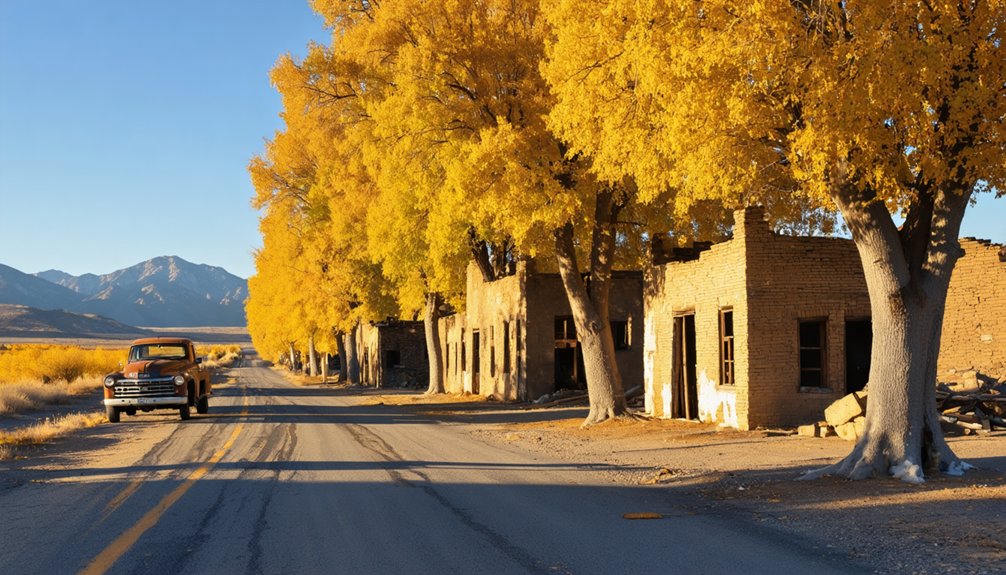
Timing your visit to Tierra Amarilla can shape everything you experience there. Spring and fall offer the sharpest clarity — mild temperatures, open roads, and light that makes the Yellow Earth glow like something from another century.
Summer brings warmth and occasional cultural festivals that connect you to the region’s Spanish and land-grant roots, plus better access to local cuisine in nearby Chama and Abiquiu.
Winter turns the high country fierce and isolated, which suits travelers chasing raw solitude over comfort. Avoid visiting when heavy snow closes mountain passes.
Whatever season you choose, arrive with curiosity and respect — you’re moving through living history, not a theme park. The land has outlasted empires, and it’ll outlast your itinerary too.
The Courthouse and the Living Side of Tierra Amarilla
Most ghost towns surrender their civic identity long before their buildings collapse, but Tierra Amarilla never did. You’ll find active government buildings standing shoulder-to-shoulder with crumbling facades here.
The 1917 Rio Arriba County Courthouse anchors the town’s living core, reminding you that this place still functions.
Look for these active landmarks before exploring further:
- Rio Arriba County Courthouse, still operational
- County administrative offices near the historic center
- Sheriff and police facilities showing daily civic life
- Access points for nearby outdoor activities along the Chama River
- Local spots offering regional cuisine tied to northern New Mexico traditions
That contrast between working institutions and decaying shells is exactly what makes Tierra Amarilla worth your detour. You’re not visiting ruins — you’re visiting a community still holding its ground.
Tio’s Ballroom, Lito’s Ballroom, and the Town’s Abandoned Landmarks
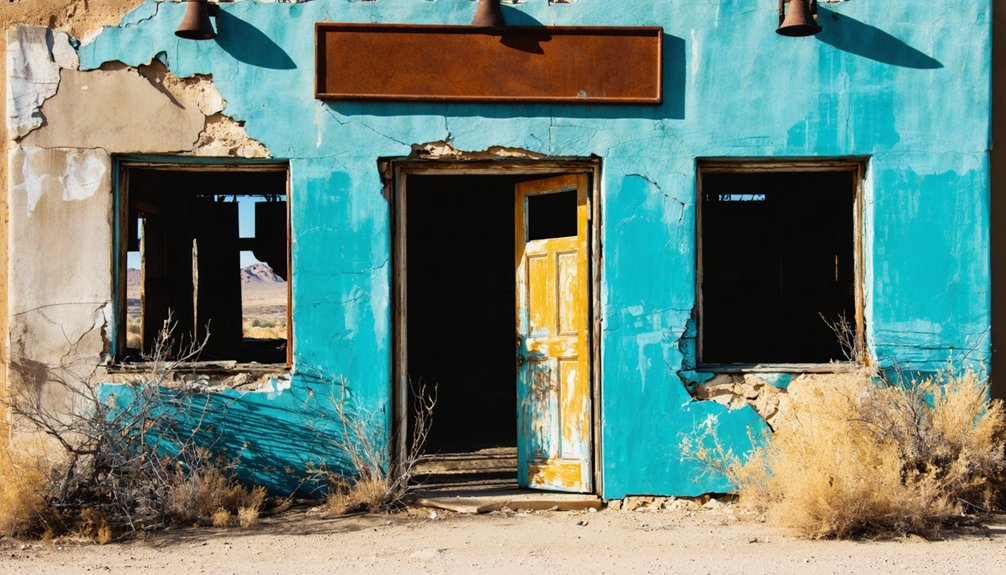
Once you step away from the courthouse, you’ll find Tierra Amarilla’s ghost-town soul in the crumbling shells of its old ballrooms and roadside commercial buildings.
Tio’s Ballroom and Lito’s Ballroom once drew crowds from across the region, but today they stand as weathered relics of a mid-century social life that quietly disappeared.
Bring your camera, because these deteriorating facades tell the town’s story more honestly than any historical marker could.
Ballrooms Left Behind
Among Tierra Amarilla’s most haunting remnants, Tio’s Ballroom and Lito’s Ballroom stand as crumbling monuments to a time when this small mountain town pulsed with weekend dances and community gatherings. These abandoned structures define the ghost town architecture you’ll encounter throughout the historic core.
When you walk past these weathered shells, you’re reading decades of rural New Mexico life:
- Ballroom walls that once held music now hold silence
- Peeling facades reveal mid-century construction styles
- Broken windows frame views of overgrown interiors
- Neighboring abandoned structures tell similar stories of decline
- The bypassed U.S. 84 corridor accelerated every building’s fate
You won’t enter these spaces safely, but you don’t need to. Standing outside, you’ll feel the full weight of what was left behind.
Crumbling Commercial Shells
The ballrooms aren’t the only structures telling Tierra Amarilla’s story of decline. As you wander the historic core, you’ll encounter former commercial buildings slowly surrendering to urban decay — old storefronts, roadside businesses, and forgotten enterprises that once served a busier highway corridor.
When U.S. 84 traffic bypassed the town center, these buildings lost their economic lifeline. Nobody replaced what left. What remains are weathered facades and empty interiors that raise real questions about historic preservation and who bears responsibility for saving places like this.
You’re not walking through a curated museum. You’re moving through a living consequence of rural economic abandonment. Keep your distance from unstable structures, respect private property, and let the crumbling shells speak — because they’re saying something worth hearing.
Landmarks Worth Photographing
Two ballrooms anchor Tierra Amarilla’s roster of photogenic ruins — Tio’s and Lito’s — and both reward a slow walk with a camera. These halls once hosted cultural festivals, dancing, and community life that defined northern New Mexico identity. Now their weathered facades tell a quieter story.
Don’t miss these stops:
- Tio’s Ballroom — peeling paint and collapsed sections frame a haunting silhouette
- Lito’s Ballroom — a companion ruin carrying the same faded energy
- The 1917 courthouse — still active, still striking against the high-country sky
- Abandoned roadside motel — a mid-century shell evoking lost highway culture
- Old commercial storefronts — imagine locals stopping here after sampling local cuisine from nearby kitchens
Shoot during golden hour when the light turns everything the color of yellow earth.
What Can You Actually Do in Tierra Amarilla?
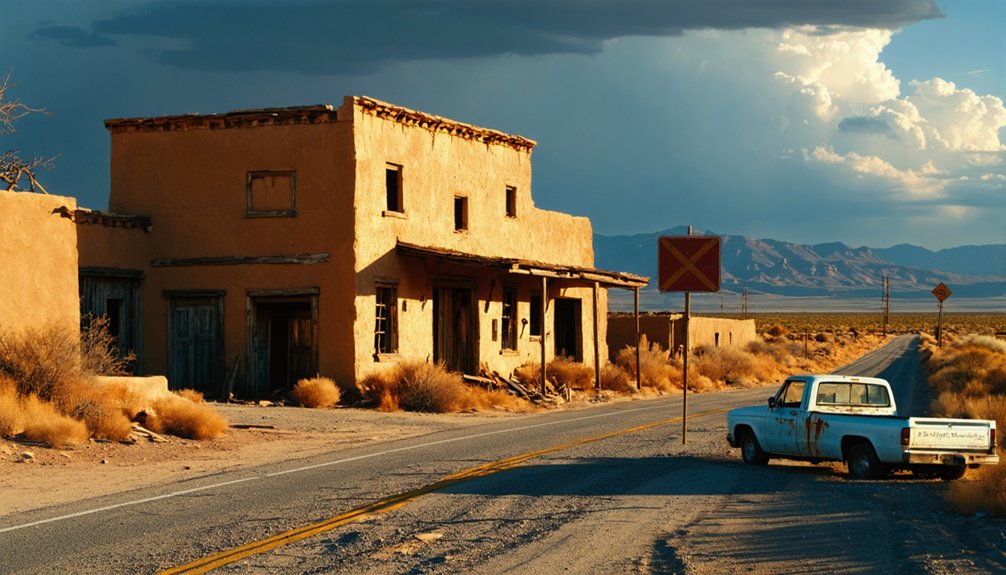
Wandering through Tierra Amarilla feels less like touring a ghost town and more like reading a history book someone forgot to finish. You’ll walk past the 1917 courthouse, still functioning, then turn a corner and find Tio’s Ballroom slowly surrendering to gravity. Photograph the contrasts. Read the landscape like a map of collapsed ambitions and stubborn survival.
Don’t expect local cuisine hotspots or art galleries — this isn’t that kind of stop. What you get instead is raw, unfiltered history written in adobe and rust. Drive the side streets. Pull over. Let the silence do the talking.
Tierra Amarilla rewards curiosity, not comfort. If you came looking for freedom from the curated tourist trail, you’ve found exactly the right place.
Exploring Tierra Amarilla Safely: What’s Accessible and What to Avoid
Exploring Tierra Amarilla means reading the difference between what’s yours to examine and what’s best left alone. Urban legends cling to these weathered walls, but cultural preservation demands respect over recklessness. Stick to public roads and exterior views, and you’ll uncover plenty.
- Rio Arriba County Courthouse – fully active; enter respectfully during business hours
- Tio’s and Lito’s Ballrooms – photograph from the road; interiors are structurally unsafe
- Old roadside motel – view from outside only; posted property deserves your respect
- County administrative buildings – accessible civic spaces worth acknowledging
- Historic streetscapes along U.S. 84 – walk them freely, camera in hand
You don’t need trespassing to feel this place. The story lives in the facades, the silences, and the yellow earth beneath your boots.
Nearby Stops Worth Pairing With Tierra Amarilla: Chama, Abiquiu, and Ghost Ranch
Tierra Amarilla doesn’t stand alone—it anchors a corridor of northern New Mexico stops that reward curiosity and punish rushing. Head north on U.S. 84 to Chama, where the Cumbres & Toltec Scenic Railroad preserves historic architecture and mountain railroad culture in operating form.
Head south and you’ll reach Abiquiu, tied inseparably to Georgia O’Keeffe and layered with local legends stretching back through Spanish colonial settlement. A few miles further, Ghost Ranch opens into dramatic red-cliffed country where paleontology, art history, and raw landscape collide.
Each stop adds a distinct chapter—railroad heritage, artist mythology, prehistoric discovery—that deepens what Tierra Amarilla started. String them together on a single route and you’ve built a road trip that moves through centuries rather than just miles.
Frequently Asked Questions
Is Tierra Amarilla Safe for Solo Travelers Visiting Alone?
With only 297 residents, you’ll find Tierra Amarilla welcoming for solo exploration. You’re free to chase historical preservation stories and local legends through its atmospheric streets — just respect boundaries and stay aware of your surroundings.
Are There Any Restaurants or Gas Stations in Tierra Amarilla?
Local dining options and fuel stations availability are limited here, so stock up before you arrive. You’ll find Tierra Amarilla’s sparse services fitting for a near-ghost town where history echoes louder than commerce.
Can Visitors Legally Photograph Abandoned Buildings in Tierra Amarilla?
You can generally photograph abandoned buildings from public roads and sidewalks, but always respect legal considerations and photography permissions—private property boundaries still apply. When in doubt, ask locals and embrace the adventurous spirit of discovery responsibly.
Does Tierra Amarilla Have Cell Service or Reliable GPS Coverage?
Cell service can be spotty here, so don’t rely solely on your phone. GPS coverage generally holds, but download offline maps before you venture into this remote, high-elevation outpost where modern signals meet frontier silence.
Are There Any Entrance Fees for Visiting Tierra Amarilla Landmarks?
You won’t pay entrance fees here — you’re free to roam! Respect local regulations and historical preservation by viewing deteriorating landmarks from public roads, letting Tierra Amarilla’s layered past speak to your adventurous spirit without cost.
References
- https://www.youtube.com/watch?v=lLkrwgnuKgE
- https://www.newmexico.org/places-to-visit/regions/northcentral/tierra-amarilla/
- https://www.ghosttowns.com/states/nm/tierraamarilla.html
- https://en.wikipedia.org/wiki/List_of_ghost_towns_in_New_Mexico
- http://freepages.rootsweb.com/~gtusa/history/usa/nm/tierra-amarilla.htm
- https://en.wikipedia.org/wiki/Tierra_Amarilla
- https://takemytrip.com/2016/08/northern-new-mexico-echo-amphitheater-cebolla-tierra-amarilla/