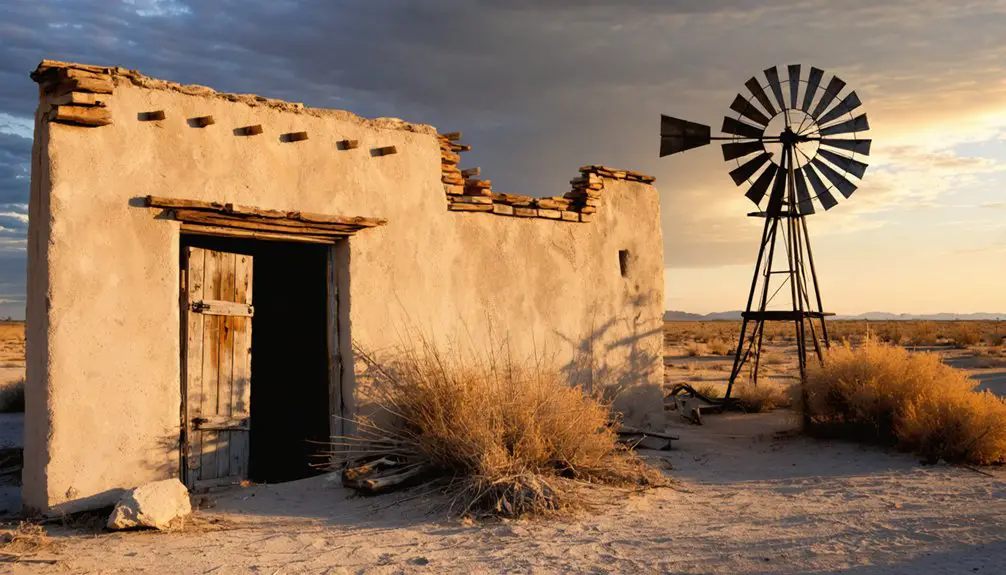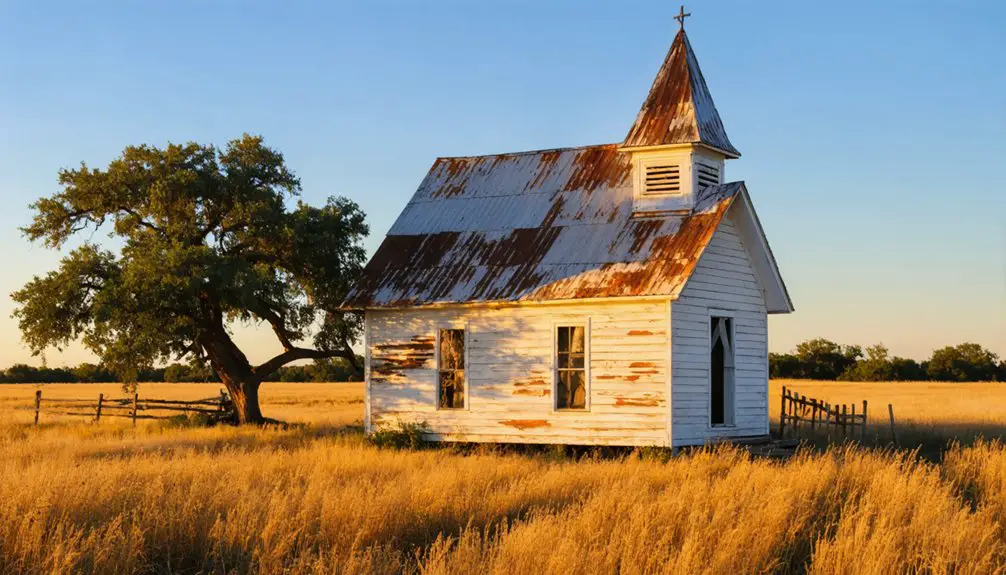
College Mound sits five miles southeast of Terrell, Texas, where a dream died before a single stone was laid. You’ll find a weathered Methodist church, a quiet cemetery, and farmland frozen in the 19th century. Pack your supplies in Terrell, take Farm Road 429, and arrive in the morning when the light does its best work. There’s more history waiting here than most Texas towns can claim—and the full story’s worth uncovering.
Key Takeaways
- College Mound, a ghost town five miles southeast of Terrell, Texas, features a historic Methodist church, cemetery, and preserved 19th-century farmland structures.
- The town was named after a college never built, as its founder died before construction began, symbolizing unrealized ambition and community resilience.
- Visit during spring or fall for comfortable weather and optimal photography conditions; avoid summer’s oppressive heat.
- Stock up on fuel, water, and snacks in Terrell beforehand, as College Mound has no stores; the drive takes about 10 minutes.
- Respect private property boundaries, as some rural homes remain inhabited; explore slowly to appreciate the site’s quiet historical atmosphere.
Is College Mound Worth the Drive?
Though it never became what it was meant to be, College Mound carries a quiet historical weight that makes it worth the short five-mile detour off the main highway from Terrell.
College Mound never became what it was meant to be — and that quiet incompleteness is precisely what makes it worth finding.
You’ll find a 19th-century Methodist church, a well-kept cemetery, and scattered rural homes that speak to the town’s unexpected resilience.
Its historical significance isn’t loud or dramatic — it’s subtle, rooted in the story of a college that never rose from the ground yet gave a community its identity.
That kind of community preservation is rare.
Settlers from Indiana and Tennessee built something lasting here, even without the institution they’d envisioned.
If you crave places where history breathes quietly through open land, College Mound delivers exactly that kind of unhurried, meaningful road trip experience.
Why Is It Called College Mound?
What makes College Mound’s name even more compelling than the quiet landmarks you’ve just explored is the story behind it — one built entirely on an unfulfilled promise.
An educated Easterner arrived in the 1840s, chose a small hill as his ideal college site, and died before breaking ground. The school never rose, yet the name survived him.
That’s the kind of local legend that gives a place its soul. Settlers from Indiana and Tennessee had already planted roots here, but this one man’s dream — unrealized and abandoned — became the community’s identity.
The historical significance isn’t in what was built but in what wasn’t. You’re standing on land named after a ghost of ambition, which feels entirely fitting for a ghost town road trip.
What’s Still Standing in College Mound Today?
Despite the ghost town label, College Mound hasn’t faded into rubble — you’ll find real remnants worth stopping for. Preservation efforts have kept key historical artifacts alive for curious travelers ready to wander off the beaten path.
Here’s what’s still standing:
- 19th-century Methodist church — a striking piece of frontier faith worth photographing
- Well-kept cemetery — walk it slowly and let history speak
- Cluster of rural homes — yes, people still live here
- Surrounding farmland structures — scattered evidence of earlier settlement life
You won’t find stores or tourist infrastructure, but that rawness is exactly the point. College Mound rewards travelers who crave authenticity over polish, offering a quiet, unfiltered glimpse into Texas rural history that most road-trippers completely overlook.
What Can You Actually See at the Church and Cemetery?
When you step onto the grounds of College Mound’s 19th-century Methodist church, you’re walking into the living edge of Texas frontier faith. Study the architectural details carefully — the weathered lines and modest construction reveal how early settlers built permanence from little. Nothing here was ornamental; every beam served survival.
The cemetery rewards equal attention. Worn headstones carry cemetery symbolism that speaks across generations — carved hands, simple crosses, and faded epitaphs marking lives shaped by the same open land you’re standing on now. Many graves date to the town’s earliest decades, connecting you directly to those Indiana and Tennessee settlers who arrived in the 1840s.
Both sites remain well-kept, meaning you’ll explore them without obstruction. Bring water from Terrell, move slowly, and let the silence do its work.
When Is the Best Time to Visit College Mound?
Timing your visit to College Mound shapes everything about the experience. The hot Texas summers drain the romance from exploring historic cemeteries and 19th-century churches steeped in local legends. Choose wisely, and the historical significance of this quiet mound feels tangible.
The best seasons to visit:
- Winter – Cool air makes wandering the well-kept cemetery contemplative and unhurried.
- Spring – Mild temperatures invite unhurried exploration of the Methodist church’s timeless character.
- Fall – Clear skies and gentle weather reveal the town’s quiet, haunting beauty.
- Avoid Summer – Oppressive heat diminishes your ability to absorb the atmosphere meaningfully.
Pack your supplies in Terrell before heading five miles southeast. College Mound rewards those who arrive prepared and ready to listen to what the land remembers.
How Do You Get to College Mound From Terrell?
You’ll start your journey in Terrell, the last real outpost before the landscape gives way to quiet rural roads and forgotten history. From there, take Farm Road 429 southeast, letting the flat Texas countryside unspool around you as the past draws closer.
The drive covers just five miles, putting College Mound within reach in under ten minutes.
Starting Point In Terrell
Before heading out, stock up on supplies in Terrell—there’s not a single store waiting for you in College Mound. This small city is your last frontier of civilization before the open road pulls you southeast.
Make Terrell count with these four stops:
- Fuel your tank completely
- Grab local cuisine from a nearby diner
- Stock water and snacks for wildlife observation stops along rural stretches
- Confirm your route along Farm to Market Road 429
Terrell sits just five miles northwest of College Mound, making it the perfect launchpad for your ghost town adventure. The town’s quiet streets carry echoes of 1840s settlers who carved their dreams into eastern Kaufman County‘s landscape.
You’re not just passing through—you’re following their exact footsteps.
Taking Farm Road 429
With your tank full and snacks packed, Farm to Market Road 429 becomes your ribbon of asphalt cutting southeast through Kaufman County’s quiet flatlands. Five miles feels short on paper, but every mile carries historical significance — you’re tracing the same general corridor settlers from Indiana and Tennessee navigated in the 1840s.
Watch for the subtle rise in terrain. That small mound ahead holds local legends about an educated Easterner who dreamed of building a college, died before breaking ground, yet permanently branded this community with his ambition. The road handles standard 2WD vehicles without complaint, so there’s no barrier between you and discovery.
Farm Road 429 doesn’t demand anything extraordinary from your vehicle — just your curiosity and willingness to follow a quiet road toward an unforgettable, unfinished story.
Distance And Drive Time
Five miles southeast of Terrell is all that separates you from College Mound, a drive that takes roughly ten minutes down Farm to Market Road 429.
Those ten minutes carry real historical significance — you’re retracing paths walked by Indiana and Tennessee settlers in the 1840s.
Local legends still echo here, particularly the story of an Easterner whose dream of building a college died with him.
Before you roll out, confirm these four details:
- Fill your tank in Terrell — no fuel exists in College Mound
- Pack food and water — no stores operate there
- Your standard 2WD vehicle handles the road fine
- Budget extra time to explore the church and cemetery
Freedom waits just down that rural road.
What Should You Bring Since College Mound Has No Stores?
Since College Mound has no stores whatsoever, you’ll need to stock up in Terrell before making the five-mile drive southeast. Pack water, snacks, and any camping essentials if you’re extending your journey across Kaufman County’s backroads. The freedom of rural exploration demands self-sufficiency, and College Mound rewards the prepared traveler generously.
Bring your camera and remember these photography tips: morning light flatters the 19th-century Methodist church beautifully, while overcast skies add dramatic texture to the well-kept cemetery’s weathered headstones. Fall and spring offer the clearest conditions for capturing the quiet dignity of this unfulfilled college dream frozen in time.
Respect private property boundaries around the rural homes, and carry enough fuel since the nearest station remains back in Terrell.
Frequently Asked Questions
What Is the Population of College Mound, Texas Today?
Ever wonder who still calls a ghost town home? College Mound’s population sits at 350, where you’ll discover historical landmarks, local legends, and a community that’s quietly defying time’s relentless march toward abandonment.
What County Is College Mound, Texas Located In?
You’ll find College Mound nestled in Kaufman County, Texas, where historical landmarks whisper local legends of unfulfilled dreams. It’s a place that’ll stir your wanderlust and beckon your free spirit toward eastern Texas’s forgotten past.
Is College Mound Suitable for Standard Passenger Cars Without Off-Road Capability?
You’ll reach College Mound safely in your standard passenger car—vehicle safety isn’t a concern here. Farm Road 429’s 2WD-friendly scenic routes invite your wandering spirit to chase history without needing rugged off-road capability.
Who Were the Original Settlers That Founded College Mound in the 1840S?
You’ll find College Mound’s pioneer origins rooted in bold historical settlement — settlers from Indiana and Tennessee who, in the 1840s, ditched their comfortable lives, chased freedom westward, and planted roots in eastern Kaufman County, Texas.
What Is the Grid Accessibility Classification Assigned to College Mound?
College Mound holds a grid classification of 4, so you’ll find it moderately accessible as you chase historic landmarks and local legends down Farm Road 429, where freedom and forgotten history await your wandering soul.
References
- https://www.ghosttowns.com/states/tx/collegemound.html
- https://www.tshaonline.org/handbook/entries/college-mound-tx
- https://www.hipcamp.com/journal/camping/texas-ghost-towns
- https://en.wikipedia.org/wiki/List_of_ghost_towns_in_Texas
- https://www.ghosttowns.com/states/tx/comyn.html