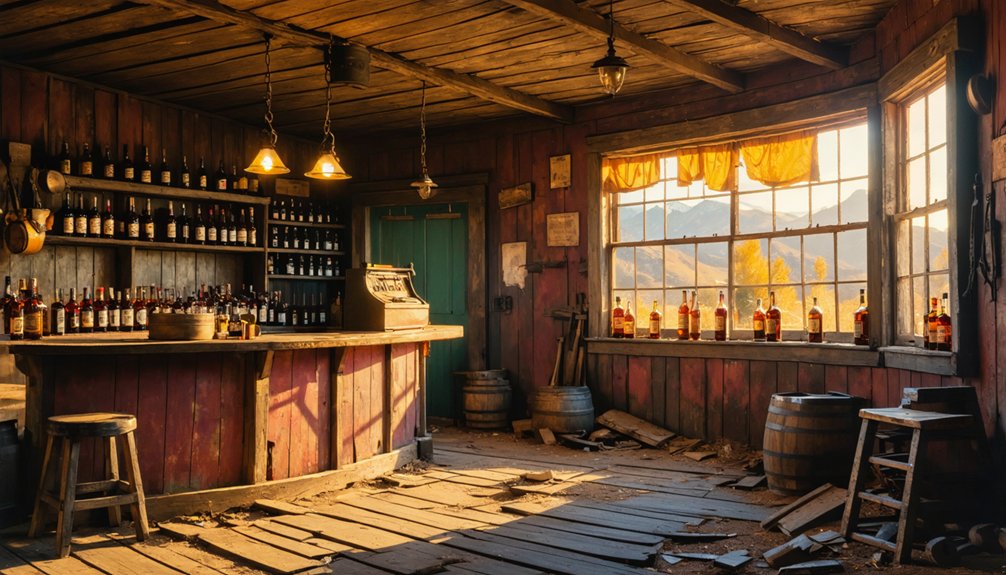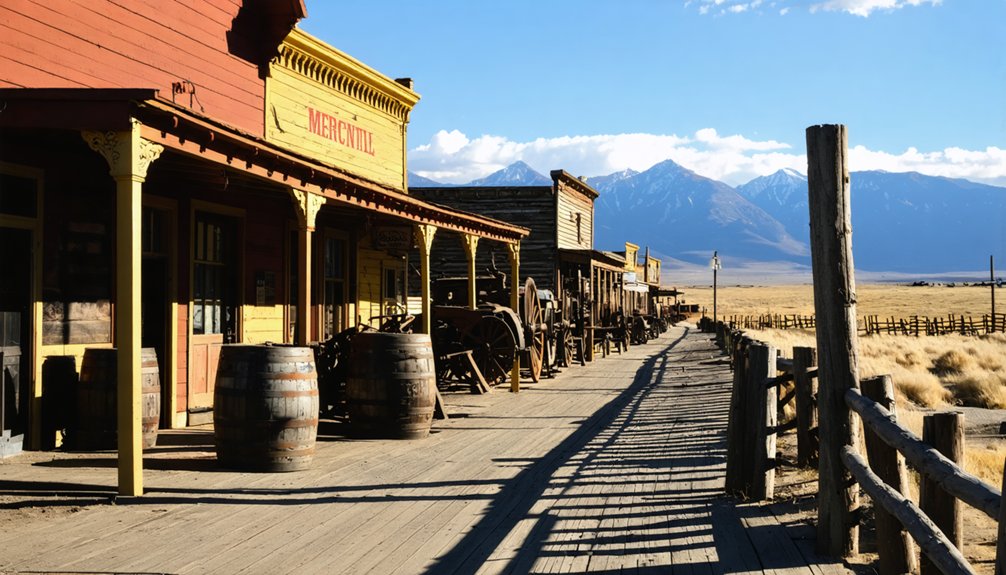
You can drive California’s entire mile house corridor in a single day, starting in San Francisco and heading south toward the Peninsula. These roadside stops date back to the Gold Rush era of 1849, where travelers once found fresh horses, food, and shelter. Some sites, like Brisbane’s 7 Mile House, are remarkably intact, while others have nearly vanished. Plan your route carefully, and you’ll uncover far more than you’d expect.
Key Takeaways
- Start at Brisbane’s 7 Mile House, the most intact stop, dating to 1853, before heading south toward other historic sites.
- Bring printed maps, water, snacks, and a camera, as cell service can be unreliable along older travel corridors.
- Research site access conditions beforehand, as some locations like 9 Mile House are fenced off and actively deteriorating.
- Each mile house served Gold Rush-era travelers with food, shelter, and supplies, giving every stop unique historical significance.
- Expect varied conditions across sites, from well-preserved landmarks to stripped remnants and complete ruins with little remaining fabric.
What Were California’s Mile Houses?
Before the highway existed, weary travelers crossing California relied on a network of roadside stops called mile houses — and they were far more than simple rest areas. Each station took its name from its distance along the route, marking miles between San Francisco and San Jose on a journey that could consume nine grueling hours.
You’d find food, fresh horses, supplies, and shelter at these stops. They shaped local architecture and became genuine community anchors, evolving into saloons, hotels, gambling dens, and trading posts. Their cultural significance stretched well beyond convenience — they drove settlement, commerce, and connection across a rapidly expanding West.
Born from Gold Rush demand in 1849, these mile houses built the social and commercial backbone of early California travel.
Plan Your Mile House Route: San Francisco to the Peninsula
Tracing the old stagecoach corridor from San Francisco south toward the peninsula puts you on one of California’s most historically layered road trips, where ghost-town remnants and still-standing landmarks share the same stretch of asphalt. Your route anchors around several mile-house stops, each offering different tourist experiences depending on what’s survived.
Brisbane’s 7 Mile House rewards you with genuine historical preservation — it’s stood at its original location since at least 1853. San Francisco’s 5 Mile House still exists but offers little visible historic fabric.
Millbrae adds two more stops: the 16 Mile House, relocated and reborn as a steakhouse, and the 17 Mile House site, gone since 1907. Expect variety — not every stop delivers ruins, but every stop delivers story.
The Best Mile House Stops Still Standing Today
Then push toward 5 Mile House in San Francisco, where architectural styles hint at the past even though its commercial life has faded.
Contrast those Peninsula stops with 12 Mile House near Carson Valley, where a stone-and-brick hybrid structure bridges two building eras.
Each site tells you something different about survival — and none of them ask permission to still exist.
Preserved vs. Deteriorated: How the Surviving Sites Compare
Not every mile house held up the same way, and that gap in survival tells you more about these sites than any museum placard could.
Take 7 Mile House in Brisbane — it’s still standing in its original location, carrying real architectural styles that connect you directly to 1853. Its economic impact shaped the corridor it served, and that legacy remains visible.
Then there’s 9 Mile House — fenced off, crumbling, swallowed by neglect. You can see the decay from the road, and that contrast hits hard.
5 Mile House offers even less, with barely any historic fabric remaining.
Visiting these sites back-to-back sharpens your understanding of what survives and why. Preservation wasn’t random — it followed money, use, and community investment.
What You’ll Find on the Ground at Each Historic Stop
Each stop delivers a different kind of encounter, so knowing what you’re walking into saves frustration and sharpens the experience.
At 7 Mile House in Brisbane, you’ll find historical architecture still standing on its original footprint, layered with local legends from nearly two centuries of roadside hospitality. It’s the most complete stop on the route.
At 5 Mile House, expect stripped-down remnants with little active historic fabric remaining.
The 9 Mile House sits fenced off and decaying, but its structural bones still tell a raw, unfiltered story.
The 12 Mile House offers a striking contrast between an older stone section and a red-brick addition, with surviving outbuildings gone but the core structure intact.
Bring curiosity, wear sturdy shoes, and treat each site as a chapter rather than a destination.
How to Make the Most of a Mile House Road Trip
Planning your route before you leave the driveway turns this trip from a loose drive into a focused historical expedition. Start at 7 Mile House in Brisbane, where local legends stretch back to 1853, then push south toward the deteriorating 9 Mile House to witness the contrast between preservation and decay.
Bring a printed map because cell service gets unreliable near older corridors. Research current restoration efforts before visiting, since access conditions shift as ownership and funding change.
Carry water, snacks, and a camera. These stops reward curious travelers who read the landscape rather than just photograph it. Treat each site as a chapter in a longer story, and the road itself becomes the thread connecting California’s Gold Rush past to its present-day ruins.
Frequently Asked Questions
Are Any Mile House Sites Located on Protected Tribal Land Today?
Some mile house protected sites do sit on tribal land today. Over 500 tribes manage U.S. land — you’ll want to research access carefully before you venture out to explore these historically rich, sovereign territories.
Did Mile Houses Serve as Postal Stops or Mail Relay Stations?
Some mile houses did serve postal routes and mail relay duties, connecting frontier communities hungry for news. You’d find these stops buzzing with riders, letters, and supplies moving freely across California’s wild, open corridors.
Were Mile Houses Privately Owned or Operated by Stagecoach Companies?
You’d find private ownership driving most mile houses, while stagecoach operations sometimes leased or contracted stops along routes. Independent entrepreneurs seized freedom’s opportunity, building roadside empires that fueled westward adventure and kept weary travelers moving forward.
Can Children or Families Visit Deteriorated Mile House Ruins Safely?
Some sites aren’t exactly family-friendly adventures. You’ll want to prioritize visitor safety at deteriorated ruins like 9 Mile House, as unstable structures pose real risks. Explore historical preservation sites like 7 Mile House instead for safer family discoveries.
Did the Gold Rush Change How Frequently Mile Houses Were Built?
Yes, the Gold Rush impact dramatically accelerated mile house development! As you trace these historic routes, you’ll discover that surging traveler demand drove builders to establish stops far more frequently along California’s bustling stagecoach corridors.
References
- https://nvtami.com/2020/05/28/twelve-mile-house-nevada/
- https://www.forgottennevada.org/sites/five_mile_house.html
- https://www.instagram.com/reel/DPmuEjrEQdf/
- https://www.reddit.com/r/IAmA/comments/fxejw4/iama_guy_who_bought_a_22building_ghost_town_over/
- https://www.youtube.com/watch?v=SV9xyafhCfs
- https://www.forgottennevada.org/sites/nine_mile_house.html
- https://kids.kiddle.co/Peninsula_Mile_Houses
- https://en.wikipedia.org/wiki/List_of_ghost_towns_in_California
- https://en.wikipedia.org/wiki/Eagle_Mountain